Exhibitions

Marlene Dumas at Tate Modern reviewed: ‘remarkable’

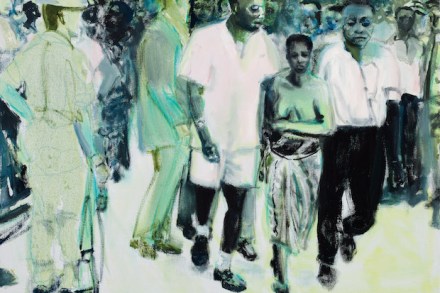
‘Whoever wishes to devote himself to painting,’ Henri Matisse once advised, ‘should begin by cutting out his own tongue.’ Marlene Dumas — whose work is the subject of a big new retrospective at Tate Modern — has not gone quite that far (and neither, of course, did Matisse). On the other hand, she does not hand out many clues as to what her work is all about. On the contrary, when Dumas says anything about her painting, it is inclined to be a self-deprecating paradox. ‘I paint because I am a woman,’ she states on her website. ‘(It’s a logical necessity.) If painting is female and insanity is a female malady, then all women painters are mad and all male painters are women.
Rubens and His Legacy at the Royal Academy reviewed: his imitators fall short of their master miserably

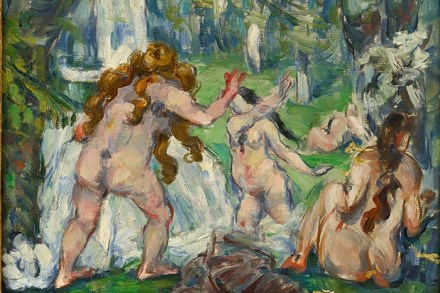
The main spring offering at the Royal Academy, Rubens and His Legacy: Van Dyck to Cézanne, teaches two useful lessons. One — not much of a surprise — is that Peter Paul Rubens (1577–1640) was a protean giant of a painter, expending sufficient artistic invention and energy to power other artists for centuries to come. The other conclusion is how hard compare-and-contrast exhibitions of this kind are to pull off. The basic idea — that Rubens was a towering figure in European culture — is plainly valid (the best riposte to the tired observation that there are so few famous Belgians is that there are plenty of celebrated Flemings, among whom Rubens is pre-eminent).

Geometry in the 20th and 21st centuries was adventurous – and apocalyptic

Almost a decade ago, David Cameron informed Tony Blair, unkindly but accurately, ‘You were the future once.’ A visitor to the Whitechapel Gallery’s exhibition, Adventures of the Black Square, might mutter the same words in front of the first exhibits. It is now a century since Kazimir Malevich painted the starkest abstractions in the history of art: one simple geometric shape painted on a background of another colour. It was not, one might have thought, an idea with much mileage. Yet those early geometric abstractions had the compressed power of revolutionary manifestos. For good or ill, there has followed 100 years of modernist, post-modernist, and now post-post-modernist geometry in art. This is the theme of the exhibition.

The tragic tale of the Two Roberts is a story of two artists cut off in their prime

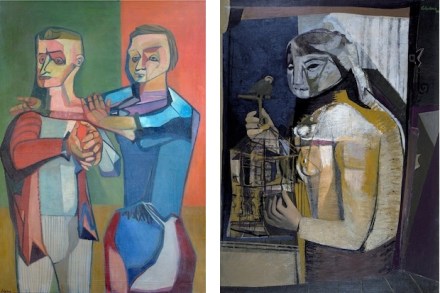
In 1933, two new students met on their first day at Glasgow School of Art. From then on they were inseparable. They lived and worked together. They became lovers. They stayed together throughout their lives. They shone at art school, then came to London, where their robust paintings soon became very fashionable. Yet a few years later, just as quickly, their work fell out of favour. They became increasingly impoverished, dependent on friends for bed and board, but they never stopped painting — or loving one another. They were both prolific drinkers. By 1966, they were both dead.

The death of the life class

‘Love of the human form’, writes the painter John Lessore, ‘must be the origin of that peculiar concept, the Life Room.’ Then he goes on to exclaim on the loveliness of that name. It is indeed a venerable institution with a delightful description: a place devoted to looking at life — or, at any rate, to earnest attempts to depict people without a stitch of clothing. Currently two exhibitions in Norwich — at Norwich Castle Museum and Norwich University of the Arts — by Lessore and another distinguished painter, John Wonnacott, focus attention on this time-honoured practice, apparently remote from the contemporary art world of video, installation and performance.

We must never again let this 19th century Norwegian master slip into oblivion

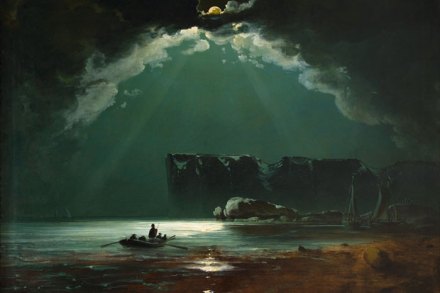
You won’t have heard of Peder Balke. Yet this long-neglected painter from 19th-century Norway is now the subject of a solo show at the National Gallery. And it’s an absolute revelation. Walking around, I marvelled at the intensity of a man obsessed with revealing the frozen grandeur and elemental drama dominating his country’s northernmost shores. Like Turner, he was driven by a restless urge to travel, discovering landscapes that enlarged and transformed his vision of the world. In 1832 he took an arduous sea journey to the far north of Norway, ceaselessly sketching the rugged coast and mountains along the way. His excitement grew as he passed the primal North Cape, and the onset of a hurricane only increased Balke’s avid involvement.

Does Allen Jones deserve a retrospective at the Royal Academy?

It has been a vintage season for mannequins. At the Fitzwilliam Museum in Cambridge, an exhibition called Silent Partners looks at the relationship between artist and mannequin, from function to fetish. In London, the Royal Academy is hosting a retrospective of the work of British artist and Academician Allen Jones. Jones, who is now 77, became obsessed with mass-produced imagery of eroticised women. As the show makes clear, he never really got over it. During the 1960s, Jones emerged as a leading pop artist. His contemporaries at the Royal College of Art included Patrick Caulfield and David Hockney, but he was expelled after a year. His big break came in 1969 with his trio of fibreglass sculptures that portrayed women as pieces of furniture.

Are the British too polite to be any good at surrealism?

The Paris World’s Fair of 1937 was more than a testing ground for artistic innovation; it was a battleground for political ideologies. The Imperial eagle spread its wings over the German Pavilion; the Soviet hammer swung above the Russian Pavilion; and the Spanish Pavilion unveiled Picasso’s shocking monument to the civilian dead of the bombed city of Guernica, raising the clenched fist of the Spanish Republic in the capital of non-interventionist France. Not everyone was convinced by ‘Guernica’ as art. Anthony Blunt in The Spectator commended Picasso’s political gesture but dismissed the painting as ‘the expression of a private brainstorm’.

Without a model, Moroni could be stunningly dull. With one, he was peerless…

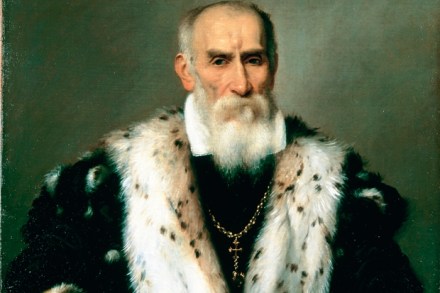
Giovanni Battista Moroni, wrote Bernard Berenson, was ‘the only mere portrait painter that Italy has ever produced’. Indeed, Berenson continued, warming to his theme, ‘even in later times, and in periods of miserable decline, that country, Mother of the arts, never had a son so uninventive, nay, so palsied, directly the model failed him’. It was a harsh judgment, but the great connoisseur inadvertently managed to put his finger on exactly what was so marvellous about his victim. A splendid exhibition at the Royal Academy triumphantly demonstrates that when Moroni actually did have a model in front of him, he was one of the most remarkable painters of later 16th-century Europe. He was, however, one who does not seem to fit easily into his time and place.

Egon Schiele at the Courtauld: a one-note samba of spindly limbs, nipples and pudenda

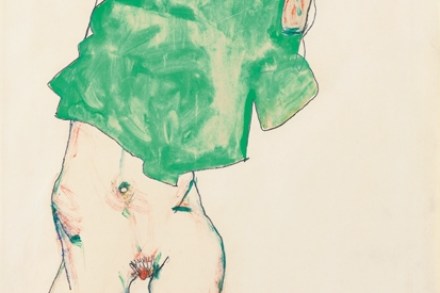
One day, as a student — or so the story goes — Egon Schiele called on Gustav Klimt, a celebrated older artist, and showed him a portfolio of drawings with the abrupt query, ‘Do I have talent?’ Klimt looked at them, then answered, ‘Much too much!’ One gets an inkling of what Klimt was getting at from the feverishly intense work on show in Egon Schiele: The Radical Nude. From childhood, Schiele drew with manic fluency. His father, a syphilitic stationmaster, was irritated to discover that a sketchbook, a gift to the boy intended to last for months, had been filled in less than a day.

The secret world of the artist’s mannequin

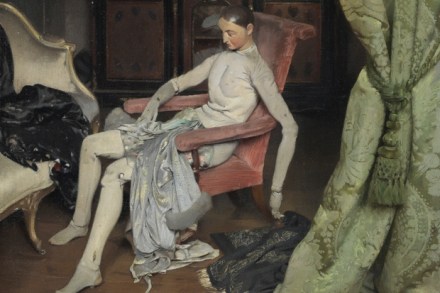
A 19th-century London artists’ supplier named Charles Roberson offered imitation human beings for sale or rent, with papier-mâché heads, soft leather skin and flexible, jointed limbs. The top-of-the-range article — described in Roberson’s catalogue as ‘Parisian stuffed’ — was pricey. Nonetheless, painters often felt they just had to have one whatever the cost. Many such creatures inhabit Silent Partners: Artist & Mannequin from Function to Fetish, a pioneering exhibition at the Fitz-william Museum, Cambridge. There are also distinguished paintings on view. But it is the figures themselves — slightly comic, a touch eerie, hard to classify — that are the real stars of the show.

Russians made the theatre space the most liberating imaginative device ever invented

You have to hand it to the Russians. They beat us into space, beat us to sexual equality, and a small display of early Soviet avant-garde theatre and film design, tucked away in the V&A’s ‘Performance’ area, proves that they beat us hollow in matters of the dressing-up box too. When you arrive (that is, if you arrive — it is a labyrinthine trek to find it) at Russian Avant-Garde Theatre, you should make straight for the little screen. It shows the amazing 1924 sci-fi film Aelita, in which an engineer living under ‘Military Communism’ builds a spaceship and flies to Mars where he falls for Aelita, Queen of Martians.

How Rothko become the mythic superman of mystical abstraction

Mark Rothko was an abstract artist who didn’t see himself as an abstract artist — or at least not in any ‘formalist’ sense. If a critic called him a ‘colourist’, he would bristle; if they admired his sense of composition, he would complain that this was not what he was about at all. His was an art of deep content, his subject an invocation of the religious, the tragic, the mythic. ‘The people who weep before my pictures are having the same religious experience I had when I painted them,’ he once famously said. ‘And if you, as you say, are moved only by their colour relationships, then you miss the point.

Tate Modern’s latest show feels like it’s from another planet

‘Some day we shall no longer need pictures: we shall just be happy.’ — Sigmar Polke and Gerhard Richter, 1966 Who says Germans have no sense of humour? OK, so their writers tend to be a pretty gloomy bunch — but like loads of other German artists, from Otto Dix to Georg Baselitz, Sigmar Polke’s paintings are illuminated by a dry, mordant wit. It’s encapsulated in an early doodle called ‘Mona Lisa’ (1963), which hangs near the entrance to this hugely enjoyable retrospective — the first comprehensive survey of his eclectic, eccentric work. ‘Original value $1,000,000,’ reads the handwritten caption. ‘Now only 99c, including frame.’ That Polke’s pictures now sell for many millions (with or without frames) adds another layer of meaning to this student jape.

All my doubts about Anselm Kiefer are blown away by his Royal Academy show

In the Royal Academy’s courtyard are two large glass cases or vitrines containing model submarines. In one the sea has receded, dried up, and the tin fish are stranded on the cracked mud of the ocean floor. In the other, the elegantly rusted subs are mostly suspended like sharks in an aquarium: a fleet in fact, all pointed in the same direction. These works are the visitor’s first sight of the vast and glorious exhibition by Anselm Kiefer (born Germany, 1945) currently occupying the main galleries of Burlington House, and they are apparently related to his interest in the Russian poet and futurist Velimir Khlebnikov. At once we are confronted by several Kiefer themes: war, poetry (he says poems are ‘like buoys in the sea. I swim to them, from one to the next ...

Curator-driven ambitions mar this Constable show at the V&A

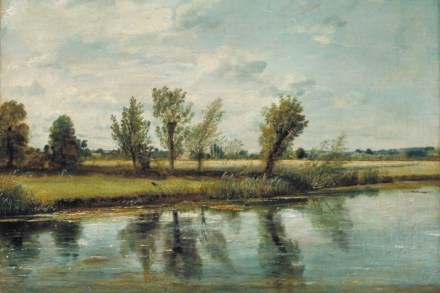
The V&A has an unparalleled collection of hundreds of works by John Constable (1776–1837), but hardly anyone seems to know about them. This is perhaps because they’re usually kept on an upper floor of the Henry Cole Wing, rather off the beaten track for most visitors. This new exhibition gives us the chance to examine the V&A’s treasures, but because it has been installed in the extensive suite of galleries usually reserved for big survey shows, such as Art Deco or Modernism, a great deal of other material is also required to fill the space. So, instead of an exhibition devoted to the genius of Constable, we have an intensely art-historical display intended to demonstrate how much he owed to the masters of the past.

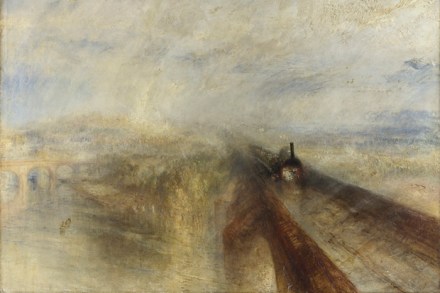
Tate Britain’s Turner show reveals an old master – though the Spectator didn’t think so at the time

Juvenilia is the work produced during an artist’s youth. It would seem logical to think, therefore, that an artist’s output during their old age would be classified as ‘senilia’. Yet no such word exists. But how else to classify the three blockbuster exhibitions this year that deal with Matisse, Turner and Rembrandt’s late work? These titans produced some of their finest art during old age. The exuberance of Matisse’s cut-outs are all the more astonishing given that they were produced not in the first bloom of life but rather in the dying embers of it. Rembrandt’s late works — on display at the National Gallery from October and discussed by Martin Gayford on p64 — will include some of his most soulful paintings. Late Turner at Tate Britain has a similar narrative.

‘Likes’, lacquered cherry pies and Anselm Kiefer: the weird world of post-internet art

In the mid-1990s the art world got excited about internet art (or ‘net.art’, as those involved styled it). This new way of making art would harness the world wide web, take the form of exciting online projects, bypass traditional galleries and be accessible to all with a dial-up connection. ‘Net.artists’ were self-styled radicals particularly fond of that most modernist of tropes, the manifesto, which they distributed via electronic mailing lists or electronic bulletin boards. These artists adopted funky, web-style names such as ‘Irational.org’ and ‘VNS Matrix’ and showed their work online at similarly funkily named websites like Rhizome, Suck and Echo. But there was, alas, a gap in the Matrix, to paraphrase Keanu Reeves’s finest film.

Why everyone loves Rembrandt

Talking of Rembrandt’s ‘The Jewish Bride’ to a friend, Vincent van Gogh went — characteristically — over the top. ‘I should be happy to give ten years of my life,’ he exclaimed, ‘if I could go on sitting here in front of this picture for a fortnight, with only a crust of dry bread for food.’ Without undergoing such rigours, visitors to Rembrandt: the Late Works at the National Gallery next month will be able to see the picture that drove Vincent to such a paroxysm of enthusiasm, along with many other masterpieces from the artist’s last years.

The man who brought Cubism to New York

The American Jewish artist Max Weber (1881–1961) was born in Belostok in Russia (now Bialystok in Poland), and although he visited this country twice (he came to London in 1906 and 1908), it was the experience of continental Europe — and particularly Paris — that was crucial for his development. The title of this exhibition is thus rather misleading: Weber never lived in England, and his ‘presence’ here is based upon a collection of his work made by his friend Alvin Langdon Coburn. Coburn (1882–1966), a boldly experimental photographer attached to the Vorticist group, was another American, but one who opted to settle in England in 1912.