Exhibitions

Scholarship and folly

It has often been related how, towards the end of his long life, a critical barb got under J.M.W. Turner’s skin. ‘Soapsuds and whitewash!’ Turner apparently snorted, repeatedly, to himself. However, until now no one has traced the perpetrator of this memorably tart comment. Now we know. It was the scandalous, super-rich patron and novelist William Beckford, who made it in 1831 while taking a visitor on a tour of his collection. They paused in front of a watercolour of Fonthill Abbey, Beckford’s erstwhile house — and folly — that Turner had painted some three decades earlier. The guest remarked that the painter did not paint like that these days. ‘Oh!’, exclaimed Beckford. ‘Gracious God! No!

Curiouser and curiouser | 9 July 2015

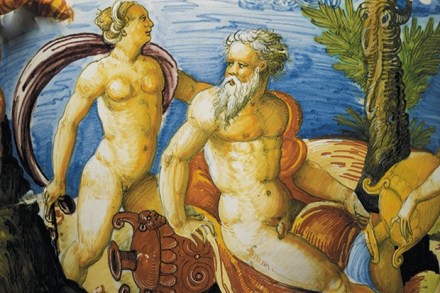
Art is not jewellery. Its value does not reside in the price of the materials from which it is made. After all, the cost of the pigment, oil and cloth that made up a Rembrandt was negligible. It’s what he did with them that counts. On the other hand, spectacular works of art can be made from gold and gems, as is clear from some — if not all — of the items displayed in the new installation of the Waddesdon Bequest at the British Museum. ‘As soon as the swallows made their appearance,’ Baron Ferdinand de Rothschild wrote in his memoir Bric-à-Brac, ‘my father’s curiosities were packed and stored away in a strong room.’ It was the young Ferdinand’s privilege to help pack these objects.

Thinking inside the box

Someone once asked Joseph Cornell who was his favourite abstract artist of his time. It was a perfectly reasonable question to put to a man who numbered Piet Mondrian, as well as other masters of modernism, among his acquaintance. But, characteristically, Cornell veered off at a tangent. ‘What’, he replied, ‘do you mean “my time”?’ In its way it’s a good response, as the exhibition at the Royal Academy, Joseph Cornell: Wanderlust, makes clear. The subtitle of the show refers to travel in mental space. In mundane reality, Cornell (1903– 72) seldom left New York City, and never ventured further afield than Maine. But in his imagination, he journeyed across the world and dwelt, mentally, in an era earlier than his own.

Shape-shifter

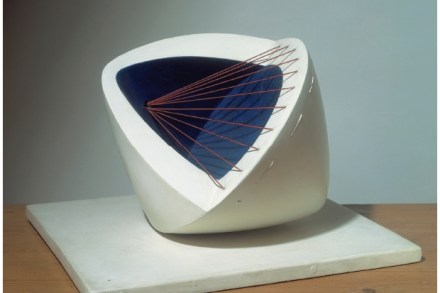
In the last two decades of her life, Barbara Hepworth was a big figure in the world of art. A 21-foot bronze of hers stands outside the UN headquarters in New York, emblematic of her friendship with secretary-general Dag Hammarskjöld — a Hepworth collector — and of her international fame. This was how a modern monument looked half a century ago: abstract but organic, romantic but starkly simplified. Since Hepworth’s death, however, her status has become less clear: was she a towering giant of modern sculpture or relatively minor, a slightly dreary relic of post-war Britain? Barbara Hepworth: Sculpture for a Modern World at Tate Britain does not quite supply the answer. But it does throw some revealing sidelights on her art and career.

Fairground attraction | 18 June 2015

Gianlorenzo Bernini stressed the difficulty of making a sculpture of a person out of a white material such as marble. Imagine, he said, that someone we knew well whitened his hair, his beard, his lips and his eyebrows, and, were it possible, his eyes. Would we recognise him? This is not a problem encountered by the 20th-century American artist Duane Hanson, whose work is on show at the Serpentine Sackler Gallery in Kensington Gardens. Hanson (1925–96) took every possible step to make his figures mimic reality in skin, hair, clothes, accessories and surroundings. In comparison, the resemblance of waxworks to their models is much less convincing. Hanson’s creations can engender a rare type of uncertainty. Is that person over there a human being or a piece of art?

The Craig-Martin touch

The Royal Academy Summer Exhibition has very little in common with the Venice Biennale. However they do share one characteristic. Each always contains so many diverse and potentially incompatible elements that orchestrating a smoothly blended result is dauntingly difficult. But, as with many almost impossible tasks, some manage it much better than others. Michael Craig-Martin, this year’s chief co-ordinator at the RA, has produced a distinctly better result than usual. The Summer Exhibition always tends to look — as David Hockney once put it — like a jumble sale. But the 2015 edition is a jumble sale with pizzazz and a chromatic zing. The transformation begins before you even get into the exhibition.

This is England

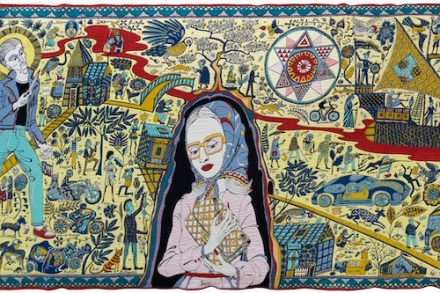
At the Turner Prize dinner of 2003, as the winner, Grayson Perry, took a photo call with his family wearing a girlish dress and huge bow in his hair, a German contemporary artist who was sitting at the same table leant over and hissed in my ear, ‘Only in England!’ He got it right in more than one way. As time goes on it becomes ever more apparent that — in his combination of grittiness, eloquence and wackiness — Perry is very much in the national grain. He even manages to look like a sort of Identikit British archetype, resembling, in different images he presents of himself, Margaret Thatcher, Alice in Wonderland and Richard III. No doubt, at some point in the future there will be a grand-scale overview of Perry’s work at the Tate or RA.

Tribes of one

The British painter Nina Hamnett recalled that Modigliani had a very large, very untidy studio. Dangling from the end of his bed was a web inhabited by an enormous spider. ‘He explained that he could not make the bed as he had grown very attached to the spider and was afraid of disturbing it.’ This anecdote — in its combination of Bohemian squalor, fin-de-siècle strangeness, whimsical humour and delicacy of feeling — gives a few clues to the art of the man who slept in that bed. More are provided by a nicely focused little exhibition at the Estorick Collection, Modigliani: A Unique Artistic Voice. It is made up of 30 drawings — many from the earlier part of the painter’s short career, plus one painting, a portrait from 1918.

He’s got rhythm

One evening before the first world war, Henri Gaudier-Brzeska, fired by drink, tried out such then-fashionable dances as the cakewalk and the tango, ‘his eyes burning — his hair wild’. What was funny about this spectacle, his companion Sophie Brzeska confided to her diary, was not so much the dances as the sight of the dancer himself, ‘the young bear like nothing on earth with his seven league boots jumping in the air like an extraordinary buffoon’. It is a description that evokes many works displayed in a delightful little exhibition, New Rhythms, at Kettle’s Yard, Cambridge. This marks the centenary of Gaudier-Brzeska’s death; he was killed in action on 5 June 1915, aged 23. But it is not exactly a memorial show.

Designer fatigue

Different concepts of luxury may be inferred from a comparison of the wedding feast of Charles Bovary and Emma Rouault with the habits of their contemporary the Duke of Wellington. At the Bovary wedding were served four sirloins, six chicken fricassées, stewed veal, three legs of mutton, four chitterlings (with sorrel), brandy, wine, foaming sweet cider, yellow custards, tarts and sweets with an architectural cake comprising angelica, oranges, nuts, jam and chocolate. The austere Duke’s ‘conception of duty’, David Piper wrote, ‘did not provoke popularity at all times’. His daily routine was tea with bread and butter in the morning, no lunch and an unvaryingly simple dinner of a joint with a pudding and iced water.

Sonia alone

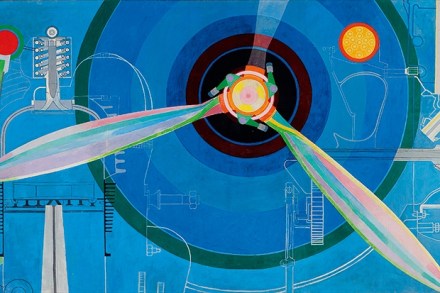
In 1978, shortly before she died, the artist Sonia Delaunay was asked in an interview whether she considered herself a feminist. ‘No! I despise the word!’ she replied. ‘I never thought of myself as a woman in any conscious way. I’m an artist.’ It is pretty obvious, though, that the Sonia Delaunay retrospective at Tate Modern (which has come from the Musée d’Art Moderne de la Ville de Paris) has been organised if not explicitly by feminists, then at least with feminism in mind. You can see the thinking behind it: let’s give the wives of the artists a break. And Mrs Delaunay, whose work has traditionally been discussed in the same breath as her artist husband Robert’s, must have seemed a suitable candidate for some revisionism.

Light fantastic

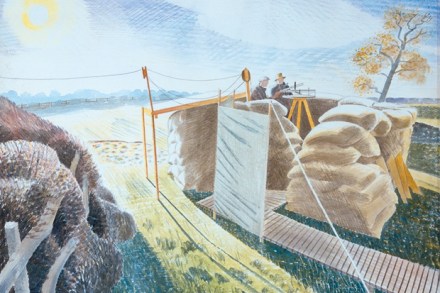
The most unusual picture in the exhibition of work by Eric Ravilious at Dulwich Picture Gallery, in terms of subject-matter at least, is entitled ‘Bomb Defusing Equipment’. In other ways — crisp linear precision, a designer’s eye for the melodious arrangement of shapes — it is typical of Ravilious. Characteristic, too, is the way he has given these implements associated with warfare and high explosives an almost jaunty air, shading into melancholy mysteriousness. That’s the Ravilious note, and I must admit I find it irresistible. Ravilious (1903–42) was one of the most beguiling of mid-20th-century British artists. Yet it is still not quite clear what position he has in art history: high or low, important or insignificant.

Wellington’s PR machine

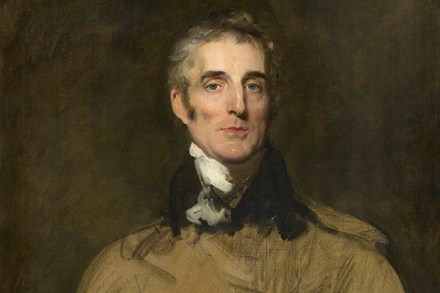
The history of portraiture is festooned with images of sitters overwhelmed by dress, setting and the accoutrements of worldly success. Vanity, complacency and, frequently, insecurity have led men and women to commission or sit for likenesses in which an extra swag of braid, another row of pearls, flounce of silk or plume topples the finished image from celebration to indictment. In such portraits, the artist hardly needs to essay psychological insights: luscious visual bombast betrays the chasm between appearance and truth.

Richard Diebenkorn at the Royal Academy reviewed: among the best visual evocations of LA there are

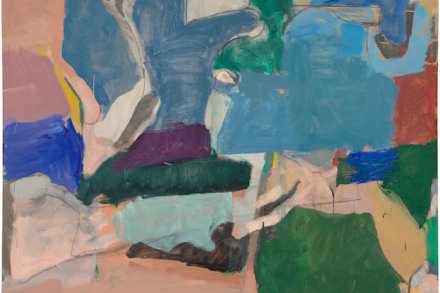
It is true that, like wine, certain artists don’t travel. Richard Diebenkorn, subject of the spring exhibition in the Royal Academy’s Sackler Wing, is a case in point: an American painter who is revered in his native land, but of whom few will have heard over here. Will the RA show change that, and — more crucially — does it deserve to? Up to a point. Diebenkorn (1922–93) was no Mark Rothko or Willem de Kooning. He was a second-generation abstract expressionist, almost two decades younger than those two, and a lower-voltage talent to boot. But he created some memorably beautiful pictures, most of the best of them situated in the elusive territory between pure abstraction and landscape painting.

Flying witches, mad old men, cannibals: what was going on in Goya’s head?

It is not impossible to create good art that makes a political point, just highly unusual. Goya’s ‘Third of May’ is the supreme example of how to pull it off. It is a great picture with a universal message — the terrible suffering of the innocent victims of war — and one echoed, with fresh horrors, in the news today. The figure in front of the firing squad, arms flung wide, in Goya’s picture is everyman. One of the reasons for its power, and for that of ‘Disasters of War’, his series of aquatint etchings, is that images of violence and evil sprang spontaneously from his imagination.

Inventing Impressionism at the National Gallery reviewed: a mixed bag of sometimes magnificent paintings

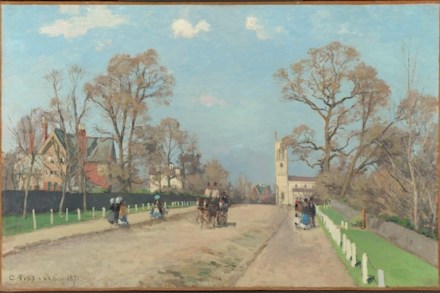
When it was suggested that a huge exhibition of Impressionist paintings should be held in London, Claude Monet had his doubts. Staging such an exhibition, he wrote to his dealer Paul Durand-Ruel, would be ‘unwise’ and only likely to baffle a London public that ‘knows very little about us’. That was in 1904. What, one wonders, would Monet make of Inventing Impressionism, which has just opened at the National Gallery 111 years later? It can hardly be said now that the British know little of the Impressionists. On the contrary, you could argue we’ve seen quite enough of them in recent decades. The challenge for a gallery planning to put on such an exhibition is how to make it different.

Don’t mock Elvis’s style – he was ahead of the curve

In the giftshop at the new Elvis exhibition at the Dome, you can buy your own version of his flared white jumpsuits. I can’t think of anyone who could wear one and not look ridiculous — particularly if they had a bit of a weight problem. But Elvis, who would have turned 80 this year, managed to pull it off. This selection of the best Elvisiana from Graceland is full of the sort of kitschy excess that would sit so awkwardly on anyone else: his outsized solitaire diamond ring, the gold phone by his bedside table, the Harley-Davidson golf carts he used to rocket through Graceland’s grounds.

Sculpture Victorious at Tate Britain reviewed: entertainingly barmy

In the centre of the new exhibition Sculpture Victorious at Tate Britain there is a huge white elephant. The beast is not, I should add, entirely colourless. On the contrary, it has a howdah richly decorated in gold and green, and numerous trappings, and tassels covering its pale grey hide. Its whiteness is entirely proverbial. After all, what can you do with a porcelain pachyderm, standing over seven feet tall? The Victorian period, a text on the wall proclaims, was ‘a golden age for British sculpture’. This is perfectly true, in the sense that a colossal amount of the stuff was turned out during Victoria’s reign.

Sargent, National Portrait Gallery, review: he was so good he should have been better

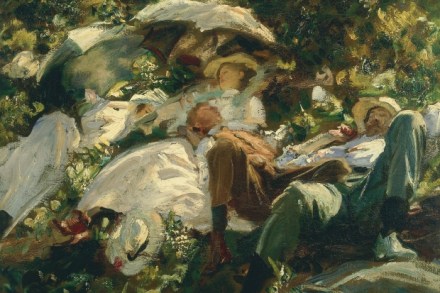
The artist Malcolm Morley once fantasised about a magazine that would be devoted to the practice of painting just as some publications are to — say — cricket. It would be filled with articles extolling feats of the brush, rather than the bat. ‘Well painted, sir!’ the contributors would exclaim at an especially brilliant display of visual agility. ‘Fine stroke!’ If such a periodical had existed in the late Victorian and Edwardian ages, no one would have been heaped with more praise than John Singer Sargent (1856–1925). Sargent: Portraits of Artists and Friends at the National Portrait Gallery is filled with mesmerising displays of his skills. There are so many, indeed, that to list them would be to describe just about every picture on view.

The future of the album lies in the gallery

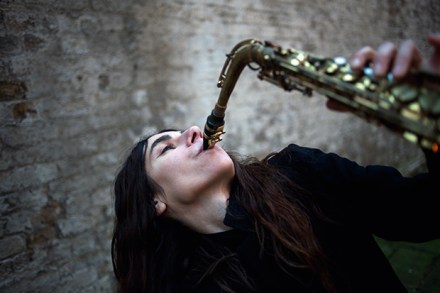
The album is not what it was. It still exists, in record collections, as part of the torrential streaming of everything, and in the sentimental memories of those who lament the loss of what once seemed a permanent fixture and the most exciting, unimpeachably authentic way of capturing and keeping music. Many musicians refuse to relinquish the idea — length, number of songs, conceptual framework, illusory two sides, solidity, sound — of the album. It remains worth hearing what a musician like PJ Harvey might have to say about the album, because it is where she has worked for 20 years, and so she has built up enough momentum to make her next one intriguing. She’s one of the last rock artists where this is truly the case.