Exhibitions

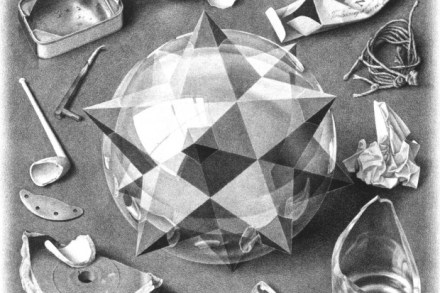
M.C. Escher: limited, repetitive, but he deserves a place in art history

‘Surely,’ mused the Dutch artist M.C. Escher, ‘it is a bit absurd to draw a few lines and then claim: “This is a house.”’ He made a good point. That is what almost all artists since the days of Lascaux have done: put down some splodges of paint or a line or two and proclaimed, ‘This is a bison’, ‘This is a man’, ‘This is Mona Lisa’. One of the aims of Escher’s work, which is currently displayed in an exhibition at Dulwich Picture Gallery, was to undermine such pretensions to represent reality. At first glance, his images often seem meticulously, even aridly factual.
Hanging offence

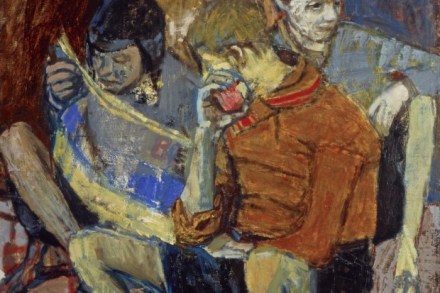
Modern Scottish Men, a new exhibition celebrating the achievements of male artists in the 20th century, opens next month in Edinburgh. Men only; no women. Bold! Only joking. That show would never happen today. How could it? Where would an exclusive, specifically male-only exhibition be tolerated these days? A women-only show, on the other hand, would be fair enough; we need to point out that the wee dears can paint too. And so we have Modern Scottish Women: Painters and Sculptors 1885–1965. Should we perhaps be feeling patronised, ladies? The recent death of Brian Sewell has again thrown up his old allegations regarding the inferiority of women artists.

Intelligent design | 29 October 2015

Peter Mandelson, in his moment of pomp, had his portrait taken by Lord Snowdon. He is sitting on a fine modern chair. Mandy would no doubt have been aware of the ancient historic associations, through bishoprics and universities, that chairs have with power. Since it is a chair much admired by architects, Mandy also looks quite cool, although these things are relative. The chair and its footstool are known as Eames Lounge 670 and Eames Ottoman 671, and they were first manufactured in 1956 by Herman Miller of Zeeland, Michigan. Curved plywood shells are veneered with Brazilian rosewood, upholstered with shallow black leather-studded cushions and supported, at a meaningful tilt (suggestive of relaxed authority), on a stellar metal support.

Unreliable evidence

I hadn’t really thought much about pixels before, despite spending a large portion of my day looking at them. After all, a pixel is just a tiny unit in a digital image, and we all tend to look at the bigger picture. But how about this: this humble unit has now become a key feature of drone warfare. Drone-fired missiles have reportedly been developed that can burrow through targeted buildings, and leave a hole that appears smaller than a pixel on publicly available satellite images. This means that drone strikes are often invisible to groups who try to monitor attacks, such as NGOs or the UN.

Repetitive but compelling: Giacometti at the National Portrait Gallery reviewed

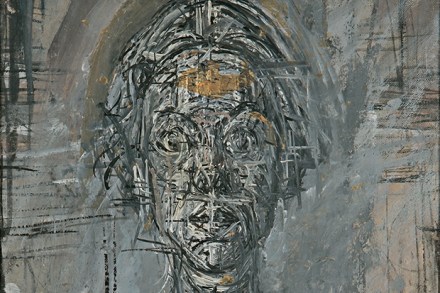
One day in 1938 Alberto Giacometti saw a marvellous sight on his bedroom ceiling. It was ‘a thread like a spider’s web, but made of dust’, an object that was both ‘very, very fine’ and in constant motion, like a snake except that ‘no animal’, he thought, had ever made such movements: ‘light and sweeping and always different’. This was, you might say, a revelation of the beauty that lay in extreme thinness and fragility. In Giacometti: Pure Presence at the National Portrait Gallery you see that process of attenuation occurring, in different ways, again and again in his art.

With this Tate Britain exhibition, Frank Auerbach joins the masters

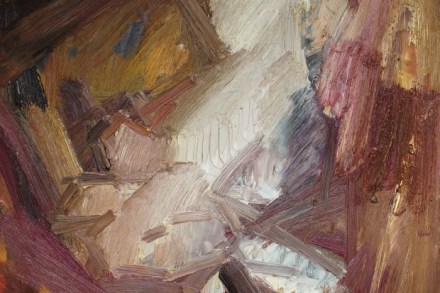
No sooner had I stepped into the private view of Frank Auerbach’s exhibition at Tate Britain than I bumped into the painter himself. Auerbach was standing, surrounded by his pictures of 60 years ago, but he immediately started talking instead about Michelangelo. Of course, it is generally safe to assume that when artists talk about other artists they are also reflecting, at second hand, on their own work. And so it was in this case. Michelangelo, Auerbach pointed out, had stingingly described someone else’s architectural design as looking like ‘a cage for crickets’. So, he argued, Michelangelo was clearly striving to make his own work the opposite of that: to give it grandeur.

Why did Goya’s sitters put up with his brutal honesty?

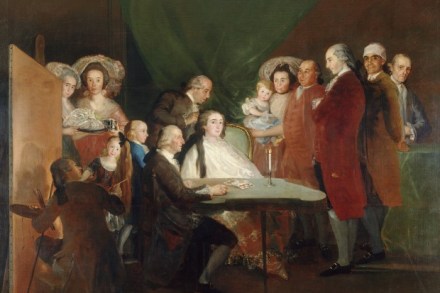
Sometimes, contrary to a widespread suspicion, critics do get it right. On 17 August, 1798 an anonymous contributor to the Diario de Madrid, reviewing an exhibition at the Royal Spanish Academy, noted that Goya’s portrait of Don Andrés del Peral was so good — in its draughtsmanship, its freedom of brushwork, its light and shade — that all on its own it was enough to bring credit to the epoch and nation in which it was created. He (or she) was absolutely correct. [caption id="attachment_9657482" align="alignnone" width="520"] Goya's portrait of Don Andrés del Peral[/caption] The same could be said of many of the exhibits in Goya: The Portraits at the National Gallery.

Now you see it, now you don’t

The artist, according to Walter Sickert, ‘is he who can take a piece of flint and wring out of it drops of attar of roses’. In other words, whatever else it is — and all attempts at definition tend to founder — art consists in making something rare and memorable out of not very much. Those words of Sickert’s popped into my mind as I looked at an exhibition of works by Avigdor Arikha at Marlborough Fine Art. Among these were pictures of a piece of toast, two pairs of socks, a casually folded orange tie, and part of a bathroom including a roll of toilet paper. Arikha (1929–2010) was a French-Israeli artist based for much of his life in Paris. For 15 years he was an abstract painter, then in 1965 he abruptly began to depict the world around him.

Stars in their eyes | 24 September 2015

‘The dominant narrative of space,’ I was told, in that strange language curators employ, ‘is America.’ Quite so. Kennedy stared at the moon and saw a promotional opportunity. Nasa’s logo was designed by the flamboyant Raymond Loewy. A PR man wrote Neil Armstrong’s unforgettable lines. Every event at Cape Canaveral (later the Kennedy Space Center) was televised, while, in the USSR, Star City was built in furtive secrecy just outside Moscow. Tom Wolfe glorified the US space programme in The Right Stuff, his boisterous 1979 masterpiece of reportage where the cowboy mentality of the fly-boys co-mingled with the technical marvels of California aerospace, myth-making the while.

Indiscreet astronaut

Among my more bohemian friends in 1980s London, Brion Gysin was a name spoken with a certain awe. He was the man who William Burroughs, the author of Junky and Naked Lunch, said was ‘the only man I ever respected’. Gysin was a modernist novelist, inventor and artist. He and his mathematician friend Ian Sommerville invented something called the Dream Machine, which was a spinning cylinder said to induce drug-free hallucinations. He came up with the idea of literary cut-ups, arguing that writing was 50 years behind art in its innovations and this was the writing equivalent of collage. The idea, of introducing random elements by literally cutting up and reassembling either new or found texts, was, for better or worse, taken up with gusto by the likes of Burroughs and David Bowie.

Melting pot

‘Celtic’ is a word heavily charged with meanings. It refers, among other phenomena, to a football club, a group of languages, a temperament, a style of art and a fringe, once the stronghold of the Liberal Democrats. But who are — and were — the Celts? The curators of the new British Museum exhibition are not at all sure, and that’s one of the reasons why the result is so enthralling. There is a familiar answer to this question: the Celts were an ancient people who moved into Europe from the east in prehistoric times and occupied most areas north and east of the Alps, together with northern Italy and much of the Balkans. They spoke a kindred group of languages and created a style of art that continued to evolve from the 5th century BC into the Middle Ages.

Bursting the bubble

The conventional history of modern art was written on the busy Paris-New York axis, as if nowhere else existed. For a while, nowhere else did. People wondered, for example, whyever the mercurial Whistler volunteered for the unventilated backwaters of Britain. But London was eventually allowed into the international conversation following successful pop eruptions that began in the Fifties. Germany followed. Now, perhaps as a response to a wired and borderless planet, where images can be instantaneously transmitted and sacred cows may be frivolously slaughtered, there is a revisionist and more inclusive policy for entrance to art’s pantheon. The braided cord has been lifted. Everyone can join the club.

Lines of beauty | 10 September 2015

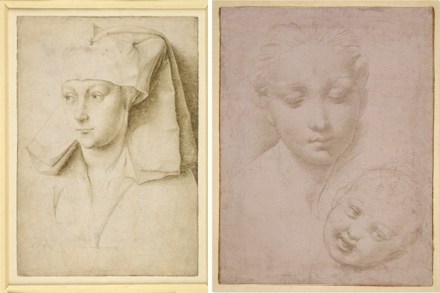
Marshall McLuhan got it at least half right. The medium may not always be the entire message, but it certainly dictates the kind of message that can be transmitted. This is one lesson of Drawing in Silver and Gold: Leonardo to Jasper Johns, an exhibition at the British Museum that is packed with subtle masterpieces, and as a bonus contains — for those who like such things — two of art’s great studies of dogs. I might as well start with those: one by Albrecht Dürer from around 1520, ‘Dog resting’, and the other by the later Dutch artist Hendrick Goltzius of his own pet, curled up and sleeping in about 1597. Both of these display the virtues of silverpoint.

Touchy-feely – not

‘The eye is fatigued, perverted, shallow, its culture is degenerate, degraded and obsolete.’ Welcome to the Palpable Art Manifesto of Romanian sculptor Paul Neagu. Art must be accessible to all the senses, he argued, for ten fingers will explain more than two eyes and the tongue might tell yet more again. His Palpable Sculpture is the focus of an exhibition at the Henry Moore Institute that itself ‘ascends to the condition of a work of art’, according to the Scottish artist and gallerist Richard Demarco. His opinion carries weight, for it was he who brought Neagu out of Romania in 1969 to exhibit and teach in Edinburgh. A succession of little galleries lead the viewer through Neagu’s playful mind.

The only art is Essex

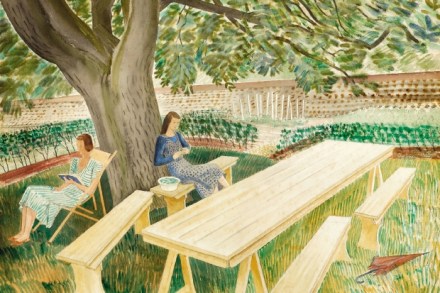
When I went to visit Edward Bawden he vigorously denied that there were any modern painters in Essex. That may not have been true then — this was in the 1980s — or even now. What is indisputable, however, is that there have been plenty of artists in the county. They are the subject of two small but delightfully jam-packed exhibitions at the Fry Art Gallery, Saffron Walden. Bawden (1903–1989) is at the heart of both of them, even if the second point he made to me — equally emphatically — was that he called himself a designer rather than an artist (‘out of self-defence, mainly’). That distinction, and the quirky humour, are both relevant to the question of Essex art, especially the variety that is the focus of attention at the Fry.

French connection | 20 August 2015

Walter Sickert was fluid in both his art and his personality: changeable in style and technique, mutable in appearance — now dressing as a French fisherman, now as a dandy, next shaving his head — and even in name (for a while he styled himself Richard, not Walter, Sickert). All of which makes his long artistic association with the seaside resort of Dieppe apt in more ways than one. This is the theme of an excellent exhibition at Pallant House Gallery, Chichester. A century ago Dieppe was a very Sickertian place. In ancestry and artistic attitudes, Sickert was an exemplary cosmopolitan.

Seeking closure | 13 August 2015

A while ago, David Hockney mused on a proposal to tax the works of art stored in artists’ studios. ‘You’d only have to say they weren’t finished, and you are the only one who could say if they were,’ he suggested. ‘There’d be nothing they could do.’ This is the state of affairs examined in Unfinished, a thought-provoking little exhibition at the Courtauld Gallery. Once upon a time, it was as clear whether a painter had completed a picture as it was whether the gardener had thoroughly mowed the lawn. Indisputably, Perino del Vaga downed tools for some reason halfway through his ‘Holy Family with Saint John the Baptist’ (1528–37). That’s obvious.

Life after death

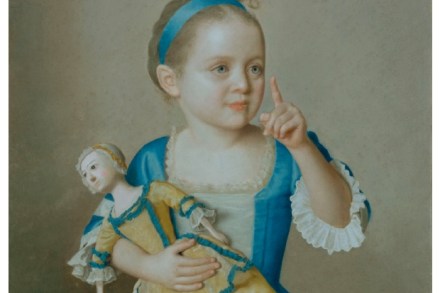
This is not the biggest exhibition at Edinburgh and it will not be the best attended but it may be the most daring. While the main gallery at the Royal Scottish Academy, commandeered as usual for Festival season by the National Galleries of Scotland, hosts a glittering exhibition of David Bailey photographs, the lower galleries offer three small rooms of Jean-Etienne Liotard. Who? You may well ask, because for anyone not schooled at the Courtauld, Liotard is likely to be as obscure as Bailey is recognisable. Drawing the two together in the same building is less of a leap than it might appear, however, for Liotard was also an eminent portraitist of his time, and, like Bailey, was himself a celebrity figure.

Watery depths

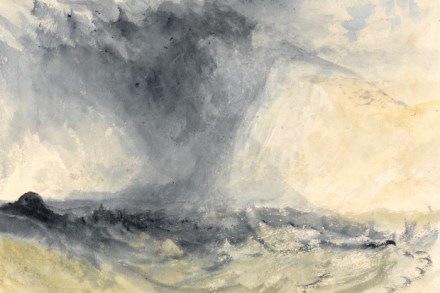
I learnt to splash about in watercolour at my grandmother’s knee. Or rather, sitting beside her crouched over a pad of thickly ‘toothed’ paper and a Winsor & Newton paintbox on a wind-swept East Anglian seashore. Now, looking back, I see that what she was doing belonged to a tradition. Her predecessors, idols and reference points are to be seen in an admirable small exhibition at the Fitzwilliam Museum, Cambridge, Watercolour — Elements of nature. This consists of works from the museum’s collection, but is much more full of delightful surprises — even for those who know the Fitzwilliam well — than that description suggests.

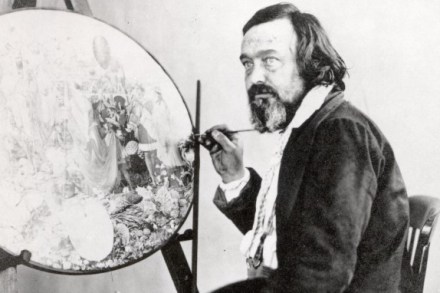
Portrait of the artist as a madman

Charles Dickens’s description of Cobham Park, Kent, in The Pickwick Papers makes it seem a perfect English landscape. Among its ‘long vistas of stately oaks and elms’, he wrote, ‘occasionally a startled hare’ ran with ‘the speed of the shadows thrown by the light clouds’. It was there on the morning of 29 August 1843 that a butcher from Rochester got a nasty surprise. He discovered the corpse of an apothecary named Robert Dadd; he had been battered and stabbed to death by his son Richard. There is no doubt that Richard Dadd was far from sane. On the other hand, his loss of mental balance — though very bad in its consequences for his father — was the making of Dadd as an artist.