Diary

How Damien Hirst ruined Devon

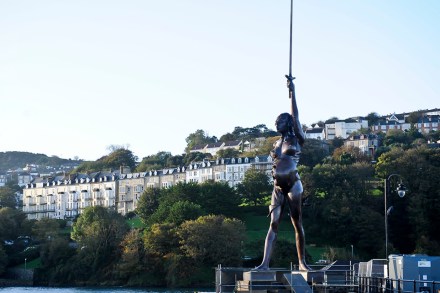
There are few better locations to resist la rentrée than the wilds of Exmoor. The late August heather and gorse. The hidden coves. The bracken and this year’s superb crop of blackberries. Then the rain. So much rain (though of course the reliably incompetent South West Water still has a hosepipe ban in place). The only blot on the landscape remains Damien Hirst’s ill-conceived 65ft statue of ‘Verity’ – a flayed pregnant woman, with her innards on show, standing on a pile of books and holding a sword – which dominates Ilfracombe’s harbour. It exemplifies the worst of public-private art, lacking any meaningful connection to the history or culture of north Devon.

Don’t cancel Queen

Another week, another whitewash. The latest chunk of culture to be painted out of existence is ‘Fat Bottomed Girls’, Queen’s 1978 hit. Don’t misunderstand me. I’ve never liked the song. I think it’s crude, patronising and misogynistic. It was pretty dated even on the day Queen recorded it. But that’s my problem. Millions loved it. That’s why it was track four on the band’s 1981 Greatest Hits album. But as Universal Records re-release Queen’s classic collection, FBG is track nothing. Track gone. Track ghosted. We’ve got to stop doing this neopuritanical cultural censorship, whether it be with songs, books (Enid Blyton’s PC-filtered Famous Five or P.G. Wodehouse’s Jeeves), fairy stories (Snow White and the Seven Dwarfs), or films (Gone with the Wind).

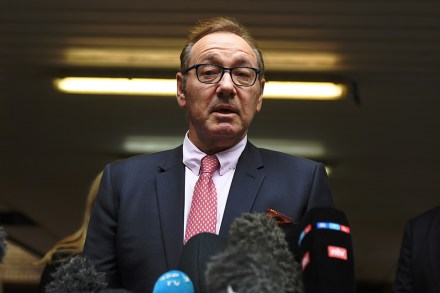
London theatre needs Kevin Spacey

Lee Anderson, deputy chairman of the Conservative party, popped a few monocles by saying asylum seekers reluctant to stay on a Home Office barge could ‘fuck off back to France’. Wash your very mouth out! Where did Anderson think he was performing? At the Royal Court theatre? The Guardian, which long teased Mary Whitehouse for being a prude, clutched its pearls at the ‘nasty’ remark. Westminster journalists, few of whom can complete a sentence without an F-word, wrote about Anderson’s ‘shock’ remark. Radio 4’s Nick Robinson (so one gathers, not having been a Radio 4 listener for seven years) was so aghast that he had to be given camomile tea and a cold compress to the brow.

Why on earth did The Spectator support Brexit?

The temperature has hit 40°C in Crete, where I am writing this, and although there have been no fires, nothing is quite how it ought to be. I can’t work out whether this is a great opportunity to get a tan or, effectively, the end of the world. My 60-year-old taxi driver tells me that unfeasibly hot summers were a regular occurrence when he was young and that there’s nothing to worry about. But, he adds, he’ll be dead soon anyway so why should he care? Right or wrong, this is the paradox at the heart of the climate change debate. Older people, who could be held responsible for the destruction of the planet, don’t need to worry. And young people, who have so much more to lose, don’t really have a say. We invented plastic. They live with it.

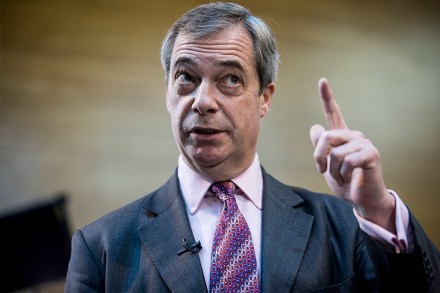
My run-in with Nigel Farage

To think I once thought cricket dull. For more than 40 days and 40 nights, I have been gripped by the Ashes. I still couldn’t tell you where short third man ends and deep backward point begins, but I have fallen in love with the rollercoaster ride that Ben Stokes and his team have taken us on. So much so that I covertly watched every ball of the final hour of the final day while on a family outing to Come and Sing: Abba. I could stand the tension no longer when the ninth wicket fell so made my excuses and left to watch the final act outside with a beer in hand. After Stuart Broad secured a victory he and I will never forget, I returned to my seat in the grand concert hall at Snape Maltings and sang ‘The Winner Takes It All’ with added gusto.

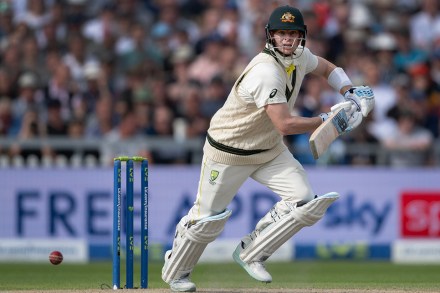
I sledged Steve Smith for England

In this summer of sporting dramas, every patriotic sports fan likes to think he’s done his bit to help. I went up to Manchester with my brother last Thursday and in the evening we found ourselves in an Indian restaurant with the England wicket-keeper Jonny Bairstow at the next table. I feel sure it was Edward’s and my manly cries of ‘Good luck, Jonny’ as he left that helped him bat so brilliantly for his 99 not out. Though I suppose it could have been the vindaloo that fired him up. My major influence on the Ashes series came a few days earlier, when I bumped into the Australian all-time-great batsman and scourge of England, Steve Smith. This was on the balcony of the All England Club at Wimbledon, where he was having a quiet chat with some friends.

In defence of ‘Mickey Mouse’ degrees

When someone asks ‘How are you?’ you have to assume your interlocutor is only being polite.Anyone who returns a ball-by-ball commentary about their aches and pains, work-life balance and reduced chances of summer fun thanks to the heat storm should immediately be sent to Coventry for the rest of time. That said, I am just back from wintry New Zealand where I have been in a Channel 4 series called Celebrity SAS: Who Dares Wins. Despite my pledge that I’d never do any more shows with the word ‘celebrity’ in the title, this one brought out the Bond Girl manquée in me and I couldn’t resist. I can’t say any more about it as it’s not out till early next year (the Matt Hancock one is about to hit our screens) but if asked I say: ‘Fine, apart from fractured rib and pulled glute.

George Washington’s lesson for Ukraine

The Australian morning TV host called me darlin’. We’d never met, but she opened with: ‘Good to have you on, darlin’. Be with you in a moment.’ Then the picture went black. When the live show returned to my Zoom screen, I was just another viewer, watching the three hosts seated on a couch half a world away chatting about the charity walk one of them had done over the weekend and the toll this had taken on his feet, which led – in a surprise twist – to a brief discussion of the strange internet hunger for images of feet. Somehow, the fetish conversation segued into a video montage with images of Hillary Clinton and Donald Trump and me from FBI days.

In defence of Australia

What a week it has been for cricket. It began with that scalding ICEC report on the ‘racist, sexist and elitist’ state of the game in England. This report was commissioned by Ian Watmore, briefly the chairman of the England and Wales Cricket Board, as a kneejerk reaction to Azeem Rafiq’s accusation of institutional racism. The report was presided over by Cindy Butts, who has been an activist for Black Lives Matter and perhaps has an axe to grind. As it stands, the report is devastating for English cricket, but much more needs to be known about the way in which it was put together and about the credentials of those who did so. I have spoken since its publication to a number of people who have played and been involved with the game for many years.

Why I won’t dish any dirt on Vogue

I’ve spent every evening of the past week in the midsummer gloaming, making the most of the longest days of the year. London has been en fête. The National Portrait Gallery’s long-awaited reopening was occasion for an enormous party, but I found it to be a weirdly disorientating experience. As an ex-trustee, for eight years I thought I knew the place pretty well. I could find my favourite portraits on autopilot, using a mental map of the different galleries. I had even worked with the team there on British Vogue’s 100th anniversary exhibition in 2016. But last week it was all change, as the whole place has been reconfigured by architect Jamie Fobert and director Nick Cullinan. They have created more natural light, new spaces and a different perspective on the collection.

How to plan the ultimate English road trip

Huge excitement last week, as archaeologists announced the discovery in Southwark of the best preserved Roman mausoleum ever found in Britain. I heard the news on the radio while driving with a friend, and both of us – living as we do south of the river – cheered. Shortly afterwards, I was invited on to the World Service to talk about Roman London. No sooner had the presenter introduced me than he was demanding to know about the mausoleum. I felt a lurch of horror. I realised I knew nothing, absolutely nothing about the mausoleum beyond what I had heard on the radio. ‘What did it look like?’ the presenter pressed. What to say? That it was big? Small? Mausoleum-y? In the event, I decided that honesty was the best policy. I put my hands up. I confessed my ignorance.

Boris was a superb prime minister

I’ll always remember where I was when my brother resigned again. I was sitting on the dock of a bay in the Adriatic, one G&T down (plus a couple of glasses of the cooling local white), halfway through the ‘signature menu’ of the Michelin-starred Alfred Keller restaurant, when that dopamine urge made me flip over my phone. Trump had been indicted on dozens of counts and Putin had committed ecocide in Ukraine and the honours list had been published and Nadine Dorries had quit after dark forces had prevented her passage to the Lords, while Rishi had backtracked and gong-blocked my father’s K… basically it was your average Friday. My phone had exploded. Carrie had WhatsApped me the statement. Breaking alerts.

My hope for Ukraine

Kyiv When Winston Churchill visited bomb sites during the Blitz, the most common sentiment he heard was, ‘We can take it!’, followed closely by ‘Give it ’em back!’. That emotion is very evident in Kyiv, where Ukrainians are understandably nonplussed at opposition in some British newspapers like the Times to their drone attacks on Moscow. They point out that they are attacking military targets there, unlike Russia’s terror attacks on civilians. I was in Kyiv as part of General David Petraeus’s delegation to a conference organised by the Cipher Brief, a national security-focused media organisation.

My return to dating

The Coronation Street writers have produced 26 scenes to ease me out of the show for long enough for me to nip down to London to do a play for four weeks in the West End. They are long scenes – one is 13 pages – with my screwed-up, long-lost daughter, played by Claire Sweeney. I really need to get a grip on my Corrie lines, but my attention is torn between them and the play script. It’s been eight months since I last performed Rose, a one-woman show about a feisty old lady who goes from a shtetl in Ukraine to owning a hotel in Miami Beach, and this week it opens at the Ambassadors Theatre. I start on page one of the 47-page play, only to get distracted by a new Corrie script. Consequently, from about page 22, I know very little.

My lunch with Salman Rushdie

I have just come back from spending some days with David Hockney at his house in Normandy. We are making a film about him – the longest film about a single subject I have ever attempted. Like Monet’s, Hockney’s environment is his subject. The great sequence of ‘The Four Seasons’ is from his grounds. He finds all the different blossoms he needs there, and there is a river and a pond. His friend has turned an old barn into a magnificent studio. David is in his mid-eighties but is as sharp as he was the first time I interviewed him for The South Bank Show in 1978.

Turkey is at an existential crossroads

The wonderful Barbara Kingsolver wrote that hope is something you should not admire from a distance, but rather live inside of, ‘under its roof’. Last week I lived under the roof of hope as the campaigns for the first round of the Turkish presidential elections drew to a close. This is an existential crossroads for Turkey, my motherland. The AKP under Recep Tayyip Erdogan have been in power for two decades. Although they started off on their journey with promises of liberal reforms, a democratic constitution, and plenty of rhetoric about joining the EU, they have become increasingly nationalist, Islamist, patriarchal and authoritarian with each passing year.

Sorry Harry, I’m the real media intrusion victim

What an emotional wringer the royal family has put us through in the past two years, from the sadness of Prince Philip’s death to the joyful Platinum Jubilee, then Queen Elizabeth II’s own extraordinarily moving funeral, and now the coronation of her son. I’ve felt so privileged to have been at Buckingham Palace for the last three events, anchoring Fox News coverage in America. After we came off air on Saturday, I mused with my two US co-presenters about what may be the next major royal occasion: a wedding, a funeral, a silver jubilee (Charles would have to live as long as his grandmother for that to happen)? Or God forbid, will the British monarchy itself be terminally contaminated by the increasingly pungent whiff of republicanism sweeping the Commonwealth?

The comedy of the Queen’s coronation

Once, years ago, making small talk with Elizabeth II, I asked her if it was true that many peers attending her coronation in 1953 had taken sandwiches into Westminster Abbey hidden inside their coronets. ‘Oh, yes,’ she said. ‘They were in the abbey for something like six hours, you know. The Archbishop of Canterbury even had a flask of brandy tucked inside his cassock.’ Apparently, His Grace offered Her Majesty a discreet nip, but she declined. When I pressed the Queen for any amusing recollections of the great day, she did recall the moment, after the crowning, when England’s premier baron, William Stourton (22nd Baron Stourton, 26th Baron Segrave and 25th Baron Mowbray), came forward to pay homage.

Don’t cancel Diane Abbott

Browsing my local Oxfam, my eye was drawn to a faded hardcover with the title The Merry Wives of Westminster. As some readers may know, my Twitter handle is @WestminsterWAG, so I bought it for the princely sum of £2.99. It wasn’t until I got home and started reading it that I realised who the author was: Marie Belloc, sister of Hilaire, a successful novelist in her own right. Married to the Times journalist Frederick Lowndes, she died in 1947; this little book was published in 1946. She writes with clarity and confidence on the SW1 of her day, but what’s fascinating are the parallels with modern life: the money worries, the snobberies and snubbings, the late-night working practices of Fleet Street’s finest, the professional rivalries.

The truth can’t be racist

You can’t please all of the people any of the time. But a core part of my job is ensuring that I don’t consistently displease a majority of them. Last week a radio show had a phone-in asking listeners to debate whether I’m a racist. I thought about calling in as Margaret from Fareham, to suggest the Home Secretary take courage from another Margaret’s words: ‘I always cheer up immensely if an attack is particularly wounding because I think, well, if they attack one personally, it means they have not a single political argument left.’ The pursuit of truth is a good lodestar for the right policies. If we are to address the injustice of the grooming gangs scandal we must be willing to acknowledge the role that ethnicity played in covering it up.