Diary

Voters still don’t know what Keir Starmer stands for

Keir Starmer is frustrated. He wants to talk about the future but interviewers like me will insist on asking him about the past. ‘I can’t believe I’m still talking about my parents when I’m over 60,’ the Labour leader has been heard to complain to his advisers. In my BBC Panorama interview with him, I asked him about his mother’s words on her death bed: ‘You won’t let your dad go private, will you?’ I felt that plea – which he revealed to me in a previous interview – told a great deal about Starmer’s ideological roots. So too does his passionate belief in comprehensive schools. Unlike plenty of senior Labour figures – Diane Abbott, to name but one – he wouldn’t let his kids go to a selective school, let alone go private.

How the Tories lost their way

Do you pack up the flat or not? That’s the question that everyone who lives in Downing Street faces as an election approaches. In 1997 my job was to brief John Major each morning on the newspapers. We’d pick up the first editions from Charing Cross at midnight and young researchers would beaver away in the early hours working out how to respond. At 6 a.m. I’d then go to the flat above No. 10 and brief the bleary-eyed premier. I remember the chintzy sofas, the family photos and the awkward moments: ‘Prime Minister, your sister has told the Sun newspaper you can’t win.’ The day before polling, I crept into the flat and was confronted by stacks of boxes. The Majors had packed up. The Blairs didn’t with their elections; nor did the Camerons. I wonder what the Sunaks will do?

Who is allowed to play Richard III?

On Tuesday night I was body double/understudy for the brave, brainy, beautiful Rachel Riley, at a packed ‘support Israel’ evening. The keynote speaker was the brave, brainy, beautiful lawyer Natasha Hausdorff. I was slightly out of my depth but I hope I provided some light relief. Natasha was dazzling in defence of beleaguered democracy, but the facts are sombre and the audience went home a little more concerned about our future in the diaspora. Anti-Semitism is known to be a light sleeper. I fear it may become insomniac. I’ve been arguing vehemently with my brother Geoff about everything and nothing for 75 years. Inevitably, these days, our arguments are about Israel.

Why won’t Rishi honour our £1,000 bet?

When I interviewed Rishi Sunak in February, I told him I thought his Rwanda plan for ‘stopping the boats’ was an expensive, unworkable dud and offered him a £1,000 bet to be paid to a refugee charity that he wouldn’t get any asylum-seeker planes taking off before the next general election. To my surprise, the Prime Minister clutched my outstretched hand and accepted the wager, sparking considerable revulsion. As the HBO comedian John Oliver put it: ‘Set aside the grossness on display here, imagine what a monster you have to be to put me in a position of genuinely wanting Piers Morgan to win something?’ Now Sunak has admitted no planes will leave for Rwanda before 4 July. Therefore, I told him on X that I’d like the £1,000 to go to the British Red Cross. But No.

Who has the worst voice in parliament?

For the first time in more than two decades we are dog-less, and the house feels horribly empty. Our Patterdale terrier, Bonnie, led a long, vigorous life but her balance had gone and her breathing was heavy, so we called the vet. Patterdales are little imps and Bonnie was ‘known to the police’. I never discussed politics with her but she liked Lib Dems; that is, she liked biting them. A public footpath bisects our garden. Most ramblers escaped intact but Bonnie had a habit of nipping tall, grey-ponytailed men with walking poles. She nipped the vicar, too, tearing a cartoon-style square out of the seat of his chinos. The language! Despite that, we remain hopeful Bonnie is in doggy heaven. ‘St Peter won’t know what’s hit him,’ said my wife.

The day Keir Starmer cried on me about his childhood

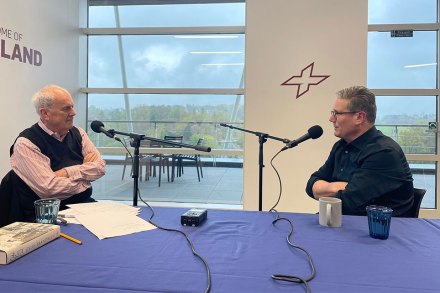
I have had a good idea. It may even be an important idea. See what you think. The other day I interviewed Keir Starmer for my weekly podcast, Rosebud. It’s so called because of the Orson Welles film Citizen Kane. Rosebud, you will recall, was the trade name of the sledge on which Kane, as a boy, was playing the day he was taken away from his home and his mother. My podcast is about the early memories of people in the public eye. I wanted to talk to Sir Keir because he aspires to be prime minister and I didn’t know much about him. We met at St George’s Park, the FA’s national football centre, near Burton upon Trent. He had had a full morning, chairing a shadow cabinet meeting, giving soundbites about football and avoiding giving soundbites about Angela Rayner.

My Britney Spears Theory of Action

Every week I check the weather in Longyearbyen, the main settlement in Svalbard. It’s about as close as you can get to a gulag with a human face – a heap of wooden houses where around 2,000 people live. It has a couple of stores and restaurants, and even a very small university. Outside the two streets, there’s much open space in which to walk. You don’t have to go far before being greeted with warning signs: ‘Don’t walk beyond this line without a gun! Danger of polar bears!’ At the door to all the cafés there is another sign: ‘Please leave your guns at the entrance!’ How can you not love a settlement like this? I can imagine living here. My life would be simultaneously a holiday and hard work – as I always imagined communism.

Tennis is sexy again

For 50 years, I’ve avoided wearing anything resembling formal tennis kit but in a rather lame way, I’ve been seduced by the current tenniscore fashion movement. Although tennis is my only sport, I’ve never owned whites, but a rather fabulous white – actually ecru – tennis ‘skort’ has arrived in the post. I only just prevented myself from adding a V-neck white sweater with navy trim to the order. Now I’ve just got to get on the court for the first time this year and stop with the shopping. Sadly, there is absolutely no resemblance at all between how I look in this hybrid of shorts and skirt to the gorgeous Zendaya, female star of the new Luca Guadagnino film Challengers. And it’s not only Zendaya in her little tennis dresses who hits the spot.

Wayne Rooney, the war buff

I blame Thierry Henry and I never blame Thierry for anything. He’s funny, charming and was a majestic footballer. But it was his outrageous handball assist for a France goal against the Republic of Ireland in 2009 that ushered in VAR – Video Assistant Referee – technology to rescue on-field refs from ‘clear and obvious’ errors. VAR was meant to end debates over refereeing decisions. Yet this form of VAR, usually a man in a ref’s outfit sitting behind a bank of screens in an industrial unit near Heathrow, has caused carnage in the Premier League. Some decisions take five minutes while fans chant obscenities. Football’s many Luddites blame the technology but it’s really human incompetence. We need to improve the operatives, not scrap the machinery.

I always judge a hotel by its club sandwich

As a child I was fascinated by the exotic names of certain cities: Havana, Rio de Janeiro and Los Angeles sounded so glamorous to me, and I was determined to visit them (which I eventually did). But never in my childhood musings did the country of Czechoslovakia join this roll-call of dream destinations. However, since a few friends returned from filming in the renamed Czech Republic and extolled the virtues of Prague, it started to interest me. So, I was delighted when producer Mark Rozzano offered me the role of Francesca Carlyle in his murder mystery Murder Between Friends. ‘Brad and George have made movies there,’ he said, ‘and the technical crews are extremely experienced.’ He was so right.

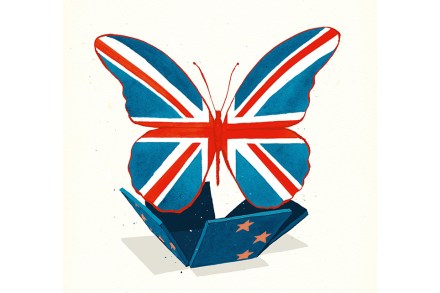
In defence of the EU

Eastern Europe is the graveyard of empires. Rome failed on the Danube, Napoleon on the Dnieper. The epic struggle between the empires of Austria, Russia and Turkey in the first world war ended with the destruction of all three and the fragmentation of eastern Europe, giving rise to the word ‘Balkanisation’. Driving through the Balkans today, I am continually reminded that history has no full stops. Every empire leaves its ghosts to haunt its successors. Vienna, like London, is an imperial city without an empire. The ethnic antagonisms of the Balkans, which provoked the first world war, survived to divide Yugoslavia in the second and then destroy it in the 1990s. The region still wears the robes of the past.

How on earth does Rishi Sunak keep going?

It’s my birthday this week and the end of my seventh decade (mathematicians will note that this does not make me 79). Looking at my long and generally happy life, I do wonder quite how we arrived where we are with this all-pervading sense of gloom and despondency. Gaza, Ukraine, Putin, Trump, Islamic State, Brexit… whichever way you look, there’s something you don’t want to see. The doomsday clock now stands at 90 seconds to midnight, the closest we’ve ever been to complete annihilation. Happy birthday to me. It’s not all bad though. Last week my son came home with a borrowed Apple Vision Pro, the wrap-around headset which retails at around £3,000.

Why the fuss over The Spectator’s sale?

This diary is late. Two months late. The columnists who missed my Evening Standard deadlines often had elaborate excuses. Mine is that I’ve been involved in working out who is going to own this magazine. We’ve seen some oddities in this particular drama. Those vehemently opposed to government interference in a free press suddenly calling for government laws to regulate press ownership. Columns from advocates of free trade and open investment in every industry except, it turns out, their own. I don’t doubt some are motivated solely by high principles; but it’s worth asking the question of others: do their high principles happen to accord with their view of who in practice they’d like to see own The Spectator and the Telegraph?

The BBC has an aura of entitlement

To W12 to be in W1A. The spoof TV series on internal BBC politics (one of that vanishingly rare UK television species – a comedy that’s actually funny) filmed a special episode for Red Nose Day. It poked fun at Lenny Henry’s final appearance as Comic Relief host after nearly 40 years at the helm. I featured as myself, cockily pitching for his job in front of an increasingly outraged Lenny. Richard Curtis’s script was hilarious, but filming was a surreal experience. Not because I was in the same room as the W1A cast, all in character as appalling BBC apparatchiks, but because we really were in the equivalent of W1A: the BBC’s offices in Wood Lane, Shepherd’s Bush. Art imitating life imitating art.

Could Cameron take over the Tories?

My weekly appearance on the podcast How to Win an Election, which I do with Danny Finkelstein, Polly Mackenzie and Matt Chorley, had succeeded in avoiding embarrassment until last week when, in response to a listener’s question about politicians’ appearance, I was momentarily stuck for something to say about Keir Starmer. I should have remained stuck. Instead, what came out of my mouth, after laying into Rishi Sunak’s skinny suits and narrow ties, was the suggestion that Keir could do with losing a few pounds. Heaven knows why it attracted such attention. Labour’s Wes Streeting was quick off the mark (he is so effective) with his condemnation of my ‘fat-shaming’ of his leader (his moral high ground lowered somewhat by an accompanying barb about my own paunchiness).

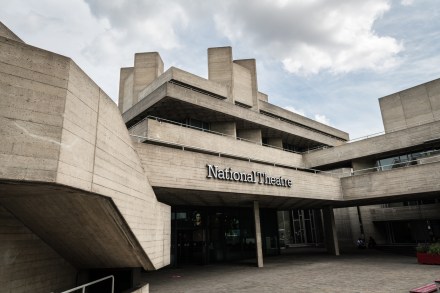
Why do people resent the theatre?

By chance, I was living in New York when John McPhee published his New Yorker essay ‘Brigade de Cuisine’. It was 19 February 1979. It caused quite a stir. McPhee described in lip-smacking detail a restaurant which was situated somewhere upstate. He inflamed the reader’s imagination by detailing how delicious the food was without revealing the restaurant’s name or location. McPhee knew what he was up to. He succeeded in animating the most intense aspirational fantasy of middle-class Manhattan. There existed an ideal dinner place of which no one knew. It was, he said, run by a mysterious chef called Otto whose technique was so fast it ‘became a collage of itself’. At one point, I believe, three investigative reporters from the New York Times were assigned to try to identify it.

Why would British universities want to be like Harvard?

A visit to Jerusalem last week reminded me of the enduring value of sociology as a discipline, despite its lamentable politicisation in recent times. The founders of sociology – I think especially of Max Weber – would have been fascinated by Israeli society. In their politics, Israeli citizens are deeply divided: there are 12 parties represented in the current Knesset, of which seven belong to the governing coalition. One regularly encounters protestors outside government buildings, but no two groups seem to be shouting the same slogans. And yet Israelis are growing together more than they are coming apart – and not just because of the 7 October attacks.

My Keir Starmer fantasy

A work outing to Venice. Sweetpea (yes, her real name) has captained my ship, run my life, steered me from countless disasters for 15 years and she deserved a decent break. Luckily two of my oldest friends have an apartment in the city. Our first supper at Corte Sconta in the authentic Castello district was sensational. Mixed grilled fish of the day, gleaming artichokes. No showiness, just exquisite food. We scored again for lunch next day outside in the sunshine on Campo Santo Stefano. Trust me to break the magic by booking us a Saturday night table at Harry’s Bar. We had to settle for 7 p.m. and then in an inner room, no view. It went from bad to worse. The bread was stale; the waiter, irritated each time we questioned the menu, unashamedly hostile.

When John Lennon took on Barry Humphries

Barry Humphries would have been 90 on 17 February. To commemorate his life, Radio 4 is broadcasting Barry Humphries: Gloriously Uncut that evening. For the programme, I recalled the joy of talking to Barry about the column he wrote for the Oldie. What a delight, too, it was to hear from the great diplomat Sir Les Patterson on everything from Australian politics to the history of lesbianism: ‘A lot of high-achieving Sheilas – like Cleopatra, Mary Queen of Scots, Boadicea, Dusty Springfield and Florence Nightingale – all paddled the pink canoe at some stage of the game.’ One day, he asked my colleague Penny about me. On hearing I wasn’t married, he said, deadpan, ‘Is he a vagina-decliner?’ Barry had immaculate manners and so asked Penny not to pass on the question.

Labour is right to ditch its £28 billion green pledge

My family despises war movies, so it’s way after Christmas that I get to see Ridley Scott’s dire Napoleon film. The most embarrassing scene is where Josephine lifts up her dress and tells Bonaparte: ‘If you look down you will see a surprise, and once you see it you will always want it.’ It strikes me that something similar is going on between Reform UK and the Conservative party, with the result being long-term electoral irrelevance for the latter. When I think of conservative values, the words chivalry, monarchy and the church come to mind. In Penny Mordaunt, the Tories have a politician who has wielded an actual sword, in an actual church, in the presence of the actual King.