Diary

How to prepare a musical feast fit for a King

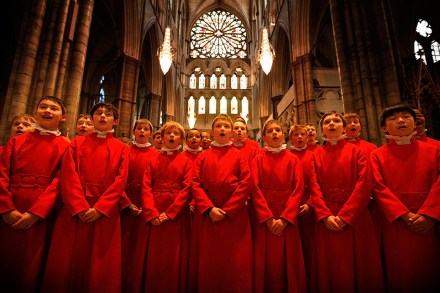
Years ago, as a penniless young musician, I sometimes played the organ at weddings and learned a bitter lesson: the congregation hadn’t come for the music. I was used to concert audiences who listened attentively and rewarded pleasure received with appreciation given, and it came as a shock to discover that wedding congregations chattered or nipped out for a ciggie during our lovingly rehearsed anthems, failed to join in the hymns and allowed their infants to howl – though once I had become a parent I grew more forgiving of this. Words of appreciation afterwards were rare. Thus I resign myself to expect scant public attention to be paid to the feast of music that will accompany the coronation service on 6 May.

What St Augustine could teach Donald Trump

Two attacks in local villages, leaving 17 dead in one and eight in another, says my teacher friend from Kaduna State in Nigeria in one of his latest letters. He writes regularly about the threats that he and his family and students face from Islamist militias. But what stays in my mind, apart from the horror of the details, is his steadfast refusal to demonise his Muslim neighbours and his eagerness to find resources to think (and pray) through what he needs to do and to communicate. He wants to learn what it is that stops cycles of retribution; he wants to break out of the mentality which assumes that what matters is to have enough firepower to intimidate and silence what threatens you.

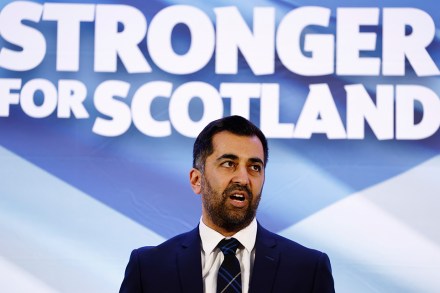
My advice to the new First Minister

Last Friday I found myself in the magnificent Carnegie-funded Central Library in George IV Bridge, Edinburgh. I was due to speak at a Scotonomics conference and, after glancing at some of the more challenging questions that had been sent in advance, concluded that an hour or so’s revision was urgently called for on the respective attributes of new monetarism and wellbeing economics. Entering the reading room, I was asked by the kind library staff if I had a reading card. ‘Well, I was a regular user as a student,’ I ventured. ‘When was that? Our records go back a fair way,’ they said helpfully. ‘1973,’ I answered. ‘Please fill in the form.

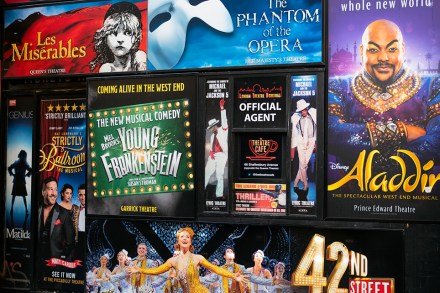
Musicals are killing theatre

This has been an agonising time for those of us who love Julian Sands. On 13 January, he went for a one-day hike up Mount Baldy, 50 miles from Los Angeles, and hasn’t been seen since. No one who knows Julian can believe he’s dead. He’s the very epitome of the free-spirited actor. You never know where Julian will be turning up next. As soon as he lands in the UK, he always telephones to tell me about, say, playing a paedophile in the terrifying Czech film The Painted Bird or going to help Mike Figgis on his latest project in Hong Kong. If it’s Terence Davies, he’ll do it. Doesn’t mind the size of the part. That’s who he is. Julian knows a lot about art, wine and mountaineering, but it’s his enthusiasm and generosity which makes him an outstanding reader of poetry.

The banking crisis could be just the beginning

Washington, DC You can measure the health of the American republic, or at least its governing institutions, on a weekday-morning Acela train from Washington to New York. It’s too expensive to use for pleasure ($337 if you plan late and are unlucky), too time-consuming (almost three hours for the 225-mile trip) to permit idling in the café car. So the train is always full of strivers, working their mobile phones. On Tuesday morning, the phone chitchat was anxious. Even in Washington, where analysts and economists had been working all weekend to contain the collapse of Silicon Valley Bank, the reeling of the financial system when markets opened on Monday caught people by surprise. It shouldn’t have.

My memories of Matt Hancock

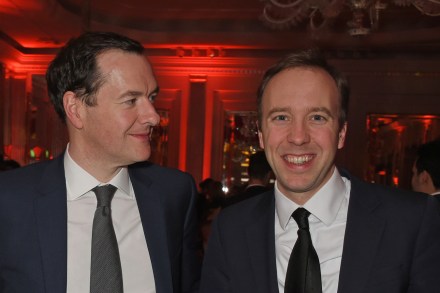
‘You could be the next Ed Balls.’ That’s what I told a doe-eyed Bank of England official called Matthew Hancock when I was introduced to him at a drinks party 18 years ago. I needed a fiercely intelligent, hard-working, exuberant aide who could help me as shadow chancellor – just as Ed had been the brains behind Gordon Brown. As you can all see from the leaked WhatsApp messages, we’ve been in touch ever since. When I tell this story now to Matt and Ed, they’re both offended by the comparison. I guess these reality TV stars are hard to handle. It’s not the first time messages meant only to be seen by Matt have gone astray.

Why I’m sticking up for science

I’m in New Zealand, climax to my antipodean speaking tour, where I walked headlong into a raging controversy. Jacinda Ardern’s government implemented a ludicrous policy, spawned by Chris Hipkins’s Ministry of Education before he became prime minister. Science classes are to be taught that Māori ‘Ways of Knowing’ (Mātauranga Māori) have equal standing with ‘western’ science. Not surprisingly, this adolescent virtue-signalling horrified New Zealand’s grown-up scientists and scholars. Seven of them wrote to the Listener magazine. Three who were fellows of the NZ Royal Society were threatened with an inquisitorial investigation. Two of these, including the distinguished medical scientist Garth Cooper, himself of Māori descent, resigned (the third unfortunately died).

The cringing self-abasement of Britain’s museums

This is National Vandalism Week, and I have been celebrating it in style. First stop – the London Coliseum for the opening night of English National Opera’s inspiring new production of The Rhinegold. The Arts Council says that the ENO is ‘one of the most dynamic and imaginative organisations working in the country’. One can believe it, listening to the orchestra on top form playing Wagner’s spellbinding score. You would never guess that the Arts Council has condemned the company to death. As vandalism goes, this is quite something. The Council has decreed that, in return for a grant significantly less than its current level, ENO must move its base out of London by next year, doing no more than a short season at its home in St Martin’s Lane.

The government’s guilt over Turkey’s devastation

Early last week I bought myself a teapot. I have several, but I could not resist this with its turquoise Mediterranean charm. Alongside I purchased tea glasses — not mugs or cups, but glasses. The Turkish way. It comes with a milk jug. The English way. Excited to use them for the first time early in the morning, I went to the kitchen where I found my 74-year-old mother, who was visiting us from Ankara. Her eyes were red and swollen from crying. She spoke in a voice so low that I struggled to hear at first. ‘There has been an earthquake.’ The glass in my hand felt small and fragile. We both knew what the next question was: ‘Did anyone die?’ I asked. She started crying again.

Tristram Hunt: How to repatriate art

At the start of last year, the Leopard Inn in Burslem, the scene of the celebrated meeting between potter Josiah Wedgwood and engineer James Brindley to agree the navigation of the Trent and Mersey Canal, ‘went on fire’. Close by, the Wedgwood Institute, founded by William Gladstone in 1863 as a design school, and proudly decorated with terracotta panels narrating the art of ceramics, stands empty. And last week, a 10ft-high red-brick bust of Wedgwood, designed by Vincent Woropay for the 1986 Stoke-on-Trent Garden Festival, was knocked down. By using weathered brickwork to sculpt Wedgwood’s coiffured hair and penetrating gaze, Woropay captured both the aesthetic delicacy of his subject and the might of the Industrial Revolution.

My clash with ‘sensitivity readers’

‘The end of the novel’: so ran a headline in the Times recently. Well, every few years one pundit or another predicts the death of the novel. They have done so throughout my lifetime and by now many of them may well be deceased themselves. But this article cogently pointed out the dangers of the new culture wars whereby writers are castigated for writing about ethnicities or events outside their own ‘lived experience’. Jeanine Cummins’s American Dirt was probably the most notorious example but even John Boyne’s The Boy in the Striped Pyjamas attracted criticism. Could it be that my next murder mystery will have a killer, a victim, a list of suspects and even an amateur detective who are all middle-aged white Jewish London-based men? That seems to be the way we’re heading.

My verdict on the Oscars line-up

Last Sunday in LA, we went to the cinema, where I’ve hardly been since Covid. I wasn’t expecting much from the film, as truly enjoyable and entertaining films have been thin on the ground recently. Regardless, I’ve always loved the whole experience of cinema-going, from handing over the tickets and finding your seat to the anticipation of watching the forthcoming attractions. But the trailers shown this time were mostly science-fiction – futuristic, computer-generated pot-boilers – and even though none of them probably cost less than £50 million, the previews left me cold… and deaf. I had to stuff tissue in my ears to muffle the booms and bangs.

My Sunday lunch with George Michael

All is grist that comes to a columnist’s mill. The late Alan Coren once wrote that if he heard a screech of tyres in the road outside his house, he rushed out, notebook in hand, ‘because you never know where the next 300 words are coming from’. I find that the Anniversary Almanac can be a reliable source of copy during thin times; my particular favourites being 40th, 50th and 60th anniversaries because they’re all potentially still in living memory. I’m already eyeing up anniversary options for 2023. And here’s an early heads-up – expect a deluge of words to mark the 60th anniversary of JFK’s assassination.

Does the royal family really have the moral high ground?

In Los Angeles this week, much of the talk was about the weather. Sunny California was copping a bomb cyclone of rain and snow, with the Sussexes’ home in Montecito in the path of the wild weather, though any witty meteorological metaphors fall flat in the face of such very real damage and suffering. One welcome side-effect of the storm was a westerly wind that blew my flight back to Washington ahead of schedule, so I was up bright and early to enjoy the appetising variety-pack that is American breakfast TV. Somewhere between news of a nurses’ strike and a six-year-old who shot his teacher, a public figure appeared, talking about his mental health issues, his work for charity and his family, who are also famous.

Music’s debt to Pope Benedict

One group delighted with the papacy of Benedict XVI was musicians. He was one of us. He had a grand piano in his apartment in the Vatican and played (mostly his beloved Mozart) regularly. His love of music was not restricted to music for the liturgy. He saw the numinous dimension to music in its secular forms too. When, two years after his renunciation, he received an Honorary Doctorate from the Pontifical University of John Paul II in Kraków, he chose to give his lecture on music. These words stand out to me: ‘In no other cultural ambit is there music of equal grandeur to that born in the ambit of the Christian faith: from Palestrina to Bach, to Handel, up to Mozart, Beethoven and Bruckner. Western music is something unique, which has no equal in other cultures.

The joys of a career change

One of the joys of a recent career change is taking a slightly longer run in the mornings. I get up in the dark and hammer my way round the park with the Protforce detectives strolling behind (and breaking into a theatrical jog when I turn round). There is nothing more beautiful than watching the sun come up over a frosty London, and seeing the light begin to gleam on the tops of those high-rises – tastefully located – that I helped to greenlight, with Eddie Lister and Simon Milton, when we were running City Hall. As I trundle along, I brood on my next moves. I think I have cracked it. One way to take your mind off the rigours of athletic exertion is to recite poetry. I now have a pretty stonking repertoire.

The King won’t be watching Harry and Meghan on Netflix

When it comes to the Harry & Meghan ‘this is our truth’ Netflix documentary, the senior members of the royal family have decided to do what the Queen Mother’s friend Noël Coward always did when faced with adversity or criticism. They are simply going ‘to rise above it’. It won’t be difficult. While the Queen Mother loved Dad’s Army and Elizabeth II did her best to get to grips with Line of Duty during lockdown, Charles III watches almost no television. The Queen Consort told me that she had persuaded His Majesty to catch a bit of the Channel 4 series about canal-boating that I do with Dame Sheila Hancock, but I think she only said that to indulge me. Our new sovereign is a workaholic with a wide variety of private passions. TV is not one of them.

My week of dining with the enemy

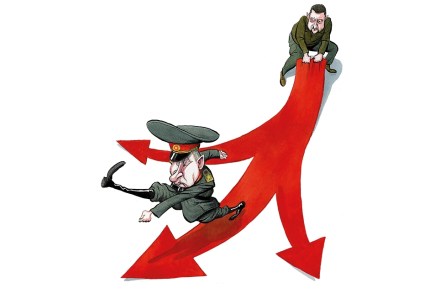
Olena Zelenska, Ukraine’s First Lady, is a remarkable woman. I listened to her in a packed meeting room in Westminster as she talked of repeated rape and sexual torture. This is what ‘liberation’ means in Russian. She spelled out how Vladimir Putin is using the desecration of women on an industrial scale. Women as old as 84 have been raped by his troops. Their youngest victim was just four. ‘We will not surrender,’ Madame Zelenska said, ‘but victory is not the only thing we need. We need justice.’ This demure, neat figure seemed so slight in the historic surroundings of Committee Room 14, yet her words beat down upon us. Women as defiant as Olena Zelenska will never forget or forgive. Even if Putin occupied every inch of Ukrainian territory, he could never achieve victory.

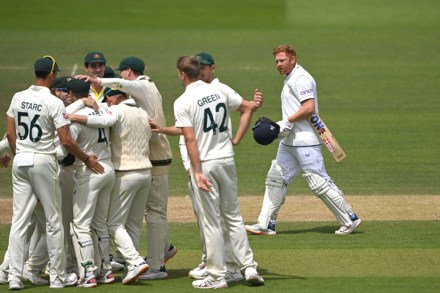
Ronaldo is happy to be sacked

‘You’d need to live on the moon not to know about Cristiano Ronaldo’s interview with Piers Morgan,’ said England footballer Jesse Lingard. I doubt even that would provide adequate protection. I’ve never experienced such global attention for anything in my career, and it reflects Ronaldo’s status as world sport’s biggest star. In fact, given he has 25 per cent more Instagram followers than anyone else – he passed 500 million this week, 123 million more than his nearest rival, Lionel Messi – I’d argue he’s the world’s biggest star of any kind. The interview’s been watched 15 million times on YouTube alone, which already makes it the most-viewed sports interview ever.

The Trumpists have gone full Nagasaki

You may not have had the pleasure of reading one Kurt Schlichter over the years. He’s a Trumpist blowhard columnist who writes popular dystopian novels about the looming red-blue civil war after a Democrat takeover, in a country where ‘all the sugary cereals that kids actually like’ are banned and ‘there is simply one deodorant, called “Deodorant”, which smells like wet cardboard and stains your shirt, blouse, or burqa’. He has replied to hostile tweets with the number ‘14’ – a white supremacist code for the 14 words: ‘We must secure the existence of our people and a future for white children.’ One column was simply titled: ‘Buy Ammo.