Diary

My pilgrimage on the Western Front Way

Daunt Books in Marylebone was full last Tuesday evening for the launch of The Path of Peace, my book about walking from Switzerland to the North Sea, to help realise the vision of a young subaltern, Douglas Gillespie, killed in September 1915 shortly after unveiling his idea in a letter to his headmaster at Winchester College. He envisaged after the war a ‘via sacra’ being created along the entire Western Front and he wanted every man, woman and child to walk the trail as a reminder of where war leads ‘from the silent witnesses’ on both sides. A ‘brilliant idea’ was how The Spectator described the suggestion during the war. But the vision lay buried for 100 years.

My part in Jair Bolsonaro’s downfall

Rio de Janeiro When I first began writing about politics in 2005, my Brazilian husband, David Miranda, was not remotely interested in the subject. When politicians or journalists would visit us in Rio and invite us to dinner, he would always try to get out of it: ‘I’m not going; you’ll talk about nothing but politics the whole night and I will be desperately bored.’ In 2013, David was detained at Heathrow under the Terrorism Act 2000. I’d been working on the Edward Snowden story, uncovering the extent to which the NSA and GCHQ surveil their own citizens, and David had travelled to Berlin to help with a documentary about the investigation.

It’s good to be back on the back benches

After the shale gas vote, I was literally sent to Coventry – to visit the UK Battery Industrialisation Centre. It is a remarkable facility that helps take batteries from development through to production. It means companies only need the hundreds of millions of pounds in investment once they have shown that their product works and is saleable. It was funded by the Faraday Battery Challenge, and I was there to announce a further £221 million of taxpayers’ money. This is one of the rather better ways the Department for Business, Energy and Industrial Strategy spends money, while some of our policies seem designed to ruin industry. I am particularly concerned about steel, where the price of energy is, in normal times, about 60 per cent more than our competitors.

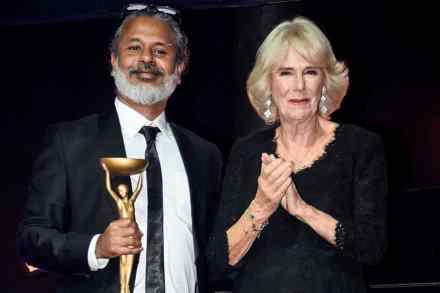
Inside the Booker Prize

It’s been a great week for the powerful fantasies of fiction (see more below), but over the weekend no novel anywhere in the world could compete with the fantasy of British politics. Continental Europe watched spellbound as the Prime Minister and her Chancellor humiliated themselves and the standing of the UK. The reactions of the different nations were predictable, but none the less excruciating for that. In Germany, where journalists have disconcertingly deep knowledge of British constitutional history, the reaction was dismay, as a distracted friend inflicts yet further damage on themselves.

Putin should fear those closest to him

I was interested to see that amid the Byzantine intrigues of embattled Conservative panjandrums, two Spice Girls have criticised the government. When the Spices manoeuvre politically, pundits sometimes cite my 1996 interview with the group in which they declared their Thatcherism and opposition to the single European currency. Such is their influence that it could be said they were precursors of Brexit itself, while their phenomenon was prophetic of this century’s Neronian-Trumpian merging of politics and showbusiness. Anyway, this takes me back to the hilarity of the original encounter. It started when the Spices heralded ‘Girl Power’ and I wrote asking if I could debate Rousseau, Marx and Nietzsche with them. To my astonishment, they agreed.

I feel sorry for Kwasi Kwarteng

In Singapore last week, I was asked: do ministers just come in, reach for the dumbest available policy and go ahead without asking anyone what the consequences will be? I explained the mindset. They do not ask because they do not want to hear the reply. In their minds, they are up against old thinking that just wants to keep Britain on the same declinist path – or ‘cycle of stagnation’ as Kwasi Kwarteng described the record of his Tory predecessors – and if you want to break new ground, don’t ask the people who will always say no. This is what Labour’s far-left Bennite wing think. Labour ministers didn’t try proper socialism because they were cowed by a combination of ‘experts’, the civil service and the City establishment.

War has come home to Russia

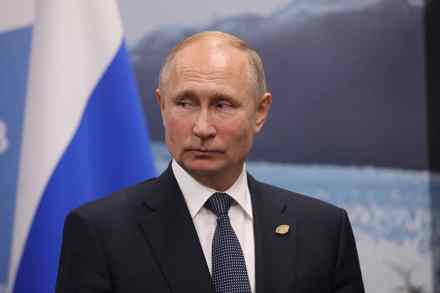
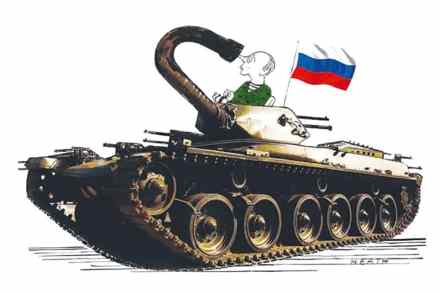
Moscow A week of somewhat mixed messages from the Kremlin. One day Vladimir Putin opened Europe’s largest Ferris wheel and presided over citywide celebrations of Moscow’s 875th anniversary, full of calm and good cheer and mentioning the war only in passing. A few days later he appeared on national TV telling the world that he was ‘not bluffing’ about using nuclear weapons and announcing a partial mobilisation. Putin has never fought a contested election in his life, so he’s never been a great one for the common touch. But in his latest address he looked as pale and dead-eyed as Nosferatu. Russians know better than most that the more strenuously something is officially denied, the more likely it is to happen.

Volodymyr Zelensky is a hero of our time

When the Queen died, I was on my way to Kyiv. My mind focused on the war in Ukraine, I found myself uncharacteristically lost for words when I was asked to comment. I took refuge in the complexities of the journey, which involved a delayed flight from Rome to Lublin, a frantic drive to Chelm on the Polish-Ukrainian border, and then an overnight train through western Ukraine. It was a good excuse. The reality was I could think of nothing to say. I couldn’t have done an interview even if I’d been trapped in Broadcasting House. Kyiv was, as NBC’s roving war correspondent Richard Engel had forewarned me, more exuberant than you might expect a capital city at war to be.

Memories of Princess Elizabeth

I am completely and utterly devastated by the passing of our wonderful, inspirational Queen, as I’m sure are so many in our fair isles. It is the end of the brilliant Elizabethan era. I was so proud to have been part of her last Jubilee. After being driven along the circuitous pageant route around London, I finished up seated in the Royal Box, waving at Her Majesty in what would prove to be her last appearance on the balcony of Buckingham Palace, where she sparkled in emerald green. This brought back memories of May 1945, when we were all celebrating the end of the second world war. My father drove his Riley Saloon as close to the gates of Buckingham Palace as was allowed, so that my mother, my sister Jackie and I could wave to the royal family while surrounded by cheering crowds.

Kwasi Kwarteng is a politician from a different age

Liz Truss doesn’t waste energy on unnecessary emotion. At the announcement of her victory at the QE2 Centre, she ditched the convention of hugging your partner and shaking hands with the runner-up. Instead she grabbed her notes from her husband Hugh O’Leary and marched past Rishi Sunak without a second glance. No time for sentimentality! Different from Johnson, surrounded by his siblings and ubiquitous father, or the uxorious Cameron and doting May. She knifed to the microphone with the same steely determination she showed all those decades ago when she told the Lib Dem conference to abolish the monarchy. The script has changed, the focus has not. Just before midnight on the first day of her regime, she rejected another convention: the showy buttering of POTUS.

My Ibiza diary

You wait 11 years for a Tory leadership election and then three come along in quick succession. The first in which I had a vote was in 2005. In August of that year my candidate, David Cameron, was being told to fold his tents. The final choice was a foregone conclusion: it would be a battle between the big beasts, David Davis and Ken Clarke. The Cameroon cohort in parliament at that point was more notable for quality – Boris Johnson, George Osborne, Oliver Letwin, Nick Soames – than for quantity. They may have made a fine first eleven but it was a struggle to find a twelfth man (or woman). Cameron, however, was convinced he had to make his case; to tell the truth, do or die. He was determined the party had to modernise. Ditch its nostalgic bring-backery on grammar schools.

Why political interviews matter

She’ll never do it. She’d have to be mad. Why take the risk? That’s what everyone said when I announced at the end of my BBC1 interview with Rishi Sunak that we were still hopeful that Liz Truss would also agree to a half-hour in-depth conversation in prime time. Well, guess what? She has agreed and will come into Broadcasting House just a week before most people expect her to move into No. 10. Too late to have any impact on the result, say the cynics. That ignores the fact that 10 to 15 per cent of the Tory selectorate will not, I’m told, vote until the last minute. More importantly, it ignores the tens of millions of people who have had no say in the choice of their next prime minister.

When did everyone get so angry?

I love Suffolk, not just for its beauty but for the stories to be found all around me. Every day I swim with my two-year-old labrador in the river Alde with views of the strange pagodas built on Orford Ness, a long strip of shingle. Amazingly, components of the nuclear bomb were tested here during the second world war. Just up the coast is the wonderfully named Cobra Mist, a radar station active during the Cold War. If you’re lucky enough to go inside, you’ll find computers and surveillance equipment abandoned in the 1970s with lights still blinking and spools turning like something out of The Avengers. The US stealth bomber was apparently tested here. In 1980, UFOs were spotted above Orford on their way to Rendlesham forest. What a location for an author!

What’s the point of the NHS if it doesn’t work?

We left prepared. Bottles of water, protein snacks, phone chargers, portable Scrabble (even the teenagers can look at the internet for only so long). And we left early: our crossing was at 2 p.m., and by 9 a.m. we were already on the M25. Six-hour queues, we’d been warned. Armageddon on the M2. Somewhere around Maidstone, I got a text. P&O Ferries: ‘We regret our sailings are delayed by up to 45 minutes.’ Uh-oh. But as we descended into Dover, zero sign of trouble. We sailed through check-in. ‘So sorry there’s a bit of a delay,’ said the man in the booth. No worries, said we, pathetically grateful not to be stuck in a lorry park. On to French customs. Again, not a queue in sight.

They do things differently in the Cotswolds

The Season has ended and – apart from The Spectator’s summer bash of course – the two bang-up parties of July were discos in the Cotswolds. They do things differently there. At Jemima Goldsmith’s I danced so hard in high heels with a selection of her handsome young swains that I suspect the double hip replacement will be sooner rather than later. At Carrie and Boris’s Daylesford wedding do in a magical flower-filled field we all busted out our best moves. I was taught the slut-drop by Liz Hurley years ago in Nick Coleridge’s party barn in Worcestershire. She demonstrated how to collapse to the floor like a broken deckchair on the count of three. My problem at Daylesford was getting up again – not a challenge shared by my sister-in-law.

Why Liz Truss shouldn’t be PM

Two and a half years ago I joined the Tory party to vote for Boris, then unjoined as soon as I could. I’ve never been a Tory voter but I believed in Boris and never thought of him as a cliquey, old-school Conservative. Now I’d like to rejoin to keep Liz Truss out. She seems to want to be PM just for the sake of being PM – we’ve had enough of that. But I’m hoist on my own petard. The party has wised up to tactical joining and you need to be a member for six months to vote. One of the many reasons we have a chronic staffing shortage, it’s said, is that Generation Z only want to do jobs that will protect their mental health, i.e. ones that aren’t too much like hard work. I’m not sure that’s the answer.

My life as a political spouse

When I was a teenage Tory activist in the mid-1990s, I hoped one day I’d be part of a leadership election campaign team. The energy and the intrigue looked so exciting. Eventually, I did end up right in the thick of it – but as a political spouse. These races have changed a lot since then. Michael Portillo’s plan to run against John Major was rumbled when his allies were found to have installed dozens of phone lines in a campaign headquarters: that was how you did it back in the 1990s. Now, it’s all done in WhatsApp groups. Kemi and I joke about what we would have made of each other then. I’m glad we didn’t meet: I’m not sure we have would have appreciated each other’s qualities at that time.

Boris’s final days in No. 10

‘So what did he say?’ I asked the ministerial friend who went to tell Boris last week he had to resign. ‘Well, he told me a long story about a relative of his who got caught up in a planning dispute, barricaded himself inside his house and the police had to come in force to drag him out. I think it means he’s not going quietly.’ At one level, politics is unpredictable; but enduring political rules apply. Boris told me years ago that while he wasn’t a team player, he could be a good team leader. For all his infectious optimism, it turns out that’s not possible. Downing Street will feel like being at a wake. Hushed voices. No one wanting to upset the family. Mourning the power that has recently departed. Perhaps a drink or two.

Boris, Sherwood and the politics of the past

It feels like the end, but we’ve been here before. The past months of Boris Johnson’s teetering administration have felt like the final act of a Shakespearean tragedy and yet the curtain just won’t fall. This week saw one of those rare electric nights of drama when a prime minister looks set to be toppled. At least, they used to be rare. In the first 25 years of my life I had only three prime ministers. The past chaotic decade looks to be about to produce its fourth. The axe hovered in the air for Johnson, but was prevented from falling – at least at the time of writing – by Nadhim Zahawi, the MP for Shakespeare’s Stratford-upon-Avon, denying us the climax. The question many have is – why?

What Starmer can learn from Scholz

I made it through the airport crush to Berlin at the beginning of last week to see how Germany is faring under Olaf Scholz, Angela Merkel’s tough-minded centre-left successor. Under Merkel, Germany was important because it was the key to EU decision-making, but towards the end of her chancellorship, the country slowed down, there was too little change and, as we now know, Merkel misjudged Vladimir Putin’s revanchist ambitions and thirst for personal glory. In talking to Scholz, I did not get the impression that he has any illusions about whom he is dealing with.