Diary

Max Hastings’ diary: I love the British Army (but not the Blackadder version of it)

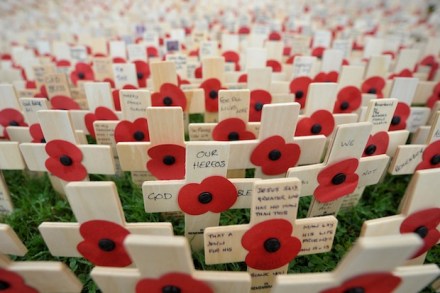
The looming centenary of the outbreak of the first world war offers an opportunity to break away from the Blackadder/Oh! What a Lovely War vision, which dominates popular perceptions. Nobody sane suggests a celebration. But, in place of the government’s professed ‘non-judgmental’ approach to commemoration, ministers could assert that although the war was assuredly ghastly, it was not futile. Whatever the shortcomings of the Treaty of Versailles, a peace imposed by a victorious Germany would have been much worse. David Cameron often mentions with pride Britain’s role in resisting Hitler. In 2014, it would be good to hear him acknowledge that Britain, and those who died in her name, were also right to resist the Kaiser’s generals.

Simon Schama’s diary: The British divide? Proms vs ‘Am I bovvered’

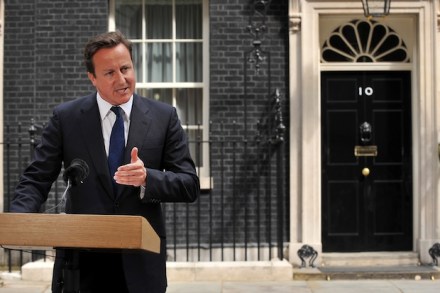
‘Wider still and wider, may thy bounds be set,’ the ecstatic throng sang at the Last Night of the Proms. They were partying like it was 1902, even though it seemed like the moral territory occupied by hope (not to mention glory) was growing narrower. Perhaps it has been ever thus, but it seems apparent that there are two versions of Britain on offer right now: Britannia Promlandia and Tate Britain, as in Catherine Tate: the commonwealth of ‘Am I Bovvered?’ Promlandia’s celebrations were cued up this time by David Cameron’s St Petersburg impersonation of Hugh Grant, schoolboyishly ticking off all things Bright and British — footie, Shakespeare and, er, One Direction. It is a feelgood Albion, perpetually basking in Olympic summer.

Harold Evans’s diary: Beware Obama – he always pulls the rug out from under his allies

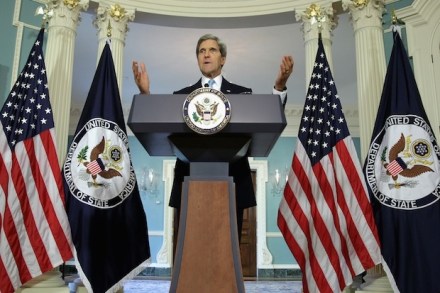
Days ago, I’d have bet that even the most bitterly partisan Congress in generations would jib at humiliating their commander-in-chief. More than two thirds of the population, according to the polls, demanded he go to Congress before firing Cruise missiles against the Syrian regime. Well, he did, didn’t he, but appeasing the people hasn’t cut much ice with Senators of both parties to judge from the hearings this week which have provoked Secretary Kerry to wag a schoolmasterly finger. In the hour their country calls on them to make a stand against the ‘moral obscenity’ of gassing 1,429 Syrians, 426 children among them, the querulous tribunes of the people seem to have learned their lines from Rick in Casablanca: ‘I stick my neck out for nobody.

Andrew Marr’s diary: Holidays after a stroke, and what the Germans really think of us

It’s been a strange summer. After a stroke, holidays are not what they used to be. We went to Juan-les-Pins for a week in a hotel. It seemed perfect because it had beaches for the family, and at nearby Antibes there is a great little Picasso museum for me to haunt. It has the best drawing of a goat ever made. My daughters and wife doggedly manhandled me across hot sand into and out of the water and I enjoyed that. But being surrounded by so many fit people running, cycling and swimming was a little dispiriting. Mind you, I’ve always been useless at holidays. I hate being too hot. I hate lying around on grit (rebranded as ‘sand’). I hate airports. I hate long car journeys. My idea of a good break involves a bracingly cold northern city and some good art galleries.

Diary – 29 August 2013

‘You are a very naughty man!’ My heart pumps in my chest and a feeling of panic surges through my veins. I spin round to find a small, impeccably dressed Asian gentleman shaking a finger at me and twinkling with glee. This is an interesting situation. I do not wish to be rude. This man clearly enjoys the psychological torture my character, Michael Moon in EastEnders, inflicts on people. However, he has accosted me at the checkout at M&S. What to do? But wait, something else is happening: two elderly ladies have witnessed this exchange and are motoring over. One is clutching a soap magazine. These biddies mean business. I can feel a good telling-off coming. I swiftly enter my PIN, pump my new friend’s hand, grab my bags and speed off into the sweets aisle.

Kirsty Wark’s diary: On the Caledonian sleeper, the new Donna Tartt, and a week of Edinburgh shows

There isn’t a Scottish politician in living memory who hasn’t been on the Caledonian Sleeper. I always imagined Donald Dewar folding himself up in his berth, he was so tall. He was notoriously sniffy about the company he kept in the bar and once recounted the horror he felt when — stuck in snow — he was forced to fraternise with practically the rest of the Labour front bench for 22 hours somewhere south of Carlisle. Journalists tend to be more comradely. The other night, I took the sleeper in tow with an old family friend, the BBC reporter Allan Little. Over Glenfiddich and cheese we exchanged scurrilous gossip and book recommendations before, just north of Watford, he made his long way back to the Edinburgh end of the train.

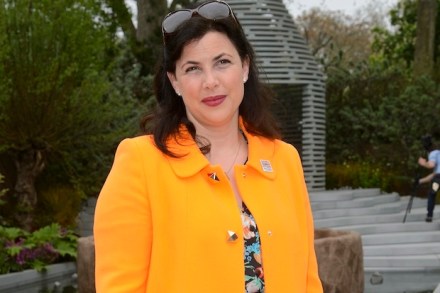
Kirstie Allsopp’s diary: Why I’m terrified of Woman’s Hour

If you haven’t scuffled you haven’t lived, and our local scuffle is the best of the best. A scuffle is a sort of off-road bumper cars in 4x4s, and it’s one of the highlights of the summer. Our car, The Scuffle Pig, was on her third outing this year. We thought she’d been dealt a fatal blow in 2011, when a foolish friend encouraged a fellow scuffler to get her out of a dip by ramming her. The back windscreen was smashed, and I had to leap out and strip my then 12-year-old stepson down to his underpants in front of numerous spectators in order to get rid of the glass. He was remarkably good about it, though. Happily the Pig rode again, sporting four new off-road tyres which cost more than she did.

Roger Scruton’s diary: Finding Scrutopia in the Czech Republic

Hay-making was easy this year, and over in good time for a holiday. I am opposed to holidays, having worked all my life to build a sovereign territory from which departure will be a guaranteed disappointment. However, the children have yet to be convinced of the futility of human hopes, and therefore must be taken for a week or so to places that renew their trust in Scrutopia, as the only reliable refuge from an alien world. As always we choose the Czech Republic; and as always it disproves my point. I don’t know what it is about Brno, but I am as home there as I can be anywhere. And Sophie and the children feel the same. We borrow the old cottage in the Moravian Sudetenland from which to explore a landscape wiped away by war.

Conrad Black’s farewell to the British press

The astonishing level of enthusiasm over the birth of the new prince goes far beyond the pleasure that people naturally feel for an attractive young couple who have had a healthy child. If there is any truth at all to these estimates in the North American media that trinkets and other bric-a-brac, and even increased numbers of tourists, will produce hundreds of millions of pounds for the British economy, the answer lies not just in normal goodwill and the effusions of the most strenuous monarchists. If my memory is accurate,  the last time there was so much public interest in a royal event, albeit of the exactly opposite nature, was at the death of the newborn prince’s paternal grandmother, Diana.

Douglas Murray’s diary: My gay wedding dance-off with Julie Burchill

The pilot refuses to get going until everyone is seated and quiet. When we take off there are raucous cheers. I am on a midday budget-airline flight to Ibiza. Louder cheers welcome the drinks trolleys which are noisily ransacked. Along from my seat a gentleman is reading The Spectator. It transpires we are heading for the same occasion. The ceremony takes place on a raked clifftop amphitheatre on the beautiful and quiet north side of the island. Boiling sun, cliffs and glittering sea boast the backdrop. Assembled friends and family swelter in the full lamp glare of the sun. I keep my jacket on. Though this may sound like sunstroke, the ceremony is conducted by Benedict Cumberbatch.

Nigel Farndale’s diary: The dread moment when they announce next year’s school fees

Next time I’m in a sauna I’m going to say: ‘It’s like a school sports hall on prize day in here.’ As the mothers fanned their faces with the programmes, one of the other fathers, Her Britannic Majesty’s Ambassador to Uruguay, leaned forward and whispered: ‘Rookie error, mate. Should have worn a white shirt.’ He was right. I was wearing a blue one, which meant I couldn’t take off my linen jacket. My interest in hearing from the headmaster about the school’s successes on the sporting field began to wane after the first three hours. I’m pleased for the Under 11Bs hockey team and all they achieved back in February, but given the humidity I think it would have been kinder if he had stuck to the highlights.

Diary – 11 July 2013

The frantic promotion of the proposed HS2 rail line — a white elephant in the making — is a reminder to those of us living outside London that we suffer from a disability: one so severe that it is worth spending £40 billion to shorten the journey to the capital by a few minutes. Our condition will get worse as centralisation proceeds and London’s gravitational force becomes ever stronger. Eventually ‘the provinces’ will evacuate their contents into the south-east, and England will be a megalopolis surrounded by deserted villages, towns and cities.

Christopher Sykes’s diary: David Hockney, Bridlington lobster, and the risks of a third martini

I began my week with a trip to Bridlington, the closest seaside town to my childhood home. ‘Brid’, as it’s known to the locals, has a special British charm, comprising miles of unspoilt beach, beach huts, a pretty little harbour, fish-and-chip shops galore, rows of guest houses and The Expanse, a splendid old-fashioned hotel. The council are, however, missing a trick. Brid’s main fishing industry these days is lobsters, as delicious as any you will ever taste. You wouldn’t know it, however, as, apart from a few expensive ones kept in tanks at the Blue Lobster on the harbour, they all go to Europe. So, come on Brid, how about an annual Lobster Festival? I was in Bridlington to talk to Margaret Hockney, David’s sister.

Pippa Middleton’s diary: What are you scared of, Boris?

Ah, good old Wimbledon: a fortnight of rhythmic ball thumping, ooh-ing at Federer’s forehand, aah-ing at Djoko the elastic athlete, and praying against common sense for good weather and British success. Some foreigners can be sniffy about Wimbledon’s particular charms — all that Union Jack patriotism, excitement over strawberries and cream and English eccentricity. ‘Grass is for cows,’ said the Argentinian Guillermo Vilas, famously, a line still repeated by some Latin players who can’t handle the low bounce and quick pace of the green stuff. Well, moo to them. Wimbers is tennis at its best, the grandest of all slams, which is why I like to go every year, at least twice.

Diary – 20 June 2013

The calendar of British summer events often involves a master class in surviving a deluge cheerfully, and recent years have tested that cheer almost to destruction. On Saturday it was the turn of the annual summer fair in Highgate, north London, home to Kate Moss and the grave of Karl Marx. The thin whisper of sun in the morning led many people to trundle hopefully to the square in straw hats and sandals, which proved a strategic error. The rain began as I was eating jerk chicken, watching the Whitethorn Ladies’ Morris Dancing group from Harrow doing their stuff on the central stage.

Anne Applebaum’s diary: Spies, terrorists and an undercover ham sandwich

I am trying very hard to understand why everyone is shocked — shocked! — by news that the US government helps itself to the massive data flows generated by Google, Facebook and Twitter. I have always assumed that something placed into an internet database is no more secret than something written in a letter. We all know that those pop-up advertisements — so amazingly compatible with what we searched for on Facebook ten minutes ago — aren’t there by accident. But if we aren’t bothered when ruthlessly efficient multinational corporations troll through our data in order to earn billions for their teenage CEOs, why are we bothered when the comparatively inept US government does the same while searching for terrorists?

James Rhodes’s diary: Trying to catch out Stephen Fry, and the scandal of music education

This was the best kind of week. It started with a three-hour road trip with my manager/surrogate father/shrink/bodyguard to Monmouth to record album no. 5. Glenn Gould (whom I worship with the fervour of a pre-teen Belieber) talked about the ‘womb-like security of the recording studio’. Which was why, in a somewhat pussy move, he retired from performing in public. And he was spot on. Bless my mum, but my first womb was a Valium- and gin-infested warm place of loveliness, and the recording studio is absolutely the next best thing. Me, the safety net of the retake, a (phenomenal) Steinway, heaters, Kit-Kats, tea and Beethoven can give any pharmaceuticals a run for their money. Even if Gould somewhat greedily chose all that and the pills too.

Justin Cartwright’s Diary

Too often, I go to South African theatre with a sense of foreboding: I anticipate something overwrought, tendentious, poorly acted and emotionally exploitative. So I arrived at the Hampstead Theatre last week without high expectations. The play, A Human Being Died That Night, was based on the book written by the psychologist Pumla Gobodo-Madikizela, who conducted interviews with Eugene de Kock, the most notorious of the appalling state-sponsored killers of the apartheid era. De Kock and his comrades murdered and tortured hundreds of anti-apartheid activists. But in the course of her discussions with him, Madikizela came to believe that De Kock should be pardoned and released from Pretoria Central jail, where he has been held for years. Many other killers who made confessions were pardoned.

Norman Lamont’s diary: Green shoots, George Osborne and Mark Carney

I was surprised to be told, by the editor of this magazine, that next week will mark the 20th anniversary of my standing down as Chancellor. The anniversary had entirely passed me by. I was asked this week why, if the economy was turning, George Osborne didn’t announce that he had spotted ‘green shoots’, as I observed in 1991. Although my remark, much rubbished at the time, turned out to be surprisingly prescient, I think Osborne is right to be cautious. Economic statistics are revised so often, trying to steer the economy as Chancellor is, as Harold Macmillan observed, like trying to catch a train using last year’s timetable. The best comment on green shoots was that of my then wife: ‘You don’t get green shoots in the autumn.

Susan Hill’s diary: The joy of fountain pens, the frustration of GP appointments

I bet you remember your first fountain pen. Mine was a Conway Stewart with marbled barrel, I had it for starting Big School and I used to polish it. That trusty pen lasted until A-levels finally broke its back and after that I slipped down the primrose ballpoint path to slovenly writing. I never used a typewriter — too noisy, so I hand-wrote my books until the almost-silent laptop seduced me down another slithery slope. But I still hand-write when I need to take my time — books can be divided, like Americans, into fast ones and slow ones. Recently, a friend told me he had gone back to a fountain pen and was finding it a joy when writing up his notes — he is not a novelist but an engineer, and appreciates good tools.