Diary

How McCartney and I helped put pop on the map

In 1977, when I set up the South Bank Show for ITV, I wanted Paul McCartney to be on the first programme. His unique talent apart, I thought he would be the key to unlocking one of my chief aims in the new programme, which was to disrupt the accepted order of play in which classical music, ballet and opera were at the top of the pyramid while down at the bottom was pop music. McCartney took some netting, but he came on and we met at Abbey Road Studios at about midnight and the programme was launched. Not without criticism: the Daily Telegraph critic wrote that as far as arts programmes were concerned, it drew the line at Lennon/McCartney. Those were the days. Clive James saw what the programme was trying to do and backed it and that was vital.

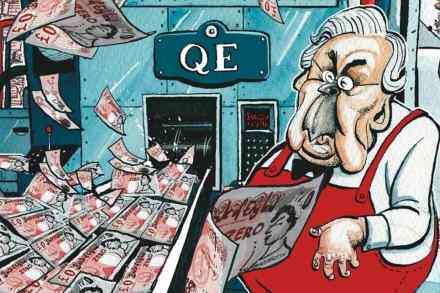
The Bank of England has to act to prevent higher inflation

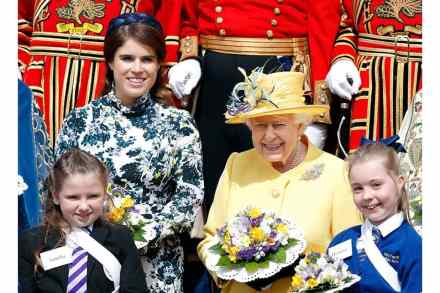
To Windsor for Garter Day, the first since 2019. With a strong voice and smiles for us all, the Queen presided over the investiture of three new Knights – Tony Blair, Baroness Amos and, as a Royal Lady of the Order, the Duchess of Cornwall – in the small Throne Room. After luncheon with the royal family in the Waterloo Chamber, we processed to St George’s Chapel for a service during which the new Knights were formally installed. It is a splendid pageant appreciated by the large crowd of onlookers who look with amazement at our outfits. We wear morning dress, garter star, a dark-blue velvet mantle, a rather heavy gold collar and a black velvet hat with a plume of white ostrich feathers. The British do like dressing up.

Don’t write off Piers Morgan yet

I wish I could persuade certain cabinet ministers to put their money where their mouths are. Several times last month on Good Morning Britain I exhorted Tory frontbenchers, including Liz Truss, to place cash bets with me. If they’d agreed, I’d be richer than Rishi by now. Well, obviously that’s an exaggeration, but I could have at least afforded to hire a private jet to fly me and Judy to our summer hols in France. Oh, all right then, a single-prop Cessna. Bet one was that there would be a swift U-turn on refusing to place a windfall tax on oil companies. I would have staked my house on it. But no takers, despite absolute denials that it was going to happen. Bet two was that there’d be a vote of confidence on Boris before midsummer.

I hope my son will inherit the Queen’s kindness

When I was asked by an old friend to write this diary, I did my usual thing of: ‘Yeah I’d love to do this and of course I can get it to you by your deadline…’ Then the deadline flew past. Now I feel like I am back at school desperately writing an essay, hoping to get it in on time. At least the subject is easier to write about than the Shakespeare we studied for English A-level. This year the country, the Commonwealth, our family and so many people are celebrating a magnificent woman. Her Majesty the Queen is an incomparable monarch who has reached a record-breaking milestone. She also happens to be my grannie, and I am a very proud granddaughter. When I was thinking about memories of the 2012 Jubilee, I rang a few of my friends and family to jog my mind.

I’ve written the perfect book

I met a Canadian couple for lunch in Edinburgh. They were from Vancouver – he a judge, she an opera singer – and had won me at a charity auction. I do this several times a year. It’s a painless way of helping good causes. Of course it’s a very one-sided blind date: they know more about me than I do about them, at least to start with. But the conversation always flows easily and I’ve met some fascinating characters. After the lunch, a drink at Inspector Rebus’s favourite watering hole, the Oxford Bar, was part of the deal. It too has character to spare. Speaking of which, I also sometimes offer charities the prize of becoming a character in a forthcoming book.

Lviv diary: ballet, bomb shelters – and everyone loves Boris

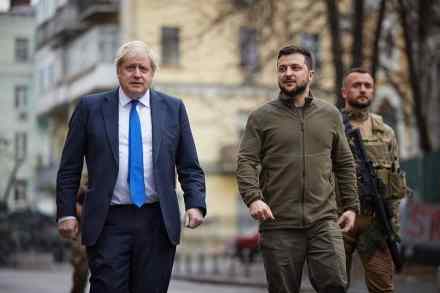
It is a glorious spring evening in Lviv and what could be better than a ballet gala at one of Europe’s grandest opera houses? The performance starts with an unusual announcement. In the event of an air raid siren, all spectators must go to the bomb shelter. The red-velvet seats are less than a third full – not for fear of going to a ballet in a war in which Russians have bombed a theatre, but because they can sell only 300 tickets since that is the bunker’s capacity. There is an emotional rendering of the national anthem for which the audience stand, hand on heart, and it is hard not to shed a tear, then the lights dim and the curtains open.

The fire and fury of America’s abortion debate

I wonder at times how some of my fellow hacks in America get out of bed in the morning. The leak of a draft of a Supreme Court decision on abortion rights last week prompted what can only be called a collective nervous breakdown. ‘My teeth have been chattering uncontrollably for an hour,’ New York magazine’s Rebecca Traister vented. ‘Bodies/minds are so weird. Like, not euphemistically – actually chattering. Audibly. And full shaking body. Though otherwise wholly, rationally, well and truly expecting it.’ Well, I wouldn’t say wholly rational, Rebecca, but you do you. The terrifying ruling would send the abortion issue back from a single court to democratic debate and discussion – where it is in every other western country.

It takes courage to be vulnerable

It has been wonderful to welcome seven refugees – and their four dogs – to my home in Suffolk. I’ve enjoyed getting to know Ukrainian food and picking up the basics of the language. It’s humbling living with three generations from one family who have escaped war with little more than the clothes on their backs. It brings perspective. They video-call family and friends left behind who live under the threat of bombardment, and it’s striking just how close to home this conflict is. The teenagers staying with me study by remote learning at their college in Kyiv while the shells fall. The Suffolk community has been so helpful.

How can James Bond survive?

I have just got back from Cannes, where I was the president of a jury, judging TV dramas. I’ve never had an experience like it. I was put up at the Majestic Hotel, overlooking La Croisette. I had a limousine to take me all of 100 yards to the Grand Palais for screenings and when I chose to walk, I was provided with a bodyguard. I even had my own hairdresser and make-up artist for the nightly photoshoot on the pink carpet. It was all ridiculous of course but it gave me a rare glimpse of celebrity and its pernicious allure. We writers are usually consigned to the engine room, toiling away with sweaty faces and blackened fingers. How lovely, just for once, to be given a sunbed on the first-class deck. I had a novel experience when I arrived at Nice airport. They stamped my passport!

Why I’m now safe from Meghan Markle

As you may have heard (if you haven’t, I’m losing my narcissistically self-promotional touch) my new TV show Piers Morgan Uncensored launches soon and will air daily in the UK, America and Australia, thus fulfilling my long-held ambition to become a global irritant. The title provokes mirth among those who feel I’ve never shown any sign of being censored.

How do we celebrate Easter in the shadow of war?

This week has been Passiontide, which means lots of wonderful plainsong in the choir of Canterbury Cathedral as my predecessors sleep. Holy Week began on Sunday in the shadow of war, suffering, loss and pain. How do we celebrate the promise of everlasting life in such darkness? Good Friday is ‘good’ because on the cross we see the goodness of God in the middle of the mess of our own creation. Jesus refuses to answer his accusers on their terms, to use his own power to overcome by force, or to see others hurt – even those who hurt him. Jesus lays down his life for the sake of others. He reaches out, on the cross, to the thief next to him, even in the depths of his own suffering.

Putin’s war is a disaster for Russia

Strasbourg Europhobes will never have a better argument against European integration than the seat of the European parliament in Strasbourg. It’s not just the €200 million per year it costs to move MEPs to and from Brussels once a month at great inconvenience to everyone; the building itself is a disgrace. It feels like a prison: identical glass corridors look out over a useless inner courtyard, so you can go on walks without the danger of escape. The former president of the European Commission José Manuel Barroso once suggested turning the building into the headquarters of the European Institute of Technology, which was an excellent offer both for the country and the city, but to no avail.

Oscars diary: a jaw-dropping night

Oscar week is intense – and it’s been a while since it’s been as intense. The red carpet is full of eager paparazzi and interviewers waiting for a photo opportunity or a quotable gaffe. My husband and I went to a couple of parties, but the most coveted is the Vanity Fair Oscar viewing dinner at the Annenberg Center. About 100 people are invited by editor Radhika Jones, and we were delighted to be among the chosen few. The ceremony was long and snoozy, and people were scrolling down their phones for entertainment when suddenly one of the most celebrated actors in Tinseltown, Will Smith, rushed to the stage and bashed the comedian Chris Rock in the face. You could almost hear the collective jaw-drops in the silence of that room.

Why I drove a lorry to Poland

‘Why the hell did you hire a lorry without a spare tyre?’ asked Rizvana. Fair question. Luckily we had just pulled into a service station near Leipzig when the front tyre blew. The bang was so loud that the cashier rushed outside fearing an explosion. We waited for five hours in the biting wind. German technical prowess came to our rescue. The mechanic arrived with hydraulic lifts, the correct replacement tyre and near-perfect English. Some onlookers gathered as three of us jumped on his torque wrench to loosen the nuts. Our mission was not going to plan. Rizvana Poole is a Labour councillor in my town of Chipping Norton and she’s the reason we drove to Warsaw in a lorry filled with supplies for Ukrainian refugees.

I’ll stick my neck out: Russia may be heading for an outright defeat

Skopje, North Macedonia In the West, it’s tempting to believe that revulsion at Vladimir Putin’s invasion of Ukraine is universal, and that he’s receiving support only from a handful of miscreant countries like Venezuela, Syria and Iran. I wish this were true. I’m in Skopje, the capital of North Macedonia, where there’s much sympathy for Putin, which has only increased since the invasion began. This is despite the government in North Macedonia being pro-western and pretty decent when compared with its predecessors and many of its neighbours. A Russian defeat will make possible a ‘new birth of freedom’ The reasons for North Macedonia’s Putin sympathy are complex.

The courage on Ukraine’s front line

Central to the question of whether or not Ukraine can survive as an independent state is that of re-supply, not just of drones and anti-tank weaponry but also of food, especially if the conflict lasts for months or even years. The vast agricultural centre of the country is not being seeded, with potentially catastrophic consequences. Nato governments are providing lethal weapons and other aid, of course, but from what I have just seen in Berehove in western Ukraine there is another very heartening sign. For there is a large underground network of private, non-governmental groups – largely based on Christian groups with long-established family connections – that is transporting huge amounts of food and other non-lethal supplies into Ukraine.

In Lviv, the mood is inspiring – and fanatical

Lviv, Ukraine On the Ukrainian side of the Polish border, near a place called Shehyni where the refugee crisis is brewing, an old black man approaches us. ‘Am I in Moldova?’ he asks gently in French, pointing to the fence. ‘No,’ I tell him. ‘That’s Poland.’ Moldova is 250 miles away. The man shrugs and returns to the endless queue of North African migrants. Several young men tell us that they have been there for four days waiting to cross. The Ukrainian guards hold baseball bats. British newspapers have reported ‘shocking racism’ at the border, and of course it is easier to get into Poland if you have a European or British passport and white skin. Yet we witness no ill-behaviour. It’s just a very cruel situation.

The West missed its chance to help Ukraine

Yet another east European tragedy is unfolding before our eyes. We have watched this movie for more than 80 years. In 1938, Czechoslovakia was abandoned to its fate by Neville Chamberlain at ‘Munich’. In 1945, at the Yalta conference, it was Poland’s turn — and the eastern half of our continent lost to Soviet domination. Then the Soviet invasions of Hungary in 1956 and Czechoslovakia in 1968, followed in 1981 by a ‘state of war’ in Poland. ‘Goodbye to all that’ we naively thought after the end of the Cold War, but in 2008, Vladimir Putin’s Russia seized chunks of Georgia.

Why I should never look at Twitter

Foreign trips can offer a sense of perspective. Heading to Saudi Arabia, I prepare for my first stint of diplomacy. While most of the world has been fixated on Ukraine, a different subject has dominated the news in Britain for the past few weeks. I wonder how, if asked, I’d explain to a Saudi minister the British media’s interest in whether an open packet of crisps and a length of mauve tinsel constitutes a party. My first problem is more practical: what clothes does a feminist pack when visiting Saudi Arabia? Ministerial briefing packs are not terribly helpful on this point. As a mother of three adult daughters, I’m not exactly a shrinking violet when it comes to defending women’s rights, and I’m not sure what to expect from the trip. I seek advice.

P.J. O’Rourke 1947–2022

The great American journalist and satirist P J O’Rourke has died. He contributed a number of articles to The Spectator over the years. This diary from December 2010 was the last piece he wrote for our London edition. RIP. — New Hampshire Just back from London, 40 years to the week since my first visit. It was a wonderful city then, in a cold- rooms, dark-streets, early-pub-closing, single-TV-channel way. And the food… I ordered a steak, it arrived boiled. But London was more polite and intelligent than America. The language was full of manners. If one didn’t like a person, one could say, ‘One quite likes him.’ One could use the politely impersonal ‘one’. No dialogue began with the rude Americanism ‘What do you do?