Diary

Why I don’t stick to football

In football, you are always stronger in numbers. With a shared focus, people from different cultures, nationalities, races, sexual orientations, political affiliations and religions can unite to achieve incredible things. When you pull on that national team shirt, rivalry subsides and is replaced with a shared desire to win. When fans step into that stadium, for 90 minutes they feel a part of something, a collective, able to leave any worries outside those turnstiles. To many it is a religion. To me, it’s still a dream. You grow up idolising figures in this game who turn out to be just like you and me. Human beings with human emotions and who, more than likely, have overcome some level of adversity in their career.

Is the USA still worth fighting for?

I have no personal investment in America’s Afghanistan war. My own service in Vietnam, now a half-century in the past, remains an abiding preoccupation, as does the more recent Iraq war, where my son was killed. But I feel no more emotional connection to America’s ‘longest war’ than to US efforts to pacify the Philippines at the turn of the 20th century. Even so, the abrupt collapse of the Afghan government and of the Afghan security forces over the course of a few days hit me hard. Rage, sadness, bewilderment, horror, humiliation: my emotional response cycled through all of these.

How would Jane Austen have fared at a book festival?

I’ve been to two of my favourite book festivals recently, Chalke Valley History Festival and Charleston, and the experience has set me thinking about festivals in general. If I could listen to a great writer — any great writer — at a literary festival, I think I would choose Anthony Trollope. He would probably go on and on, just as his books go on and on, but be highly engaging in exactly the same way. Still in the 19th century, I don’t imagine Jane Austen would be much fun at a festival — but I am quite sure she would have the sense not to accept. Sir Walter Scott would lecture one at length about tartan history but his enthusiasm would be contagious.

Even the Taliban are in shock: my week on the Kabul front line

Kabul I’ve been to the front line in Iraq, Syria and Libya and witnessed all kinds of crazy, unlikely events. But I have never seen anything like what’s happening in Kabul. Only two weeks ago, I was reporting for CNN in the city of Kandahar. It was clear that this provincial capital would not be the last to fall. Then on Sunday morning, we heard that the Taliban were at the gates of Kabul itself. In the afternoon, we heard that they had entered the city. By the evening, Taliban fighters were manning checkpoints on every street corner, wielding guns but not using them. How on earth did they take a capital city of six million in a matter of hours while hardly firing a shot? The Afghan army was never a coherent force in the way that the Taliban is.

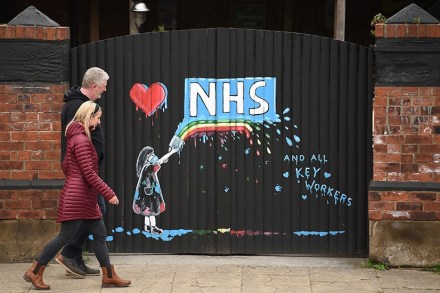
Why shouldn’t we worship the NHS?

For obvious reasons, stocks in ex-editors of The Spectator are experiencing an all-time low. But my own complaint is with Nigel Lawson. Lawson may say it’s hardly his fault that his remark ‘The NHS is the closest thing the English people have to a religion’ has been appropriated ever since by anyone who thinks it’s a clinching argument for privatisation. Actually, it’s the opposite — a clinching argument for the present arrangements. I’ve had to make a lot of visits to hospitals in the past year, far more often than I’ve been to the theatre or the cinema. By force, I’ve seen a great deal of the NHS at first hand. My conclusion is that if I were to follow a religion, the NHS would be top of my list.

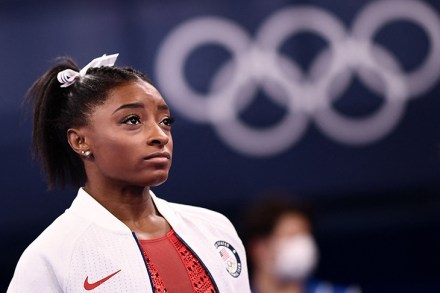
Should Simone Biles listen to Novak Djokovic?

I’ve always been a Spectator reader, so I’m delighted to be writing a diary about the Olympics from Tokyo. My first experience of an Olympic Games was probably the most political of them all — Moscow 1980. I wasn’t sure that I would be competing until a few weeks before the opening ceremony. The build-up was fraught with geopolitical tensions — the Soviet invasion of Afghanistan and the US-led boycott of the Games. Thatcher’s government fell in line with Uncle Sam — a little too eagerly — only to then lose its fight with the British Olympic Association. So we ended up going. I lost the first of my finals that year over 800m, which inspired some fairly critical reportage.

My brush with a royal literary crisis

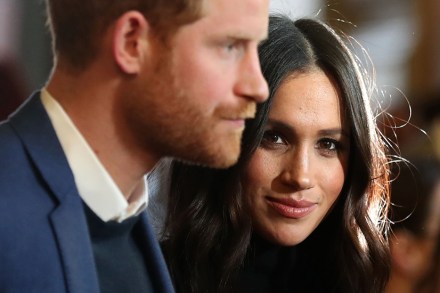
The past week has seen another media splash about the self-exiled Duke and Duchess of Sussex. Following the recent ruckus over the statue of Princess Diana, the latest crisis to come off the royal conveyor belt was news that the Duke has written what his publishers sedately describe as a ‘literary memoir’. Cue general outrage. I was duly put to work by a weekend newspaper on an article that was expected to follow the anti-Harry orthodoxy but somehow it wandered off course. None of us has all the facts about why he and his family have moved to California, yet that hasn’t stopped pro- and anti-Sussex camps mobilising with a fervour more appropriate to a medieval war of religion.

Sajid Javid: My isolation diary

You always remember when a prime minister calls you to ask you to take on a new role, and you remember the reaction of your loved ones, too. My mum was delighted — like many Asian mothers she wanted at least one of her five sons to be a doctor and she was thrilled that I would be, as she put it, ‘working in healthcare’ after all these years. My wife was concerned about the pressures of the role and what it might mean for our family. And my daughter was worried that I might not look the pinnacle of health walking through the famous Downing Street door, due to my limp after an unfortunate slip during ‘walk your children to school week’.

The unsettling sensation of a full diary

The Queen’s Platinum Jubilee pageant was officially launched last week, with a splashy press call in the Raphael Court of the V&A. I happen to be co-chair of the pageant, to be held in June next year, alongside the eventmeister Sir Michael Lockett. The Raphael Gallery felt like an appropriate setting, since the seven glorious cartoons, considered the most important Renaissance paintings outside the Vatican, belong to the Queen on longstanding loan. Jubilees are a peculiarly British thing, applauding monarchs for their decades of service, full of ceremony and fiesta; a national celebratory parade through the streets of Westminster and down the Mall to Buckingham Palace.

A quiet revolution for our times may have begun

I’ve been amazed by the response to my decision to leave my band, Mumford & Sons. The article in which I explained why has now been read 700,000 times and has been republished by newspapers in the UK, the US and Germany. My main hope in publishing it was to restore my own sense of integrity — eroded, I felt, by an apology I made to an extreme but vociferous internet minority who took great exception to what I considered an innocuous tweet to Andy Ngo, the author of a bestselling book about the radicalised far-left. Just as I never anticipated the angry reaction to my unremarkable tweet, I could never have foreseen that my article about the ensuing fuss would have generated so many messages of gratitude. Gratitude for what?

The true cost of theatre closures

It turns out that if there’s one thing more expensive than making theatre, it’s not making it. Empty buildings haemorrhage money. Postponing a show already in rehearsal or raising the curtain only for it to be dropped shortly after — as happened in December when theatres reopened just to close days later — scares off investors and unsettles audiences. (I might also say that being unable to gather as a community to make sense of the world through stories is costly not just in a financial sense. But then I am a pretentious playwright.) No, what we need is to begin filling our diaries once again with plays, musicals, comedy gigs and concerts. What the live arts need is certainty.

I’m calling my removal from office ‘the great betrayal’

I’ve always maintained I go to Fermanagh for sanity, and after the past few months, I need a return to sanity more than ever. Fermanagh is by far the least populated of Northern Ireland’s six counties and it’s beautiful. I grew up here in the countryside, playing in fields, and now live near Brookebrough in the east of the county. From the sanctuary of Fermanagh I think about the fact that the new DUP leader and his team will now have to negotiate with Sinn Fein to get the first minister nominated again. Once I resigned, it meant that the deputy first minister was also out: for both ministers to be appointed there has to be agreement between the parties. This is not an easy process, as you might imagine.

British broadcast news has gone badly wrong

I’ve worked for some media thoroughbreds — including the Financial Times, ITN and CNN — so I know the sense of assurance that comes from wearing the badge of a long-established journalistic brand. But nothing — nothing — beats the buzz I now feel as a presenter on GB News. It’s the thrill of being part of a start-up, especially one so many want to fail. We GB News types are disruptive and entrepreneurial. We think that British broadcast news has gone badly wrong. It has become smug, stale and monocultural. We want to do something about that. Amid the advertising boycotts, inevitable technical glitches and even more inevitable catty reviews, we know we are on to something — and that’s what scares the incumbents.

Why do my American friends keep asking me to marry them?

My diary has been filled with dental appointments, reflecting a truism that American dentists pray for British teeth. The tally in this past month is one root canal, three extractions and two bone grafts, which more or less equals the cost of putting one dentist’s child through a year of college. The epic began almost a year ago with a mild toothache, which my usually excellent dentist in Charleston, South Carolina, insisted needed the attention of a specialist. I rejected her advice with the confident assurance that I was getting old, the pain was mild, and it was a race between the tooth and death, a race that death would win. The tooth won. Are British teeth among the worst in the world?

The Keir Starmer revelation that we didn’t air

Following my abrupt departure from Good Morning Britain after declining to apologise for disbelieving Meghan ‘Princess Pinocchio’ Markle, I’ve been riding a rare wave of public popularity, with my anti-woke, pro-free speech book Wake Up becoming a no. 1 bestseller and people stopping me in the street to offer support. A lady named Marion from Eastbourne wrote to compare my campaign to that of John Lilburne, the 17th-century English political leveller who coined the term ‘freeborn rights’ and became a champion of liberty. She wrote: ‘Lilburne spent his life fighting for freedom of speech, and for this he was whipped, pilloried, half-starved, exiled, imprisoned and twice put on trial for his life by Oliver Cromwell. He never gave up.

My enduring love for Ewan McGregor

In the New York Times, the celebrated journalist Maureen Dowd describes Crieff as ‘a sleepy town in Scotland’. Well. There speaks a woman who has never been in the Quaich on a Friday night when the homemade haggis baws with whisky mayo are on special offer and Duncan has come down from Ochtertyre with ‘the fire o’ the deil in ma loins’. A fire, I might add, that no amount of whisky mayo could ever douse. It’s all happening there, Maureen! The Visit Crieff website even promises tourists in the pearl of Perthshire ‘a high chance’ of ‘bumping into a young Obi Wan Kenobi in the high street’. Tiny sigh. The force might be strong, but that’s not really true, is it?

At the V&A, we’ve done some Marie Kondo-style reordering

‘We humour them when they suggest absurd reforms, we placate them with small material comforts, but we heave sighs of relief when they go away and leave us to our jobs.’ I am glad to say that the approach adopted by one of my predecessors, Eric Maclagan, to the visiting public is no longer preferred policy at the V&A. Instead, this week we are desperate to welcome the British people back to their collections. For the past five months, South Kensington has felt too much like Miss Havisham’s mansion, with lots of dust sheets, unexplained noises and an overpowering sense of loss.

The Trump nightmare isn’t over

What would happen to the Republicans after Donald Trump? That has been one of the pundits’ favourite themes in the past few months. Maybe the GOP could run against Joe Biden’s massive spending and borrowing splurge, some pondered; or go after some low-hanging woke excesses on the left; or exploit the huge influx of illegal immigrants at the southern border that Biden is bringing about so swiftly; or warn of inflation, or the generosity of pandemic relief holding back the recovery; or find some new young faces to appeal to minorities who moved ever so slightly to the right in the last election. And some Republicans have indeed made gestures in that direction. But gestures are all they have tried, because of one overriding fact.

In Hartlepool, I’m aiming for a noble defeat

By the time you read this you may know if the Tories triumphed in the Hartlepool by-election — or if, in the end, the party was too badly wounded by all that business about who paid for whose wallpaper. Boris Johnson visited the town more times than he visited Scotland in the campaign, so he certainly sensed victory. But who can predict elections nowadays? One thing, alas, is all but certain: I will have lost. I decided to stand as an independent candidate at the last minute, motivated by how much I loathe the apparatchiks at both main parties’ London HQs — disconnected, mediocre and disdainful. Just look at their candidates. Labour chose slick Paul Williams, booted out by his constituents in Stockton South for flouting their wishes in the Brexit referendum.

The truth about the government and ‘herd immunity’

I spent much of the 1980s and 1990s reporting on company chief executives who didn’t understand the distinction between mine and theirs. They enjoyed lavish lifestyles — company flats, art collections, huge expense accounts — without the owners of the company (you and me through our pension funds) having a clue. Then came the corporate governance revolution, and much of this was cleaned up. So I had déjà vu earlier this week when reporting that the Tory party had loaned tens of thousands of pounds to lavishly decorate and refurnish the PM’s home in Downing Street. Maybe Tory donors and members think this is an appropriate use of their money. But did anyone bother to ask them?