Columns

The pleasure of not knowing

A few years ago the podcaster Lex Fridman published a list of books that he was hoping to read in the year ahead. It included works by George Orwell, Fyodor Dostoyevsky, Hermann Hesse and others. If he had published this in the world of print media he might have got back some encouraging noises. But because he put the list online – worse, on the platform then still known as Twitter – he received mostly mockery. ‘Who hasn’t read Animal Farm?’ was the general tenor of the blowback, as though a man who had been a researcher at MIT was next to being a neanderthal.
Snobbery is the best weapon against screen time

I can’t be the only neurotic mother to have rejoiced when the Princess of Wales revealed recently that she has a strict ‘no phones at the table’ rule. The Prince of Wales then later let slip that Prince George, who is 12, isn’t allowed a smartphone. When George eventually does get a phone, William added, it will be a brick without the internet – similar, one imagines, to the sort favoured by drug dealers. Hallelujah! Up until now, the best line for parents to trot out has been the old chestnut that ‘Silicon Valley guys send their children to schools where the tech use is unbelievably moderate because they know how addictive this stuff is’.

Why we are all solipsists

I once tried to write a novel but lacking any ear for dialogue or skill at characterisation, I abandoned the attempt. The plot, though, was quite good. A couple on a smallholding are facing hard times. Their farm is failing. Daily life is shot through with anxiety, and they retreat increasingly into their interior worlds. Alone at night the husband keeps dreaming he’s in another place, a farm where he and his wife are happier, things go better, and life is crowded with incident. Gradually he finds himself living for nightfall, retreating from domestic misery and awaiting only the next episode in a different life unfolding in his dreams: a life marred only by the nightmare that afflicts him when he goes to sleep: a recurring story about a failing couple on a failing smallholding.

What England’s old folk songs can teach us

I grew up in the 1980s but in many ways it was more like the 1880s. We lived with my grandmother on the Northumbrian coast and the routine of our days echoed the routines of her youth, perhaps her mother’s and grandmother’s, too. We were like an elephant family in an African game park, following our matriarch around ancient migratory routes, oblivious to the rise and fall of regimes outside. Lunch (no elbows on the table), a walk to the sea, sherry time (Amontillado dry); then my grandmother and my clever younger brother would play Piquet while the children of lesser focus played with the open fire.

Discrimination is good, actually

Many years ago, a friend described one of my serious literary novels as ‘clever’. I was offended – but I shouldn’t have been. The friend was from across the pond, where I now understand ‘clever’ simply means smart. For Americans, cleverness infers a shallow, facile intelligence. Applied to people, it often hints at sly, calculating deviousness or cunning. It has no positive moral qualities, as westerners understand them. Tax evasion can be ‘clever’. Let’s move on to ‘culture’ – a big, fuzzy word we throw about with careless abandon that often summons images of traditional clothing and cuisine. But, parsed in its most profound sense, culture might best be defined as ‘what a people admire and what they deplore’.

The mind-body conundrum

I’m committed this winter to too many expensive building projects at once. As the balloon of my bank balance drifts ever lower towards the waves, and the crests of red ink lick the wicker of my basket, I’ve realised something has to be thrown out. Thus it was that last week I found myself in London’s Hatton Garden. Tucked into my little knapsack was my passport and a couple of one-ounce mini bars of gold I had bought after the last banking crisis, and stored in an old kettle. It was late afternoon, and dark.

Where was my invitation to Your Party?

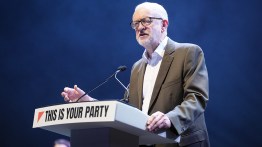
For perhaps the first time in my life I have experienced ‘fomo’ – fear of missing out. It is strange to feel this teenage sentiment now I am safely in my forties, and even odder that it should occur in relation to a party political conference in Liverpool. Yet as I sat watching videos from Your Party’s first conference this week, there was no way to avoid the feeling that I had missed out on something big – a feeling only intensified by the likelihood that Your Party’s first conference will also be its last.

Hands off my prostate

Too much information. That’s what you’re about to get. I wouldn’t read another line if I were you. I will be talking, at length, about my prostate and, by extension, my old fella and why I will not let the medical clergy anywhere near either of them, not the private medics or the chaotic maniacs who work for the NHS. I don’t mind whipping it out for you, though – and so this is an article which is both repulsive in its personal revelatory details and will also, if anyone takes it seriously, result in 230 premature deaths over the next decade or something. I don’t think it’s going to get me on the shortlist for the Orwell prize, then. But telling unpopular truths hasn’t worked very well either, so never mind.

Labour’s plan to unite the left

It is easy to criticise the Budget. The process was a chaotic mess. For many on the right, Rachel Reeves’s £26 billion tax raid to placate Labour MPs was a form of madness as well as badness. But good politics means understanding your opponents. One former No. 10 Tory thinks there was method in the madness: ‘It totally makes sense for Labour to move to the left.’ Nearly half of those who voted Labour last year would not vote for the party today. The number of voters fleeing Labour to the right – to Reform or the Tories – has remained steady since January at between 13 and 16 per cent, or one in seven of their 2024 voter base. Two-thirds of those votes have been lost to Reform.

What’s Trump got to do with the price of turkey?

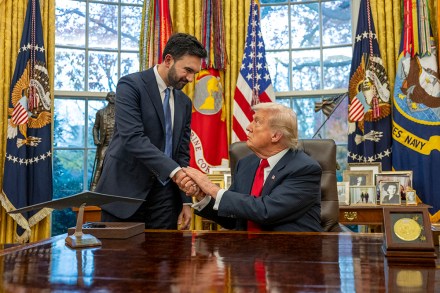
During last week’s excruciating Oval Office make-nice between an insultingly buddy-buddy American President and a fraudulently obsequious New York City mayor-elect, the contest was over which pol was the more patronising. At one point Trump graciously granted his petitioner permission to call him a ‘fascist’ while clearly implying the guy’s OTT campaign rhetoric had been embarrassing. Donald Trump sat regally on his throne, patting Zohran Mamdani’s arm while commending ‘Attaboy!’ as if petting a golden retriever that had fetched a ball. For his part, Mamdani stood mutely by the Resolute desk with cartoonish humility, hands over crotch. This cowed performance of beta-male submission was meant to disguise who’d got a leg over whom.

The theatre isn’t a thinktank

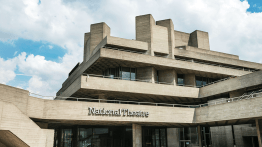
Readers tend not to approve of rows between columnists, but I must take issue with something Lloyd Evans wrote in ‘No life’ last week. Our theatre critic claimed that his companionship ‘is very low calibre’, that he ‘can’t match anyone in conversation’ and that he ‘can barely recall making a witty or worthwhile comment’ in his life. I should like to disagree. Some time ago at a party in The Spectator’s garden I got talking with Lloyd and he said one of the most interesting things I’d heard in years. I had gone over to congratulate him on summing up the general awfulness of most of George Bernard Shaw’s plays in just a few paragraphs in a recent column, and then began commiserating with him. My sentiments went something along the lines of: how do you do it?

The obvious truth about BBC bias

For quite a few members of the House of Commons culture, media and sport committee, the answer to the claims of left-wing bias against the BBC could be annulled by the simple expediency of firing the only supposedly right-of-centre person within the corporation, Robbie Gibb. It is a curious logic that the left employs. This is especially true in the case of Labour’s Rupa Huq, the MP for Ealing Central and Acton (which, I am told, is in London), who believes that people can only be ‘black’ if they subscribe to the same idiotic world view as herself.

Rachel Reeves’s road to ruin

Rachel Reeves is lucky that the name ‘omnishambles Budget’ has already been taken. When the entire document was published long before she got to her feet in the Commons, the only thing that would have made this most chaotic pre-Budget period more shambolic would have been if the Deputy Speaker had banned her from making her statement at all. Reeves described her second Budget as an expression of ‘Labour values’ but really it is a manifestation of Labour foibles.

Was the BBC’s Trump edit outrageously wrong?

I should begin by making something clear. Splicing together two parts of a speech to give the impression they were one unbroken excerpt is a grave professional error, and would be viewed as such by any broadcaster in the business. The error would be egregious even if there were no suggestion it reinforced the accusation that Donald Trump was inciting riotous behaviour, simply because what viewers thought they witnessed did not occur. There is no excusing what Panorama did to Donald Trump’s 6 January 2021 speech. Nobody in the senior ranks of the BBC is to blame for not knowing about this at the time; but once it did become known, an immediate and unconditional apology should have been made.

It’s not Starmer’s fault that everyone loathes him

Finding someone who ‘likes’ Sir Keir Starmer is a terribly enervating quest, and I have given up on it without success. It is true that I have not contacted Sir Keir’s close family members, or indeed canvassed inside the walls of Broadmoor hospital, so it may be that some tiny reservoirs of affection remain. Less reservoirs than sumps, really. But the generality is that people seem to loathe him – the responses I get when I accost people in the street and say, ‘What do you think of Sir Keir Starmer?’ are largely unprintable, except in London, where for some reason the most common reply is to invoke the name of the author of The Critique of Pure Reason, which is mystifying. Whatever, people detest him. They think he is useless, bland and untrustworthy, indecisive and stupid.

Trump’s Epstein gamble

It is always interesting to see who the American left claims are the leaders of the American right. There was a time during President Trump’s first term when Steve Bannon fitted the role – and relished playing it. Back then most days brought another media profile of the dark genius of the MAGA movement. The Guardian, New York Times and others were obsessed. Vanity Fair would send reporters to follow Bannon as he conquered America and, er, Europe. Documentary crews were perennially in tow. Indeed one documentary following Bannon around included a scene in which they followed him to the showing of another documentary about him from a crew who had similarly followed him around. At which point you felt that we might fall into some kind of vortex.

Labour may have lost the countryside forever

Before the last election, Keir Starmer promised that his party’s relationship with the countryside would be ‘based on respect, on genuine partnership’. But, 16 months into his premiership, the government is shedding rural votes after Rachel Reeves’s changes to inheritance tax. Protesters wearing flat caps and riding tractors have become a familiar sight in Westminster, such is the outrage about the effect on family farms. At the most recent protests, Labour MPs in rural seats were reduced to begging the Treasury to pause the changes ahead of the Budget. ‘So many of my farmers are pleading with me,’ admitted Samantha Niblett, MP for South Derbyshire.

The UK’s tax take, take, take

Helping her country ski ever more steeply down the wrong side of the Laffer curve, Rachel Reeves may be preparing to violate Labour’s manifesto and raise income tax – perhaps a suitable juncture at which to examine just how wacko the UK tax code is already. Start with the duplicity of ‘national insurance’. This unhypothecated add-on simply pours into the Treasury’s coffers as plain taxes. Yet much of the populace still believes that NI specifically funds the NHS. This is misunderstanding by design. The sly mislabelling is a resentment blocker. In truth, the employee basic tax rate is a straight-up 28 per cent, not 20 as advertised. The mooted Reeves proposal of raising income tax by 2 per cent and reducing basic-rate NI by 2 per cent is dishonest.