Columns

The House of Lords’ Valkyries fighting for assisted suicide

It seems counter-intuitive to say that the House of Lords is more representative than the House of Commons. Yet in the extended reading of the assisted suicide bill, it is clear the Upper House is surprisingly reflective of the reality of the nation. Nominally, the bill is being piloted by Lord Falconer, the formerly cuddly ex-housemate of Tony Blair. Falconer has consistently sought to water down amendments and concessions secured during the Commons debate. During last week’s Lords debate, he cited ‘somebody called Sarah Cox’ – who just happens to be the former president of the Association for Palliative Medicine (APM) and gave evidence to the bill committee last year. This didn’t prevent Lord Falconer from misrepresenting her testimony, prompting a complaint from the APM.


Am I a libertarian after all?

I have never been the greatest fan of libertarianism as a political ideology. Libertarians seem to me to be the bisexuals of politics – they want a bit of everything. But even I felt a slight twinge of libertarian sentiment this week when I read some remarks by our Home Secretary, Shabana Mahmood. The Labour minister had told MPs that artificial intelligence is an ‘incredibly powerful tool that can and should be used by our police forces’, though she added that it must be regulated in a way that is ‘always accurate’. I have never before read the words ‘police’ and ‘always accurate’ in the same sentence, so the novelty grabbed my attention.

The poisonous truth about British universities

This week it became clear that almost none of the adults whose job it is to teach students the truth are much inclined to do it. Even the doziest vice-chancellor must by now have twigged that gender ideology is dangerous bunk and that it lures in the most vulnerable – yet still they can’t bring themselves to speak out. This goes not just for academics, but for politicians in the education business too. For anyone minded to understand how poisonous the atmosphere in universities is, the story of poor Professor David Gordon is horribly instructive. His ordeal began more than a year ago when he invited another professor, Alice Sullivan, to give a talk to his students at the University of Bristol.

Lima’s monument to memory

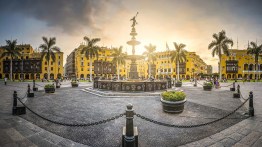
In the pantheon of South America’s great hotels, the Gran Hotel Bolivar’s place is assured. Stand anywhere in the Plaza San Martin, one of Lima’s historic central squares, and the proud art deco 1924 building – all 300 rooms and five storeys of it – glistens dazzling white over the promenaders, tourists and hawkers below. These days it feels almost marooned, an island of elegant, old-fashioned opulence set in a sea of fuming traffic. The rich and sophisticated have deserted the old part of town for the cool condominiums and plate glass of modern Miraflores, but Miraflores has no memory. The Bolivar – every stone, every pane of stained glass, every monogrammed brass doorknob, even the black Model T Ford standing beside the reception desks – remembers its glory days.

The second coming of Gordon Brown

At a Christmas party I witnessed a showdown between two Labour movers and shakers, one a devoted Starmerite, the other an unrepentant Blairite, over whether the Prime Minister can turn things around. They didn’t agree on much – Keir Starmer’s vision or lack of it, Europe, immigration, you name it. When I commented to another leading figure in the party that Blairites, with the exception of Jonathan Powell (now running foreign policy) and Alastair Campbell (whose podcast has moved him leftwards), seem to have lost faith in this government, this former minister said: ‘Of course they have, because this is the second term of Gordon Brown.

Reform’s real race problem

I think it was Zadie Smith who I first heard point out that race is in America what class is in Britain: the conversation underneath every conversation. When I first heard that remark I slightly baulked. Not least because one had rather hoped that class would be less of a thing in Britain in the 21st century. I suppose it is, although you do still meet people who treat the English language as though it is a minefield in which one incorrect vowel will suddenly take them out. But if the class stuff still lingers in Britain, the good news is that we now have the American race obsession too. For anyone who hasn’t lived in America, it is hard to describe just how permeated race is into every conversation in the culture.

There should be no ‘sanctuary’ from ICE

After three hours of parsing American case law, for once I share Donald Trump’s exasperation. See, many a naif, including yours truly three hours ago, would have thought the Democrats’ ‘sanctuary cities’ unconstitutional. A sanctuary city instructs its local police force to cease all co-operation with federal immigration agents. The constitution’s supremacy clause dictates that federal law overrules local law, just as rock crushes scissors in the hand game. For sub-jurisdictions to offer refuge from big meanie federal Immigration and Customs Enforcement (the aptly cold-hearted sounding ICE) should not, legally, be possible. It’s possible.

The tragedy of Keir Starmer

For someone who likes to present the general public with the idea that he doesn’t have a personality, Sir Keir ‘I don’t dream’ Starmer has actually provided plenty of insight into who he really is. From his occasional flashes of fury when thwarted in the Commons to his chronic lack of authenticity when out bothering voters, a picture emerges of a man who doesn’t much like the ‘people’ side of politics. Perhaps the most revealing example was when, in opposition, he unhesitatingly told Emily Maitlis that he preferred Davos over Westminster. By his own revealed preferences and statements, Starmer is an aspirant technocrat, not an enthusiastic democrat.

Labour’s next rebellion

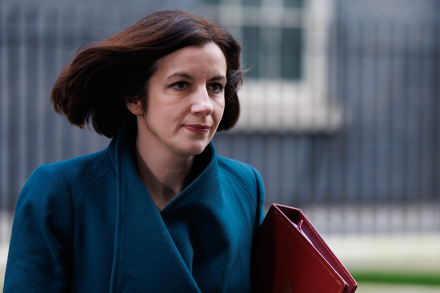
When Bridget Phillipson arrived at the Department for Education, she knew which issue would define her tenure. Within days, she was facing dozens of new Labour MPs grilling her about how she planned to overhaul the system for special educational needs and disabilities (SEND). ‘From the outset we have gone out there to speak to the parliamentary Labour party,’ says an ally. ‘We know that this is a key postbag issue.’ Over the past ten years, the number of claims for special needs has exploded. A fifth of all children in England are now reported to have SEND; in Scotland, 43 per cent of pupils have some sort of additional learning need.

The young women hypnotised by Polanski

A friend mentioned to me last week that a third of young women in the UK are planning to vote for the Green party under its wonderful new leader, Zack Polanski. Bad as I tend to expect things to be, even I thought that surely things can’t be that bad. However I dutifully entered the terms ‘Polanski’ and ‘young women’ into Google, and promptly fell down a different rabbit hole. Defining my search terms a little more clearly, it turned out that my informant was correct. So badly deranged are the youngest cohort of female voters in this country that a third of them really do believe that they have found their saviour in a man who until recently promised that he had a technique to inflate women’s breasts through hypnotism but who also thinks that J.K. Rowling is a crank.

In praise of the climate ‘emergency’

All this winter, until New Year’s Eve, and for the first time since I started keeping llamas, Vera, Ann and Lynn were happily grazing on grass that was still growing. They were managing without hay. Something seems to be happening to our climate. Global warming alarmism is not for me. I’ve never pitched in, fists flying, to this fray. One would want scientific expertise or new information – and I lack both. I’ve grown to distrust the wildly divergent prophecies of the climate change warriors as much as I distrust their adversaries in the ‘nothing to worry about’ camp.

No sex please, we’re Gen Z

For many years now we have all been agonising over the fertility crisis. Why aren’t the kids having kids? It’s become a sort of parlour game, the swapping of the various theories. Is it the cost of living? Micro-plastics? Eco-anxiety? Tight underwear, I heard the other day, and snorted with scorn even as I tipped my son’s stretch-cotton pants into the bin. But now another, rather more fundamental explanation for the baby shortage has emerged. It’s not just that younger generations aren’t having babies – it turns out they aren’t really having sex at all. The Atlantic was first to properly examine this trend among young Americans, in a terrific piece which gave a name to the phenomenon: The Great Sex Recession.

The 14 questions that will define British politics in 2026

Contemplating a new year always raises questions. Was there a Third Protocol? What was wrong with Oral-A? Can Keir Starmer survive 2026 as prime minister? It is the biggest question in politics this year and the fact that it does not have an easy answer illustrates the mess Starmer has got himself into over the past 18 months. A few days before Christmas, a senior figure in No. 10 outlined how Labour’s high command still believes the winds will change for the party in 2026: a ‘virtuous circle’ of falling interest rates and inflation, more investment, growth, and rising confidence in the government among the public and the Parliamentary Labour Party. Another Starmer loyalist noted the old adage: ‘It’s always darkest before the dawn.

David Walliams deserves to be cancelled

A traditional British Christmas is not complete until we have all enjoyed the seasonal cancellation of a celebrity, under the mistletoe. Excitement mounts during Advent as to who the luckless sap might be this year and then, on cue, the little cardboard door is at last opened and we all gather around the tree for a joyous hatefest. I was fairly happy with this year’s choice, the comedian and children’s author David Walliams, as there is something about his manner and that weird shiny moonface which has always slightly irritated me.

‘Islamist’ is a dishonest confection

Convicted last month of plotting what could have proved the worst terrorist attack in British history, Walid Saadaoui had hoped to murder at least 50 people in Prestwich, because ‘Prestwich is full of Jews’. He was caught purchasing four AK-47s, two handguns and 1,200 rounds of ammunition. For Saadaoui’s fires of righteousness on social media had earlier drawn the eye of British law enforcement. ‘Avenge your religion Oh Muslims in Europe,’ he posted. ‘I pray to you not to catch me until I break my thirst with Jews, Christians and their proxies’ blood.’ Thus Saadaoui instructed an undercover officer: ‘Grab a Jewish person and slaughter him and remove his head, rub blood on my body, throw it away. That is the least we can do.

Alaa Abd el-Fattah and our misplaced priorities

What would you like the priorities of His Majesty’s government to be? I have quite a long list. Sorting out the economy would certainly be up there, as would closing the border. But I imagine the government has had to put such things on the backburner because it turns out that one of its actual top priorities has been ensuring that Alaa Abd el-Fattah can come to the UK. Who, I hear you ask? El-Fattah turns out to be an Egyptian ‘activist’ who has lately spent a certain amount of time in the prisons of General Sisi. In 2021 he gained British citizenship through his mother, who lives in the UK. I think that clears up any fears of the anti-integrationist movement in this country by the way.

Will Keir still be Prime Minister in a year?

Keir Starmer will start the new year as he means to go on: by attempting to convince his troops that he is still the best man to lead them. The Prime Minister will begin 2026 by hosting Labour MPs at Chequers. The motive behind the outreach is simple. ‘The only question that matters this year,’ says a non-invitee, ‘is whether Keir can cling on.’ It was not so long ago that a peacetime prime minister with a healthy working majority was thought to be unassailable. No longer. The defining moment in parliament these past 12 months was the summer welfare rebellion. After 120 Labour MPs threatened revolt, the £5 billion cuts were withdrawn. ‘The party took back control,’ says a minister. Some in the Whips’ Office wished to make this a vote of confidence.

The year wokery went into decline

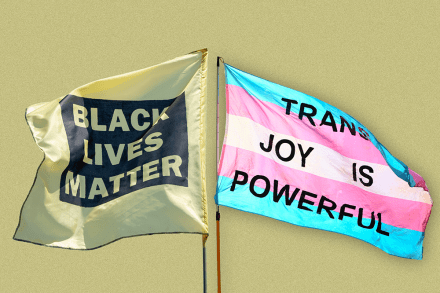
We will remember 2025 as the year that a madness which had gripped us for a decade finally succumbed to that most irritating of things, reality – and the edifice it had built began to crumble like a 1970s brutalist building constructed from high alumina cement. It is not quite the case that woke is over, as Piers Morgan believes, simply that its appurtenances have become despised and those who shout most loudly in favour of its idiotic shibboleths are confined to a smaller and smaller tranche of far-left delusionals.