Columns

The pathology of politics

Researchers from Imperial College London this week released an analysis of the health of voters in the UK. In a publication associated with British Medical Journal, the experts claimed to have found that people who vote for Reform are disproportionately sick. I am sure that the researchers in question could not possibly have enjoyed coming to their conclusions. But they reported that the conditions Reform voters are most likely to suffer from include obesity, chronic obstructive pulmonary disease and epilepsy. The scientists did not go so far as to claim that voting Reform makes you epileptic. As every smart-aleck first-year at Imperial could tell you, correlation does not imply causation.


Who will stand up for motherhood?

Scientists at the Oregon Health and Science University have created the beginnings of a baby using not human eggs, but skin cells. My reaction upon reading this news was to try to fold it up and tuck it away deep in some mental crevasse where I’d be sure never to see it again, because the implications are just too grim; the potential for suffering too much to bear. What the lab has done is devise a way to persuade human skin cells to behave like sex cells (eggs and sperm) and to divide using not only mitosis, which replicates all 46 chromosomes, but meiosis, which results in just 23. Once they’ve discarded half their chromosomes, the skin cells can then be fertilised with sperm, just as if they were human eggs.

In defence of Chris Cash

Can you be a spy by mistake? If, with no treacherous intent, without ever intending to disadvantage your own country, you share information which might give another country advantage over yours, are you spying for that country? In ordinary usage I’d answer these questions with a firm no. Spies operate for many reasons – reward, blackmail, ideology or as a profession – but they do know they are spies. It’s intentional behaviour. If I’ve ever met or communicated with Chris Cash, I don’t remember it. He has, however, been described to me by mutual friends whom I trust. Their descriptions concur. Nothing I’ve learnt about this young man, who worked at Westminster on research into China, suggests it’s likely he can justly be accused of being ‘a Chinese spy’.

Robert Jenrick is right

I’ve just got back from doing a spot of shopping in my local town – and do you know what struck me? How white it was. Absolutely heaving with ghostfaces. In fact, in the hour or so that I spent there I don’t think I saw a single non-white person, apart from some young ladies leaving the local tanning salon who were the colour of a glass of Tango and that doesn’t really count. It is OK to say this, incidentally, if you then use it as a basis to attack the town’s lack of diversity and demand the government ship a few ethnics in, regardless of whether or not they fancy the idea. It is not OK if you are expressing happiness in the fact that the town is all white – if, for example, I had written the words ‘Thank the living Lord Jesus Christ!’ after my second sentence.

The real war is to come for the Tories

British politics often resembles a golden-age murder mystery, with multiple parties sitting anxiously on the sofas/green benches waiting for the detective/electorate to crack the case. The Reform, Labour and Tory conferences provided a plethora of clues. But just as Sherlock Holmes solved ‘The Adventure of Silver Blaze’ by diving into the significance of the dog that didn’t bark, just as much can be learned from what didn’t happen over the past few weeks. First, there was no serious leadership challenge from the pretenders in Labour or the Conservatives. Andy Burnham turned up in Liverpool with a knife between his teeth, only to discover he neither had a seat nor the 80 parliamentary supporters needed to challenge Keir Starmer.

Transgenderism proves people will believe anything

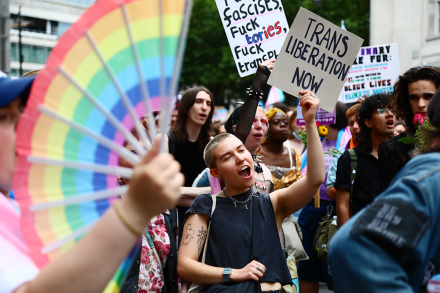
For years, the World Professional Association for Transgender Health (WPATH) has wrapped itself in a guise of medical expertise, advising doctors, schools and corporations in America about how best to treat the hundreds of thousands of people who have mysteriously become confused about which sex they are (personally, I’d recommend a quick dart to the loo to pull down their pants). In truth, WPATH is an advocacy organisation whose storm troopers comprise manic men in dresses who hate women but also think they are women. Get your head round that. Last year, a trove of intra-organisational emails exposed the recklessness of its indiscriminate promotion of ‘gender-affirming care’ (neither affirmative nor care) for ostensibly transgender minors.

Starmer has bought himself time. Can he use it wisely?

The Labour conference in Liverpool was a curiously upbeat affair. Much of the good spirit came from schadenfreude at the misadventures of Andy Burnham. The Mayor of Greater Manchester scuttled out of Liverpool just before Keir Starmer’s speech, having united the party in mutual contempt at his posturing in recent days. ‘A fucking clown’ was the verdict of an ex-cabinet minister. ‘He did an Eric Heffer,’ remarked one Labour official – a reference to the cantankerous Liverpool MP who stormed out of Neil Kinnock’s conference speech 40 years ago. ‘It was the worst coup attempt since South Korea,’ says a former aide. Burnham, however, is merely a symptom, not a cause of Labour’s woes. Serious rivals are unlikely to telegraph their ambitions quite so blatantly.

The Murray Test for TV drama

It is almost a century since Ronald Knox wrote his ‘Ten Commandments’ for detective fiction. Most of them still hold true. For example, his edict that twin brothers and other lookalikes must not be introduced to the story unless the reader has been prepared for them. Also the forbidding of more than one secret passageway or room in any story and the insistence that the sidekick, Dr Watson-like figure should never keep a thought to himself, while having thoughts slightly below the anticipated intelligence of the average reader. My favourite rule is number five. ‘No Chinaman must figure in the story.’ In reality this is an extension of rule one, which holds that the criminal must be someone who has appeared early in the story.

Hard-won gay rights will be easily lost

In the Palace of Westminster a fortnight ago, I spoke at a reception celebrating the 50th anniversary of the Tory gay rights movement now called LGBT+ Conservatives. And last weekend I read a book to be published on 9 October. It turns out that its author and I are saying the same thing. Professor Ronan McCrea has chosen the title The End of the Gay Rights Revolution: How Hubris and Overreach Threaten Gay Freedom. My speech bore no such title, but here’s more or less what I said. I began by recalling, for a young audience, the dismal beginnings of what was to prove a cultural revolution. ‘I will never forget the sniggers and winces at our then name: the Conservative Group for Homosexual Equality.

Crime and no punishment in Khan’s London

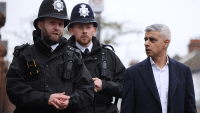
Those of us trapped in Mayor Sadiq Khan’s low traffic neighbourhood scheme are now obedient, resigned. We expect a car journey of under a mile to take 40 minutes. We don’t hope for anything more. On Sunday, around five o’clock, my son and I stuck fast in Dalston Lane, but as we settled down to wait in a mist of carbon monoxide, there was a commotion up ahead. Down the wrong side of the road, horn blaring, lights flashing, came a Mercedes G-wagon, matt black with that handy snorkel up the side, the favourite ride of north London’s gangsters. It was interesting how calm everyone was about it, how unsurprised. A souped-up tank of a car coming at us head-on, and no one shouted or beeped.

Let’s just ignore the Church of England

How important do you think it is to know what the Church of England thought about that ‘Unite the Kingdom’ march in London two weeks ago? There is a very good argument for saying it is about as meaningful and relevant as finding out what Bonnie Blue, that young lady touring the country flat on her back and welcoming anyone who fancies a bit of frictionless poking, thinks about the fractious border dispute between Thailand and Cambodia. There are many institutions in this country that are irrelevant to the great mass of citizens, but few more resolutely so than our established Church.

What’s really behind Reform’s rise

It is the question dominating bars and fringe debates this party conference season: what exactly is driving Reform UK’s popularity? Various explanations are proffered: the collapse of the two-party system, fickle voter tastes, the rise of populism across the West. But these are symptoms of a much greater shift: the new information age, unleashed by the internet. In a nation whose politics have long been characterised by venerable institutions, Reform, born in 2020, can claim to be Britain’s first successful e-party. Like most apparent overnight successes, Reform has in fact been years in the making. For much of the 2000s, Nigel Farage struggled to get anywhere with his Eurosceptic messaging.

Is Charlie Kirk’s murder really a ‘watershed’?

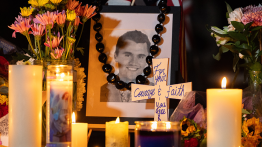
The Charlie Kirk assassination has triggered a spate of duelling death counts. The usual media suspects on both sides of America’s epic left-right divide have trotted out set lists of the past decade’s politically motivated violence. For once, the faction that chocks up the most fatalities in this warped real-life video game loses – for the competition is over which end of the political spectrum can blame the other end for the frenzied ideological bloodlust we’ve been told for days now characterises the contemporary United States. For the left, the starring evidence that the right’s crazies pose the greater threat to the orderly conduct of civic life is January 6th.

The political resurrection of Christianity

There is a passage in Milan Kundera’s novelisitic essay ‘Testaments Betrayed’ where he writes about the nature of history. Man walks in a fog, Kundera observes. He stumbles along a path and creates the path as he walks it. When he looks back, he can see the path, he may see the man, but he cannot see the fog. Everything looks inevitable after it has happened. So we have the ‘sleepwalkers’ explanation of how Europe stumbled into the first world war. We have the ‘inevitability’ of the slide into the second world war. It is perhaps the greatest of all idiotic modern presumptions that so many people imagine while looking back that they would have known better or acted differently. Which brings me to the present.

Starmer’s battle against the King of the North

After Keir Starmer’s calamitous fortnight, the No. 10 official was reflective: ‘Some people say: “Your worst day in government is better than your best day in opposition.” That’s horseshit. Those people haven’t worked in government.’ The mood in Starmer’s top team after the resignation of Angela Rayner and the sacking of Peter Mandelson is, one senior party figure notes, a combination of ‘anger and hurt’. MPs and ministers are openly discussing replacing the Prime Minister with Andy Burnham, the mayor of Manchester. But the outlines of a fightback are now visible. The strategy is one of carrots and sticks. First the carrot.

Who marches against Tommy Robinson?

Isn’t it time we banned such marches as the ‘Unite the Kingdom’ rally, given the thuggery and lawlessness which ensued? A hate-fest organised by the fascist Tommy Robinson, whose real name is Stephen Yaxley-Hitler. No fewer than 528 arrests, 50 of which were for possession of a weapon and 21 for crimes of a sexual nature. It would seem that this demonstration was undertaken by heavily tooled-up Nazi pervs. It is shocking that we should allow it on our streets. Oops, forgive me. I’ve got my facts wrong. I had all the arrest figures written down on a piece of paper. Then, when coming to write this article, I picked up the wrong piece of paper.

How to raise a patriot

‘Good news for patriots,’ said one of our most celebrated national newspapers this week: ‘Your numbers are likely to swell.’ This was on the editorial page, where the opinions of the paper are laid out, and it referred to a poll conducted by ‘More in Common’ which had found, to everyone’s surprise, that British teenagers are pretty patriotic. About half of all 16- and 17-year-olds feel proud of their country, it found, which is more than their parents. It was an interesting poll for anyone considering the rise of Reform and how that might interact with the incoming slew of teenage voters. Interesting too for those of us in liberal London, trying to keep the flickering pilot light of patriotism alive in our children’s tiny, K-pop-infested minds. (What’s K-pop?

Beware the restless, shifty liars

I have only been to Alexandria once, some years ago, when Hosni Mubarak was still in power, but it struck me as a sad city. Of course the library was not the library. The lighthouse was not the lighthouse. The city was not the city. I looked around for the remnants of the Greeks who had made it their own, but there seemed little left of them. Is there a cause we are financing so considerable it is decent to pass the cheque on to the next generations? Alexandria was on my mind again this week while reading a new biography of the city’s most famous modern poet, Constantine Cavafy (1863-1933). He was part of that world which migrated across the Mediterranean.

The misplaced sympathy for Angela Rayner

One evening last week I came home, flipped on the TV and saw on the news what must surely be a eulogy for some sainted figure who had been taken from us prematurely, such was the wailing and the gnashing of teeth. Mother Teresa, I wondered? Isn’t she dead already? Only as I sat down with my cup of tea and saw a photograph of a woman with what looked like a dead fox on her head did I realise that the lamenting was on behalf of Our Blessed Lady of the Ginger Growler and the Vapes who had, apparently, resigned. It would not have surprised me, from the tone of the coverage, if the BBC had organised a shrine to our former deputy prime minister, where desolate members of the public could leave commemorative mementos, garlands of flowers, detailed advice on property taxation, etc.