Columns

Sydney Sweeney, the Hollywood radical

Every time you feel down about Britain’s out-of-touch elites, a look across the Atlantic is a reassuring reminder that it could be worse. Hollywood, in particular, seems incapable of learning lessons. The highlight for me was when various actors tried to comfort people during the pandemic by recording a butchered version of John Lennon’s ‘Imagine’ from their California mansions. As if the worst song ever written wasn’t already bad enough. Such political tone-deafness has become such a stock trope of Hollywood that it has been lampooned at length, most brilliantly by South Park creators Trey Parker and Matt Stone in Team America: World Police (2004).

Justice in war is messy

At the end of last month, a judge in Belfast issued a verdict that was both right and wrong. The case related to a man known to the public only as ‘Soldier F’. He was one of the members of the Parachute Regiment involved in the events of the day in January 1972 that became known as Bloody Sunday. That day 13 members of the public were shot dead during a civil rights march in Londonderry that turned violent. The precise details are probably more heavily documented than those of any other day in history thanks to the Saville Inquiry, which became the longest and costliest legal inquiry in British history. Indeed, it made the trial of Warren Hastings look like a snap verdict.

Inside the Wes Streeting plot

Keir Starmer is stuck in a catch-22. If he is to avoid the threat of continual leadership challenges, the Prime Minister will need to deal with what every poll shows are the public’s three overriding concerns: the cost of living, rampant illegal immigration and the state of the NHS. But if serious progress is made in any of these areas, it is likely to turn the minister responsible into a viable leadership candidate. Let’s call it catch-25. Rachel Reeves at the Treasury has a monumental task and is politically tied to the Starmer project, so she can be ruled out. Of the other two key issues, most progress has been made in reducing NHS waiting lists, the task of Wes Streeting.

The engine’s pitch has changed

On a long flight there’s an instant, and perhaps you’ve noticed it, when a very slight alteration in the pitch of the engine occurs. Some considerable time remains before the ‘prepare for landing’ announcement, but from this point on the plane’s trajectory will be gently back to earth. Within the cabin we sense no sharp adjustment of tilt, but something has changed. From the moment when, in Nicosia in 1955, General Sir John Harding spoke to me at the Christmas party he gave for British children in Cyprus, I had wanted to be, like him, the governor of a colony. I was six. My head was bandaged. The governor seemed concerned.

We have to stop looking away

I learnt not to intervene on a late summer’s afternoon nine years ago. My son was still a baby and I was pushing him in his pram across a busy road in a responsible way, only after the green ‘walk’ man had lit up. I was about halfway over when a boy of about 14 on a moped scorched through the lights and past us, nearly hitting the pram. I yelled at him, and as I yelled felt the spirit of civic duty rise within me. If we middle-aged mothers don’t set the kids straight, who will? The boy skidded to a stop and turned to face me. I can’t now remember what he said, but the gist of it was that I’d radically misjudged the situation and that if I didn’t show him some respect, he’d have to hurt me.

Energy is the new political battleground

With three weeks until the Budget, the main political parties have been setting out their economic thinking. Each faces the same bind: anaemic growth, fiscal constraints and uncomfortable exposure to the bond markets. The upshot is that there is less ‘clear blue water’ on the economy between Labour, the Conservatives and Reform. Even Sir Mel Stride, the shadow chancellor, irritated some colleagues by appearing to suggest he would raise income tax if he were in Rachel Reeves’s shoes at his party’s conference. ‘It’s a good job no one is listening to us,’ jokes a fellow frontbencher. If the economy is less of a dividing line in British politics, what might take its place? Energy is one possibility.

You can’t trust the BBC

You may remember that in February the BBC found itself in a spot of bother regarding a film about the conflict in Gaza which, it transpired, had been narrated by the son of a Hamas minister. Some people, not least Jewish people, wondered if such an account perhaps might accidentally stray into the realms of partisanship, and the BBC was forced to withdraw the documentary forthwith. It then commissioned an internal report into why this young lad had been chosen to front the film, rather than, say, Rylan Clark or Clare Balding. As a consequence of the investigation, the BBC’s head of news, Deborah Turness, sent a round robin email to all BBC staff. Only now, nearly nine months later, can I reveal the disturbing truth about what Ms Turness told her colleagues.

New York is not the city that Mamdani pretends it is

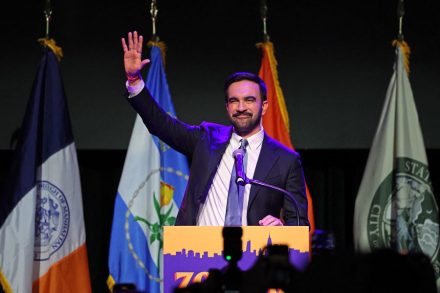
There is an unhappy history of left-wing Britons getting involved in US elections. Back in 2004, the Guardian organised a letter-writing campaign, urging voters in the swing state of Ohio not to re-elect George W. Bush. The good people of Ohio didn’t take kindly to a bunch of Islingtonians telling them how to vote, and although the Guardian’s campaign probably can’t be given all the credit, the voters of Ohio duly went to the polls and swung firmly behind Bush. One wishes that Sadiq Khan’s intervention in this week’s New York mayoral election might have had a similar result. Interviewed shortly before Zohran Mamdani was elected, the mayor of London praised the Democratic Socialist candidate for mayor of New York as ‘fun’ and ‘authentic’.

I’ve been enslaved by my Apple watch

Aside from streaming on an iPad, one of the few entertainments on offer when riding a stationary bike is tracking your heart rate. Breaking 150 beats per minute provides a fleeting (and doubtless misplaced) sense of achievement. Yet the wearable heart monitor that came with my exercise bicycle proved unreliable; one’s BPM never truly drops from 137 to 69 in one second. This is to explain why I bought the fitness freak’s fetish: an Apple watch. Its heart-rate monitors are accurate. I opted for a reconditioned older model, not only half the price of the new ones but inclusive of the blood oximeter function, which a medical technology suit has forced Apple to eliminate in current American models until the litigant’s patent runs out in 2028.

Is Reform racist?

Sarah Pochin’s gonna take a lot of coachin’. You can’t just turn up on the telly and say you’re sick of all the blacks everywhere. And the Asians. Un-accountably, perhaps, you will be accused of racism, the definition of the term having been extended rather further than my interpretation: to discriminate against an individual on the grounds of his or her race. There will be outrage among the deluded; there will be faux outrage among the opportunistic. Your own party leader will slap you down by saying, in effect: ‘Well, she’s right, obvs, but you can’t say stuff like that.’ And her own leader is not wrong. The Overton window may have shifted but it hasn’t yet been smashed.

Don’t fear the bogeyman

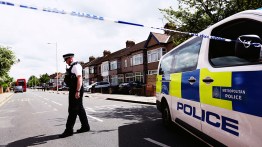
Britain is beset by a bogeyman. A giant, mystical beast that the public are forever being threatened with. Remember last year when a young Welsh choirboy stabbed three young girls to death at a Taylor Swift-themed dance party in Southport? Long before we were allowed to know the name of the culprit – Axel Rudakubana – we were warned about a much greater menace: a rallying by the ‘far right’. After impromptu protests and some rioting broke out in various cities, we were promised on an hourly basis that the ‘far right’ was mobilising. Soon there were crowds of Muslim men organising to counter any such threat.

Which party has the crypto factor?

He helped ‘break’ the Bank of England – but now Scott Bessent is helping to shape its future. As a young hedge-fund manager, he served in George Soros’s firm when it made $1 billion on Black Wednesday. But as Donald Trump’s Treasury Secretary, he has overseen an explosion in cryptocurrencies this year which has left many in London looking on enviously. While the use of cryptocurrencies such as bitcoin has trebled in Britain since 2021, this country’s governing framework has struggled to keep up. A shortage of political bandwidth has meant the UK lacks a national equivalent to Europe’s MiCA rules or America’s Genius Act, passed in July. Our policy is moulded by a trio of the Bank, the Treasury and the Financial Conduct Authority.

The lost art of the insult

Imagine I were to begin this column by remarking that a woman preaching is like a dog walking on its hind legs. It is not done well, but you’re surprised to find it done at all. Dear me, that would never do, even in as cheeky a magazine as The Spectator. Then try instead: ‘Dr Johnson was no admirer of the female sex. “A woman’s preaching,” he said, “is like a dog’s walking on his hinder legs. It is not done well; but you are surprised to find it done at all.”’ I could get away with that. An antiquated opinion, safely attributed to an 18th-century writer, enclosed behind quotation marks and decorated with a few cobwebs, can still be sneaked past our 21st-century censors. But how about a more recent offensive remark?

Imagine what Enoch Powell might have said

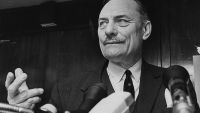
The great John O’Sullivan has a story about Enoch Powell which he keeps promising to put into print. Since he still hasn’t done so, I will risk repeating it here. It occurred during a conversation some years after the Rivers of Blood speech. A group of conservatives were talking, and Powell was among them. At some point one of those present referred to the 1968 speech and asked Powell: ‘Why did you do it?’ Powell’s reply started something like this: ‘When the lark sings in the morning they do not say – “Oh lark why dost thou sing?” When the nightingale gives forth her song…’ and so on. After Powell had gone through an array of the bird kingdom metaphors, he came to his clincher: ‘And so it was with me that day in Birmingham.

George Abaraonye deserves his downfall

Contrary to what I had expected, the Oxford Union president-elect, George Abaraonye, lost his vote of no confidence by a whopping margin and will now have to resign. More than 70 per cent of Union members voted for the semi-literate, dreadlocked leftie to lose his job following his apparent delight at the murder of Charlie Kirk. Intimidation and hostility was reported as his supporters sought to disrupt proceedings by hampering the work of the returning officer and Abaraonye, in the manner of a presidential candidate who has been defeated in a general election in a country composed largely of what we are now enjoined to call the global majority, refused to accept the verdict. The ballot was, however, marvellously conclusive – 1,228 out of the 1,746 who voted said he should go.

Reeves’s fiscal play-off

In a week where political attention was on espionage and anti-Semitism, the cri de coeur from one Treasury official was notable. Recalling how Budgets were made during the years of Gordon Brown, before the 2010 coalition created the Office for Budget Responsibility (OBR), the number-cruncher complained: ‘All they had to do was fiddle their own figures. That was a dream compared with this.’ Earlier this month, Rachel Reeves received the OBR’s first estimate of the state of the public finances, showing the depth of the ‘black hole’. She will shortly get another OBR report on how falling productivity is damaging growth. For every 0.

Legal immigration is an absolute nightmare

A personal note this week, as 15 October 2025 marked an occasion of sorts: when my husband’s and my Portuguese residency permits expired. Isn’t that a bit sloppy, you might ask, allowing your permission to remain in a country where you live to lapse? On one party’s part, very sloppy, but not ours. At least a dozen people must have exclaimed to me: ‘Oh, I’ve thought about moving to Portugal!’ After emigrating from London in 2023, I’m not issuing a warning exactly. We don’t regret the move. Landscape gorgeous, food great, people nice, wine cheap. But this country is notoriously bureaucratic, and the paperwork side of playing Mother, May I? with Portuguese immigration was and remains a nightmare.

The ECHR will never be reformed

It is more than nine years since I was suspended by the Labour party for – I think – a comment I made about Palestine. I had written: ‘If you handed over Israel to the Palestinians they would turn it into Somalia before you could say Yom Kippur.’ I remember having worried about the sentence a little – not because of its meaning, but because I wasn’t sure that ‘Yom Kippur’ was quite right in that context. I thought, and still do, that ‘Allahu akbar!’ might be better, but there we are. Anyway it was either that or a following sentence where I wrote: ‘For many Muslims the anti-Semitism is visceral, an ingrained part of their unpleasant ideology.