Columns

The thinking behind Nigel Farage’s shadow cabinet

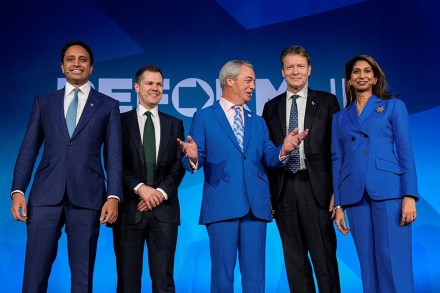
There is an old joke about Nigel Farage, put about by former colleagues. ‘Why is Nigel like a beech tree?… Because nothing grows under him.’ The comparison to this acid-leafed tree which stifles all beneath it is one the Reform UK leader has never accepted. ‘I don’t fall out with people,’ he once said. ‘They fall out with me.’ Like Tintin, Farage has enjoyed many different adventures in different guises: ‘Nigel in America’, ‘Nigel in the Jungle’, ‘Nigel in the City’. This week, we got another: ‘Nigel and the Gang of Four’, the leader who seeks power only to yield it to others. Four names were unveiled as part of Reform’s new ‘shadow cabinet’ to show he is building something bigger than himself.

Britain’s right is falling into the same trap as the left

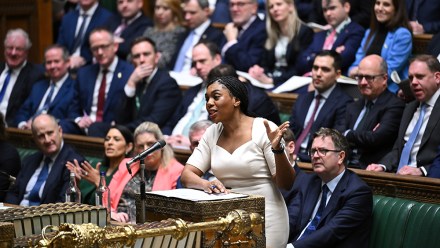
As I have suggested here before, there are few joys in life equal to that of watching the left fall out among itself. Whatever your political views, the whole Judean People’s Front vibe of the parties to the left of the Labour party brings a special type of comedy. If anybody remembers the recent Your Party conference they will know what I am talking about. In fact if anybody still remembers Your Party, they deserve a box of chocolates. But something similar now seems to be happening on the political right. And the Gorton and Denton by-election has brought it into a clearer light.

What would Kenneth Williams make of our age?

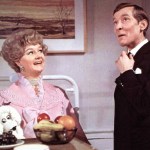
Sunday marks what would have been the 100th birthday of Kenneth Williams. It’s tempting to try to imagine what he would have been like had he lived longer, though the absurdity of our age might have been beyond even his acid observation. That’s perhaps the most interesting aspect of Williams: he can’t be imagined in the present day at all. As recent as his lifetime was, it was one so utterly bound by the 20th century as to feel distant. How so? Well, his critics would point to the Carry On films. A young and serious acting talent, coached in Shakespeare by Olivier no less, was wasted, so the argument goes, on trivial smut, consigning him to perma-residence in the world of Ted Heath and the Wombles novelty record.

To understand pure stupidity, watch The News Agents

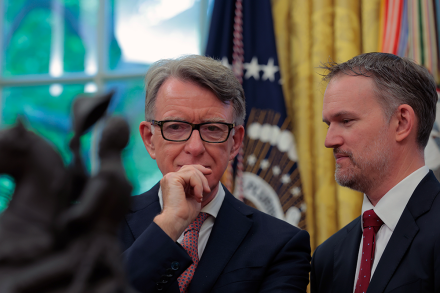
There have been numerous surveys over the years intended to prove that conservatives are more stupid than liberals and vice versa, so many that it is almost impossible to draw any meaningful conclusion. It is of course an important issue and so, in lieu of yet another survey, could I suggest that you watch a single edition of The News Agents podcast and you should be left in no doubt as to the correct answer. Whether it be Jon Sopel asserting the brilliance of the appointment of Peter Mandelson as the UK’s ambassador to Washington, or almost anything Emily Maitlis says on any issue, or just to see Lewis Goodall – merely to catch the faintest glimpse – will immediately direct you to the correct conclusion.

British politics has become a Devil’s Wheel

There is a moment in Evelyn Waugh’s Decline and Fall which has been much on my mind lately. It is the bit towards the very end of the novel when our hero, Paul Pennyfeather, re-encounters the sinister modernist architect Professor Otto Silenus. By this point Pennyfeather has undergone all manner of travails. He has been debagged and sent down from Oxford, accused of human-trafficking and sent to prison. But, as the pair sit outside the Corfu villa in which Pennyfeather is staying, the professor suddenly offers to reveal his theory about the meaning of life. How many people in politics have been picked up and flung off this great revolving fairground ride? Silenus describes a particular fairground attraction, the Devil’s Wheel (‘the big wheel at Luna Park’).

Who doesn’t want a better life?

Every couple of years a columnist-cum-novelist will inevitably stoop to shameless self-promotion. In my defence, at least the novel released this month is germane to the political moment. Lest its simple title, A Better Life, come across as lame, I asked the designers of my British and American hardback covers to use imagery that conveys the book’s focal subject matter: immigration. See, proponents of unfettered mass migration have eternally assured us that most illegal immigrants – or as the Biden administration instructed federal law enforcement to call them, ‘newcomers’ – are merely seeking ‘a better life’. This explanation is routinely trotted out as an irrefutable justification for a potentially near-infinite imposition of foreigners on western polities.

The stakeholder class needs blowing up

In February 1974, a frustrated Ted Heath, unable to achieve anything in government against constant opposition by the mighty trade unions, called an election. One basic question was front and centre of the campaign: ‘Who governs Britain?’ Soon the answer came back: ‘Not you, mate.’ In fact, it would take Margaret Thatcher’s victory to clip the power of the unions – but only after enormous political and economic risks were taken. With the collapse of public infrastructure, a lingering sense of decline, and Britain looking embarrassed (and embarrassing) on the world stage, comparisons to the 1970s abound today. Another similarity is the presence of an all-powerful caste.

I was right about Peter Mandelson

A fight between Alastair Campbell and Peter Mandelson? A difficult one to call, really. Like a war between Pakistan and Turkey: you kind of want both sides to suffer unimaginable losses. It happened fairly often, though, in that uniquely dysfunctional Blair government and before, when his cabal of liars and smarmers were preparing for power. Here’s Campbell on the subject: ‘He started to leave, then came back over, pushed at me, then threw a punch, then another. I grabbed his lapels to disable his arms and T.B. [Tony Blair] was by now moving in to separate us and P.M. just lunged at him, then looked back at me and shouted, “I hate this. I’m going back to London.”’ Stamp, stamp, stamp went those dainty little feet, probably clad in moccasins.

‘It’ll be a photo finish’: inside the Gorton and Denton by-election

British by-elections are often prolonged affairs, dragging on for months. Yet in the Manchester seat of Gorton and Denton – once home to Myra Hindley and the Gallagher brothers – campaigners are on a frantic dash to canvas the 82,000 voters before polling day on 26 February. ‘It is a proper three-horse race,’ says one. ‘And it’s coming down to a photo finish.’ Gorton has been red since the days of Ramsay MacDonald – but now a WhatsApp scandal threatens to end Labour’s hegemony. Andrew Gwynne, the departing MP, has quit over a series of lewd messages. Manchester mayor Andy Burnham, blocked from standing to replace him, has instead become the spectre of this contest.

What Catholics get wrong about assisted dying

The Catholic Church has always been remarkably relaxed about sin. It becomes distinctly jumpy, however, when it encounters any challenge to the Church’s designation of what is sinful. Human beings (it suspects) are and always will be sinners. The Church has no problem in dealing with sinners: they should confess. Absolution may be available, dispensed by a priesthood who have privileged access to the Almighty, and can intercede. It isn’t really the commission of a sin that worries the Church. It’s the rejection of a doctrine ‘We will tell you what’s unclean in the eyes of God. We also offer a laundry service to which we hold the monopoly.’ To a cynic it might occur that this a shrewd way of drumming up trade.

The role of ABBA in the Ajax fiasco

‘It’s all about ABBA,’ a military acquaintance whispered when I mentioned the scandal of the British Army’s order of 589 Ajax armoured vehicles, for which -‘initial operating capability’ status has been withdrawn following multiple cases of soldiers suffering after-effects of intolerable noise and vibration. What could that possibly have to do with the great Swedish-songsters? Nothing, he explained: it is an acronym for ‘Anything But British Aerospace’, allegedly a mantra in defence procurement circles in a previous era.

I decluttered a 1990s time capsule – and this is what I learnt

After my grandmother died a few years ago, we couldn’t bring ourselves to get rid of most of her possessions. What had started as a storage room at my parents’ house quickly morphed into a living, breathing pile. It gradually invaded the spare bedroom and was making encroachments into my mother’s study. Answering the call of nature at night became fraught with terror, lest the pile had become sentient and would drag me into its clutches in the small hours of the morning. It was like living in a cross between Storage Wars and a Stephen King novel. There was a whole box devoted to Diana and Charles plates and Andrew and Fergie engagement mugs I’ve never been one for minimalism.

Why won’t the BBC use the word ‘Jews’?

I was intrigued to learn from the BBC Today programme on Tuesday that ‘buildings across the UK will be illuminated this evening to mark Holocaust Memorial Day, which commemorates the six million people murdered by the Nazi regime more than 80 years ago’. Who were these unfortunate ‘people’, I wondered? Just anyone at all? Was it a wholly indiscriminate spot of slaughter? I have some vague memory that it was one race in particular that was singled out for extermination, but the BBC dared not say their name. In fact, the sentence I quoted is wholly inaccurate: the ‘six million’ figure relates only to Jewish people.

What is ‘Starmerism’?

If Keir Starmer didn’t already understand Harold Macmillan’s warning about ‘events, dear boy, events’, he got a lesson on Saturday. At 4.49 p.m. on Truth Social, Donald Trump ate humble pie about the -sacrifice of British troops in Afghanistan, having previously claimed Nato forces avoided the front line. ‘We enjoyed it for a few minutes,’ a close aide recalled. Eleven minutes, to be precise. At 5 p.m. on the dot, Andy Burnham announced that he wished to stand in the Gorton and Denton by-election. So began the latest psychodrama at the top of the party. This was an open challenge to Starmer’s authority and a test both of his remaining political power and his willingness to use it.

No one is safe from a wealth tax

No matter how many jurisdictions discover the hard way that wealth taxes backfire, in California an initiative is collecting signatures to put a ‘one-time’ (ha!) 5 per cent tax on the net worth of the state’s roughly 200 billionaires on November’s ballot. Hey, those guys are rich. They won’t even notice. But the funny thing about people and money is that even folks with lots like to keep it. The 2026 Billionaire Tax Act is slyly retroactive, a variety of pre-crime legislation – applying to anyone resident in California on 1 January this year, looping a bungee cord around the ankles of would-be absconders. Thus billionaires such as Peter Thiel scrambled to establish a presence in a lower tax state before midnight on New Year’s Eve.

The censors are winning

They say you should never meet your heroes, a rule that is not always correct. But I did have a salutary session some years ago when a friend in New York asked me if I wanted to meet a comedian I really do admire. I had been looking forward to the meeting, but unfortunately it took place during the summer of 2020. If you remember those far-distant days, this was a time when America was obsessing over the story of alleged disproportionate police violence against black Americans. One of the cases was that of a woman named Breonna Taylor. Although the case for the police’s actions and the victim’s innocence revolved around a number of issues, the main one was whether officers should have shot when they did.

The allure of Reform

Kemi Badenoch’s travails with Nigel Farage’s Reform UK party have taken me back to the politics of the 1980s and the Social Democratic party’s challenge to Labour at the time. Like Reform now, the SDP sought to replace one of the main incumbent parties of British politics, but the SDP’s case went beyond finishing off Labour. Like Farage now, they argued that the whole two-party system was ailing, that neither was capable of providing a political home for millions of voters who felt unrepresented by them, and that each was, in their own way, so stuck in their furrows that only a new party could give Britain the leadership it needed. The project did not end in success despite this initial message at one point commanding 50 per cent in the polls.

The true villains of our TV crime dramas? The creators

Idly watching the first episode of a TV crime drama series recently, I found myself in a slightly troubled frame of mind. We were already 35 minutes in and no probable villain had shown their face. We had seen black people, Chinese people, lesbians, the disabled, the impoverished and powerless, Muslims, the young and idealistic… yikes, I thought to myself, it simply can’t be any of them, can it? Surely not. And then, as if the scriptwriter had heard my private worries, for lo, a very rich, marble-mouthed white woman emerged and was shown being beastly to some young and idealistic people and I thought: bingo! We have our villain. There is no need to watch the remaining five episodes. She did it, the rich cow. The only slight surprise is that it was a woman rather than a bloke.