Arts feature

The journalists who scripted the golden age of Hollywood

When talkies appeared in 1927, Hollywood went searching for talkers to write them. It turned to men like Herman J. Mankiewicz: to journalists. The greatest screenwriters of the golden age were journalists first; unlike novelists, they thrived in Hollywood — at least professionally. Good films and good journalism need brevity; novels don’t. Reading about F. Scott Fitzgerald struggling at MGM, 12 years after The Great Gatsby, is brutal, like trying to watch a man learn to walk. The film Mank, by David Fincher, tells the story of how Mankiewicz and Orson Welles created Citizen Kane — for which they shared an Oscar for the screenplay in 1942 — and how they bickered over the credit.

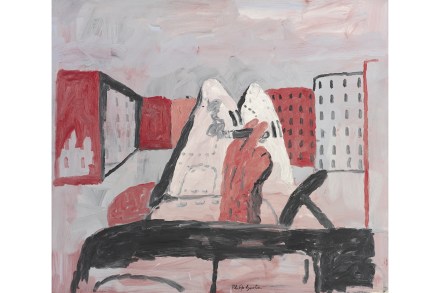
Antony Gormley: why sculpture is far superior to painting

Antony Gormley: In the beginning was the thing! The reason I chose sculpture as a vocation was to escape words, to communicate in a physical way. It was a means of confronting the way things were, of getting to know them in material terms. The origins of making physical objects go back to before the advent of Homo sapiens, earlier even than the appearance of our Neanderthal cousins. Sculpture emerges from material culture. At the beginning there was an urge to make objects and you could argue that making them was the catalyst for the emergence of the modern mind.

‘We’re all members of the Stasi now’: Irvine Welsh interviewed

The history of the word ‘offend’, from the Latin offendere, to hit, attack, injure, is a revealing one. From its starting point in physical violence to transgression against God in the Middle Ages, today ‘offence’, understood as displeasure or upset, is seemingly everywhere. The word may no longer refer to direct physical harm, but culture of all kinds, from artworks to comedy to literature to music, seems to have an upsetting quality to some. Words, we are told, are ‘violence’, images are hurtful, differing opinions are dangerous and must be suppressed. Even silence is ‘violence’, as this year’s Black Lives Matter protests reminded us.

The genius of stop-motion wizard Ray Harryhausen

Modern Two in Edinburgh reopens this week, and what more fitting subject for a show in a time of global catastrophe than Ray Harryhausen, titan of cinema, creator of beasts, destroyer of cities, king of adventure? If you were near a screen at any point during the Cold War, you almost certainly watched Harryhausen movies. The tentacled Beast from 20,000 Fathoms, so realistic it was awarded an X certificate upon arrival in Britain; the mythical marvels of The 7th Voyage of Sinbad; and the vicious skeletons of Jason and the Argonauts captivated generations of viewers. These indelible creations, all handmade by one man, the animator, special-effects pioneer and producer Ray Harry-hausen, have become a magical fixture in our collective imagination.

Skyscraper squats and a lesson from India: the future of British architecture

Not long ago, if you asked discreetly in the right Hackney pub, you would be put in touch with a character called Syd the Squatbroker. For as little as £150, he would gain access to the roof of an abandoned council tower block with a set of fireman’s keys. Then Syd (nom de guerre of a carpenter from Harlow) would abseil down to a window, gain entry and open an empty flat. Sometimes he would cut through heavy steel squat guards using oxyacetylene cutting gear. Latter-day squatbrokers aren’t yet abseiling down the Shard or Canary Wharf’s glass and steel phalluses to liberate underused office spaces and thereby help solve London’s housing crisis, but you’d think they must be tempted. Post-Covid, home working is becoming permanent.

Why the Royal Academy is wrong to consider selling their precious Michelangelo

How much does a Michelangelo cost? It is, as they say, a good question, meaning: nobody really knows. The reason for this odd state of affairs is that almost none of them have ever been bought and sold on the open market, which is how the prices of most things are established. It’s hard to think of many examples of his sculptures being traded in that way over the past 500 years. Strangely, the main exception is the ‘Taddei Tondo’, otherwise known as ‘Virgin and Child with the Infant St John’, which, reportedly, some members of the Royal Academy are suggesting the RA should sell. If that were to happen, which I very much hope it does not, we might learn the answer to the conundrum. Probably it would be a very large sum indeed.

The most important book on black Britishness has one flaw: its author was white

How many black friends do you have? Do you have any? It’s likely that black people have more white friends than the reverse. In part that’s surely down to demographics and the size of the population. No matter your colour, you’re ten times more likely to bump into a white person than a black person, more or less, depending on where you find yourself, of course. The situation is not so pronounced as in the United States where residential segregation has reinforced social apartheid. In the UK black and white people may live cheek-by-jowl, but that doesn’t necessarily indicate knowledge or even empathy. Out of just over 100 households on our street in Brighton there are three black families; ours is one of them.

The gentle genius of Mervyn Peake

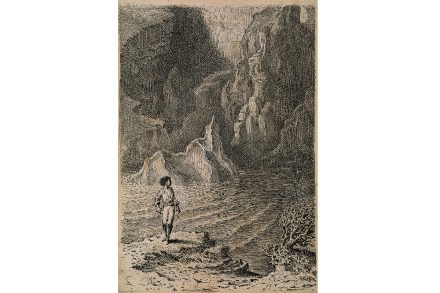
To be a good illustrator, said Mervyn Peake, it is necessary to do two things. The first is to subordinate yourself entirely to the book. The second is ‘to slide into another man’s soul’. In 1933, at the age of 22, Peake did precisely that. Relinquishing his studies at the Royal Academy Schools to move to Sark, in the Channel Islands, he co-founded an artists’ colony and took to sketching fishermen and romantic, ripple-lapped coves. He put a gold hoop in his right ear, a red-lined cape over his shoulders, and grew his hair long, like Israel Hands or Long John Silver. The incredible thing was that he had yet to receive his commission to illustrate Treasure Island.

The forgotten female composer fêted by Mozart and Haydn

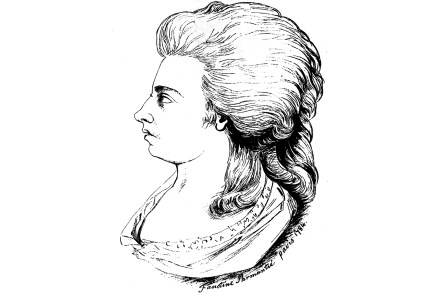
A few years ago, I was sitting in the London Library researching a book about blind people across the ages. As a semi-blind person myself, I sighed at the lack of women, other than the endlessly chipper Helen Keller, who never had a bad day. Ever. My sister, however, drew my attention to a two-line wiki entry for the 18th-century composer, singer and professor — and darling of the Viennese musical court — Maria Theresia von Paradis (1759–1824). Ten years passed, and after many hours of research in libraries and chats with music scholars, we now find ourselves — to our utter amazement — co-writing a chamber opera about her life.

The art of street furniture

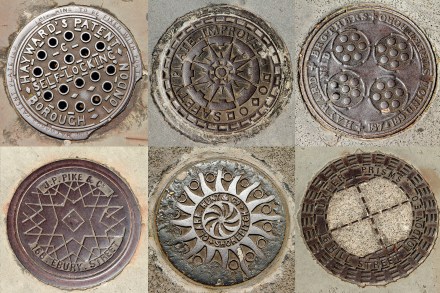
It was possible to stand in the middle of the road during the lockdown without being run over. In Willow Place, near Victoria Station, I crouched over a narrow grating of stout grey iron, and caught a glimpse of light reflected from moving water deep below, as though at the bottom of a well. This was the River Tyburn, on its way from Hampstead via Buckingham Palace to the Thames. During the endlessly sunny lockdown days, I wandered the streets near my office in Victoria. The bright unpeopled silence (like a landscape by de Chirico) brought to my attention details unnoticed before. With all the galleries closed, this was street art.

The original Edinburgh Festival

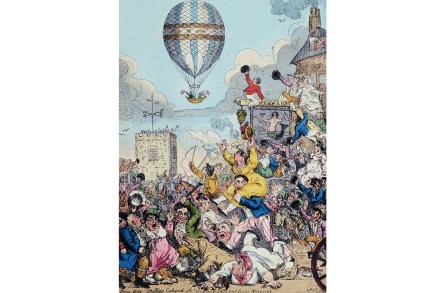
Edinburgh, 3 November 1815. The university courtyard is buzzing. A band is playing. Surrounding streets are filled with thousands of excited spectators, many waiting since 10 a.m. From the Castle, from windows and rooftops, from Calton Hill, Holyrood Park and Salisbury Crags, all strain to get a glimpse. Then finally at 3 p.m., above the university, a large balloon suddenly emerges, climbing wondrously into the crisp November sky. Orchestrating this aeronautical display was pioneer English balloonist James Sadler. His balloon rose majestically as the westerly wind took it towards the sea. Sadler continued waving his flags as long as he could be seen, and the crowds applauded and gasped.

‘Where I grew up, classical music was diversity’: an interview with conductor Alpesh Chauhan

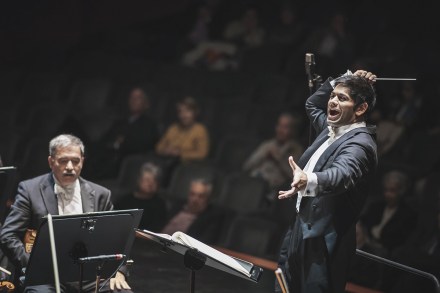
The first time Alpesh Chauhan conducted Birmingham Opera Company, he was surrounded by rats: six-foot tall rats, singing Shostakovich at the top of their voices. There were singing cops, too, and a marching band wearing bloodstained wedding dresses, and this was all happening in a derelict Edgbaston dance hall best known as a location for the 1980s Central TV drama Boon. Well, of course it was. BOC is the company that staged Mussorgsky in a circus tent and Stockhausen in an abandoned chemical warehouse; its whole point is to upend traditional assumptions about opera. The big difference in its production last year of Lady Macbeth of Mtsensk came from the orchestra.

The real Rupert Murdoch, by Kelvin MacKenzie

For more than four decades I have been around Rupert Murdoch. In that time he employed me in both London and New York, invested in my business ideas and ultimately fired me. It was always rock ’n’ roll around Rupert and that’s the way I liked it. So you would have thought that when the BBC made its current three-part documentary on him, it might have come to me for my views. Oh no. I presume it didn’t want to take the risk I might say something warm and supportive. It did, however, film Trevor Kavanagh, the Sun’s political columnist, for hours on end. He was warm and supportive. But all that was left on the cutting room floor. The BBC only wanted the bile. Instead, it concentrated its filming on the usual suspects.

Model villages aren’t just for kids

When you leave Bekonscot, the world looks different. The semis and grass verges of suburban Beaconsfield seem slightly wrong: too large, too assertive. It takes a minute or two to adjust your perspective — to size yourself up, or bring the surrounding houses down. In that moment, you experience the sensation described by Will Self in Scale, his morphine-addled hymn to Britain’s most celebrated model village: ‘Some people lose their sense of proportion; I’ve lost my sense of scale.’ Well, supply your own lockdown metaphor.

Drive-in cinemas are back – but for how long?

Pandemic creates the oddest phenomena: here, for instance, is a British drive-in cinema. They exist for people who won’t go to a conventional cinema for fear of infection, which sounds like a film in itself. But that is the charm: attending a drive-in cinema feels like living inside a film, because every British drive-in cinema until now has failed.

The weird and wonderful world of hotel carpets

Consider the carpet. In all likelihood, you usually don’t. It’s simply something beneath your feet, soft or scratchy, bright or beige, thick or thin. But in a new book, Bill Young asks you to pause and really look at a particular genre of floor-padding: the carpets in the hotels around the world. In Hotel Carpets, the long-neglected designs pop from the pages. Young, a corporate pilot, would often send pictures of hotel carpets to his wife and daughter while he was travelling. ‘Because I spend most of my life in hotels, that’s just one thing that was sticking out,’ Young says, in a video interview from his home in Dallas, where he’s been mostly grounded of late, due to the pandemic.

Culture is going underground: meet the rebel army

Among the first to arrive was a Labour grandee. Then others drifted over: academics, musicians, writers, a nurse. They came from different directions, some looking shifty, others excited. The secret meeting point was an inconspicuous pub in north London. Queueing shoppers nearby assumed the growing crowd was waiting to get into the supermarket. In groups of five those gathered were led down a suburban street to a derelict leisure centre. For one night only, the gym had been turned into a makeshift theatre. The audience, of up to 30 people, had congregated to flick a collective V at the social distancing measures, and to watch A Hero of Our Time, a three-hander adapted by HUNCHtheatre from the 1840 novel by Mikhail Lermontov.

The festivalisation of TV

The Glastonbury festival has undergone a series of metamorphoses in the 31 years since I first attended as a 15-year-old fence hopper (as, indeed, have I, thank heavens). One of the most significant changes, to pillage Gil Scott-Heron’s famous prophecy, is that the evolution has been televised. Back in 1989, if your boots weren’t on the ground — often a quagmire, though not that year — you missed out on all the fun. This has not been the case for aeons. Television coverage of Glastonbury began on Channel 4 in 1994, switching to the BBC three years later.

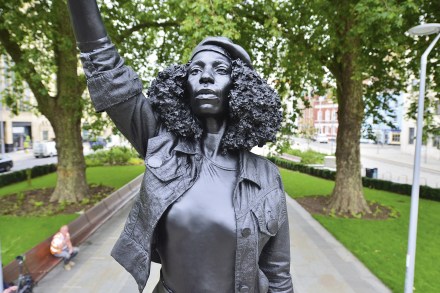
The statue-topplers are obsessed with white men and white history

On my visits to Bristol in the past, there was always a certain statue peering over the city centre that would trigger heightened emotions in me. I’m not talking about the recently toppled monument of slave-trader Edward Colston, but the memorial to another representative of empire: the radical scholar and reformer Raja Rammohan Roy, who came to London in 1830 as the ambassador of the Mughal Emperor (who was by then a titular sovereign under the rule of the East India Company), and died in Bristol three years later. He now stands in pride of place on College Green, outside the cathedral, about five minutes’ walk from where the Colston statue stood, until last weekend. Both statues commemorate quintessential products of the British Empire.

This crisis could be the catalyst for a golden age of British theatre

The arts are in a state of crisis. How often have you heard that before? Well, this time around it happens to be true. In the age of coronavirus, it’s clear that the old way of doing things won’t work any more. Theatres, in particular, have been quick to grasp the bleeding obvious: cramming lots of people into crowded spaces has suddenly become extremely difficult. How do you fill a theatre in an era of social distancing? Short answer: you can’t. The response from theatre practitioners has been fairly predictable. What the theatre needs, they tell us, is more public cash. West End producer Sonia Friedman says that 70 per cent of performing arts companies will close by Christmas if there is no government rescue package, reports the Telegraph.