Arts feature

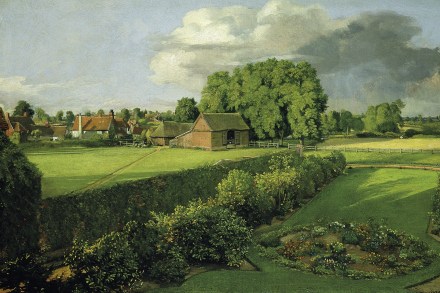
How John Constable got masterpiece after masterpiece out of a tiny corner of rural Suffolk

Before his marriage John Constable returned regularly in early summer to his native village of East Bergholt. When he wrote from there to his wife-to-be, Maria Bicknell, he almost always exclaimed that Suffolk was ‘in great beauty’. His enthusiasm was never more eloquent than on 22 June 1812, when he declared: ‘Nothing can exceed the beautiful appearance of the country at this time, its freshness, its amenity — the very breeze that passes the window is delightful, it has the voice of Nature.’ I often think about Constable (1776–1837) as I pace across the water meadows on my daily constitutional — partly because this too is an East Anglian landscape not unlike the one he was writing about: flat, leafy, watery, abounding in willows.

Swanky, stale and sullen, the summer music festival has had its day

‘Festival?’ said Nathan Milstein. ‘What is festival?’ I had naively asked the most immaculate of violinists where he used to play in the summer and he looked at me as if I had proposed an unnatural act. ‘Before the war,’ said Nathan, offering a glimpse of paradise lost, ‘Volodya and I would stay at Senar for six weeks with Rachmaninov.’ Volodya was Horowitz, his best friend. ‘In those days,’ he continued, ‘we liked to spend time with composers. A composer was someone you could talk to. He knew philosophy, literature, lepidoptery. Rachmaninov could name all the butterflies around Lake Lucerne. He liked me better than Volodya, maybe because I was not pianist.

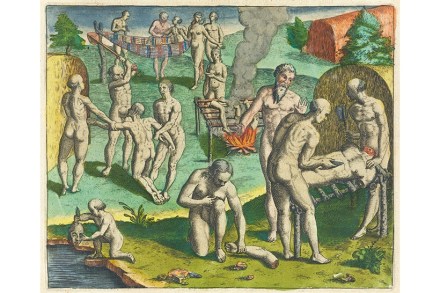
Europe’s eye-popping first glimpse of the Americas

Coronavirus has cast a dampener over this year’s Mayflower 400 celebrations due to a hidden enemy with which the Pilgrim Fathers were all too familiar: within months of their arrival in America more than half of them had died of a disease whose principal symptom was violent coughing. There was no official artist on the Mayflower. Its ragtag party of Separatist Puritans had only been granted a charter on condition that their religious affiliation, banned in England, was not formally recognised.

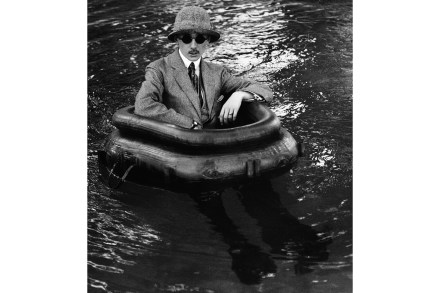
William Boyd on the miraculous snaps of boy genius Jacques Henri Lartigue

What must it be like for an artist to achieve success only at the end of a long, relatively ignored career? The word ‘bittersweet’ seems particularly apt. Yet, late recognition is better, I suppose, than dying in oblivion like Vincent van Gogh, Franz Kafka or John Kennedy Toole. One of my favourite photographers, Jacques Henri Lartigue (1894–1986), did manage to savour the sweet smell of success in his old age. Lartigue’s late flowering was down to New York’s Museum of Modern Art and its then director of photography, John Szarkowski. There’s a very good argument to be made that during Szarkowski’s tenure at MoMA (1962–91) his shows transformed 20th-century photography.

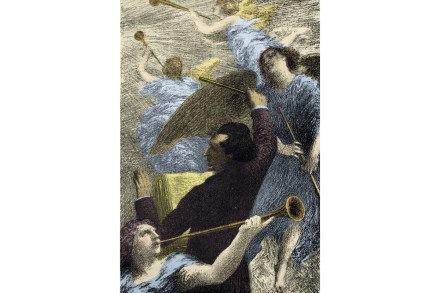
Why we love requiems

At some point during the 20th century death disappeared. The dying were discreetly removed from our communities and homes, taken to hospitals with short memories and wipe-clean walls. Mourning blacks faded before vanishing altogether; the elaborate funeral monuments of the 19th century shrugged off curlicues and cherubs and arranged themselves into unobtrusive, apologetic sobriety. Coffins — gauchely literal — gave way to the more tasteful euphemism of the ash-filled urn. Only concert halls bucked the trend. Suppressed from everyday life and language, death found a different outlet. How many choral societies or symphony choruses today go a year without performing a requiem mass? How often do Classic FM or Radio 3 go a day without playing music from one?

From Middlemarch to Mickey Mouse: a short history of The Spectator’s books and arts pages

The old masters: how well they understood. John Betjeman’s architecture column ran for just over three years in the mid-1950s. Yet during that short run he experienced the moment that comes, sooner or later, to every regular writer in The Spectator’s arts pages. ‘It is maddening the way people corner one and make one discuss politics at the moment,’ he wrote on 23 November 1956, clearly as bored of the Suez crisis as the rest of us were, until recently, by Brexit: Because I write in this paper, people assume that I share its Editor’s views about Suez… But I don’t know what the views of this paper about Suez are, because I never read the political stuff in front.

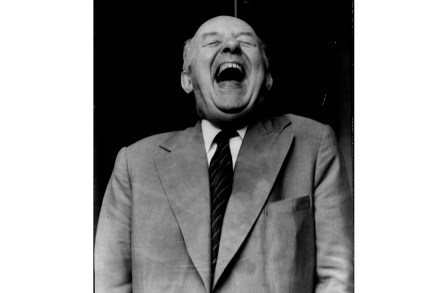
Welder, banjo player, comedian, actor, and now artist – Billy Connolly interviewed

We are in a basement gallery in London’s West End, and Britain’s greatest comedian is doing what he does best — sharing his delight at the daft absurdities of daily life. He remembers seeing a little boy wading into the freezing waters at Aberdeen. ‘You make a certain noise when the wave comes up. It’s a noise that you can only repeat by shoving a hot potato up a donkey’s arse.’ He is making this empty gallery feel as though it’s full of people — and a bunch of strangers laugh like old friends. ‘A lot of my stuff doesn’t have punchlines’. He doesn’t need them. ‘It’s lovely just making a big picture, and saying, “I was there, and I’d like to invite you to share it with me.

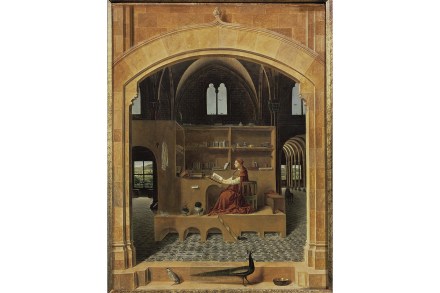
The art of the hermit

Late in the afternoon on Valentine’s Day, I walked through an almost empty Uffizi. Coronavirus was then a Wuhan phenomenon. Our temperatures had been taken at the airport, but there were no restrictions on travel and those wearing masks looked eccentric. I congratulated myself on finding Florence so quiet. Off-season, I thought smugly. That’s the way to do it. Heaven knows it’s empty now. The painting that caught my eye on that distant-seeming visit was a long, low cassone-shaped painting on the theme of the Thebaid attributed to Fra Angelico (c.1420). The Thebaid is a collection of texts telling of the saints who in the first centuries of Christianity retreated to the barren lands around the Egyptian city of Thebes.

War and plague have menaced theatres before, but rarely on this scale

It seems a long time ago now. I was meeting the artistic director of a pub theatre near Westminster on the afternoon of 16 March. Already it was clear that this was one of the worst days of his professional life. That evening’s performance of a John Osborne play had been cancelled because a cast member had caught a severe cold over the weekend. During the morning, four more shows had withdrawn their productions, and the theatre had nothing to present for the next eight weeks. As we spoke, his phone pinged. Another cancellation. The door swung open and the production manager came in with a look of doom on his face. ‘Downing Street’s just announced — all theatres to close indefinitely.’ The artistic director turned to me.

The director that everyone loved to hate: David Thomson interviews Peter Bogdanovich

Peter Bogdanovich’s new documentary about Buster Keaton, The Great Buster, is a match made in movie heaven. I can’t think of two men more devoted to making motion pictures — huge successes in their day — more acquainted with the merciless climate of Hollywood, or more aware that they were as instrumental in their own downfall as in their glory. ‘Buster said he made the great mistake of his life in 1928,’ says Bogdanovich. ‘He had done these masterpieces in the 1920s — Steamboat Bill Jr, Sherlock Jr, The Navigator, The General — and done them the way he wanted with his own production unit... It couldn’t get any better. But then [he was] told to sign with MGM. And Buster was never the same again.

Mother nature is finally getting the art she deserves

I guess that few would currently dispute that the world is in crisis. I’m not talking about Covid-19. Nor am I primarily addressing the issues arising from the 36 billion tonnes of carbon that the human project sends into our atmosphere every year. Climate chaos is a part of the issue, but I’m thinking principally of those things that most impact upon the biosphere as an ongoing live enterprise.

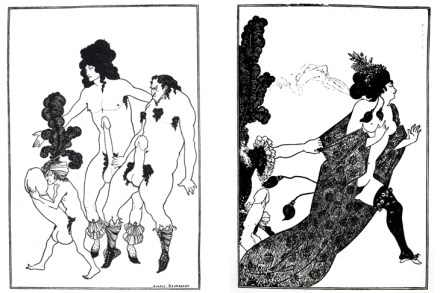
The gloriously indecent life and art of Aubrey Beardsley

Picture the young aspirant with the portfolio of drawings pitching up nervously at the eminent artist’s studio, only to be turned away at the door by a servant; then the master catching up with him, inviting him in and delivering the verdict on his portfolio: ‘I seldom or never advise anyone to take up art as a profession; but in your case I can do nothing else.’ Within two short years of this fairy-tale meeting in the summer of 1891 between Edward Burne-Jones and the 18-year-old Aubrey Beardsley, the self-taught insurance clerk who had fallen under the Pre-Raphaelite spell had turned himself into the most talked-about artist in London.

‘I feel compelled to be disgraceful’: Miriam Margolyes interviewed

I meet Miriam Margolyes in her large Victorian house in Clapham. She is very small and round, with a shock of grey hair, and the clear and open gaze of a curious child. There is an innocence to her, like someone who has not quite grown up. She has a wonderful voice, which bought this house. When it rests it is low and serious; but when she is telling a good story it takes flight. She is best known, now, for Harry Potter films and Blackadder; and for The Graham Norton Show which she dominates by speaking filth while looking delighted. This is deceptive though. When she wants, she can be very serious, although she struggles to be serious for long, which is why, I think, she does not have Janet Suzman’s career. When I say I find her serious she is delighted.

Antonio Pappano on diversity, a new Ring cycle and defending Verdi from dodgy directors

The horse beats me to the stage door by a short nose. Known as Tiz, it’s an opera specialist who comes up from Norfolk for 10 a.m. rehearsal and is driven back home each night. Tiz is on call right through the Fidelio rehearsals — unlike, as Sir Antonio Pappano points out, the star tenor who does not show up for the first act. This is a fairly sore point, and I wait until late in our conversation to probe it. There has been a media hoo-hah about Fidelio tickets going to ROH friends, leaving hardly any for the general public. Pappano, the quiet man of opera, suddenly shoots up an octave. ‘That’s not particularly true,’ he cries. ‘In October, we released several hundred tickets. They were snapped up.

I regret my bust-up with the Bee Gees: Clive Anderson interviewed

‘The really tricky thing,’ says Clive Anderson as we discuss the topic of being recognised in public, ‘is when they say, “I love your programmes —that thing you did with Margarita Pracatan…” Do I say now that that wasn’t me? Because if you let them carry on about how they loved your Postcards From…, and the Japanese game show, and then you tell them, they get very indignant and say, “Well, why did you let me give you all that praise?”’ It’s easy to understand the mistake in the abstract — indeed The Spectator’s arts editor made it himself in his email to me: ‘Could you interview Clive James for us?’ (If I could manage that, Igor, I wouldn’t be writing for a living.

Some of the best Austen adaptations are the most unfaithful

The new Emma film by Autumn de Wilde is the latest in a very long line of Austen adaptations, but by no means the strangest. Even in Austen’s lifetime there were pirated editions and translations of her books that took liberties with the originals, and the first illustrated editions raised howls of objection, too, at their ‘lamentable’ interference (as E.M. Forster thought) with the sacred text. Early stage versions all made free with ‘Divine Jane’ according to whim.

How Jan van Eyck revolutionised painting

We know tantalisingly little about Jan van Eyck, but one thing is sure. He once spent a week in Falmouth. In 1428 Philip the Good, Duke of Burgundy, sent a formal delegation of nobles and courtiers to negotiate his marriage with Isabella, daughter of the King of Portugal. One of these was Van Eyck. The official party set off from the port of Sluis in Flanders on 19 October, and arrived the next day in Sandwich, where they then spent a fortnight waiting for two Venetian ships to get there from London. Once embarked, they were driven by gales to take refuge in ports on the English coast, including Falmouth. In the surviving account of the trip, Van Eyck (d.1441) is described as ‘an exquisite master of the art of painting’.

The art of pregnancy

In 1622, Elizabeth Joscelin wrote a letter to her unborn child. This was fairly common practice in Elizabethan England; pregnant women were encouraged to write ‘mother’s legacy’ texts in case they did not survive the birth. ‘It may… appear strange to thee to receyue theas lines from a mother that dyed when thou weart born,’ she wrote. Her daughter Theodora was born on 12 October 1622, and following a violent fever Elizabeth died nine days later. Her letter — which urged her child to pray, avoid temptation and be charitable — was discovered posthumously in her writing desk and published in 1624 by an Anglican clergyman called Thomas Goad. The Mothers Legacie, To her Vnborne Childe became a hugely popular book.

The history, power and beauty of infographics

William Edward Burghardt Du Bois was born in Massachusetts in 1868, three years after the official end of slavery in the United States. He grew up among a small, tenacious business- and property-owning black middle class who had their own newspapers, their own schools and universities, their own elected officials. After graduating with a PhD in history from Harvard University, Du Bois embarked on a sprawling study of African Americans living in Philadelphia. At the historically black Atlanta University in 1897, he established international credentials as a pioneer of the newfangled science of sociology. His students were decades ahead of their counterparts in the Chicago school.

TikTok is the world’s fastest-growing – and goofiest – digital platform, but should we fear it?

In November last year, an internet video made by a 17-year-old American went viral. The video was less than a minute long and began with its creator, Feroza Aziz, looking directly into the camera and talking viewers through a makeup tutorial. ‘The first thing you need to do is grab your lash curler. Curl your lashes, obviously. Then you’re going to put them down and use your phone… to search up what’s happening in China, how they’re getting concentration camps, throwing innocent Muslims in there, separating families from each other, kidnapping them, murdering them, raping them, forcing them to eat pork, forcing them to drink, forcing them to convert.