Arts feature

Theatre’s final taboo: fun

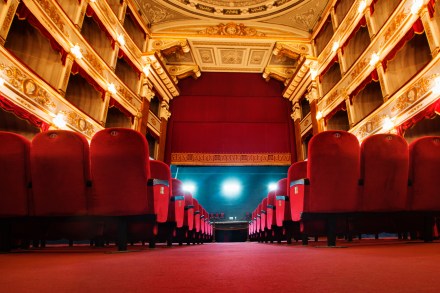
How will the theatre look after lockdown? A clue emerges in a statement made by Guy Jones, the literary associate of the Orange Tree in Richmond. ‘The victims of this year are many. Homelessness is on the rise, loneliness is deadly, the monster of racism lurks in every-day interactions… and many of the inequalities we live with are written into the systems in which we are asked to participate.’ ‘The victims’. That’s his starting point. It might seem odd that a theatre should prioritise the injured and the aggrieved, as if the stage were a tribunal or a public court where justice is dispensed. But that’s how theatres see themselves. Lockdown and the rise of BLM in 2020 have created a host of new causes to be fought over by snarling dramatists.

The Mozarts of ad music

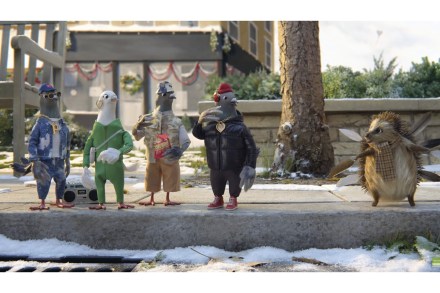
It’s Christmas 2020 and Kevin the Carrot is on a mission. Snow swirls, ice glistens and roast turkeys and cold cuts wait on the table, bathed in cosy firelight. The visual symbols of Christmas are all present and correct in the big Aldi seasonal advert, but what pulls them together is the music. A hint of John Williams on a solo horn, a burst of swashbuckling rhythm; symphonic strings as our vegetable hero makes it home. It’s all there, sumptuously scored and precisely gauged to make you feel that in 30 seconds, you’ve experienced an epic. And then, of course, to go out and buy parsnips. ‘I was lucky, because the mood had already been chosen,’ says Guy Farley, the composer who wrote that score.

The first-century saint who went viral

Earlier this year, Saint Veronica went viral. A tweet observing that every painting of the saint made her look like a merchandise seller at the Crucifixion was liked more than 35,000 times and retweeted more than 6,700 times. Not bad for a first-century saint. I disagree slightly. Veronica doesn’t strike me so much as a proto T-shirt tout, more as an early Christian super-fan. ‘I touched the hem of his garment.’ ‘Yeah? Well, I literally mopped the sweat from his brow.’ The Sudarium of Saint Veronica is one of art history’s more peculiar subjects. While some saints and their attributes are easy to confuse (Tau? Sword? Saw? Tongs?

The dark history of dance marathons

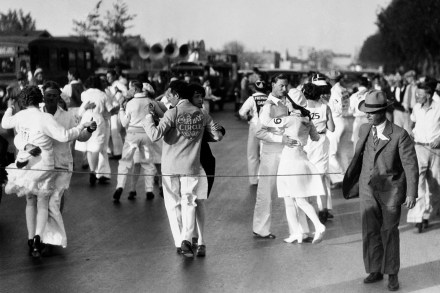
On 31 March 1923, Alma Cummings put her feet into a bowl of cold water. Then, tired-eyed but smiling obligingly for the photographer, she held up her dancing shoes. There were holes in both soles. Cummings had just finished a 27-hour stint of waltzing at a Manhattan ballroom, wearing out not just her shoes, but six male partners in the process. The dance instructor was one of the Americans responsible for a strange cultural phenomenon that swept the United States over the next two decades — dance marathons. Cummings’s record was soon beaten and within a few years promoters were organising public competitions across the States in which couples danced for hours, days, months even, to win prize money. Some collapsed and even died in the process.

How real is the performing arts exodus?

Think back 12 months to when you first felt the pandemic. Not when you first read about Covid-19, but the moment of impact — the lurch in the stomach as it hit you that this time, it really wasn’t going to be OK. For Emma Cook, a freelance stage manager on the John Cleese farce Bang Bang!, the moment came during a rare week off. ‘I was sitting in a restaurant near the Bush Theatre in London, waiting to go and see The High Table, and I got a message from a friend who had just flown back from overseas: “Why are the theatres all closed?”. I thought, no they’re not, I’m about to see a show. So I walked over to the theatre and they told us: “No, sorry. We’ve had to stop everything.” And that was when Covid suddenly became big and real.

The truth about my father, Philip Guston

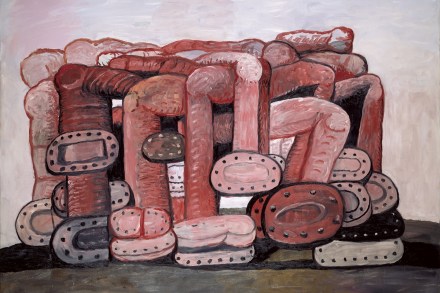
Philip Guston’s later work is — and I say this with love — nails-down-a-blackboard weird. The vapid pinks and flat reds lend a nightmare cheerfulness. The menacing American figure wearing Mickey Mouse gloves is rendered in cartoonish style. The clock shows it is time to panic, challenging you to call out the hood for the Ku Klux Klan symbol it appears to be. By the time he started making these paintings, in 1968, Guston was pretty much post-everything: post-realism, post-abstract expressionism, post-criticism (he and his wife Musa sailed to Italy the day after the show’s opening night, and when a review found him in Venice, poste restante, he dropped it in a canal).

The triumph of bedroom pop

I must have been about 16 when I got my first Portastudio. The compact home recording unit had first been introduced by Japanese electronics firm Teac in 1979, offering unprecedented multitrack dubbing to the bed-bound amateur musician. For a little less than $1,000, you could record four separate tracks of instrumentation — as much as the Beatles had when making Sgt. Pepper — on an ordinary cassette tape. By the time I got my teenage hands on a four-track machine of my own, that price had come down by an order of magnitude. It was a chunky little unit in pigeon blue with just two microphone sockets and a small handful of mixing dials for volume control and stereo panning.

The Sistine Chapel as you’ve never seen it before

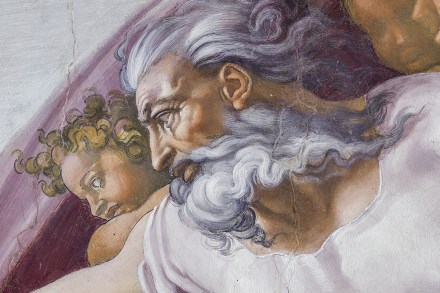
‘The World’s Most Lavish Art Book’ is a pretty big claim, but when two men lugged it through my front door I conceded that The Sistine Chapel is one monster tome. Three, actually. Three hardback volumes, each two feet-tall, each weighing nearly two stone, each in its own calico bag, comprising of digitally perfect photographic recreations of the artwork in the 15th-century chapel. The first volume deals with the masterpieces along the walls, while volumes two and three are a quasi-Greatest Hits, one covering the Sistine ceiling and one the ‘Last Judgment’, both of course by Michelangelo and one of the most famous art sequences on the planet.

Our love affair with the Anglo-Saxons

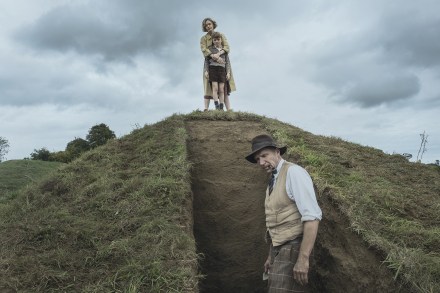
On 5 July 2009, an unemployed 54-year-old metal detectorist called Terry Herbert was walking through a Staffordshire field when his detector started to beep and didn’t stop. Herbert guessed almost immediately that he’d found gold. What he didn’t realise was that he had made Britain’s greatest archaeological discovery since the second world war. Three hundred sword-hilt fittings, many of them spectacular examples of Anglo-Saxon metalwork; a mysterious gold-and-garnet headdress, apparently for a priest; miniature sculptures of horses, fish, snakes, eagles and boars.

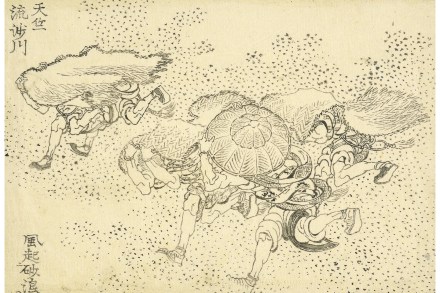
These rediscovered drawings by Hokusai are extraordinary

Lost boys, lost women, lost civilisations, lost causes — the romantic ring of the word ‘lost’ is media gold. So when the British Museum announced last autumn that it had acquired 103 ‘lost’ drawings by Hokusai, one was tempted to take it with a large pinch of salt. How do 103 drawings by Japan’s most famous artist simply disappear? The answer is, surprisingly easily. Hokusai’s works have never commanded the sorts of prices a draughtsman of his calibre would be expected to fetch, not even in Japan. His art was designed to be affordable: in his day, you could buy a print of ‘The Great Wave’ for the price of a double portion of noodles — and still stretch, if you were lucky, to a side order of ‘A High Wind of Yeijiri’.

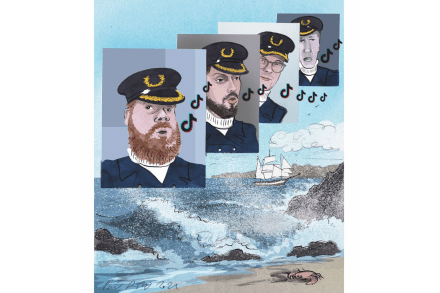
From ancient Greece to TikTok: a short history of the sea shanty

Many things are now normal that would have seemed unlikely a year ago. But even in this strange new world the sudden rise of the sea shanty is, perhaps, strangest of all. It all started in December when Nathan Evans, a postman from North Lanarkshire, posted a video of himself online — a lone figure filmed in no-frills close-up, hoodie high under the chin, beanie pulled down to the eyes — singing the 19th-century whaling song ‘Wellerman’. A trickle of views became a storm, thousands turning to millions (now billions) and just like that sea shanties went from kitsch, Last Night of the Proms novelty to global phenomenon. The song went viral — the centre of a new internet craze: #ShantyTok. Fast forward a few months and Evans, whose song went to No.

The rise of bad figurative painting

Bad figurative painting is today’s hottest trend. Last autumn Artnet listed the top ten ‘ultra-contemporary’ artists (meaning those born after 1974) with the highest total auction sales so far that year. Counting down: Lucas Arruda, Jia Aili, Ayako Rokkaku, Dana Schutz, Amoako Boafo, Nicolas Party, Matthew Wong, Jonas Wood, Eddie Martinez, Adrian Ghenie. None are household names. All are figurative painters, though some play with bad abstraction as well. None are particularly exciting. Many, many others are climbing after them. Since the list was published, Dana Schutz’s ‘Elevator’ (2017) sold for nearly £4.8 million at Christie’s Hong Kong, a new record price for the artist. The work is a poor impression of cubism.

British opera companies and orchestras must start investing in native talent

Early in 1946, two men boarded a train at Euston and went trawling for talent. Audition notices were posted at town halls up and down the land: singers wanted, no experience required. Two thousand applied. One town after another, they lined up for Karl Rankl, Covent Garden’s music director, and David Webster, its general manager. Those who sang in tune were hired, £8 a week for chorus, £40 for soloists. An organist in a Harrogate church was appointed chorusmaster. ‘At Carmen rehearsals,’ recalled Constance Shacklock, a farm girl from Nottinghamshire and future star, ‘none of us had ever seen a Carmen before, let alone sung one.’ By mid-year, Covent Garden had a credible opera company.

Most artistic careers end in failure. Why does no one talk about this?

It is a standard narrative in all showbiz reporting, and one that arts hacks seem to be duty-bound to abide by. It is the fairy tale of ‘Making It’; the story of a star whose career took time to get off the ground but, thanks to perseverance and self-belief, went stratospheric. It goes like this: ‘I was a nobody, and I was turned down from everything. And I nearly didn’t go to that final audition, but whaddya know? I turned up and… Shazam! Oscars raining down and a mini-series on Netflix.’ There is an encyclopaedia of stars who toughed it out before making it big.

Ignore the activists – Humboldt’s Enlightenment project deserves celebrating

‘What a loss is the excellent Humboldt. You and Berlin will both miss him greatly,’ Prince Albert wrote to his much-beloved daughter Vicky, Crown Princess of Prussia, on news of the death of the author, explorer and celebrity Alexander von Humboldt in 1859. ‘People of this kind do not grow upon every bush [‘an den Blumen’] and they are the grace and glory of a country and a century.’ After some delays and bad luck, the grace and glory of the Humboldt name flourishes once again with the opening of the Humboldt Forum.

On the trail of one of the first artists to paint ordinary things

There are many marvellous things to be seen in the Musée des Beaux-Arts at Dijon. But when I paid a visit a couple of years ago (in those days you could just step on a train and do such things), it was a little picture of the Nativity that particularly caught my eye. Its date, artist and original owner are all uncertain, but its beauty and originality were clear at a glance. Here, for almost the first time in European art, the appearance of ordinary things and people were the subject of close, rapt observation. Not of course that there was anything ordinary about the Nativity itself, which was a miraculous, world-changing event — signalled in the painting by the bright golden sun rising over distant jagged hills.

The legend of Marlene Dietrich

How to sum up the legend of Marlene Dietrich? She was an actor, a singer, a style icon, even a war hero. A retrospective is under way at the BFI, where more than a dozen of her films are being shown throughout this month. Many admirers saw only the shimmering legs and forgot the sharp intellect, the wartime gallantry. But it would be wrong to deny that body image was central to her success. It was with this in mind that the critic Robin Wood christened Dietrich ‘the Venus de Marlene’. Like the statue alluded to, Dietrich is a monument of Western culture, her image cast not in stone, but in light (that marble of the modern world, made possible by the newly invented movie camera).

How we became a nation of choirs and carollers

Between the ages of 15 and 17 I had a secret. Every Monday night I’d gulp down dinner before rushing out to the scrubby patch of ground just past the playing fields, where a car would be waiting. Hours later — long after the ceremonial nightly locking of the boarding house — I’d sneak back, knocking softly on a window to be let in. I’d love to say that it was alcohol or drugs that lured me out. It wasn’t even boys — or, at least, not like that. My weekly assignation was with Joseph and Johann, Henry, Ben and Ralph. My addiction? Choral music.

Meet the front man of ‘the most revolting band in the world’

Corey Taylor, the singer of Slipknot, laughs when I observe that he is disappointingly well adjusted. He had just been explaining that he does his own cleaning at home, that he ‘hates seeing privilege and entitlement’, that he can get from place to place without needing his hand held (you might scoff, but many musicians get infantilised by a life of indulging and being indulged). ‘I have a very healthy ego,’ he says. ‘But I also know to keep it in check as much as I can, because I don’t want to be that dude.’ Which is not to say Slipknot’s career has been free of incident. Far from it. Though they have released only six studio albums over the past 21 years — the last three all US No.

Meet the woman who designed Britain’s revolutionary road signs

‘Design. Humanity’s best friend,’ proclaims a row of posters outside the Design Museum. ‘It’s the alarm that woke you up… The card you tapped on the bus… And the words you’re reading right now. So embedded in our lives we almost forget it’s there.’ It is one of the ironies of good design that the better it is, the less we notice it. This is especially true when we really need it: when lost in an airport five minutes before the gate closes or battling helplessly down the wrong road. In these instances, the woman we invariably have to thank for helping us to find our bearings is currently the subject of an overdue tribute at the Design Museum.