Any other business

Putin’s game in European energy: divide and conquer

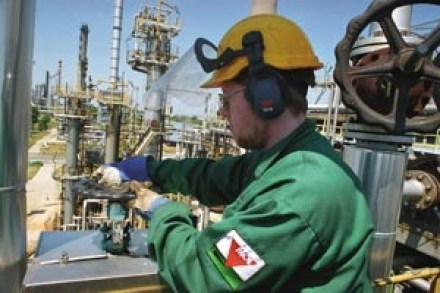
Vladimir Putin’s efforts to divide the West may be on the back foot now that Nicolas Sarkozy and Angela Merkel have decided to stop being beastly to the Americans, but his most effective attack dog — Gazprom — is gleefully setting EU countries against each other. For governments fixated on more immediate threats such as radical Islam, this might seem footling stuff. But the struggle by OMV, Austria’s biggest oil and gas company, to snap up its Hungarian counterpart MOL (pron. ‘mole’) provides a perfect insight into the underworld of the Central European energy business: all the more so because at first sight Gazprom’s hand is invisible.
The City’s fascination with farming

Everyone’s an expert on agriculture these days. Talk to anyone in the City: when they’re not boring you with how much copper wire it takes to build a satellite city outside Shanghai and what that means for mining shares, they’re telling you about soy bean yields in Brazil and the rising price of powdered milk. Fascination with food has been brought on by a sudden realisation in financial markets that there’s money to be made in farming. After several decades of stagnation, the prices of pretty much everything edible has started to soar.

Slums for the masses, fortunes for the few

Hu Bin is your archetypal Chinese real-estate entrepre­neur. Built like a bull, with a huge, moon-shaped head, a permanent grin and tiny, nicotine-blackened teeth, he is also the embodiment of Beijing’s sudden determination to use its huge capital reserves to buy the world. Despite an estimated £5 billion fortune, Hu Bin would normally have remained a low-key figure, even in China. His company, Shanghai Zhongzhou International Holding, is the unlisted owner of isolated packets of high-end residential property dotted around Shanghai.

The tale of Grand Central’s ghost train

Rail delays are a daily fact of life, but Grand Central’s ghost train has set new records. Due to depart from Sunderland last December, it has yet to pass York en route to King’s Cross. I’ve read the timetable — three services a day north and south. I’ve read the BBC travel website, which reports that as far as ‘current disruption and engineering works’ go, Grand Central has ‘no incidents to report’. I’ve heard about the simplified, value-for-money fare structure — including a 50 per cent refund if no seat is available — and the personalised park ’n’ ride service.

The death of the golden share

‘A triumph for the European Commission’ (as USA Today chose to describe it) is not something usually to be celebrated here. But yesterday’s finding by the European Court of Justice against Germany’s ‘VW law’ – protecting Volkswagen against takeover via a blocking minority vote held by the state – really does look like a blow for greater dynamism, industrial synergy, and efficient use of capital throughout Europe. In Britain, the golden share was used to allow the government a continuing hand in the destiny of privatized businesses  – but this ruling seems to mean that the device has finally had its day.

A hellfire sermon for HSBC’s boss

Matthew Lynn says shareholder activist Eric Knight is right to castigate HSBC’s strategy, and that the bank’s deeply religious chairman Stephen Green now faces a battle to hang on to his job When he isn’t running the world’s second biggest bank, Stephen Green, the chairman of HSBC, is an ordained priest and amateur theologian. In 1996 he published Serving God? Serving Mammon? Christians and the Financial Markets, in which he explored whether you can do the Lord’s work whilst also commuting to Canary Wharf every morning to do battle in the boardroom and kick ass on the trading floor. ‘Christians can serve God in the world of finance and commerce, but it is also possible to fall into the trap of serving Mammon there,’ he wrote.

The making of Ronald Reagan

I have a new hero. He is called Lemuel Boulware, of America’s General Electric Company. According to a fascinating new book by Thomas W. Evans*, Boulware should be credited not only with a role in defeating the intellectual apparatus of communism, but with the creation of one of the most successful US presidents of all time: Ronald Reagan. History has largely glossed over the fact that Reagan spent eight years from 1954 as GE’s ‘ambassador’. He was employed by America’s biggest company to go round its plants giving pep talks, and to present General Electric Theater, a popular television chat show. Reagan was hired by Boulware, who was GE’s head of public relations.

‘We take the risks that private finance can’t’

Even being soaked by driving rain isn’t enough to dampen Jonathan Kestenbaum’s passion for innovation. Even being soaked by driving rain isn’t enough to dampen Jonathan Kestenbaum’s passion for innovation. The chief executive of Britain’s largest source of endowment funds (£350 million and counting) arrives in the Notting Hill coffee shop where we are meeting, shakes off his coat, and within seconds is talking with almost religious fervour about how well-targeted public finance can promote technological and social change. The National Endowment for Science, Technology and the Arts (NESTA), which he runs, is difficult to categorise. It began in 1998 with £200 million from the National Lottery. It has both commercial and non-commercial aims.

The double-edged symbolism of Mbeki on the shoulders of white rugby victors

South Africa is buzzing — and not just in the afterglow of victory in the Rugby World Cup. Johann­esburg, built in the 1880s on the back of mineral excavation, is experiencing a contemporary form of gold rush. At the gleaming international airport, yuppies of every hue shape deals on their laptops. A ride into town takes you past shopping malls almost as large as the gold dumps on the outskirts, into a city of building sites. Another sports fixture, the 2010 soccer World Cup which South Africa will host, is often touted as the trigger for this construction boom, but much of it would clearly have happened anyway. Parts of the smart northern suburbs are gridlocked by road-closures related to the building of Gautrain — a 25 billion rand (£1.

You can admire a roguish old pagan without approving of him

Recently I managed to get hold of a copy of Alone by Norman Douglas. This series of essays about Italian towns at the time of the first world war was the author’s favourite book. But it is not easily found. Indeed several of Douglas’s works are rarities. Most people know his novel South Wind, about wicked goings-on in pre-1914 Capri. And Old Calabria, my own favourite, which deals with the toe and instep of Italy, is one of the finest books of travel ever written. It has been republished, notably in a 1955 edition, with an introduction by John Davenport. So has Siren Land, another fine travel discourse on the Sorrentino peninsula, and there is a modern edition of a third, Fountains in the Sand, about the hinterland of Tunisia.

‘Emotions are key. It’s not just about sandwiches’

A tiny door marked ‘Pret a Manger Academy’ in the back wall of Victoria station leads up two narrow flights of metal stairs to a warm, colourful room where rock music is playing softly. Strangely shaped leather chairs scattered with fluffy cushions give the faint air of a bordello. This is the headquarters of Pret a Manger, the sandwich chain which owns 164 shops in Britain, and others in New York, Hong Kong and Singapore. So far, so surreal. Julian Metcalfe, the co-founder of the sandwich chain, appears almost in a puff of smoke. An arresting presence, he would make a good wizard. He’s dressed in a tailored slate-blue jacket two shades darker than his eyes, a snowy, open-necked shirt, pristine blue jeans and sludge-coloured converse shoes — no laces.

Darling must scrap his tax attack on entrepreneurs

Gordon Brown can’t stop himself from meddling, even with his own good ideas. Soon after he moved into No 11 Downing Street, he introduced one of the best pro-growth capital gains tax regimes in the world. Last week his Chancellor Alistair Darling, with Brown grinning approval beside him, undid much of that good work in one fell swoop. Their primary target was the City’s private equity industry; but their destructive 80 per cent tax hike will also ensnare farmers, entrepreneurs, small companies quoted on the Aim market, life assurance companies, 1.7 million employees who participate in company share schemes, business angels and venture capital funds, to name but a few.

Piggy in the middle between the grain speculators and the supermarkets

The concentrated aroma of — how shall I put it — deep piggy doo-doo that wafts through your car window as you motor up the A1 through North Yorkshire is, in normal times, nothing more nor less than the smell of money. So I was taken aback to hear a farmer from that part of the county declare that if prices carry on the way they’re going, ‘it’ll be time to shoot the pigs’. We will hear shortly from Merryn Somerset Webb, in our Investment column, about how to make money in ‘soft commodities’ — in which dabbling by you and me does no harm if it boosts farmers’ income and the value of their land.

How to stay sane when computers go crazy

‘I’m on the beach with my BlackBerry,’ a senior banker told the Financial Times back in early August. ‘Normally, banks run on half or two thirds of normal staff in August, which can make it difficult, so every banker has to remain vigilant, even if you’re on the beach like me.’ But, at precisely the same time, in a small back office at an investment bank on Wall Street, one highly vigilant trader was in a frenzy of activity — constantly checking seemingly unbelievable market data and firing off trade after trade, but still ending the week 30 per cent down, and wiping nearly $1 billion off the value of a major investment fund. The bank was Goldman Sachs. The fund was its flagship Global Equity Opportunities fund. And the trader was a computer.

Don’t put your money under the mattress

Extreme stock market volatility and the crisis at Northern Rock have prompted some crass comment about how to look after savings in uncertain times like these. Probably the worst is the glib recommendation, so often trotted out during a panic, that you might as well keep your money under the mattress. But the only people to benefit from financial advice like that are burglars. Quite contrary to what pessimists might have you believe, anyone can still enjoy risk-free, tax-free returns comfortably ahead of inflation. Meanwhile, the more adventurous may seek to profit from setbacks suffered by others.

The asset that shines in troubled times

John Stepek says the price of gold is a gauge of investment fear — and there’s a lot of fear around right now Last week, we had a power cut. It was already pitch-dark outside — not the best time to discover that the children had hidden our only torch. We stumbled about in the dark, before a kindly neighbour gave us some candles and a lighter — just as the power went back on. It was a useful reminder that you can rely on the modern world to function about 99 per cent of the time, but it’s always worth having an old-fashioned back-up, just in case. When the National Grid cuts out, you want candles in your drawer. When the global financial system starts to wobble, you want good old-fashioned gold in your portfolio. But why?

A good share is like a good wife

James Delingpole admits to ‘utter crapness’ as an investor in the past, but thinks he now has a winning strategy It has been over a year since I checked my share portfolio but when I did the other day I had the most pleasant surprise. Apparently, despite understanding next to nothing about the workings of the stock market, I had managed to net myself a cool £3,000 profit. ‘Warren Buffett eat your heart out,’ I thought — at least for the few seconds it took me to work out what had really happened. This wasn’t my real portfolio at all. It was my paper (or, more accurately, ‘screen’) portfolio, based not on any physical holding but on the information I typed into iii.co.