Martin Jacomb

High-class fraud

From our UK edition

You can always find a thief in financial markets. That is where the money is. Most frauds are quite dull affairs, and some are never uncovered. A few, however, are spectacular. The scale of loss, or the glamour of the perpetrator, or the failure of the ‘system’ to spot and prevent the crookery, may contribute to make a good story. One case, almost within living memory, which has all of these elements, was that of Gerard Lee Bevan. He was born in 1869 into a highly respected City banking family. The Bevans were among the founders of Barclays and continued to be involved in the management of the bank until recently. However, Gerard Bevan did not make the grade for the bank.
Nor all that glisters

From our UK edition

Fool’s Gold, by Gillian Tett Millions of words and scores of official reports on the credit crisis have poured out. There has been no shortage of criticism, especially from political leaders eager to deflect responsibility from themselves. The catastrophe is a man-made disaster, and in years to come historians will ask how it could possibly have been allowed to happen. Gillian Tett’s Fool’s Gold is the book they will turn to. The story she tells reveals in painful detail how credit derivatives came to be invented and then misused on an unimaginable scale. It is a thriller. The idea emerged from a wild weekend party of J. P. Morgan ‘rocket scientists’ (as they used to be called) in 1994 at Boca Raton, a Florida resort.

From Northern Rock to Lehman: who should share the blame?

From our UK edition

Martin Jacomb assesses the extent of the damage to the banking system so far — and the effectiveness of responses by central banks, regulators and lawmakers Will it be short and sharp, or drawn out and deep, with lasting damage? A recession is upon us, but no one knows its path. Its course and its force are, like Hurricane Gustav’s, unpredictable. It is already more than a year since it all started. Banks everywhere have made enormous losses; some, even important ones such as Lehman Brothers in New York, have collapsed, and more may do so. They are being blamed for the catastrophe. But it is not as simple as that. A decade of the miraculous combination of low interest rates and low inflation inevitably led to banks lending ever higher volumes to riskier borrowers.

Northern Rock: a day to remember

From our UK edition

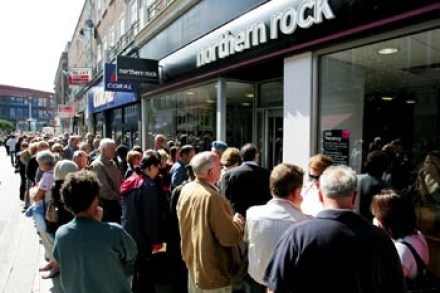
It was not an iceberg that caused the crash of Northern Rock and fortunately there was no loss of life; but it will be remembered, like the sinking of the Titanic, for years to come. None of us had seen queues of worried depositors outside bank branches before. We can remember it happening in It’s a Wonderful Life, but this was real life; and the pictures went round the world. The affair must have damaged the Bank of England’s standing among other central banks. People say it is the first such event since Overend, Gurney in 1866. Although there have been numerous bank failures since then, none has involved queues of voters. The bankruptcy of Overend, Gurney was momentous.

A very private enterprise

From our UK edition

Private equity investment, backing venture capital and management buy-outs, has been around a long time. Private-equity takeovers of public companies listed on the stock exchange are a more recent development; and the number and size of such transactions has increased dramatically. Since some identified individuals have made enormous fortunes, inevitably there has been a bit of an outcry.Several forces have come together. Abundant liquidity has made banks ready to lend large amounts of money at interest rates which are still low by historical standards. Energetic entrepreneurs have spotted that they can exploit opportunities arising from the way the stock exchange values some companies. On top of this, tax changes have made the net returns seriously attractive, assuming all goes well.

The solution is to privatise Oxford

From our UK edition

Oxford University has become headline news again, with everybody chipping in to say how they think it would best be run. The reasons for this new-found interest are radical proposals put forward by its vice chancellor, John Hood, which suggest replacing the traditional system of governance with a more ‘top-down’ managerial approach. Vice chancellor Hood wants ‘outsiders’ to supervise the running of the university. After hanging in the balance for a while, these proposals were defeated last week by 730 votes to 456. This week it was decided that there should be a further postal ballot, but this may produce the same results. Changes billed as ‘modernising governance’ are not popular at ancient institutions.

The day the City entered the modern world

From our UK edition

It was a day to remember: 20 years ago, on 27 October 1986, Big Bang caused a revolution in the securities market which turned the whole financial sector upside down. The early 1980s was a time of change. The Thatcher government’s thirst for deregulation was at its height. Exchange controls had been lifted, capital could be invested anywhere, nationalised industries were being privatised and restrictive practices were being crushed. Meanwhile, information technology was beginning its hugely influential growth. In fact Big Bang, which had at its heart the abolition of fixed minimum stock exchange commissions, was overdue. Fixed commissions had been abolished in New York more than ten years before.