Previous magazine Next magazine

Latest issue

Cassandra complex

Browse past issues

Books and Arts

Books and Arts

Will the real B. Traven please stand up?

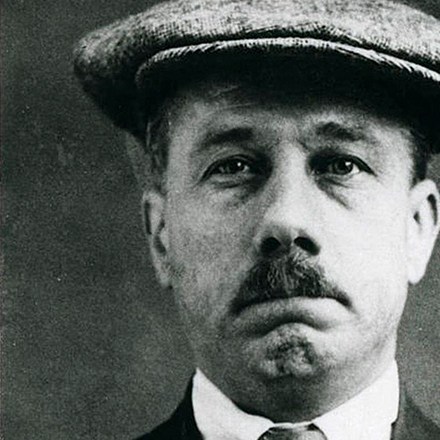
One hesitates to describe The Treasure of the Sierra Madre – perhaps now best known for its 1948 film adaptation starring Humphrey Bogart – as the great American novel, or even a great American novel. Its prose is too unwieldy, its structure too ungainly. While you, the reader, wish it spent more time with its characters – a trio of beat-up prospectors called Dobbs, Curtin and Howard – it is given to flights of economic theory about labor relations in 1920s Mexico, a setting great American novels don’t tend to trouble themselves with. Besides, its author, B. Traven, was almost certainly German and may never have spent time in the United States. Hang on. Almost certainly? May never?
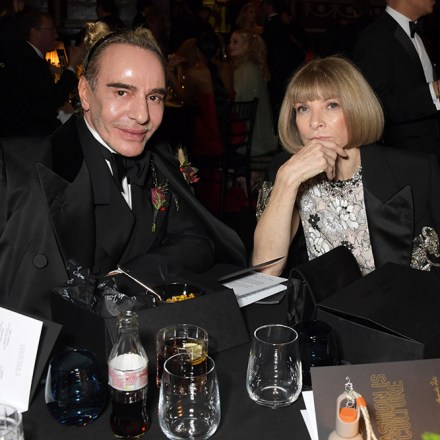
Will Anna Wintour survive the Galliano debacle?

In this summer’s couture blockbuster The Devil Wears Prada 2, the moment of greatest humiliation for Meryl Streep’s Miranda Priestley comes about halfway through the film. With her Vogue-adjacent fashion magazine Runway imperiled by budget cuts and its philistine new owner, Miranda is not spared the hair-shirt treatment the rest of her staff endure. In a scene that is supposed to be funny but ends up being almost tragic, this ice-hearted doyenne of the fashion world is compelled to travel from New York to Milan Fashion Week in coach class, among hoi polloi. As the usually excellent Streep is forced to mug and gurn at the humiliation that she endures, I found myself mouthing “The horror! The horror!” – but for altogether different reasons.

Maine character syndrome

When I arrive at the Longfellow Hotel in Portland, Maine, the weather is as Henry Wadsworth Longfellow described it: “Into each life some rain must fall/ Some days must be dark and dreary.” In his childhood home, I stand in the “rainy day” room, where Longfellow is believed to have written those words in 1841. A portrait of his sister Anne hangs on the wall. She was a caring soul, who helped hold family life together while her brother became a celebrated poet. His portable writing desk is on display, complete with white quill. The first poem he published, aged 13, was written in this house. Six years later, he sailed to Europe. His early travel sketches appeared in the New England Magazine, while his observations of European life were brought together in Outre-Mer and Hyperion.

She lived frantically ever after: the jaw-dropping life of Barbara Cartland

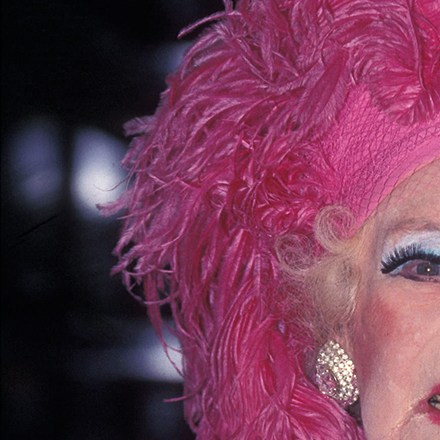
Matthew Sweet’s jaw-dropping life of Barbara Cartland opens with the grande dame reclining on her chaise longue in the library of Camfield Place, her home for 50 years. Here she could be found daily between 1:15 p.m. and 4 p.m., a ghoulish masquerade of femininity in a hot-pink taffeta cocktail gown with a snappy Pekingese nestling by her side. Her face, beneath the halo of Elnett-stiffened yellow hair, bears an inch of white powder. There are two clownish circles of rouge on her cheeks and sticking plasters on her temples to tighten the skin. Gazing into the middle distance through tarantula-sized false eyelashes lathered in black boot polish, she is “talking, talking, talking.” (Boot polish applied with a toothbrush is preferable to mascara because it stays put when you cry.

The history and importance of smell for our antiseptic age

For smell historians and experts, of whom there are gratifyingly more than you’d think, a standard assumption to be skewered is that olden ages stank; the modern world doesn’t because hygiene and chemicals have banished stinks in the name of progress. According to this reading of history, banishing odors is a sign of progress. Civilization doesn’t smell. Neither Bjørn Berge nor William Tullett stand for this. For them, older times may have been smellier, but people were comfortable with living alongside middens, rotting corpses and foul tanneries. Smell in the modern age is now under threat and at risk of extinction or of being even more marginalized – Tullett uses the word “ephemeralized” – than it already is in this age of visual primacy and screens.

smell
leader

First among equals: what makes a great leader and does it matter?

Almost two decades ago, Jared Diamond cemented his international reputation with Guns, Germs, and Steel, which argued that geography and environment rather than racial differences shaped the rise and conquest of nations. Still going strong at 89, he has now written a book on leadership. This is a crowded literary space, but Diamond offers a distinctive approach. A distinguished biologist and polymath, he has little time for the Great Man theory of history popularized by the 19th-century essayist Thomas Carlyle. Altogether too subjective, he says, never mind the absence of women. Leo Tolstoy’s War and Peace is no better a guide, since it casts individuals as constrained by circumstance, with scant influence over events.

The wonder of the Bayeux Tapestry

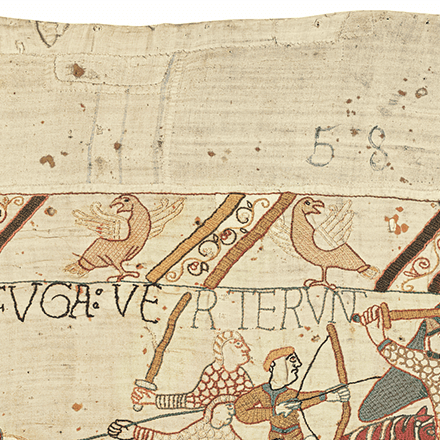
How the Froggies must be laughing. Such a gracious loan. So kind. Like England lending Henry V’s longbows to the Louvre – or sailing HMS Victory up the Seine. Well, let them titter. The Tapestry is home. Nothing else matters. Likely sewed in Canterbury in the 1070s, before being sent across the Channel, it has only ever left Bayeux twice before. In 1803, when Boney was contemplating a pop at the White Cliffs, he displayed it in Paris. (After Trafalgar, it was quietly returned to Normandy.) Then, as the Nazis were retreating from Operation Overlord, it was taken for safe-keeping to the cellars of the Louvre and, in late 1944, only weeks after Paris’s liberation, placed on public view. Today’s minibreak from Bayeux comes in rather happier times.

The Grand Tour is the perfect TV to pass out to

The Grand Tour – aka Amazon does Top Gear – is back with a new trio of presenters. Whether you care will largely depend on your general attitude to television. If you think its purpose is to push boundaries, entertain, inform and edify, you may as well stop reading now. If, on the other hand, you treat TV like soma, then the lightly revamped show is probably worth your consideration. I’m in the soma category. The only job of TV, as far as I’m concerned, is to relieve me of having to make conversation with the Fawn while I’m having my supper, and then to distract me long enough for me to be able to half-digest my food so that I’m ready to have my bath and go to bed.

Words are the most important part of any opera

The long days wane, summer fades and sure enough, the big international guest orchestras land at the BBC Proms. A rare catch this year was the Proms debut of the orchestra of the New York Metropolitan Opera, under its music director Yannick Nézet-Séguin. Debut? No, I couldn’t quite believe it either. What with the regular Radio 3 broadcasts from the Met, and all those live cinema relays, the Met Orchestra almost feels like part of the family. There must be few overseas orchestras whose live performances are more familiar to British audiences. No question, though, there’s always something rather festive about hearing a great opera orchestra in concert.

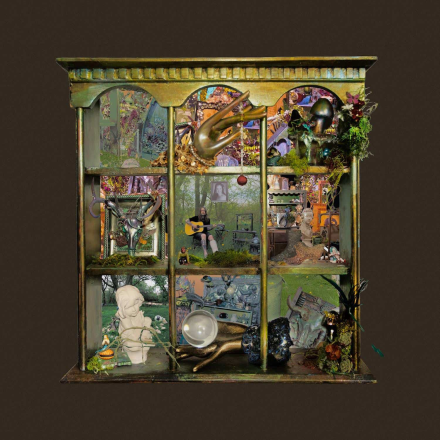
Billy Strings’s extraordinary and exhilarating new album

It’s easy to get the wrong idea about bluegrass – to imagine that this flinty shard of American traditional music is baked centuries deep into the soil of Appalachia. In fact it developed in the 1940s, pioneered by Kentucky maestro Bill Monroe, and only truly flourished during the American folk revival of the 1960s. Bluegrass was one of the few places where the hippies and good ol’ boys found communion; the Grateful Dead’s Jerry Garcia was a devotee. The style has evolved, generation upon generation, via exponents such as Lester Flatt, Earl Scruggs and Del McCoury. The latest bluegrass star is William Lee Apostol, aka Billy Strings, a 33-year-old guitarist, singer and songwriter from Michigan, whose backstory reads like some grisly American gothic melodrama.