Josie Cox

Down with the children’s birthday-industrial complex

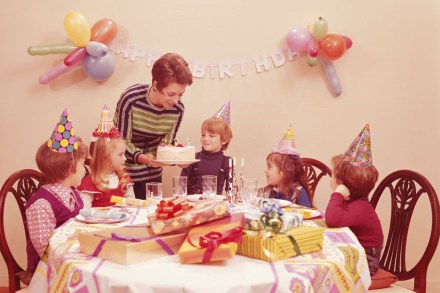
Recently, I’ve been thinking a lot about birthdays. For one thing, I’m writing this on the very day I turn 37. For another, you might’ve heard that America’s got a big one coming up later this year: 250. Old enough to stop squabbling and act its age. But right now, the only birthday that matters in our household is my daughter’s, and it’s coming up in two weeks. New York City children’s birthday parties – at least many of the ones I’ve witnessed – are unlike anything you’ve ever seen. Not so much parties as highly coordinated tests of moral conscience. They’re diplomatic summits involving balloons, sugar and, yes, perhaps a touch of low-level psychological warfare.

Staten

Dispatch from an unloved borough

Once a year, Nick, a surgeon who lives on the Upper West Side of Manhattan, visits Staten Island. Almost as soon as he arrives, he literally runs back to where he just came from. Nick is a marathon runner — he’s done New York seven times — and like millions of similarly masochistic athletes and wannabes, he’s lined up at the mouth of the Verrazzano Bridge, the eastern edge of New York City’s least exalted borough, with the sole aim of getting back to more familiar territory as briskly as his legs can carry him. “Of course I don’t have anything against Staten Island,” he explains. “There’s just not that much of a reason to go there.” Many others, it turns out, feel the same. I moved to Manhattan just over four years ago.

Adieu, Dinosaur the pigeon

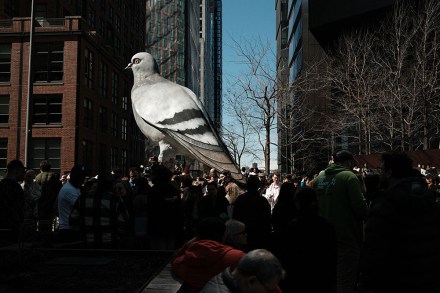
On one of the first warm Saturdays of this year, hundreds of New Yorkers flocked to the popular High Line, the railway-turned-public park that extends over 22 blocks of Manhattan, to bid farewell to a T-Rex-sized pigeon. The pigeon, cast out of aluminum and named “Dinosaur,” had been a resident of its elevated perch since 2024. As so many New Yorkers will tell you, though, part of what’s magical about living in this city is that the experience is often transient. In the words of Baz Luhrmann, you should “leave before it makes you hard.” There’s nothing worse than a hard pigeon and so it was that on that glorious day last month, I joined throngs of people eager to get one last look at the monstrous, departing bird.

My search for the perfect New York therapist ended badly

Before moving to New York City, I had a particular vision of what my life as a writer in this fabled land of opportunity would look like. I’d wear sleek, black turtlenecks and skinny jeans. I’d go to diners and eat bagels. I’d defy the caloric calculus and stay svelte. I’d write at my window like Carrie Bradshaw, getting paid at least $2.50 per word. I’d go to book parties and stroll through the West Village, occasionally bumping into a semi-famous friend. We’d spontaneously drink wine. Perhaps most importantly, I’d have an excellent therapist – someone who had many leather-bound books, a calm and reassuring presence that could effortlessly calibrate my mental state. He’d look a bit like Wallace Shawn or maybe Barbra Streisand.

February in New York: where dreams come to die

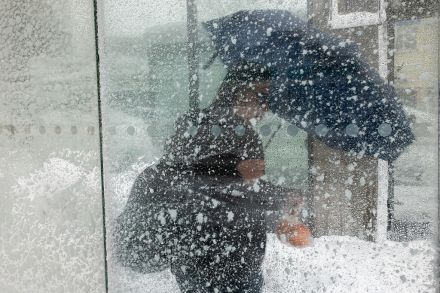
I probably sound naive, but February always struck me as a month that should be full of hope – brimming with the type of optimism that comes from new beginnings. At least here in New York, though, it was grim. Everything feels more expensive. Everyone’s temper seems as short as the blink-and-you’ll-miss-them daylight hours. And then there’s the weather. The streets are flanked like an Arctic military checkpoint by car-sized mounds of calcified brown snow. The kind of snow that has visible layers, like a geological cross-section of urban neglect. The kind that has already gobbled up who knows how many small dogs. The wind is so ferocious, it makes that chemical skin peel you’ve been targeted for on Instagram look pleasant. New York does sleep. And thank goodness it does.

Roaches: the spirit animal of New York City

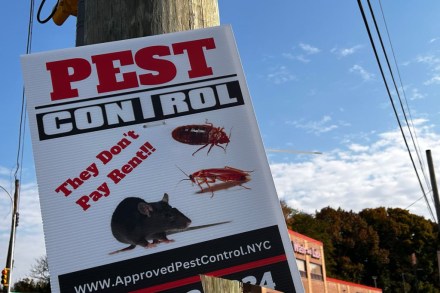
Over the past few years, I’ve written regularly for this magazine about my devotion to New York City. I love the cultish exercise classes that test your psychological mettle and the cryptic linguistic idiosyncrasies of the people you meet here. I love the know-it-all doormen – the actual kings of Gotham – and that any day, a celebrity might move in next door. I love that this is home to the world’s most audacious rats and, yes, I love Staten Island – proof that my affection extends beyond accepted social norms. Only here would someone say ‘I named a roach after you’ and consider it a heartfelt gesture of affection When a recent email landed in my inbox, though, it ignited a whole new appreciation for this brazen metropolis.

roaches

The subway deserves some respect

A few weeks before the end of the year, I was invited to a house party at which I had the misfortune of becoming embroiled in a conversation with a man I’ll call Joe, because his name was Joe and I don’t feel inclined to offer him the dignity of a pseudonym. There’s a theory I’ve corroborated since moving to New York in 2020. Every conversation at a party in this city eventually gravitates toward one of five subjects: traffic, the weather, real estate, sex or the mayor. The ultra-rich are among the subway’s most devoted riders Joe told me he works in finance (which he pronounced “fin-ants”) and it seemed he wasn’t bothered about the weather. He wasn’t a tax-optimizing Connecticut commuter, so had no unsolicited opinions to share about traffic.

Hold on to your peppermint mochaccinos – the Rockettes are not from New York City

In some ways, it feels like I stepped off the plane at JFK from London mere days ago – wide-eyed, naive and still convinced that “winter” would be charming and cozy rather than a six-month endurance test in avoiding frostbite. Yet here I am, somehow entering my sixth year of participating in the annual pageant that is the New York holiday season: that weeks-long spectacle beginning with the first delicate whiff of PSL-something and ending in the far-too-slowly receding hangover on an insultingly arctic New Year’s Day. The first year, Covid-tinted and therefore emotionally reminiscent of a half-deflated Macy’s parade balloon, was not what one might call festive. But things have really picked up since.

rockettes

Meet the e-girls selling European decline to America

Earlier this year, a striking 28-year-old woman, dressed head to toe in a vivid shade of crimson, stepped up to the podium at a conference in Hungary. “Ladies and gentlemen: hello Budapest. I’m so thrilled to be here again,” she began, adjusting the twin microphones and gently swiping a strand of long blonde hair from her forehead. “As some of you might remember, last year I gave here a speech as well, about the ‘great replacement,’” she continued, confidently glancing around the assembled audience. “I wanted the whole world to know that the ‘great replacement theory’ was, in fact, not a theory, but reality. White people are becoming a minority in their own homelands at an exceptionally fast rate.

e-
diner test

The diner test

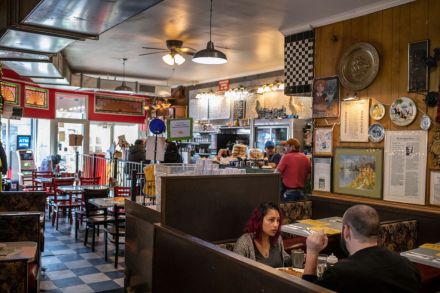
Some people say you become a real New Yorker when you’ve lived in this city for ten years – when you’ve complained your way through ten Arctic winters, ten swamp-thick summers, ten Halloweens that made you question the human psyche and ten consecutive mornings trapped behind barricades courtesy of Marathon Sunday. Respectfully, I disagree. In my opinion, you become a real New Yorker when you’ve mastered the delicate, near-mystical art of going to a diner. I know what you’re thinking: she’s doing that painfully American thing where everything’s hyperbole.

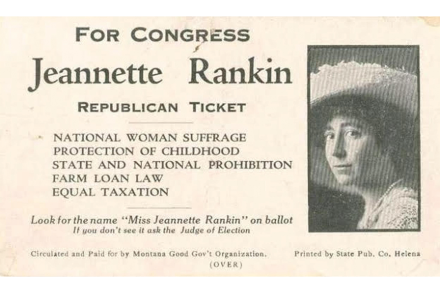
How Jeannette Rankin became the first woman in Congress

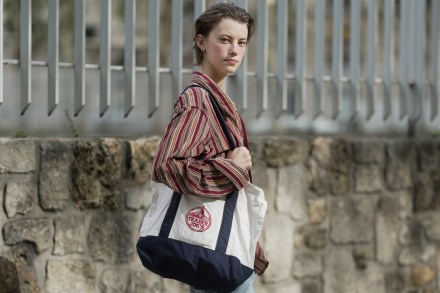
Susan B. Anthony and Elizabeth Cady Stanton; Alice Paul and Sojourner Truth; Ida B. Wells and Carrie Chapman Catt. They may not be household names, but to anyone with a passing interest in US women’s history, they’re hardly obscure. They’re widely associated with America’s fight for women’s suffrage: a tribe of trailblazers who’ve made it into history books and onto overpriced tote bags. Some were popularized by the Tony Award-winning musical Suffs. Three are immortalized as statues in New York’s Central Park. But behind the scenes of their various campaigns, another woman charted her own course for the same cause.

rankin
trader joe's

How Trader Joe’s became a way of life

A young woman recently approached me as I stood outside Trader Joe’s on the corner of 93rd Street and Columbus Avenue in Manhattan. “Excuse me,” she said, “I’m visiting from the UK and I’m just wondering if there’s anything worth seeing around here.” This is not an unusual occurrence. It’s always tourist season in New York. People come for the cherry blossoms in Central Park, for the magic of the Rockefeller Center Christmas tree and for the vague hope of running into Timothée Chalamet at a downtown brunch place. They even come in the sweltering heat of summer when I, personally, would rather be anywhere else – ideally somewhere without the pungent smell of hot garbage and misplaced ambition.

New York City belongs to the rats

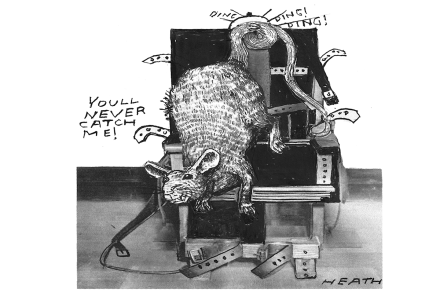
Before I moved to New York City five and a half years ago, the warnings were never about astronomical rent prices, apocalyptic winters or days-long subway delays. They were about rats. Former Manhattanites authoritatively spoke of them with the kind of hushed dread usually reserved to conjure biblical plagues. These weren’t mere animals, I was told, but tiny demons in fur coats – miniature Tony Sopranos with tails – who were quick to scuttle from the shadows at the merest whiff of a discarded bagel, bold enough to set up camp in your kitchen and perfectly willing to maul a callow pug or nibble on an unsuspecting baby. One friend cautioned me to keep the toilet lid shut at all times.

rats
Kennedy

The real Kennedy men

Long before the #MeToo movement shattered the careers and reputations of people like Harvey Weinstein and Kevin Spacey; long before Jeffrey Epstein and R. Kelly were locked up for committing heinous sex crimes; and long before we’d become familiar with names like Monica Lewinsky and Virginia Roberts Giuffre, there were the Kennedys. In very basic terms, that’s the premise of Maureen Callahan’s book Ask Not — a title that riffs on JFK’s inaugural address — which salaciously chronicles how men from three generations of one of America’s most exalted families spent their lives perpetrating violent misogyny and psychological abuse without suffering so much as a polite slap on the wrist.

The donor center is the last bastion of civility

“Braiding Sweetgrass,” she cawed from the other side of the room. “By someone named Robin something. Robin Kimmerer, I think.” The source of this unsolicited book recommendation was Sandra, an eighty-six-year-old musician and Quaker. Since the 1960s — Sandra later told me — she’d donated “probably about three hundred pints” of blood. She was such a prolific giver, that when President Nixon proclaimed the first National Blood Donor Month in 1970 — which still is January — she was interviewed on TV. I met Sandra in early January. We were half-sitting, half-lying foot-to-foot in a donor center on the Upper East Side of Manhattan.

blood

The curious case of Botox babies

"You look great,” my friend beamed at me as she opened her apartment door a few months ago. “Have you had Botox?” Of course I hadn’t. I’d had something that’s almost certainly far rarer — especially as a parent — in this age of ubiquitous beauty-on-demand services: eight solid hours of sleep, followed by a strong cup of coffee, followed by a ten-minute power walk through a New York City downpour replete with gale-force winds blowing in off the Hudson. Take that, injectable dermal fillers. Botox, it seems, is everywhere. Many of my acquaintances, even those barely old enough to remember Tamagotchis or Princess Diana’s funeral or that AOL dial-up tone, casually drop into conversation how overdue they are for an appointment with Doctor So-And-So.

Botox

New York is a people pleaser’s hell

Oh, New York, New York. So nice they named it twice. It never sleeps. It’s New York or nowhere, they say. And also — start spreading the news — it’s a people pleaser’s hell. I’ve written for this magazine before about the absurd hurdles I’ve encountered as a British-sounding expat trying to come to grips with the salespeople and baristas of the Five Boroughs. I’ve described the well-meaning individuals who can’t — for love nor money — figure out what I want when I order a “water.” “Oooh wah-der!” they’ll eventually exclaim in a voice laced with pity for the poor foreigner, presumably just off the boat. But over the last few months I’ve become painfully aware of an even more inhibiting feature of this city.

New York

The secret lives of New York’s doormen

The first test was the audacious cockroach that sidled into our apartment about three days after we moved in. Hardly enough of a native Manhattanite to calmly swat it and flush it and go on eating my pizza, I pollyannaish-ly sprinted downstairs instead. “Excuse me,” I breathlessly announced to the crossword-solving bald guy manning the front desk — I hadn’t even had the courtesy of introducing myself to him yet. “There’s a cockroach in my living room.” Visibly unimpressed but with an air of professional politeness that almost hid what he actually wanted to say (“suck it up, princess”), he looked up at me sympathetically: “The exterminator comes Tuesdays.” It was Friday.

doormen

The rise of the lazy-girl job

To anyone who’s ever dismissed Gen Z as a cluster of feckless snowflakes, or shunned them as gritless, superficial posers raised on instant gratification and social-media filters; to anyone who thinks this juvenile rabble will never amount to more than bitter complainers about rising house prices and corrupt capitalism — I implore you! Take a moment to consider that these zoomers, these mini millennials, these whiny warriors of wokeland, have just instigated the labor market trend we didn’t know we needed: the rise of the lazy-girl job. If you instinctively recoil at any new phrase with “girl” in it — “hot girl summer,” “girlboss” — I’m right there with you.

Could you find love with a business degree?

From our UK edition

‘D’you know what the acronym MBA stands for?’ The 27 -year-old who asked me this had a deep tan and fluorescent teeth. He may have winked, but the eye twitch was more likely a nervous tic from looking at himself in the mirror so much. I responded with a look of indifference tinged with fear. ‘Married’ – he paused for dramatic effect and demonstratively looked at my wedding ring – ‘but available.’ I felt nauseated.