

When I arrive at the Longfellow Hotel in Portland, Maine, the weather is as Henry Wadsworth Longfellow described it: “Into each life some rain must fall/ Some days must be dark and dreary.” In his childhood home, I stand in the “rainy day” room, where Longfellow is believed to have written those words in 1841. A portrait of his sister Anne hangs on the wall. She was a caring soul, who helped hold family life together while her brother became a celebrated poet.
His portable writing desk is on display, complete with white quill. The first poem he published, aged 13, was written in this house. Six years later, he sailed to Europe. His early travel sketches appeared in the New England Magazine, while his observations of European life were brought together in Outre-Mer and Hyperion. In 1827, he met Washington Irving in Madrid, the two great American men of letters sharing stories underneath the Spanish sun.
Give it five, as they say in Maine, and the world changes. “Be still, sad heart! and cease repining; Behind the clouds is the sun still shining.” I set out from Portland dock with the lobstermen on their peppermint-green boat and the sun appears on cue. We head past Portland Head Light, another inspiration for Longfellow, and on toward the lobster pots. Every lobsterman has his own distinct pattern painted on his pots’ buoys, but “one guy keeps it cheap by using duct tape.” I’m shown how to pick up a lobster, disarm it and discern its sex. Fertile females – known as “eggers” – can breed for many years and so are prized. If a female is caught laden with eggs, a lobsterman will make a nick in her tail to let other lobstermen know to keep throwing her back to sea. She’s got work to do.
Harbor Fish Market has a vast range of oysters, presided over by a mermaid with come-hither eyes
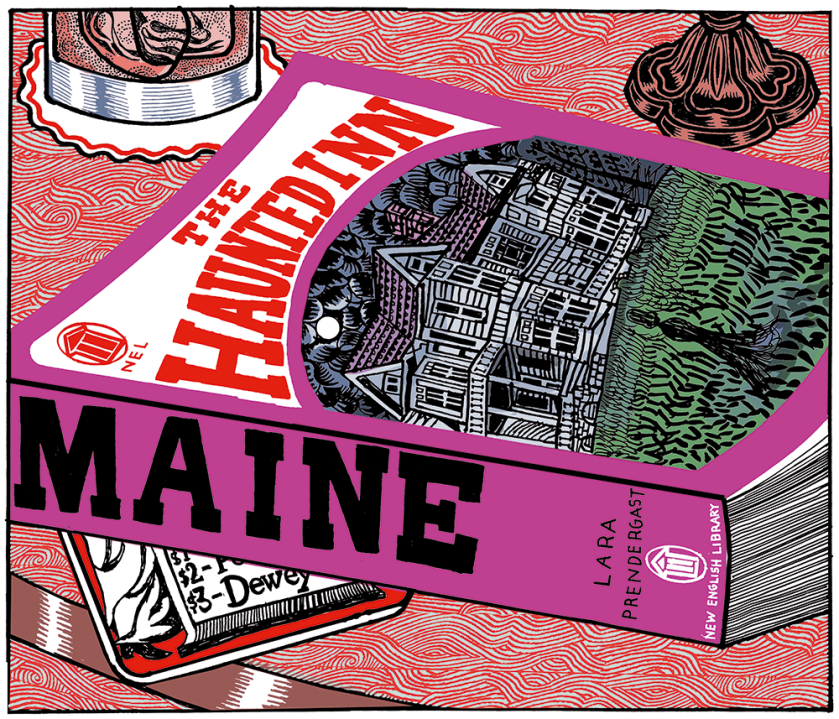
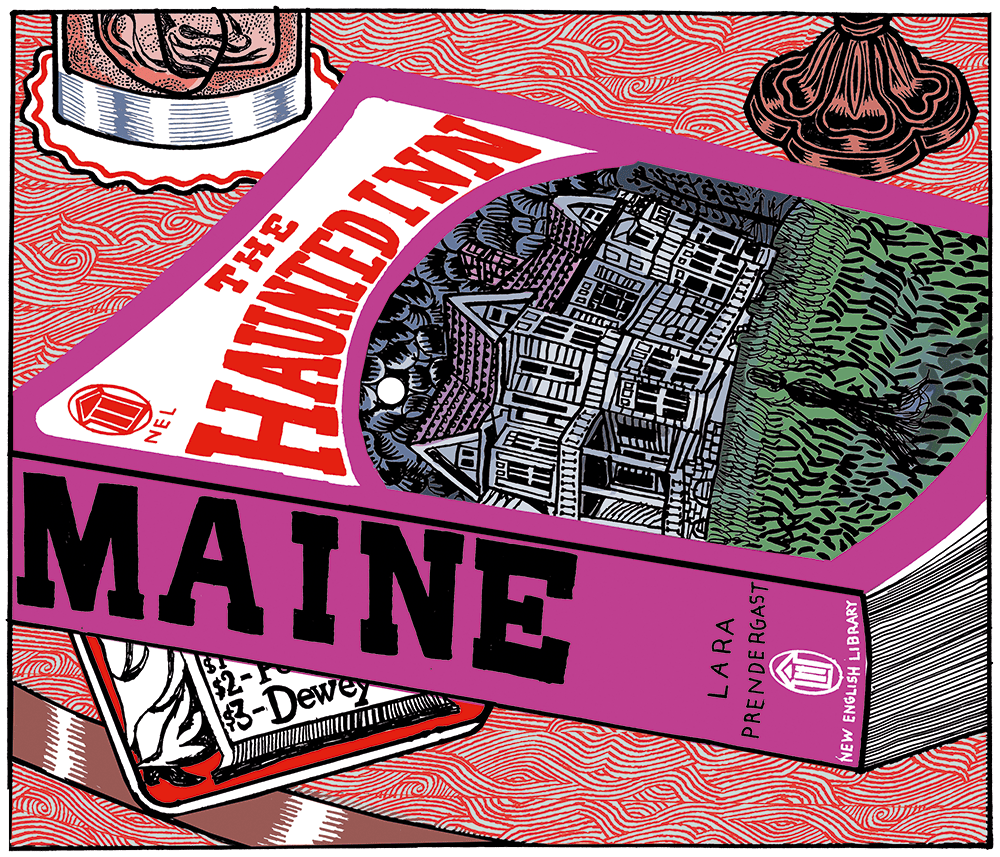
Back on land, Harbor Fish Market has a vast range of oysters, presided over by a wooden mermaid with come-hither eyes. The oysters have names like Love Point, Eros and Beso del Mar. Until recently, the seafront was a different place, filled with less salubrious establishments. A bar called $3 Deweys, said to stand on the site of an old bordello, pays homage to this history. “Nights were long and lonely,” explains a small poster. “Ladies would smile coyly and point to the following list: $1, Lookie. $2, Feelie. $3, Dewey.” Now the seafront is home to an ice cream shop called Coastal Creamery. Happiness comes in many forms.
If you are after oysters, here is a recommendation: OystHers, in Bath, which is just outside Brunswick. It was set up by three sisters, the daughters of a lobsterman from Georgetown who died a few years ago. His girls still love lobsters; Lauren has one tattooed on her fingers. But they wanted to diversify, so Sadia learned to farm oysters, Lauren is front of house and Mollie makes delicious lobster rolls. The whole joint is wonderful: crushed oyster shells on the floor, large glasses of champagne, local musicians passing through. The Sea-Cute-Erie platter is worth knowing about.

Brunswick is also home to Harriet Beecher Stowe’s house, where she offered shelter to the fugitive slave John Andrew Jackson, inspiring her to write Uncle Tom’s Cabin. Cathi Belcher oversees the house and folks passing through town can use Stowe’s writing room, which has been restored to a vague approximation of its original design with pale yellow walls and a charming desk.
Cathi explains that Stowe’s novel was a huge success in England, as well as America. During the 1850s, Stowe met with both Queen Victoria and the Duchess of Sutherland, who presented Stowe with a gold bracelet made of links shaped like shackles. The Spectator reported on Stowe’s reception in 1853, referring to her as the “Mother of Uncle Tom” and discussing “the ways in which this great work may be aided by the people of England.” Before departing, Stowe received a petition signed by more than half a million British women urging American women to fight slavery. Later, in November 1862, Abraham Lincoln is said to have greeted Stowe with: “So you’re the little woman who wrote the book that made this great war!” Nowadays, Uncle Tom’s Cabin, the abolitionist call to arms, is banned in some American schools.
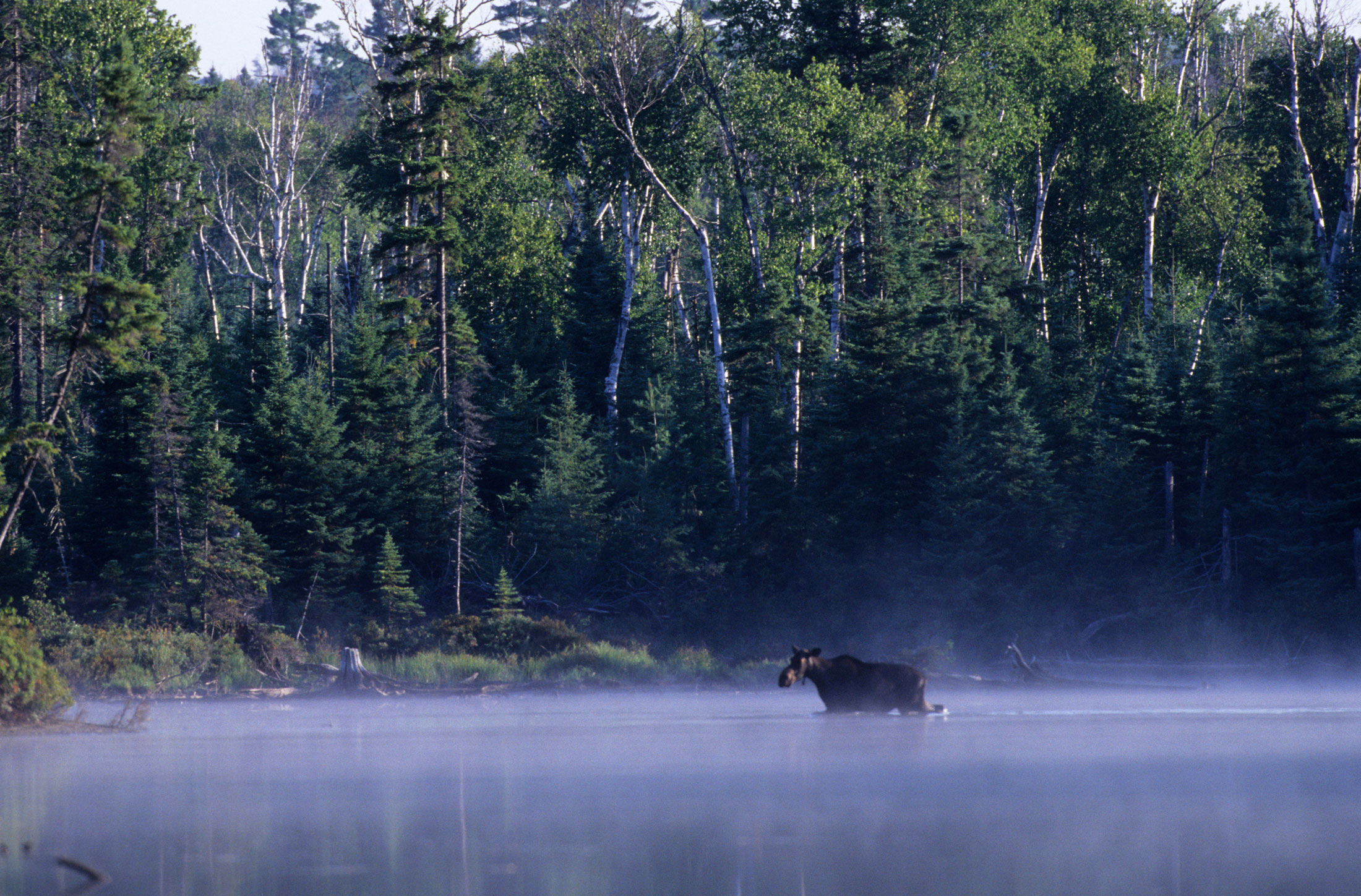
Heading further north, away from the noise of civilization, I reach a more remote Maine. Along the roads appear dilapidated houses, disused textile mills and a tattoo shop called “Aftermath Ink.” I take an old steamer boat out into Moosehead Lake, immortalized by Henry David Thoreau in The Maine Woods as a “gleaming silver platter at the end of the table.” It is a primal place. “The lake can eat a boat,” says Suzanne AuClair, a Thoreau expert. “It is scattered with wrecks.”
A navigational map she shows me includes translations of the traditional Penobscot names for the local geography: “Where the water bulges,” “Handiest place to build canoes,” and the unnerving “You can see the white entrails when paddling by.” Later, when twilight appears, I head out with a ranger called Sam to track moose. I stare out into the dark trees, but if the moose can see me, I cannot see him.
Night falls and it dawns on me that I am in Creepy Town. I arrive at the Greenville Inn but find nobody at the reception desk. A man appears, who says he lives here but seems to have no idea where anything is, then he disappears. My room’s door is wide open. Inside, there are Tiffany lamps and frilly curtains. The walls are covered in honeysuckle chintz. On the landing is what looks like a bloodstain, partially covered by a doormat. Two white rocking chairs lurk on the veranda outside.
I seek comfort at a local bar and order brisket. “You’re staying at the Greenville?” smirks the barmaid. “That place is totally haunted.” I hear tales of a spirit who tap-dances in room 302, and a younger woman who strolls the corridors. By all accounts, she is sweet and jovial but I’m not keen to make her acquaintance, so knock myself out with a strong drink from the honesty bar at the Greenville. I have a copy of The Shining in my bag but now doesn’t feel the moment to unearth it. Heavy rain falls all night. It is a relief to reach breakfast: zucchini bread with walnuts, served by an elderly woman. She tells me she occasionally hears a girl’s laughter coming from the attic.
‘You’re staying at the Greenville?’ smirks the barmaid. ‘That place is totally haunted’
Somebody better able to cope with the gothic than me is Jennifer Millar, who runs tours of Bangor, the real-life inspiration for Stephen King’s fictional town of Derry. She read The Shining when she was ten. “Everyone’s got a Steve story here,” she says. Hers, though, are compelling, because her father-in-law ran a bookstore beloved by King, her mother lived a few doors down from him, and Jenny used to serve him coffee. “We are very protective of Steve.” As we set off around Bangor, I confess to not being a fan of horror. “None of my family are either,” she reassures me.
We head to key spots: the storm drain which inspired IT, the condo featured in Creepshow, Ralph Roberts’s house from Insomnia. In Mount Hope Cemetery, we pause by the grave of Carrie M. Hesseltine, who died in 1856 aged 24. She is the namesake for the novel that helped grow King’s literary reputation. With a new adaptation out soon, I ask for Jenny’s thoughts. “Why do modern adaptations make Carrie so lovely? She’s dumpy and pimply in the book.” Then we stop at Tabitha King’s former school, where her husband drew inspiration for the novel’s mean girls, a theme that never gets old. Before leaving town, I pop into a restroom. “redrum” is scrawled across the back of the door in red paint. I know that reference, at least. Thanks for the ride, Maine.





Comments