Spectator Life

Spectator Life

An intelligent mix of culture, style, travel, food and property, as well as where to go and what to see.

Small plates are a scam

The drift began with the Anglicised version of tapas – a word meaning ‘to cover’, or ‘lid’, that originally described the small pieces of food used to cover and protect drinks. But ‘small plates’, now a mainstay of those fashionable, overpriced restaurants that pride themselves on being the antidote to stuffy and formal, have dominated the restaurant world for more than two decades. In Venice once, in the early 1990s, I ended up in a backstreet bacari, which is a booze and snack joint, as I couldn’t afford the restaurants in the centre. It was full of working men, and cheap as chips. Huge platters of cold mussels, cured ham, anchovies and crispy gnocchi sat behind a glass counter. Perched above the bar were a barrel of red, and one of white.

Does Cornwall have a pasty problem?

I assumed that the headline in the Mail about ‘pasty wars’ would involve some grievous insult to Cornish pride, including something other than beef, onions, potato and turnip; perhaps pointing out that the turnip was actually a swede. Instead, it was about how a deli in Mousehole, where I live, was charging a tenner for a pasty – albeit served on a plate (presentation is half the battle) with a side salad. The Mail journalist wrote that it was ‘shocking’ that a pasty in a restaurant overlooking what Dylan Thomas called ‘quite the loveliest village in England’ [sic] would cost more than a pasty from an industrial estate off the A30. It’s not rocket salad, as the saying goes.

Smart even for Chelsea: Josephine Bouchon reviewed

Josephine is a Lyonnaise bistro on the Fulham Road from Claude Bosi. It is named for Bosi’s grandmother and is that rare, magical thing: a perfect restaurant. Bosi runs Bibendum (two Michelin stars, and in Michelin House) and Brooklands at the top of the appalling Peninsula hotel (two Michelin stars). He opens a second Josephine this month in Marylebone, which needs it since the Chiltern Firehouse, always a restaurant that felt like Icarus with a kitchen, burnt down to rubble. I haven’t eaten in Brooklands – I wish the Peninsula were an island, so that it could float to Victoria and then away, being an oligarchic monstrosity. But my instinct is: this is the good stuff.

Would you steal from a restaurant?

‘You wouldn’t steal a car…’ began the early noughties anti-piracy video. ‘You wouldn’t steal a television… You wouldn’t steal a handbag.’ No, but it seems from reports from restaurants, you might slip some silverware into a handbag if you’re out for dinner. In February, Gordon Ramsay revealed that nearly 500 cat figurines had been stolen in one week from his latest restaurant, Lucky Cat. The maneki-neko cat models – said to bring good luck – cost £4.50 each, which makes that a loss of more than £2,000 for the restaurant in just seven days. What is it about dining out that means we think pocketing property is acceptable?

With Gok Wan

25 min listen

Gok Wan is a renowned stylist and television presenter. Over the years, Gok has transformed the way we think about style and body image with his much-loved series How to Look Good Naked and Gok’s Fashion Fix – his focus on body positivity was the antidote to the crash-dieting fads which dominated the 2000s. Later in his career, Gok drew upon his Chinese heritage to author books on Chinese cooking. On the podcast he tells Liv and Lara about growing up in a Chinese restaurant, why hosting is more like ‘theatre’ and why he always abides by the five-second rule.

The egg shortage is coming to Europe

President Trump swerved in his ‘Liberation Day’ event last week, speaking on an issue that has preoccupied America for months: the price of eggs. Trump said: ‘The first week I was blamed for eggs, I said, “I just got here”. The price on eggs now is down 55 per cent and will keep going down. They were saying that for Easter, “Please don’t use eggs. Could you use plastic eggs?” I say, we don’t want to do that.’ Like him or not, Trump has a way of understanding the zeitgeist. The egg crisis is threatening to become global. It has displaced even Marine Le Pen as a subject of discussion at my village café. There was not a single carton of eggs on sale yesterday when I did my shopping at the Super U. How will I make my bacon and eggs?

The Judgment of Berkshire

Almost 50 years ago, in a hotel bar in central Paris, French wine faced a reckoning. Steven Spurrier, a British wine merchant, decided California deserved a spell in the sun: at the time French wine was the dominant force in Europe, with bottles from the New World – Australia, New Zealand, the US and the like – considered their poor cousin. Spurrier came up with the idea to pit the very best French Bordeaux against Californian cabernet sauvignons and chardonnays against white Burgundies, and have a panel of experts – all French – rank them in a blind tasting that came to be known as the Judgment of Paris. California won both categories. Odette Khan, a well-known critic, reportedly demanded her scorecard back so news of her grave error wouldn’t reach the papers.

The curious cult of Dubai-style chocolate

Dubai-style chocolate, viral star of TikTok and Instagram, is so popular that Waitrose is limiting sales to two bars per customer. The upmarket supermarket chain has taken the move, the Times reports, ‘because we want everyone to have the chance to enjoy this delicious chocolate’. Some are sceptical. Steve Dresser, who heads up consultancy Grocery Insight, has questioned whether this is a marketing ploy, with Waitrose ‘trying to generate scarcity’. The supermarket says no, assuring the Grocer of the ‘incredible popularity’ of these £10 confectionery bars. It’s incredible all right. Even Waitrose’s yellow sticker fare is beyond my budget, so to me a tenner for a slab of chocolate sounds not so much indulgent as fall-of-the-Habsburgs decadent.

Why the restaurant world hates beer drinkers

I’ve always thought working in hospitality is like getting a free MBA – but one rooted in the real world rather than theory. So it didn’t surprise me to discover a brilliant business idea in a book about the restaurant trade. In Unreasonable Hospitality: The Remarkable Power of Giving People More Than They Expect, star restaurateur Will Guidara describes his quest to take Manhattan’s Eleven Madison Park from number 50 in the San Pellegrino restaurant rankings in 2010 to the number one spot in 2017. To check out the competition, Guidara takes a group of employees to the top restaurant on the list. Unsurprisingly, the experience is superb, and his team busily spot ideas they could copy. But Guidara isn’t interested in these.

The paradox of West Virginia

West Virginia. There is a paradox. A state of natural beauty, glorified by mountains and watered by rivers – including the Shenandoah (surely the most beautiful word in American) – carved out of reluctant nature by hard human labour, then divided by slavery and war, but ending on the Union side – it ought to be an honoured political jurisdiction. But the West Virginians broke away from the rest of Virginia. In its early days, it was governed by cultivated gentlemen, who filled their cellars with fine wine and their libraries with fine books. Yet the way of life which managed this transplant of European civilisation was sustained by slave labour in the cotton fields. It is as if the West Virginians have never been forgiven for abandoning the lost cause Another paradox.

Golden syrup dumplings: the perfect comfort food

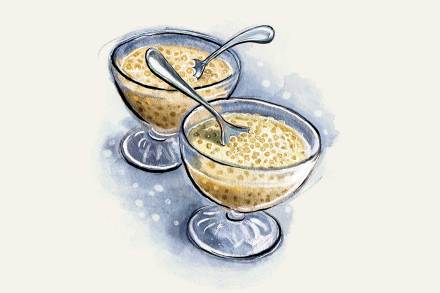
The Italians have a phrase: ‘brutti ma buoni’. It means ‘ugly but beautiful’, and it’s the name they give to their nubbly hazelnut meringue biscuits, which – as the name suggests – taste lovely but aren’t lookers. The phrase came to me the other day when I lifted the lid on my pan of golden syrup dumplings. Because they’re ugly little buggers. They look a little like soggy apple fritters, or even chicken nuggets – am I selling them to you yet? But focus on the buoni, not the brutti: they are absolutely delicious. Golden syrup dumplings sound as British as queueing.

Have we finally developed tastebuds?

We British are not famed for culinary daring. An adventurous meal has traditionally been one that lacks potatoes. Nose-to-tail eating is mostly anathema to a nation that prefers the blandest part of the chicken because it’s the easiest to cut up. Poverty and shortage were not enough to spur our creativity during postwar rationing. The food writer Elizabeth David recounted a Scottish schoolmaster’s wife who recoiled in horror at her freshly gathered chanterelles. A fisherman did the same on spotting her with a crab, both reacting with the same appalled cry: ‘You’re never going to eat those dirty things?’ Few in Britain praise dishes of pig’s ears or chicken knees, but over the past 30 years our culinary character has improved.

A creche for nepo babies: the River Cafe Cafe reviewed

The River Cafe has grown a thrifty annexe, and this passes for democratisation. All restaurants are tribal: if dukes have Wiltons, ancient Blairites have the River Cafe. It is a Richard Rogers remake of Duckhams oil storage, a warehouse of sinister London brick, and a Ruth Rogers restaurant. Opening in 1987, it heralded the gentrification of Hammersmith, which has stalled now that Hammersmith Bridge is closed to traffic and sits dully on the Thames, a bridge of decline. The River Cafe appears, thinly disguised, in a J.K. Rowling Cormoran Strike novel where a literary agent murders her client because he writes Swiftian pastiche, and it is a good place to watch the Boat Race. It is intensely disorientating until sunset.

Why we still love Pizza Express

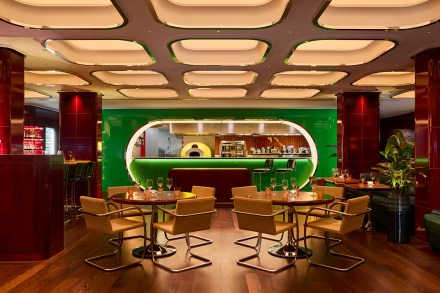
How’s this for a bargain? A Pizza Express margherita for only 33p, if you dine in and order between 5 and 6 p.m. tomorrow, to celebrate 60 years of the chain. ‘In 1965 we brought proper pizza to the UK, and what better way to mark those 60 years than with 60 minutes of our original pizzas at their original prices,’ reads the promotion. I love Pizza Express. I don’t often go there, but I’ve never had a bad time in the place. I almost always choose the American, which has been on the menu since it opened, and the service and food is always consistent. I have no expectation beyond my pizza being fresh out of the oven, and everybody being served at the same time, however big the table. That’s not, by any means, to say the menu is perfect.

With Loyd Grossman

24 min listen

Loyd Grossman is a man of many talents: from appearing on our screens as the host of MasterChef and Through the Keyhole, to crafting a beloved line of pasta sauces. Loyd has left his mark on both the culinary and cultural worlds. On the podcast, Loyd talks to Lara about hazy memories of ‘sipping a Shirley Temple cocktail aged 6 or 7’, the secret behind his pasta sauces, and why he loathes school meals.

Why my dog is vegan (and yours should be too)

This morning, as usual, I was woken up by the large ball of golden fluff that is my dog, Honey. At a time she considers decent, she bounds on to my bed, tail wagging furiously, to tell me it’s time for her breakfast. Honey still has the puppyish bounce she has always had – even though, at the age of almost 12, she is gently settling into canine old age. And I’d go so far as to say that what I give her to eat has a lot to do with her youthfulness. Eye-roll as much as you like, but I believe one of the key reasons Honey is thriving is because she hasn’t eaten meat for more than six years. Yes, my dog is vegan. Not that she realises that, of course: as far as she’s concerned, she still gets the same sausages, dog chews and choice of dry and wet foods as she’s always had.

The Berry Bros supremacy

For more than 50 years I have assumed that any sensible person will be a right-winger, even if not all of them will admit it, and that this will be especially true of oenophiles There are exceptions. Harry Waugh, a clubman, author – Bacchus on the Wing is especially good – and merchant-connoisseur, was one of the most delightful wine experts of the last century. It was an education to sit with him as he talked his way through a good bottle, which effortlessly became a good several bottles. Moreover, Harry lived to be 97. I spent far too little time in his company and cannot remember his ever talking about politics. Why on earth should he? There were far more important topics to consider. But it is said that during the 1930s he was briefly in the Communist party.

Bring back beef dripping!

For several years, a debate has raged (mainly on Twitter, now X) over whether animal fats are actually better for you than industrially processed ‘seed oils’. The debate has become more mainstream thanks to the efforts of the new US Health Secretary, Robert F. Kennedy Jnr, who wants to Make America Healthy Again. His strategy involves a back-to-the-land style embrace of animal fats, particularly beef dripping. The anti-seed oil community use technical-sounding terms like ‘linoleic acids’ to firm up their side of the debate but fundamentally their point is that our bodies have evolved to process animal fats rather than overly processed stuff. J.D.

Sole meunière: simple one-pan sophistication 

Picture the scene. The year is 2004. The setting, a British field or maybe a beach. There is a small open fire burning with a single cast-iron pan perched on it. A male TV chef – dressed in a striped shirt, open at the neck, chinos, possibly red, leather shoes – is standing over it, reverently holding a fish. ‘This is a beautiful piece of fish,’ he says, ‘and we’re not going to do anything fancy here. It doesn’t need it! We’re going to keep it simple.’ There must have been a clause in the contract of any TV cookery show in the early 2000s to say that a beautiful piece of fish should be cooked simply.

Last orders for the great British regular

The regular’s stage is the fetid pub carpet, the creaky floorboards, the cramped smoking area where they can sneak a shot between rounds. Their audience is the jaded, spotty bartender, the unsuspecting family looking for a quiet Sunday lunch, and any poor soul too cowardly or inebriated to walk away. Regulars are the backbone of the British pub trade, but their time has come to an end. Gen Z has rung the bell for last orders. A recent survey found that 43 per cent of 18-to-34-year-olds have given up booze altogether. Thirty-six per cent of that same demographic are using non-alcoholic substitutes to curtail their drinking, and ‘bingeing’ – drinking more than four pints in one sitting – appears to be on the decline.

Will TfL kill off another London institution?

Following the closure of Hungarian restaurant the Gay Hussar in 2018 – that Soho institution and virtual museum of Labour party history – it seems Londoners are about to lose another Central European landmark. The Polish restaurant Daquise has finally had time served on it by Transport for London, who wish to redevelop the buildings round South Kensington station, where Daquise has been serving its loyal customers for nearly 80 years. Formerly a wartime canteen for Polish officers, Daquise opened as a restaurant in 1947. Even its name is rather romantic – a portmanteau word put together by the restaurant’s uxorious founder (he was Dakowski, his wife Louise, therefore Daquise).

A great-day-out cafe that’s good value: Kenwood House reviewed

The immaculate bourgeois socialists of north London – that is not code for Jews – like to eat and drink in the former servants’ quarters of Kenwood House, because this is a mad country.  Kenwood is beautiful. It is Hampstead’s best house, standing at the top of the heath, near the head waters of the River Fleet, the river of the journalists. Further down the hill the immaculate bourgeois socialists gambol in the swimming ponds, which is apparently a fashionable thing to do. I prefer the lido, but I am not afraid of working-class teenagers. Hampstead Heath is an excitable woodland.

With Ash Sarkar

25 min listen

Ash Sarkar is a journalist, academic and political activist known for her commentary on social justice and democratic socialism. She is a senior editor at Novara Media, and her work has been published extensively. Ash’s debut book, Minority Rule: Adventures in the Culture War, examines how ruling elites exploit cultural divisions to maintain power. On the podcast, she tells Liv and Lara about early memories of her grandmother’s paratha, why she is not a vegetarian and why she prefers to think of herself as a ‘Cava communist’ as opposed to a Champagne socialist.

The rise of protein washing

I bought some pork scratchings the other day, and the packet said it was ‘high in protein’. Gruntled, the brand, is distributed by the Keto Shop and is now being marketed as some type of health food. I had to laugh. Wolfing down a packet of pork scratchings in the pub is now part of the latest health kick? Demand for protein is being driven by health-conscious middle classes, including Gen Zers. According to one national poll, nearly half of adults in the UK have increased their protein intake in the past year, including a whopping two-thirds of those aged 16-to-34-year-olds. This is boosting demand for chicken breasts, lentils and – I can hardly believe I’m writing this sentence – cottage cheese.

The restaurant where time (and prices) have stood still

Walking into this crowded and clattering restaurant for the first time in more than 30 years, two things strike me almost immediately: 1) it seems to be largely unchanged and 2) the prices have scarcely risen. I can’t claim to have tried every wine list in Soho, but I can tell you with certainty that this is the first time in a very long time that I have seen a glass of wine for under £5 in the West End. But, incredibly, here it starts at £4.50 – with cocktails from £8.The restaurant is Pollo, as it’s still popularly known, or La Porchetta Pollo Bar as the sign outside calls it. It crams 100 covers on to two floors at the eastern end of Old Compton Street, just behind the Cambridge Theatre, in Soho.

In defence of red velvet cake

I will admit to having been dismissive of red velvet cake in the past, considering it to be bland in flavour and garish in colour. It tended to come in cupcake form with towering hats of super-sweet buttercream, which made it unpleasant and difficult to eat. The cult love for red velvet, inspiring scented candles and lip balms all smelling of synthetic vanilla, always struck me as a bit naff – the preserve of teenage girls queueing outside Instagram-bait bakeries. Why would you plump for a red velvet cupcake when you could have coffee and walnut or a lemon syrup-soaked sponge or a nobbly carrot cake? Red velvet was a cake for people who didn’t really like cake.

Stop scoffing food on trains!

I’m on the 10.45 slow train to Ipswich. It’s not even lunchtime, yet everyone around me is already gorging on food. The corpulent man opposite is posting fistfuls of cheesy Doritos into his gaping maw, washing them down with cheap lager. A woman is noisily chomping her way through a limp burger that reeks of dirty vegetable oil. On my right, I’m greeted by the unmistakable whiff of Greggs meat pie, an unholy stench best described as ‘care-home carpet’. By the time we reach Colchester, the entire carriage sounds and smells like a student refectory, with competing crisp packets and loud slurping noises adding to my sense of despair at the awfulness of humankind. There is no longer much escape from the tyranny of ‘food-on-the-go’.

Why the left hates Gail’s

Is there any more evil influence on the world than Gail’s the bakery? It has thrown thousands of poor people out of their homes by gentrifying their neighbourhoods; it has destroyed the livelihoods of hundreds of hard-working owners of independent coffee shops by drawing away business; it has scorned the poor by throwing away its old sandwiches rather than give them to the homeless; and it allegedly supplied a box of pastries to the White House for tea last Friday, which so poisoned the atmosphere between Volodymyr Zelensky and Donald Trump that it could quite possibly lead to world war three. OK, I made the last one up. But as for the others, Gail’s stands accused of them all.

Last orders: farewell to my 300-year-old local pub

The Cherry Tree on Southgate Green began life as a coaching inn on one of the historic routes from London to York and beyond. It has been trading since 1695, when what are now the north London suburbs were open fields. But the other evening, the pub – my local – rang last orders for the final time. The brewery that owns it is having it refurbished as a brasserie, its pub status coming to an end after 330 years. I went on its final evening for the closing-down party. It was like being in an episode of EastEnders, in the sense that it was a pub full of faces you dimly recognised from events long past, drinking and being jolly, like the Queen Vic at Christmas. Becoming a brasserie seems an unlikely route to financial redemption for the Cherry Tree, though.