Spectator Life

Spectator Life

An intelligent mix of culture, style, travel, food and property, as well as where to go and what to see.

Something to relish: in praise of Patum Peperium

In a social media age, certain ingredients – long esteemed by those in the know – suddenly burst on to the scene. One morning we woke up to all the supermarkets stocking Mutti tinned tomatoes. Ortiz sardines and Perello Gordal olives are now in the limelight. I wonder – given the current zeitgeist for all things umami – whether Patum Peperium (Latin: ‘peppered paste’) could be next. Then again, the ‘Gentleman’s Relish’ – an anchovy paste made with butter and spices – isn’t for everyone. Much like Marmite, it has embraced this contentious reputation: ‘Dividing opinions since 1828’ it declares in its branding. After almost 200 years on the scene, it has started popping up in trendy spots, like a debonair rake sauntering into a party fashionably late.

The tiramisu is one of the loveliest things I’ve eaten anywhere: La Môme London reviewed

La Môme is the new ‘Mediterranean’ restaurant at the Berkeley, Knightsbridge’s monumental grand hotel. It has changed, as all London’s grand hotels have changed: it is Little Dubai in the cold and the chintz is on the bonfire. Fairy lights hang from the awning of the entrance, as if in an eternal Christmas. I barely recognise it, though I ate an impersonation of a mandarin in its overwrought Instagram-friendly bakery two years ago, and it was inferior to a real mandarin. I cling to that. Designers must keep busy: this means grand hotels are always getting renovated – it’s life of a kind. The lobby feels gold, though that may only be an impression.

With Emma Fox, CEO of Berry Bros & Rudd

28 min listen

Emma Fox is the chief exec of Berry Bros & Rudd, the world's oldest fine wine and spirit merchant. A retail veteran, Emma's broad experience has been shaped by a career spanning over 30 years.  On the podcast, Emma tells Liv about early memories of 'sugar butties', what's the best bottle to bring to a dinner party and what she would pair with her desert island meal.

The real benefit of wind power? Lobster for all!

In a world of bewildering uncertainty and breakneck change, where a pack of butter now costs about the same as a small family saloon in the 1950s, there is at last some good news to cheer the soul. It concerns the lobster, that culinarily appealing crustacean which has sustained us nutritionally since the Stone Age – albeit in recent times mainly for the wealthier sort. Suddenly, the lobster has got the wind in its sails. It’s thanks in no small part to Britain’s rather quixotic, headlong dash to become, seemingly, the only net-zero country in the world, and the enormous wind turbines that have been springing up off our shores to help this take place. Because – would you believe it?

A pint, a punch and a scotch egg

My local gastropub, which is very popular, serves a hot, freshly made and runny-yolked scotch egg. It's billed as a ‘Cackleberry Farm Scotch Egg with Maldonado Salt’ because part of hospitality is marketing. If you just chalk up ‘scotch egg’ on a board, it doesn’t entice the appetite in quite the same way. But call it ‘œuf écossais enrobés de chair à saucisse’ and serve it on a cracked slate tile – you’ve got yourself a stampede. A couple who live in the village visited the pub and ordered two of them. Shortly after being served, the husband of the couple returned the plates to the bar and asked the staff to reheat their partially eaten scotch eggs. The landlord explained that he could not reheat them once they had been partially eaten.

Should you bother decanting wine?

We were almost having a symposium and I was invited to define Toryism in one sentence. I replied that one book would be easier: the late Roger Scruton’s On Hunting, which ought to be subtitled: ‘From Horse-Shit to Heaven: the Search for Love, Order and God.’ ‘But what if you leave out God, and therefore heaven?’ said one fellow: ‘What would be left?’ ‘What indeed. Many learned Tories – Dr Johnson, Salisbury and Quintin Hogg being obvious examples – would have given a simple answer: nothing.’ Those of us who have to do without God and yet avoid the abyss of nothingness can only fall back on eupeptic pessimism. Edward Fitzgerald’s Omar points the way: ‘A jug of wine and thou.

The secrets of the perfect potato rösti

You may be forgiven, if you are a regular reader of this column, for thinking that my primary motivation in cooking is showing off. I’m always banging on about lovely dishes you can serve to unsuspecting guests that will guarantee plaudits and amazement. But while there is more than a kernel of truth in this, I think that it’s actually simpler than that: what I crave from cooking is satisfaction. And I don’t mean satiation of hunger (although that too: I am greedy), but the sense of achievement that cooking – almost – invariably brings. True, this achievement can often be found in presenting a beautiful cake to an assembled group of people, or your new friend saying ‘You know, I think these are the best brownies I’ve ever tried’.

In defence of lard

It’s somewhat risky to make the case for lard for a publication whose cookery columnist is the author of a book on butter. But so be it. Because lard has generally been at best overlooked and at worst openly maligned, and that is madness. The cost of cooking oils has rocketed in the past couple of years – sunflower oil has trebled in price, olive oil doubled. Butter is much dearer too. Yet inexplicably no one has suggested lard might step in to save the day. The cheapest pack of butter at Tesco will currently cost you £1.99. A block of lard is 50p. It has long been a slight object of ridicule. A ‘tub of lard’ is somehow crueller an insult than the Shakespearean ‘fat as butter’.

The great Valentine’s Day con

When a press release for solar-powered sex toys popped into my inbox on 3 January, it dawned on me it could only mean one thing: we were already in the build-up to Valentine’s Day. A few days later, it was followed by the new aphrodisiac version of the Knorr stock cube, Knorrplay, and a set of champagne glasses adorned with red hearts. A couple of years ago I found myself overnight in Newcastle, with a male colleague. We were working hard on a harrowing story and decided a nice meal out would cheer us up. Not a chance in hell: neither of us had realised that the dreaded Valentine’s Day was upon us. Every single restaurant, from low-rent kebab joints right up to Michelin-starred gaffs, was full to the rafters with courting couples.

Why Gen Z worships the pickle

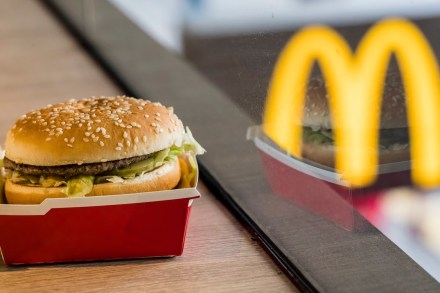
If something can be squeezed into a jar with brine, Polish grandmas will do it. Walk into the kitchen of the average babcia and you’ll see jars lining the shelves filled with mysterious experiments, as if in an old-fashioned Slavic science lab. Here are pickled cucumbers, pickled peppers, pickled mushrooms, pickled cabbage and pickled beetroot. Babcia knows that pickles are tasty, cheap, versatile and great for your health. Dziadek (Grandpa) knows that they are great with vodka. British Zoomers love pickles as well. Pickles, according to the website Vox, are among 2025’s ‘hottest foods’. McDonald’s has even cashed in on the fad with an advertisement showing a husband affectionately donating pickles from his burger to his wife.

How to get a table at Audley Public House

The Audley Public House is on the corner of North Audley Street and Mount Street in Mayfair, opposite the Purdey gun shop where you can buy a gun and a cashmere cape, because the world has changed. The Audley is a vast pale-pink Victorian castle, and it meets Mayfair in grandeur and prettiness. If the Audley looks like it could puncture you with an ornamental pinnacle, it also seems frosted with sugar – but that is money. This is the tourist Mayfair of the affluent American imagination: the pharmacies and grocers have gone, replaced by fashion (Balmain, Simone Rocha) and the spirit of Paddington Bear. Woody Allen shot Match Point in the Audley, and that is the most normal thing about it now.

With Groove Armada’s Andy Cato

19 min listen

Andy Cato is a musician, record producer and DJ, and is perhaps best known as one half of the Grammy Award-winning electronic music duo Groove Armada. Andy is also a farmer and now puts his energy into championing a better food system as co-founder of Wildfarmed, the UK’s leading regenerative food and farming company. Backed by Jeremy Clarkson and hundreds of farmers nationwide, regenerative farming methods place nature at the heart of food production: protecting natural landscapes, minimising pesticide use and building food security. On the podcast, he tells Lara about nutrition on world music tours, his favourite food spot at Glastonbury Festival and why he sold the rights to his music to pursue regenerative farming.

Michelin’s relaunch is a recipe for disaster

The Michelin Man is in trouble. In fact, his job is on the line. For 125 years, the Michelin Man, real name Bibendum, has been the face of the Michelin Guide: a coveted series of publications that award restaurants for excellence. But last week, news broke that the guide is attempting to reinvent itself in a bid to keep up with the world of online food reviews. Much like an aged B-list celebrity on a serious comedown, the guide is looking towards the internet for validation. In its endeavour to stay relevant, Michelin runs the risk of tarnishing the very thing that has kept it afloat for over a century: its reputation. And without its reputation, the Michelin Man’s next stop won’t be The Ledbury for flame-grilled mackerel – it will be the Jobcentre for a petrol station sandwich.

The time-poor woman’s perfect chocolate cake

Isn’t it awful that the older you get, the more you know yourself? It’s supposed to be a good thing, attributed to wisdom, experience and a deeper understanding of our place in the world around us. But good lord, self-awareness can be a cruel mistress. I have realised that my greatest culinary goal is simply unachievable. You see, I long to appear effortless. This is true throughout my life, but particularly so when it comes to cooking. Every time I invite friends round for lunch or dinner, I resolve that this is the time when everything will not only be easy but, crucially, I will make it look easy. That I will simply throw something together that everyone will adore; the gathered diners will be equally impressed by the food and by the nonchalance with which I’ve assembled it.

The best way to approach sake 

We were discussing civilisation, as one does, and its relationship with cuisine. Pasta in Italy, paella in Spain, the roast beef of Old England; wurst in Germany, burgers in the States –though with those latter examples we are moving away from the concept. What about Japan, a complex society which is full of paradoxes? For three-quarters of a century, the Meiji Restoration was the most successful revolution since the Glorious Revolution itself. It was part of a process which opened Japan to western influences and vice versa. Rather as in the UK, ancient forms were preserved, which helped to ensure social stability during a period of rapid change. Japan often bewilders westerners.

Why are we going nuts for pistachio?

You could be forgiven for thinking you’d walked into Oz: in the past couple of years, the whole world has gone green. Pale green, to be precise. Suddenly, pistachio is everywhere: it's in our pastries, our chocolate, our coffees, our puddings, and even showing up in perfumes, paint charts, scented candles and on our fashion runways. Where has this sudden lust for pistachio come from? In one way, pistachios are old news: they’re an ancient crop that has grown in the Middle East and been used as an ingredient in Middle Eastern and Mediterranean cookery for as long as can be remembered.

The key to finding the best pubs in Britain

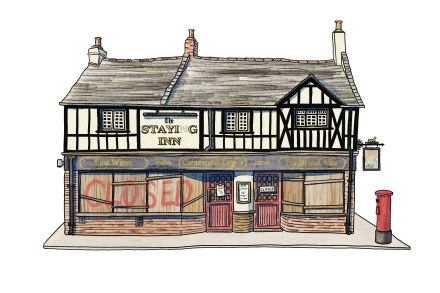
Entering the New Inn in Llanddewi Brefi in Ceredigion is like stepping back in time. The only pub in the village (since the Foelallt Arms closed down four years ago), The New Inn seems to hail from the 1970s. Its till is a pull-out wooden drawer full of coins and notes. There’s a coal fire in the grate. The bar is littered with eccentric and old-fashioned clutter: a jar of pickled eggs, boxes of Swan Vestas as if smoking in pubs was still the norm, plaques to award the winners of a conker competition long past, sheep farming memorabilia.   The clientele are dressed as if they’ve just got back from marching down Whitehall with Jeremy Clarkson. And, it transpires, these drinkers are waiting to be fed.

Can you still afford to eat out?

Many of us will remember, misty-eyed, how things changed around the turn of the century. How Britain ceased to be a nation brutalised by rationing and rissoles and instead blossomed into a utopia of celebrity chefs, endless food TV and a population seemingly willing and able to eat out most nights of the week. We no longer regarded ourselves as poor cousins to European nations with ‘cuisines’ – hell, Michelin stars glittered from every orifice. We had the uncalibrated zealotry of converts. In the years following the pandemic, UK hospitality came blinking back into the light, adopted a collective fixed grin and the can-do attitude of small businesspeople, and did some amazing things while trying to get back to that prelapsarian state of glory.

Is a soul the only thing unavailable in Harrods?

The Harrods bookshop, which I browse for masochistic reasons, is mesmerising: an homage to the lure of ownership. The first book I find is called, simply, 150 Houses. Is that enough? Then I find Luxury Trains, the Porsche Book, the Lamborghini Book and the Jaguar Book. Then I find a book designed for a lifelong self-guided tour of the world of James Bond, who is a fictional British civil servant. Then I find books called Dior, Balmain, Prada and Gucci. I didn’t know they did words. I want to tell you that the Harrods bookshop is entirely advertorial for the life I can’t afford, but that would be unfair. Because I also find a copy of Mansfield Park in the same colours as a Minion: custard yellow and bright blue.

With Jeremy Chan

19 min listen

Jeremy Chan is the head chef and owner of Ikoyi, and the author of a cookbook of the same name. On the podcast, he tells Liv and Lara about growing up with a number of different food influences – from Hong Kong to Canada – and why his two-Michelin-starred restaurant should never be pigeonholed.

In praise of hospital food

I’ve been in hospital, bed-bound, for six weeks; because I can write it’s not so bad, but between deadlines time passes slowly, so landmarks in the day come to mean a lot. Most of all, I look forward to my husband visiting at 3 p.m.; secondly, the meds trolley trundling towards me like a dear old open-handed friend at 9 a.m. – but a close third must be the bell which announces the arrival of meals: breakfast at 7 a.m., lunch at 12 p.m., dinner at 5 p.m. In the first bay I stayed in, I always made my ward-mates laugh by squealing with genuine glee when I heard it.

I can’t stand Stanley Tucci

I love Italian food, and I love food writing and TV programmes, so you might think I’d love Stanley Tucci. And yet I find him creepy and his recipes are rubbish. I can’t be the only one. The actor, who I first saw in the brilliant film Big Night, about a Jersey Shore Italian-American restaurant, is probably best known for The Devil Wears Prada, a film I adore. His character in that film did wind me up, but it took a while before Tucci himself got on my nerves. I suppose it began with him coming over all cheffy, like he’s the new Anthony Bourdain. Who cares what Colin Firth eats when he’s round at the Tucci gaff? I kept being told to watch his TV series where he travels around Italy, but the sight of his smug face on my screen turned out to be more than I could bear.

In defence of British food

Recently in Spectator Life Rob Crossan laid bare ‘the unpalatable truth about British food’ – namely that it is, er, in some establishments he’s been to, done badly. Leaving aside the fact he’s looking for his fish and chips in the wrong place (outside the M25 it wouldn’t be such a struggle), encountering a few dodgy versions of British fare is not a good reason to sit idly by and allow our culinary heritage to disappear. British food can compete with the world's best – if we allow it to. In many ways we have had to develop a thick skin when it comes to the loss of treasured bastions of food and drink.

The real reason you hate vegans

Just when it seemed as though January in Britain couldn’t get any bleaker, along came ‘Veganuary’. Cue loads of puny, blue-haired wokerati spending this month preaching about how we should give up on two of man’s greatest pleasures – meat and cheese. If you’ve been finding it irritating, you’re not alone. In surveys of public opinion, vegans are hated more than any other group, with the exception of drug addicts. So when a chef tells the newspapers that he’s banned vegans from his restaurant, or a magazine editor jokes that they should be killed, do you feel justified in allowing a smirk of amusement to cross your face? After all, in an era when we are supposed to have obliterated all our prejudices, despising vegans still feels deliciously permissible.

The Reagan effect on wine lists

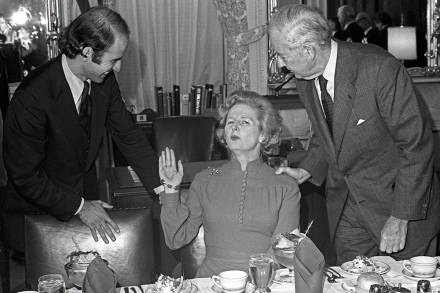
Let us indulge in a slight paraphrase. What rough beast slouches towards the White House to be reborn? The inauguration ceremonies remind us that many Americans still hanker after monarchical splendour. Even as contentious a figure as Donald Trump is accorded the dignities appropriate to a head of state. The same of course is true of M. Macron, who carries them off better. The dignified portion of the constitution, or the efficient one? It could easily be argued that President Trump is better in the latter role. In his early phase, President Macron wanted us to see him as a Napoleonic figure. Indeed. Napoleon le Petit. If a bottle was old enough to drink, restaurants might even apologise and offer a discount When the Trumpians hit town four years ago, comparisons were drawn.

Hunter’s chicken: the ultimate cheer-me-up-quickly recipe

Pub food in Britain has had a mixed reputation over the years. For a long time, the most a pub would have to offer as food would be some pork scratchings or a pickled egg. There certainly wasn’t a brigade of chefs in white coats in a shiny chrome kitchen. This is midweek-teatime cooking, it’s sling-it-in-an-oven cooking, it’s cheer-me-up-quickly cooking Pub grub started to appear in the 1970s, but it was simple, filling and predictable. It was the sort of unpretentious, low-priced food that was suitable for a worker’s lunch break. So up and down the country pub menus all hit the same beats: steak and kidney pie, ham with egg and chips, chilli con carne, fish and chips, even lasagne – and hunter’s chicken.

The offal truth? Organs are delicious

I’m sure my mum would forgive me for saying this, but cooking is not one of her many strengths. Raising three children, and with a husband who worked shifts in a steel mill, she was feeding people round the clock, so cooking became a necessity rather than a pleasure – as it will have been for the majority of working-class women in the 1960s and 70s. Since this was before convenience food really hit the shelves, things were cooked from scratch, and in winter, steak and kidney suet pudding was on the menu in our house most weeks. As were liver and onions, mince and potato pies and anything else cheap and cheerful, usually involving lots of animal fat and parts. The sweet, creamy texture, gamey and pungent, was a delight.

How to eat like a president

John F. Kennedy opted to serve New England lobster, Ronald Reagan a California-inspired garden salad – and James Buchanan 400 gallons of oysters. Held at Statuary Hall in the US Capitol, the inaugural luncheon for a new president is as much part of inauguration day as the swearing-in ceremony and the inaugural address.  Nixon enjoyed pineapple slices topped with cottage cheese and washed down with a glass of milk First time around, in 2017, Donald Trump’s inaugural meal featured dishes including Maine lobster and Gulf shrimp. But for those not on the guest list to find out what he serves tomorrow (McDonald’s ice cream, perhaps?), there are plenty of other opportunities to eat like a president in Washington DC.

How to serve smelt

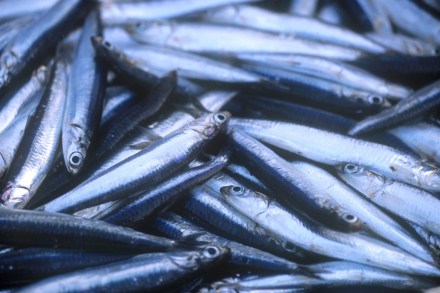
Donald Trump has form with the smelt. In his 2016 presidential run, he complained that California’s authorities were prioritising the endangered fish (which are native to the Sacramento-San Joaquin River Delta) over farmers’ irrigation needs. ‘Is there a drought?’ he asked a private audience of farmers ahead of a rally. ‘No, we have plenty of water.’ Environmentalists, he said, were wasting water in their efforts ‘to protect a certain kind of three-inch fish’. Last week, he levelled a similar accusation against California’s governor Gavin Newsom – or, as he calls him, ‘Newscum’ – for using the state’s water (which could have fought the LA fires) to provide the ‘essentially worthless’ smelt with a habitat.