Spectator Life

Spectator Life

An intelligent mix of culture, style, travel, food and property, as well as where to go and what to see.

The depressing rise of the status shake

If you’re young, hot and desperate for affirmation, the status symbol du jour is an Instagrammable protein shake in a single-use plastic cup sporting the logo of an upmarket gym, private members’ club or boutique supermarket. How depressing. Like so many vacuous trends, the status shake originated in LA, where the go-to spot is Erewhon – a supermarket so health-obsessed and expensive that it makes Whole Foods look like Lidl. At Erewhon, famous faces such as Hailey Bieber, Kourtney Kardashian and Gisele Bündchen don’t just drink status shakes, but ‘collaborate’ on them, creating their own signature blends which sell for up to $23 (about £17).

Wagyu isn’t worth it

A colleague took me out to dinner recently, repaying a favour. Ben likes his steak and we ended up at some high-end joint in Mayfair. Unsure what to order, I left it to him and was served Wagyu beef, which literally translates as ‘Japanese cow’. When it came, it was pale in colour with lines of fat running all the way through. It didn’t look like steak. Nor did it cut like one – I probably could have used a spoon. Worst of all, it didn’t taste like one. It was a bit like eating solidified grease that required no chewing and left a funny kind of aftertaste. More foie gras than steak – not just in terms of flavour and texture, but also in terms of force feeding.

Wigan’s pies are grotesque and glorious

Fancy a slappy? It’s not what you think – unless you’re from Wigan, in which case you’ll know exactly what I’m offering. A slappy, otherwise known as a ‘Wigan Kebab’, is a whole pie served inside a sliced barm cake (not cake, but a soft, sweetish bread roll). Wiganers are known as ‘pie eaters’. I don’t mind a slice of mince and onion or chicken and leek every now and again, preferably in winter – but I certainly couldn’t imagine indulging on a regular basis. But if I am to eat pie, it should be in Wigan. Don’t get me wrong, there is absolutely no way I would travel to Wigan especially, because – and I mean no offence to its inhabitants – there isn’t an awful lot else going for it. I can say this because I’m from Darlington.

Food that’s both serious and serene: Babbo reviewed

After a week in which Israel triumphed at the Eurovision Song Contest with second place – western Europe is for them, eastern Europe slightly less so (plus ça change) – I review Babbo, the new neighbourhood restaurant in St John’s Wood. Restaurants tend to drift in, settle and drift onwards here. The Victorians knew it as a land of mistresses and smut; now it is a world of private hospitals, bad parking and MCC members, who seem bewildered by it all, as if Lord’s landed like a spaceship in an alien land. Only Oslo Court seems impregnable, because it manifests Jewish solidity – it is disguised as the home of your cousin in a mansion flat – and Jewish subversion. It is a specialist in seafood and cream cakes. Everything else comes and goes.

With Daria Lavelle, on her breakout novel ‘Aftertaste’

33 min listen

Daria Lavelle was born in Kyiv, Ukraine, and raised in New York. Her work explores themes of identity and belonging and her short stories have appeared in The Deadlands, Dread Machine, and elsewhere. Daria is the author of the critically acclaimed new novel Aftertaste which explores food, grief and the uncanny.  On the podcast she tells Liv about her 'inexplicable' love of olives as a child in Ukraine, trying to make it as a writer in New York and how to write about food without it feeling contrived.

How to save Britain’s pubs

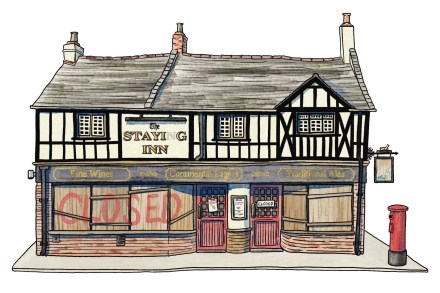
In Bradford a few weeks ago, I popped into a pub called Jacobs Well. It’s a squat old building, all but submerged behind the stultifyingly ugly road that grinds around the edges of the town centre. The Well was fairly quiet on a Monday night, but everyone there was congregated around the bar and it was immediately apparent that this was a place where long friendships are nurtured and strangers are welcomed. There were interesting cask ales, free hotpot and doorsteps of bread on a side table for anyone who fancied a meal, wonderful photos of old Bradford on the walls and a blackboard chock-full of handwritten notices advertising upcoming band nights and quizzes. The Jacobs Well probably doesn’t make huge profits.

The art of the political lunch

We had been discussing Ukraine, Gaza, Iran, the possibility of a nuclear exchange across the Punjab and other trifling matters. It was decided to change the subject. A youngster was planning to write a piece on lunching and suggested I might know something about that. I did not disagree. In the old days, lunching was a vital part of the political process. It was a good way of getting to know politicians, so that contacts would ripen into friendships. That said, it was not an efficient method of discussing complex matters. Lunch was forgossip and general political impressions. If detailed rumination was necessary, the place for that was in the minister’s office, equipped with a notebook. The 1980s were particularly fruitful.

Devilled kidneys: a heavenly breakfast 

Iam standing in my kitchen preparing kidneys for devilling. Snipping their white cores away piece by piece until they come free and I’m left with just the wibbly, burgundy kidney, ready for their spiced flour, I pause. There is no denying that even fresh raw kidneys can smell a little… challenging. And for one moment I consider skipping the whole thing and just having an unchallenging slice of toast instead. I’m so glad I didn’t. Because once cooked, kidneys are not challenging at all: they’re luscious and tender, with an earthy, gamey flavour which is almost compulsive. That robustness is actually their strength: kidneys can take bold flavours – feisty seasonings and rich sauces – which is why they are so suited to devilling.

Why are women expected to love chocolate?

‘What? You don’t like chocolate?’ The British Airways attendant almost shouted at me in incomprehension as she was passing out little packets of chocolate digestives. I had had the temerity to ask (in economy, of course) whether there might be any other biscuits on offer. To which she had responded with a concerned enquiry about allergies. No, I said, I am not allergic. I just don’t like chocolate. I can’t say I was surprised by the attendant’s reaction. Any suggestion that you might not share the current appetite – nay, fetish – for chocolate and you are treated as though you’re inexplicably withdrawing yourself from the cultural mainstream. This applies particularly to women. In the event that a man declines chocolate, this tends to pass without comment. So be it.

Everything Ottolenghi should be but isn’t: Delamina Townhouse reviewed

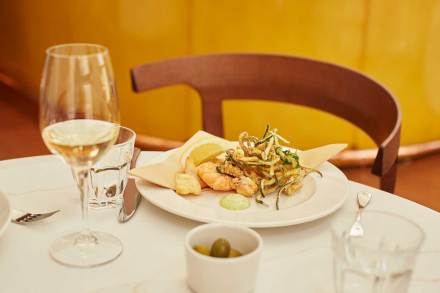
Delamina Townhouse is on Tavistock Street in Covent Garden. It is an Israeli restaurant, and a very fine and subtle one, though Israeli restaurants are rebranding as ‘eastern Mediterranean’ these days due to growing Jew hate on London’s streets, which fills me with rage. (I am not talking about criticism of Israel. I welcome all criticism. I am a critic. I am talking about demonisation, and the glib urge to annihilation. Plenty of restaurant critics have a line on the war. I have checked.) But not enough rage to stop eating. I ate for Ukraine at Mriya in Hammersmith: now I eat here. If you think I am decadent, well, I am hardly the only one. You are lucky.

I’m obsessed with anchovies

Attempting to make lunch for a friend today, I discovered I had run out of anchovies – even though I always have some in stock: tins and jars of the salted variety in oil, tubs of boquerones in vinegar, and, lurking in the back of the fridge, a tube of anchovy paste. I was bordering on hysterical as I made my way to the local supermarket, only to find they too had run out. I instantly went online and ordered a massive tray of the salted ones that last forever to ensure this never happens again – though I know it will, because I use them all the time. One of the numerous uses for anchovies is as an integral part of a dressing for Caesar salad. Without it, the entire salad is a flop.

With Mary-Ellen McTague

25 min listen

Mary-Ellen McTague is a chef based in Manchester. She is the culinary driving force behind Aunbury, 4244, the Creameries and her newest venture, Pip at the Treehouse Hotel. Mary-Ellen is also the co-founder of Eat Well MCR, which has delivered almost 100,000 meals across Greater Manchester since 2020 to those sidelined by poverty. On the podcast, she tells Liv and Lara why, as a child, she would only eat orange cheese, why Lancashire hotpot is so nostalgic, her Eureka moment when she decided to become a chef – and where you should eat in Manchester.

When it comes to cheese, I’m Eurocentric

There are many reasons to like Kyrgyzstan. It has extraordinarily lovely women: some mad collision of Persian, Turkish, Russian, Mongol and Chinese genes makes for supermodels at every bus stop. It is safe, friendly, cheap. Its cities are commonly free of rubbish and graffiti (how does Central Asia do this, yet we cannot?). Despite these charms, it has few tourists. However, I can’t say anything positive about the cheese – because the cheese is dreck. Last night I went to the Globus supermarket here in downtown Bishkek and bought a sample of the local fromage. When I got it home, it was like chewing a rubber toy: tasteless, over-firm, banal. In the end I was reduced to smothering it in Sriracha to make it vaguely flavoursome.

McDonald’s isn’t worth it any more

When did you last eat at a McDonald’s? If I’d asked this question a decade or so ago, I imagine the answer would probably have been ‘more recently than I’d care to admit’. The Golden Arches were the ultimate fast-food guilty pleasure, where, for considerably less than a tenner, the hungry, hungover or intoxicated could gorge on burgers, chips, milkshakes and chicken nuggets – served swiftly and efficiently. It was never designed to be Michelin-star standard, but everyone knew what they were getting with a Maccy D’s: comfort food that hit the spot and did so with unerring, machine-like competence. Yet now the company seems to be caught in an inexorable decline, as consumers tire of the belly-filling delights.

The reinvention of limoncello

My first memories of limoncello, I expect like most people, are from an Italian holiday, the slender bottles as yellow and radiant as the Amalfi sunshine. And at a local, family-run Italian restaurant, cheerfully slammed down on the table at meal’s end. The lemon liqueur is now having a new lease of life, born again as an aperitif. The limoncello market grew 31 per cent from 2019 to 2023 and it is popping up everywhere from Australia to Germany. Above all this is down to the advent of the ‘limoncello spritz’, which was even added to the menu at J.D. Wetherspoon last year. Having enjoyed two decades as top dog, the Aperol spritz finally has some meaningful competition.

The gobsmacking brilliance of baked Alaska

I have never seen a baked Alaska in the wild. Have you? I knew what they looked like, of course, all meringue cheekbones and technicolor interior, but I haven’t actually come across one. For whatever reason, they seem to be an endangered species – so I took to making them myself. The pudding was invented in the 18th century by Sir Benjamin Thompson (also known as Count von Rumford), a physicist who invented the double boiler, the modern kitchen range and thermal underwear too. Thompson realised that the tiny bubbles created when you aerate egg whites to make meringue provided so much insulation that you could torch the meringue and leave ice cream intact, unmelted, beneath.

My new-found love for Marsala

Western Sicily is one of the most wonderful places on Earth. From the Greek temples in the south to the Arab-Norman architecture and frescos around Palermo, there are endless treasures and glories. There are also records of fascinating characters, especially the Emperor Frederick II Hohenstaufen, Stupor Mundi. Historians still argue whether he was a prototype of a Renaissance ruler, with a distinct flavour of the Enlightenment, or merely among the most remarkable men of the high Middle Ages. He was a polymath, but one of his most distinguished qualities ultimately limited his inheritance. He found it impossible to stop fighting, not least against a succession of popes. In that particular phase of the conflict between papacy and Holy Roman Empire, Frederick could not win a decisive victory.

Why Americans are so fat

Are you hungry, peckish, esurient? Join me at Josie’s diner in Lexington, Kentucky, in the heart of Bluegrass country, where the horses are lean and very many people are, let me be frank, not. Josie’s is heaving at 8 a.m. as the well-upholstered clientele arrive for the morning feed. A mercifully slim student at the University of Kentucky is my waitress. ‘Hi, y’all! I’m Madeline Rose and I’ll be your server today,’ she announces, in the earnest tone of wait staff in a country where the credit card terminal offers the option of a 25 per cent tip. The menu she hands me is already expansive, but there’s more.

Long live the long lunch!

I keep on my bedside table, where others might place religious texts, Keith Waterhouse’s seminal The Theory and Practice of Lunch. Waterhouse, that magnificent chronicler of Fleet Street’s liquid lunches and disappearing afternoons, understood what modern efficiency cultists cannot: that civilisation is measured not by what we produce but by how elegantly we pause. His gospel preaches that a proper lunch requires ‘two-and-a-half hours of quality time at a quality establishment’, a commandment I try to observe with monastic devotion at least twice a week. The book’s spine is cracked at the chapter entitled ‘The Lunch Bore’.

Northern Europe doesn’t get salads: Claro reviewed

Claro is at 12 Waterloo Place, St James’s, and, when I tried to find out what it used to be – it has the energy of a bank – I found an advert from the Crown Estate offering the lease for a ‘retail or wellness opportunity’. 12 Waterloo Place was pictured in pen and ink, with a woman holding a yoga mat idling past, and a woman in cycling shorts hanging back. I wonder why the Crown Estate is pushing wellness, which I think is being rich, bored and female while not dying. (I have never heard a woman with a good book talk about wellness.) The price is upon application. I looked further: 12 Waterloo Place is 20th-century Baroque pastiche, it was a bank, and it wants to be a wellness opportunity. It should talk to the ducks in St James’s Park. They live inside a wellness opportunity.

With Roger Pizey, Head of Pastry at Fortnum and Mason

20 min listen

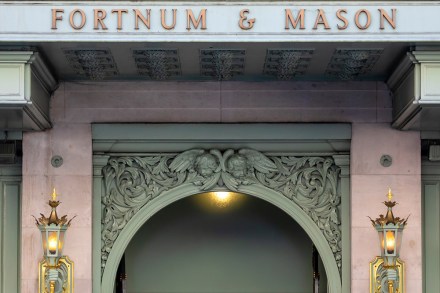
Roger Pizey is a baker, chef and one of the most influential pâtissiers in the UK. He started his culinary journey as an apprentice at La Gavroche under Albert Roux before taking on the role of head of pastry at Marco Pierre White’s Harveys, during the time it achieved three Michelin stars. He has since worked at a number of London institutions and now serves as the head of pastry at Fortnum and Mason. On the podcast he tells Liv and Lara about childhood memories of Manchester tart, what he learnt from Albert Roux and Marco Pierre White, and why Fortnum’s rose éclair is the perfect dessert.

Lindt has cheapened itself

Lindt has opened a ‘first of its kind’ flagship store at Piccadilly Circus. Roger Federer was wheeled out to cut the ribbon. It features the UK’s largest Lindt truffle pick ’n’ mix counter (a snip at £6.50/100g), a ‘barista-style’ hot chocolate bar and an ice cream station. There’s even jars of chocolate spread for those who consider Nutella lowbrow. Lindt’s CEO for UK and Ireland, in that PR corporatese that sounds like guff to everyone except his marketing department, said: ‘With 2025 marking Lindt & Sprungli’s 180th anniversary, what better way to celebrate this journey and enduring passion for captivating chocolate lovers worldwide.’ It’s enough to make me crave Quality Street. It’s fairly obvious what’s inspired them.

Why Easter eggs are getting more expensive

While the US continues to use the price of chicken eggs as a political (American) football, closer to home our concern is with eggs of a sweeter kind. This year has seen chocolate prices rise dramatically. The price of cocoa had remained stable for decades, but in November 2023 it rocketed and has remained high ever since: it is currently almost three times what it was 18 months ago. The sudden increase came about after particularly poor harvests in West Africa, where more than 80 per cent of the world’s cocoa is grown. Extreme weather, in the form of both record-breaking high temperatures and then very heavy rains, have ravaged the cocoa plantations in Ghana and Côte d’Ivoire.

Admit it: Creme Eggs are vile

Every Easter, the Creme Egg dominates supermarket shelves. It is, Cadbury’s marketing department loves to remind us, ‘the nation’s favourite Easter egg’. Its popularity sometimes verges on cultlike. In 2016, when Cadbury opened a pop-up café in Soho called Crème de la Creme Egg Café, people queued down the street to eat something they could have bought at any old corner shop. In 2019, a mega-fan from Liverpool had a Creme Egg tattooed on her hip. I have never understood the love for something so mediocre. Creme Eggs are a cheerless chocolate. What I find perplexing is why anyone would find a confectionary that resembles the albumen and yolk of a soft-boiled egg appealing.

Lamb is for life, not just for Easter

Roast lamb is as expected on the Easter table as turkey is at Christmas. But as a nation, we are falling out of love with lamb. Meat consumption in Britain is at its lowest level since records began, and according to the Agriculture and Horticulture Development Board (AHDB), lamb has been in particular decline for the past 20 years. We may feel we are supporting the sheep-farming industry, but the truth is a little more complicated There are a number of reasons for this: some people are trying to eat less meat for environmental or ethical reasons, while others don’t enjoy the richer taste of lamb compared with other meats. Perhaps most importantly, after a long period of rising in price more drastically than other meats, the cost of lamb reached record highs last year.

The simple elegance of fondant potatoes

In 1999, a relatively unknown American chef wrote an essay in the New Yorker uncovering the secrets of restaurants. ‘Don’t Eat Before Reading This’ lifted the lid on both the underworld of professional kitchens and the mentality of chefs. In it, the writer meticulously took down ordering fish on a Monday (old), eating steak well done (for ‘philistines’), brunch as a concept (despised) and vegetarians in general (‘Enemies of everything that’s good and decent in the human spirit’). The no-punches-pulled writing, which was both lyrical and graphic as well as funny and forthright, was the first published essay by Anthony Bourdain, who would go on to become one of the most influential and beloved personalities in the food world.

The Chinese tried to get me drunk

China: what next? Around the time of the millennium, I wrote that during this century, many of the world’s great questions would be answered in Chinese characters and that great fortunes would be made, and lost, in the China trade. That is one prophecy which might hold good. No one ever says that they could take or leave Maotai Churchill said that the longer you can look back, the farther you can look forward, and it is worth following the Chinese example and thinking in epochs. Consider one of the most significant might-have-beens in history: the career of the 15th-century eunuch admiral Zheng He.

Why I’ve given up on bacon

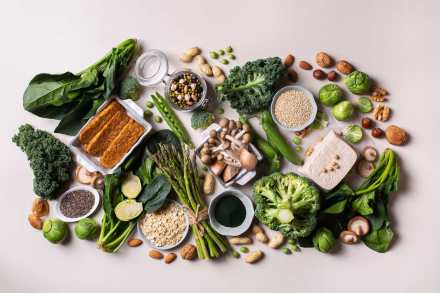
Having long been a man whose spirits wilted if meat was not the centre of his meal, I have become almost vegetarian. It’s routinely predictable for age to lead us astray from our youthful socialism, but I find my dietary change more difficult to explain. My younger self would view my politics with horror and my diet with incredulity. I remain partial to eating flesh, but the conviction that any plate without it must be a side dish has evaporated. For most of my life, meat and two veg was my credo – and if the two vegetables were ketchup and mustard, then all the better. But these days I often cook without remembering to include anything that once had blood – and am bemused to find myself content. The vegetable delivery company Natoora bears some of the blame.

The hot cross bunfight

There’s a well-known clip from daytime TV show This Morning where celebrity chef Gino D’Acampo is cooking a classic Italian pasta dish. Holly Willoughby, one of the presenters, tastes it and says: ‘Do you know, if it had, like, ham in it, it’s closer to a British carbonara?’ D’Acampo, in his Italian-accented perfect English, looks at her in horror before replying: ‘If my grandmother had wheels, she would have been a bike.’ This phrase goes round and round in my head as I stand agog in my supermarket’s bakery aisles. Where once there might have been one choice of hot cross bun as we hurtle towards Easter – perhaps one ‘standard’ and one ‘luxury’ in the bigger shops – our options now extend as far as the eye can see.