Spectator Life

Spectator Life

An intelligent mix of culture, style, travel, food and property, as well as where to go and what to see.

The strange rituals of Taiwan’s bin men

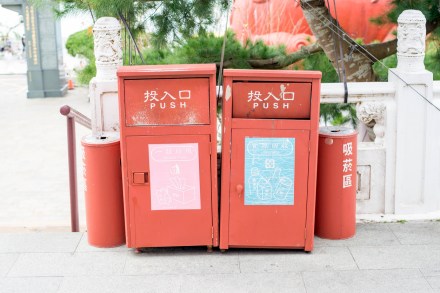
The bin system in Taiwan is strange. There is no single bin day. A citizen retains responsibility for their rubbish until the moment the bin lorry arrives on their road, at which point they must take it upon themselves to put it into the appropriate receptacle or shredder. In my bit of Taipei, where my university sent me for a year to study Mandarin, the lorries came almost every evening. Each neighbourhood had two slots – mine were at 18.30 and 21.20. Before the lorries left, they would play loud warning jingles. Sometimes this was Beethoven’s ‘Für Elise’, and sometimes it was ‘A Maiden’s Prayer’, a Polish piano piece also heard on Taipei city buses.

How BA lost the plot

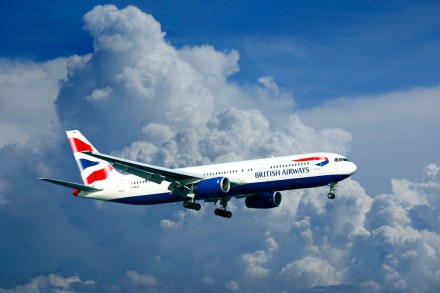
I am writing this from Nashville, Tennessee, where British Airways was supposed to have flown me and a planeload of Boeing 787 customers on a direct service from Heathrow. However, the night before our intended departure I received a terse message from the airline saying that the flight had been cancelled. A later email informed me that I would be flying on their code-share partner American Airlines (AA) to Charlotte, North Carolina. Then after a layover I would eventually be deposited at my destination. There is mounting frustration at what they say is BA’s ‘unreliability and general low standards’ Not surprisingly the American Airlines flight was rammed with passengers, many similarly bumped BA customers.

There’s something sad about Sandbanks

I’ve always had a soft spot for the English seaside. It’s idiosyncratic, a little kitschy, a little gross. There are those pre-war beach windbreakers. There are tuna and sweetcorn sandwiches in packed lunches. There’s a mangy dog nipping at your feet as you run into icy waters. It’s always windy, often pebbled, and full of litter. The spit of sand stretches out along the English Channel and unfurls into Poole Harbour We love it like we love mushy peas – that is to say we learn to love it. But Sandbanks is nothing like that. Sandbanks is considered a cut above, and it is. The chintzy aspects of seaside towns like Paignton and Bognor Regis are lost on Sandbanks and its £13 million bungalows.

The mystical power of Assisi

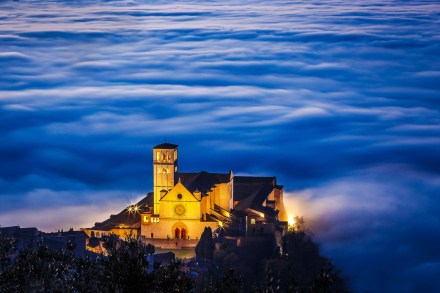
In the courtyard of the bishop’s palace, the young man who would become Saint Francis stripped naked in front of his parents and various town and church officials. He handed his clothes with a bag of money on top to his father, saying: ‘I give these back to you. From now on I have one father; the Father in Heaven’. Deep in the basilica is a striking painting depicting a six-winged Seraphim angel bestowing the stigmata with what looks like lasers It was a turning point in his life (not to mention devastating for his parents).

The peculiar ritual of Spain’s Christmas lottery

Half of Britain is said to have watched The Morecambe and Wise Christmas Show in 1977. Spain’s Christmas lottery, broadcast live to the nation each year on the morning of 22 December and marking for many the start of the holidays, is a similar moment of national unity. Spaniards everywhere down tools, watching with bated breath as lives throughout the country are transformed. Lottery tickets are untraceable so previous years have seen furtive-looking men carrying suitcases full of banknotes descend on bars, lottery outlets and banks This year the television cameras and the giant spherical cage containing thousands of numbered wooden balls will be in place as usual.

Hunting werewolves dans la France profonde

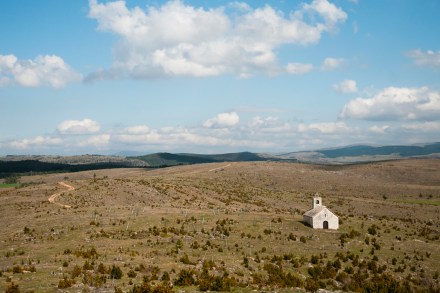
As a travel writer, you soon learn that there are countries which, when you mention them, elicit a polite smile of incomprehension, which says: er, where’s that then? Laos is a classic example. Also Kyrgyzstan. And maybe Eswatini. But can it be true that there are chunks, regions, entire departments of France that conjure the same puzzled stare? Oui, my Spectator reading friends, c’est vrai: and that place is Lozere. France may be the single most touristed country on earth, the one country the whole world knows, yet for the last few weeks, when I’ve told people I’m off to do a French travel piece in the department of Lozere I’ve been confronted with flat incomprehension, then embarrassingly incorrect guesses: is it in Brittany? Is it an overseas island?

Hell is a Christmas market

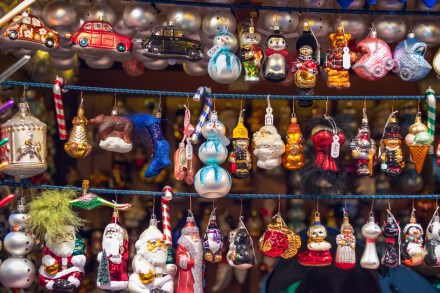
It’s that time of year. The sound of a Silesian Bratwurst connecting with cold lips. A security guard getting aggy with the actor playing ‘the elf’. Ketchup spraying into the air like celebratory champagne. Spilled mulled wine inebriating the local rat population. Overpriced tat sold in gift box form to drooling tourists.  It’s Christmas market season. A confusing month of crowded streets and impulsive shoppers. But Christmas markets have nothing to do with Christmas. They did once. They do in Germany. But these markets, the central city cesspits, are nothing more than shoddy farmers’ markets in tinsel.  ‘No, thank you. Merry Christmas.’ We walked away.  There is an idea of a Christmas market – something that is almost holy.

Nuremberg is the best and worst of Germany

On a snowy night in Nuremberg, a city that encapsulates the best and worst of Germany, a huge crowd has gathered in the ancient Marktplatz for the opening of the Christkindlesmarkt, Bavaria’s biggest Christmas market. Cradling mugs of steaming Glühwein, stamping our feet to keep out the cold, we’re all waiting for the Christkind (Christ Child) to appear on the balcony of the Frauenkirche (Church of Our Lady), an event that marks the start of Nuremberg’s Advent season. Five hundred years ago, Nuremberg was one of the biggest cities in Central Europe Turns out we have Martin Luther to thank for this quaint Teutonic custom.

Hong Kong’s fading Britishness

Not much of Hong Kong still feels British. There is the odd tube stop – Admiralty, Kennedy Town, Prince Edward – but that’s about it. On the car ride from the airport, I chatted to the driver as we passed under half-built concrete arches covered in green construction cloth. He told me the authorities were building another runway; we’ve been arguing over a third runway for the best part of 30 years, I said, and it still hadn't started. He laughed. ‘We used to be run by England. Now the communists are in charge, it’s much easier.’  I went to Java Road in search of the morgues and black bunting My cheapy British phone contract is allergic to Hong Kong networks and insists on gobbling up around £20 of credit a day. None of my bank cards seem to work either.

The growing appeal of dreary Düsseldorf

In the cavernous basement of Bilker Bunker, a second world war air raid shelter in downtown Düsseldorf, the staff of groovy events guide the Dorf are toasting the magazine’s tenth birthday. During the war, Germans sheltered here from the RAF. Today, their descendants come here to party. With an art gallery up above and DJs down below, this labyrinthine concrete relic is a symbol of Düsseldorf’s transformation – from industrial powerhouse of the Third Reich to Germany’s hippest city. Düsseldorf has always been a wealthy city, the buckle of the German rustbelt The Dorf is the size of a slim paperback. It fits neatly into your coat pocket. It started out online but its success soon spawned a print edition: art, music, fashion and loads of entertainment listings.

Israeli nightlife is slowly returning

Tel Aviv is the size of Bristol, with about 400,000 residents each. While Bristol has 400 pubs and bars, and just shy of a thousand restaurants, the rough concrete charm of Tel Aviv yields no fewer than 1,750 cafes, bars and clubs and more than 4,000 places to eat. Tel Aviv is a dense, hedonistic city: friendly, creative and edgy without the nasty underbelly of European cities. It is known in Israel as ‘the bubble’, secular and in its own world of sun, sea, late nights and wine, apparently separated from the problems of wider Israel.

In praise of the späti, Berlin’s late-night corner shops

The späti is a Berlin institution. These late-night corner shops began popping up in the former German Democratic Republic for workers clocking off from their evening shifts. Serving as a mixture of mini-supermarket and meeting place, spätis have outdoor seating, often wobbly wooden tables and benches on which locals sit and drink cheap bottles of beer from the amply stocked fridges. Spätis are much cheaper than bars, with most beers going for around €1.50 a bottle Spätis are much cheaper than bars, with most beers going for around €1.50 a bottle (and some as big as half a litre). They continue a quiet and benign form of East German egalitarianism, attracting to their benches any character that can afford the low price of a drink.

Hungary, the autumnal civilisation

A couple of weeks ago, I made the dish I always make at this time of year. It’s a Hungarian gulyás – or more correctly, a pörkölt – a mixture of beef, onions, peppers, tomatoes and paprika, stewed very slowly and served with plenty of sour cream. It’s appropriate this dish should be from Hungary, as no season suits the country better. Come to that, no country suits the season better either. It isn’t just that the Buda Hills look ravishing once the trees start to turn rust and golden or that the city’s bridges look more graceful and melancholic than ever. It isn’t even the mist – not to say fog – that comes off the Danube, suspending buildings like their majestic parliament house or Citadella fortress in ghostly silhouette.

How to travel India by steamboat

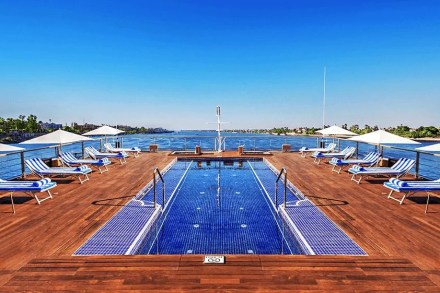
‘The road to hell is paved with good intentions’. Nowhere is this so true as in the streets of Calcutta, departing point of our cruise. The legacy of Mother Teresa has placed a stigma on the ancient capital of the British Raj, now forever considered a city of the dying and destitute. Unsurprisingly, Calcutta does not feature all that much in tourist guides, which is a mistake, because from my experience, it is the most friendly, cultivated and humane among all of the Indian megacities. A visit should be planned sooner than later since, if nothing is done, the beautiful palaces will hardly survive another decade. They are quickly crumbling under the embrace of vegetation which has turned the city into a kind of living Angkor Wat.

Finding my family roots in Spain

The sun had sunk behind the mountains that surrounded the harbour of Cudillero, a small fishing town in Asturias. My hair was still wet from the sea. Two old men were sitting next to us, chatting loudly in Spanish while my husband, father, and I ate bonito pate. Despite being a shy child, my grandfather was keen to prove his masculinity as a shepherd ‘It’s full of English and Germans with their caravans,’ said the man with a baby-blue jumper slung over his shoulders. ‘Yes,’ replied the other, ‘always the same.’ My father turned to the men smiling and said in Spanish, ‘I live in Spain, in Extremadura, and my grandmother was Asturian.’ That’s why we were there.

Will the Las Vegas Grand Prix survive?

Equal parts hype and horsepower, this weekend’s Las Vegas Grand Prix is the most talked about sporting event of the year. For the first time, Formula One will take to the strip, with 20 cars screaming past the floodlit Venetian Caesar’s Palace and the faux Eiffel Tower at 200mph. Certainly, it lost its shirt on Thursday when a loose drain cover damaged the Ferrari of Carlos Sainz and the Alpine of Esteban Ocon. The first practice session was cancelled after just eight minutes while someone went to fetch some fresh concrete. The second and final of the night’s practice sessions was delayed and extended, finishing at 3.30 a.m. on Friday and waking up anyone who wasn’t in a nightclub or at a card table.

Why I love terrible towns

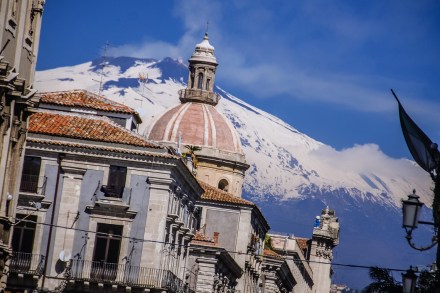
There are plenty of reasons to visit Catania in Sicily, and some of them are positive. The town is impressively ancient – dating back to the 8th century bc. It boasts a handsome, lavishly voluted Baroque core. A few steps from that main piazza you can find the picturesque fish market, the Pescheria, which sequins the black tufa cobbles with silvery fish scales, and has been selling inky squid for centuries. What else? The city has a striking location, with Mount Etna squatting on the horizon, apparently benign, but occasionally sending out chuffs of smoke to remind you of its menace, like a volcanic version of Tony Benn, puffing his pipe at the edge of British politics.

Japanese service is stiflingly polite

One thing you can be sure of on a visit to Japan is that the service will be at the very least good, and quite often superb. The chances of being short-changed, snubbed, or slighted are virtually zero and truly bad service is so rare I almost, after 24 years in Tokyo, crave it now and again to break the monotony. ‘The customer is God’ as the Japanese say, and sometimes this exhortation to staff feels like only a slight exaggeration. I once witnessed a sad scene where an old lady tried to engage the cashier in a supermarket in casual conversation At its best, Japanese service can be glorious to behold. I once saw a customer drop money from her purse in the crowded food hall of Isetan (Japan’s version of Harrods). At the first tinkle of the coins, staff leapt into action.

Would you drink fermented horse milk?

To my great disappointment, I was never (knowingly) fed qarta – a popular dish of boiled and pan-fried horse anus served without sauce or spices. I did, however, get to try the next best thing – kymyz, mares’ milk fermented in a goatskin. It was the second day of a horse trek in Kyrgyzstan and it had begun to hail. Not exactly golf ball-sized, but close enough to the golf ball sweets you bite into to find bubble gum. The horses coped, perhaps because getting pelted with hail is a fair trade for not being on a Kyrgyz menu. We stopped under a tree and our guide’s blank stares gave no indication of whether the weather was normal or not. The following two hailstorms suggested it was.

Leuven: Belgium’s most underrated city

From the vertiginous belltower of Leuven’s university library, you get a great view across the mottled rooftops of Belgium’s most underrated city. Leuven isn’t swarming with sightseers, like Bruges. It isn’t choked with commuter traffic, like Brussels. It’s lively and compact, ideal for a weekend away – so why have most British travellers never even heard of it? Search me. I’ve just spent three days here and I had a great time. I can’t wait to go again. One of the best things about Leuven is, it’s so easy to get here: two hours via Eurostar from London St Pancras to Brussels, and then a local train to Leuven from the same station. Trains leave every ten minutes at peak times and take around half an hour.

What’s more trendy than space travel? Banning it

In bedrooms across the country, women are wearing £145 sexy silk chemises emblazoned with jewels spelling out the words ‘Ban Space Travel’. This isn’t just a bit tacky or part of a new kink. It’s a sign of growing cynicism around space exploration. (Another item in the same collection, sold by luxury underwear company Bluebella, casually calls for ‘world peace,’ as though the two issues are akin.) Bluebella’s CEO Emily Bendell says the garment, designed by Ashish Gupta, is a ‘cultural statement’. ‘With so many problems here on earth, we have to hold billionaires focused on space exploration to account,’ she says. It is unclear exactly how much holding to account exactly lace-trimmed camisoles can do. But this movement goes far beyond the bedroom.

Gorillas in the mix: in search of Rwanda’s silverbacks

Two hours into a muddy hike through Rwanda’s Nyungwe rainforest and though I’ve been barked at by a baboon, crossed rivers of fire ants and stepped over a foot-long centipede, I have yet to see any chimpanzees, which is the reason I’m here.  My guide and our team of trackers are on the path ahead, armed with machetes, rifles and a walkie talkie. We’re looking for an alpha male called Kuyu. His morning calls echo in the distance and my guide tells me we’re not far from him. I hope he’s right. I am covered in Mosquito repellent clothing, I’m hot, tired and my enthusiasm is waning.  ‘Look up,’ says my guide, and he gestures at a dark shadow that glides across the tree canopy above. We’ve found them!

Are party holidays ever that fun?

Forget GCSEs or landing your first part-time job. Nothing screamed growing up in Britain like embarking on your first European party holiday, armed with an alarming lack of SPF or common sense but a suitcase packed full of skimpy outfits and condoms. Every summer, thousands of young Britons would jet off to Greece, Cyprus or Spain, having signed up for a week of raucous hedonism provided by travel companies like Club 18-30. They’re getting steadily less popular – Gen Z don’t really drink, after all – but the themes explored in Molly Manning-Walker’s new film, How to Have Sex, remain universal. Set in the Greek resort of Malia, Crete, Manning-Walker’s debut feature won the Un Certain Regard prize at this year’s Cannes.

Britain’s electric vehicle mandates don’t make sense

It is now four years since I bought my first electric car. At the time, I wished I hadn’t. The car, though solid, swift and fun, had the slight problem that it could explode at any time.  In 2019, a tranche of electric cars were sold to ingenues such as myself, only to be recalled so that their batteries could be replaced with ones which might not spontaneously combust. Once replaced, it was fine, but my home needed an upgrade, too – every fuse in the house blew when I first tried to recharge the car and boil a kettle at the same time. Being an EV pioneer (I was the first person in my French village to have one) came with hardship. Road trips were experiences of anxiety, despair and finally anger, as autoroute charging in France was primitive.

Nothing beats the Great British caravan holiday

Air travel isn’t what it used to be. I think we can all admit that. Those of us who don’t fly British Airways on a regular basis understand the true pandemonium of trying to get to Luton Airport at 3am with an Uber driver half asleep at the wheel. We understand what it means to sit on the tarmac for two hours with the smell of faecal matter and burp being pumped around by a broken air-conditioning unit. We understand what it is to pay £10 for a bath-warm Coke and a pressurised packet of pringles that will inevitably explode into the aisle.  So, what can we do about it? Well, without the dosh, I’m afraid not very much, Son. Though we can look inwards.  Enter the caravan holiday.

Confessions of a speeding granny

I suppose it was going to happen. But not inevitably. After 66 years behind the wheel, I’ve finally gotten a speeding ticket. In France. During those years, I’ve put the pedal to the metal in an Alfa Romeo (Spider Veloce with Weber carburetors), a zippy MG (my mother’s), a 375HP Corvette Stingray (my first husband’s), occasionally an e-type belonging to a friend and a swanky but stodgy Mercedes. A French camera finally caught up with me as I was ripping up a Burgundian country road from Nolay to Autun, going 105 kph in a 90 kph zone in my new (to me) Mini Cooper. My grandchildren have begun to love ‘Puddle’ as much as (or more than) they love me.

The Welsh Marches: England’s foodie frontier

I’m in a car embarking on a road trip through one of the great foodie regions of the world, charged with the onerous task of scoffing and boozing my way through five days of epicurean heaven. But where am I? Trundling along the Rhone valley from Lyon to Provence? Barrelling down the autostrada to Bologna? No, I’m on the A458 just outside Shrewsbury. Because this is a tour of the Welsh Marches, England’s foodie frontier, from Shropshire through Herefordshire to Gloucestershire, where a food and drink revival over the last three decades has turned this lush, fertile, famously green corner of Britain into a gastro-destination as good as any in Europe. My first stop is the Haughmond, a hotel/gastropub with a cute attached bakery, in the village of Upton Magna.

Among the Glastonbury pagans

England is a mystical place, and its epicentre is Glastonbury, known by its pagan residents as Avalon, the mythical island of the Arthurian legend. It has sacred springs, the supposed tomb of King Arthur, the Tor and ruined tower, proximity to Stonehenge and now a thriving, sprawling community of pagans, with dozens of denominations from druid to water-witch. Once dismissible as mere woo-woo fringe, paganism has become a religious force that demands serious consideration for the simple fact that it is the fastest-growing religion in Britain. In the 2021 Census, 74,000 people in the UK referred to themselves as pagans, up from 57,000 in 2011, with a further 13,000 people calling themselves Wicca.

The night my friends went missing on a Spanish train

Twenty years ago, the Spanish railway company RENFE stole my girlfriend’s father. There were four of us – my girlfriend, her dad, and a university friend of ours. We had been in Spain for more than a month, walking the Camino de Santiago. Now it was time to head home, first by train to Bilbao and then on to Stansted by air. Once we found our seats on the train, in the rearmost carriage, I settled in for the long haul – the journey is ten hours – with my battered copy of Herodotus, which I was determined to finish before the start of the new academic year. I was soon absorbed in the father of history’s delightful tall tales about, among other things, giant gold-mining ants.