Spectator Life

Spectator Life

An intelligent mix of culture, style, travel, food and property, as well as where to go and what to see.

Lost in Mexico: in the stumbling footsteps of Malcolm Lowry

I had been kicking my heels in a dusty two-star hotel on a dual carriageway in Leon, central Mexico, for days. One afternoon, I spotted a battered old English language hardback in a junk shop window: Under the Volcano by Malcolm Lowry.  I had read the book before, half a lifetime ago, in maybe 1985, when I knew nothing about Mexico, failed relationships or alcoholism. Almost 40 years later, with a more than working knowledge of all three, I felt better placed to appreciate Lowry's 1947 masterpiece. With nothing else to do or read, I bought it. I haggled the shopkeeper down to 100 pesos – about £4. Barely 24 intense hours later – the same time span that the novel unfolds in – I had finished it. Or had it finished me?

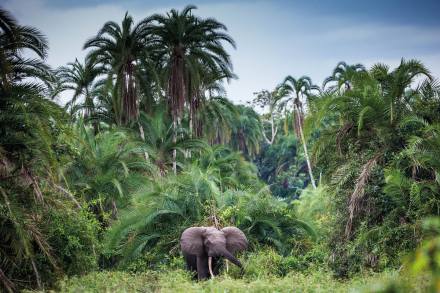
The elephants I’ll never forget

'No lions?' ‘No lions. It’s fast-flowing water, so there shouldn’t be any leeches. We do have slender-snouted crocodiles, but they’re quite shy.’ 'Hippos?' ‘One we see every now and again.’ Swamp-walking hadn’t been on the year’s bingo card, but I’d found myself wading through clusters of floating dung and algae in the largest tropical rainforest on the African continent. Rubber slip-ons heavy with silt, sulphurous foam collecting in my shirt pockets, I felt strangely calm. As a day, this was turning out to be exceptional It had been the invitation of a lifetime: to add my name to the list of a few hundred outsiders who have stamped a boot in the Congo Basin, one of the wildest and most remote places on Earth.

elephants
bimini

Bimini the beautiful

Give me a golf cart on an obscure small island and I am ecstatic. That’s how I felt on Christmas Eve rumbling around North Bimini, one of thirty inhabited islands in the Bahamas, with my wife and teenage sons on a balmy day full of benign clouds and serendipitous discoveries. I’m a traveller who is blessed and cursed with hyper-curiosity. Places with too much to see frustrate me because no matter how long I stay, I’m inevitably nagged by a sense that I missed something. I love cruises but port days are a particular tease because you’re always racing against the clock to get back to the ship. So for me, Bimini, with zero stop lights, no fast food and nearly as many golf carts as its 2,000 inhabitants is almost perfect.

Venice

An escape from Venice

Those who have visited Venice in the summertime will have witnessed the masses who descend into the heart of the labyrinthine islands, clogging their historic stone arteries and beautiful atria in a gormless and sclerotic trance. Meandering along the canals can always lead to some duomo or piazza that merits a standstill and an upward gawp. If you’re at all like me, after sweating through those tight streets with other tourists, one day certainly feels like enough. So it went on my recent visit. After popping my head in for as much of the Biennale that was still on display, a Bellini at Harry’s, lunch at Staffa and an inspiring visit to the Fondazione Querini Stampalia, I decided to get in the car and leave.

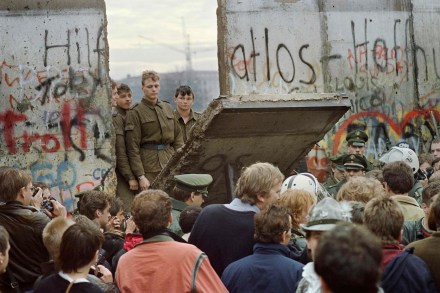
Who really lost when the Berlin Wall fell?

The fall of the Berlin Wall was meant to have been the crowning moment for the West, and for the principles of empowering liberation and freedom. Obviously so – I used to think. Now I’m more along the lines of, well, yes and no. The fall also seems in some ways to divide the former good times from the current bad times, both for Germany and for the rest of us. Such thoughts came to mind after I headed to Berlin to witness the New Year’s Eve fireworks display, during which the city is turned into the most attractive war zone you’ll encounter. I stayed with my brother, a creative type who, like many others artistically inclined, settled in Prenzlauer Berg, an area formerly in East Berlin. With the Wall down, people were drawn to the low prices and atmosphere of artistic liberty.

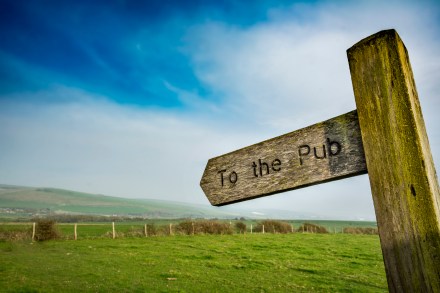
The key to finding the best pubs in Britain

Entering the New Inn in Llanddewi Brefi in Ceredigion is like stepping back in time. The only pub in the village (since the Foelallt Arms closed down four years ago), The New Inn seems to hail from the 1970s. Its till is a pull-out wooden drawer full of coins and notes. There’s a coal fire in the grate. The bar is littered with eccentric and old-fashioned clutter: a jar of pickled eggs, boxes of Swan Vestas as if smoking in pubs was still the norm, plaques to award the winners of a conker competition long past, sheep farming memorabilia.   The clientele are dressed as if they’ve just got back from marching down Whitehall with Jeremy Clarkson. And, it transpires, these drinkers are waiting to be fed.

The bitter cocktail of British decline

You can’t get a Pegu in Rangoon any more. That may not sound like a disaster for the ages – nothing, say, compared to the ongoing chancellorship of Rachel Reeves, MP for Blankstare-upon-Derr – but it is quite telling, once you know the background. To explain, the Pegu is a cocktail. Here’s the recipe, if you fancy making one: Take 2 oz of gin. Add ¾ oz of orange curaçao or triple sec. Squeeze ½ oz of fresh lime juice. Include 2 dashes of Angostura bitters. Add 1 dash of orange bitters. Fill a cocktail shaker with ice and combine all the ingredients. Shake vigorously for 15 to 20 seconds until well chilled. Strain into a chilled coupe or martini glass. Sounds nice, right?

Italy is most beautiful in winter

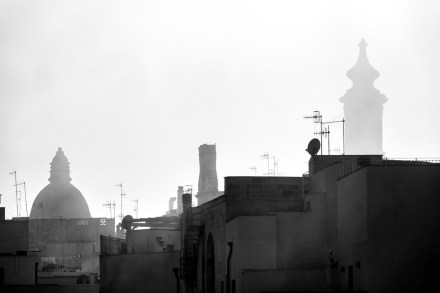
Monopoli, Puglia Monopoli is an elegant little seaside town in Puglia, the heel of the Italian boot, and in summer it’s unbearable. Tourists flock from everywhere. Squares you could normally zip through in a few seconds take ten minutes to cross, and the queues for Bella Blu, the ice cream parlour in Piazza Garibaldi, remind you of the Ryanair check-in desk. That struggling little pizzeria you patronised loyally throughout the autumn and winter now asks you to come back in an hour’s time and still can’t find you a table when you do. Monopoli, which seemed to be begging for it on every previous visit, suddenly has options. It’s offhand with you, looks at its watch and plays hard to get.

Pure shores: a Scottish sea safari

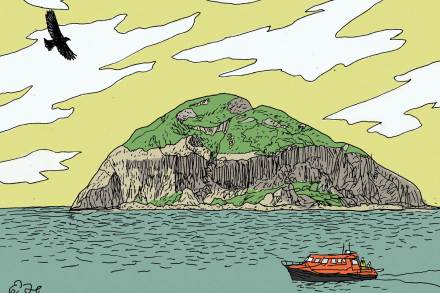
In the narrow strait between Jura and Scarba, the sea does strange things. Standing waves barrel over phantom surf breaks. Steely waters seethe and swirl, as if stirred by invisible hands. No wonder the gulf’s name, Corryvreckan, means ‘cauldron of the speckled seas’ in Gaelic; this is the world’s third largest whirlpool, classified as ‘unnavigable’ by the Royal Navy. Yet here I am, aboard a thirty-seven-foot rigid inflatable boat (RIB), riding the rapids. Skipper Sandy Campbell cuts the engine so we can try ‘boat surfing,’ the swell dragging us apace past Scarba’s looming quartzite cliffs. Islanders of old dreamt up mystical explanations for this phenomenon.

Hebrides
balloon

In a balloon over Burgundy

I said I’d never go up in a hot air balloon again. But that was a terrified me forty-five years ago. And here I was, relaxed and enjoying the views of the French Côte d’Or with my family and a handful of French people at 1,500 metres, hovering over vineyards, pastures and fields. In 1979 I was contacted by Hans Büker, a thirty-nine-year-old German balloonist who was hoping for some free publicity in the International Herald Tribune, for which I was the Swiss correspondent. Büker was trying to launch a ballooning festival in Château d’Oex in the Bernese Oberland, known for its cheese and rolling pastures pierced by imposing alps.

I love Edinburgh. I’m not sure it loves me

This year I shall have lived in Edinburgh for a quarter of a century. I fell in love with the city on the 23 bus travelling from the New Town to the Old Town. There was so much architecture. Gothic and Georgian, medieval, baronial. So many turrets and finials, tollbooths and towers. I was drunk on the stuff. Add pomp – a Royal Mile, a castle, a palace. Then the libraries, art galleries, museums. And that’s before you get to bookshops and Edinburgh’s proud moniker, the first Unesco City of Literature. What other city has a railway station (Waverley) named after a novel or a high street (Princes Street) with shops on one side and gardens on the other? The 23 bus was taking me to the psychiatric hospital just beyond Morningside Edinburgh doesn’t love me.

How to eat like a president

John F. Kennedy opted to serve New England lobster, Ronald Reagan a California-inspired garden salad – and James Buchanan 400 gallons of oysters. Held at Statuary Hall in the US Capitol, the inaugural luncheon for a new president is as much part of inauguration day as the swearing-in ceremony and the inaugural address.  Nixon enjoyed pineapple slices topped with cottage cheese and washed down with a glass of milk First time around, in 2017, Donald Trump’s inaugural meal featured dishes including Maine lobster and Gulf shrimp. But for those not on the guest list to find out what he serves tomorrow (McDonald’s ice cream, perhaps?), there are plenty of other opportunities to eat like a president in Washington DC.

The death of affordable skiing

Ski season is upon us, and with it that familiar dump of status anxiety. Sliding down mountains has always been a rich man’s folly, but only a few years ago, normal people could just about afford to go if they saved hard enough. Not anymore. In parts of France, the cost of a six-day lift pass is just shy of £400. In Switzerland, a pizza can set you back forty quid. That’s just for starters. Factor in the cost of ski hire, ski wear, flights, accommodation, après-ski and mountaintop lunches, and your eyes won’t stop watering. Bring the family, and you’ll need more than a second mortgage. Flights and accommodation alone can double in price during school holidays, and those energetic sprogs will need fuel – lots and lots of expensive fuel.

In defence of BA’s new loyalty scheme

One of my favourite cartoons shows a couple sitting in luxury at the front of a plane, the wife peeking through the curtains to the cabin behind. ‘I’m so glad we’re in business class, darling,’ she says to her husband. ‘There seems to be some sort of hijacking happening in economy.’ People who have learned to play a game by one set of rules are bitterly affronted when the rules change Because we must consort with strangers for several hours, planes and airports amplify the normal human sensitivity to status. And so the media furore created by British Airways in revising the status thresholds for its loyalty programme is valuable fodder for students of psychology.

What tourists to London should actually see

Tourists seeking to understand life in London often come up short. It’s not their fault. It is often said that London is a metropolis made up of city villages, each with its own unique personality and characteristics. Most tourists never make it past the invisible walls of central London. Why would they? No one flies to London with thoughts of visiting Tooting or Deptford, though they should – Tooting has, without a doubt, the best curry restaurants in the city. We Londoners scarcely know our own city. We are all blind men touching various parts of the elephant’s body. Many tourists return home without any idea of what it means to live in London.

The town that inspired One Hundred Years of Solitude

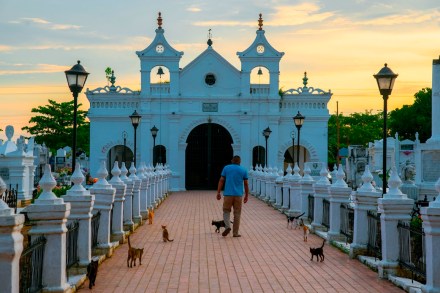
The homes of famous writers are disappointing. Often, you see the famous desk, and that’s about it. There are exceptions: for example, Pushkin’s home in St Petersburg is interesting because they have the blooded waistcoat he wore during his fateful duel. Hemingway’s house in Cuba is intriguing because it is so macho – pistol, rifles, leather everywhere – you conclude he must have been secretly gay. Sadly, I can report that the home of Gabriel García Márquez in remote little Aracataca, in Colombia, is predictably disappointing. They don’t even have the desk. They’ve got the bed where he soiled his nappy – allegedly his first childhood memory – and half a kitchen. A visit takes ten minutes, as does a tour of his tedious hometown. https://youtu.be/4oQeQR1DEjw?

Red lights and shinto rites in Osaka

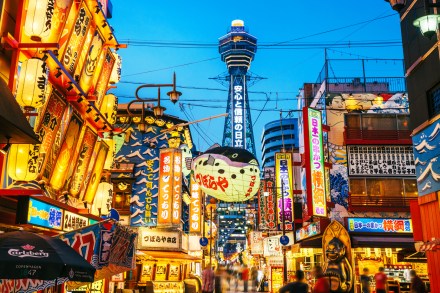
It gets somewhat forgotten, Osaka. On the bamboo-and-tatami trail of Japanese sites, this ancient port, fort and conurbation at the very heart of Japan commonly misses out on foreign visitors: as everyone rushes from Tokyo to Kyoto, from sacred Mount Fuji to ancient Nara to haunted Hiroshima. For most overseas tourists, Osaka is just a fleeting stop on the Shinkansen high-speed trains – a glimpse of another sprawling Japanese city with bland, utilitarian housing. The edgiest place in Osaka is about as dangerous as the Cotswolds The Japanese themselves know otherwise. They flock to the city because they revere its pivotal history – Osaka was Japan’s archaic imperial capital, back in the 4th to 7th centuries – and they celebrate its epochal sites.

The tragedy of Anne Boleyn’s childhood home

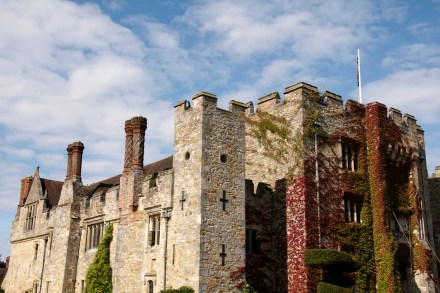
Hever Castle was the childhood home of Anne Boleyn and played a not insignificant part in the Henry VIII story. The smitten despot, already planning his divorce from sonless Catherine of Aragon, would ride over from his hunting lodge at nearby Penshurst Place to woo Anne there. Then, when things didn’t work out as he’d hoped, Henry seized Hever from her family and gave it to wife number four, Anne of Cleves, as part of the settlement when he was divorcing rather than beheading her, as he had poor Anne Boleyn. The first thing that I heard when I arrived in a teeming car park was the voice of Mariah Carey singing: ‘All I Want for Christmas Is You’ It remains one of Britain’s best-preserved Tudor houses.

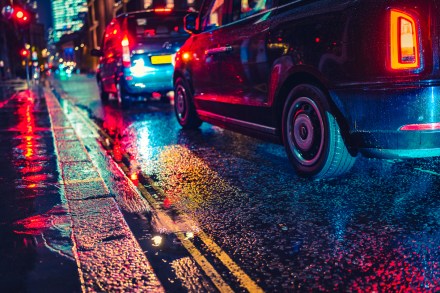
London is getting worse

A famously elitist members’ club, a 900-year-old meat market, and a traditional old barbershop may not feel like they have much in common. In fact, they didn’t – not until the last week or two, when they all simultaneously closed in their disparate parts of London. The first closure, that of the Groucho Club, has been widely covered in these pages, generally with an overtone of chortling. After all, it is hard to feel sorry for a place that is notoriously exclusive, boasts a world-class art collection, and charges members £1,500 a year for the privilege of eating near a Damien Hirst – or indeed eating near Damien Hirst.

48 hours in Dublin

I need little excuse to go to Dublin, one of my all-time favourite cities. The only trouble is that recovery between visits takes so long. I’m neither as young nor as thirsty as I once was. And I’m still haunted by a bizarre trip I made many years ago when I hadn’t even intended to visit the Fair City. I’d been at a family party in Co. Down, drinking Guinness with Bushmills chasers for what seemed like days. Next thing I knew, I was waking up starkers three days later It was an accident waiting to happen, of course, and, thanks to too much poitín, the wheels came off spectacularly in the Dufferin Arms, Killyleagh.

Blackpool is cheap, tacky and wonderful

Arriving in Blackpool by train is just as I’d always dreamed. At the Pleasure Beach station, I disembarked right by the roller coasters, which rear up like Welsh hills beside you and, with the seagulls, welcome you with shrieking riders and clattering wheels. There are vast coasters in wood and metal weaving in and out of each other. Curvaceous and sprawling, they’re Gina Lollobrigida in steel. I’ve wanted to visit Blackpool for years. Spending my early childhood near Clacton-on-Sea, I got used to the delights of a tacky seaside town, and Blackpool is surely the mother of them all – even if it’s a mother with too much blusher and mascara on, who looks as though she’d scratch your eyes out if provoked.

Can you ever be fluent in a foreign language?

A couple of weeks ago, at one of my local bars in Antequera, a waiter asked me something as he served our glasses of wine. I didn’t catch it, so I asked him to repeat what he’d said. After the third time, I still hadn’t understood and clearly wasn’t going to. This guy has a thick Andalusian accent and sprays out about a thousand syllables per minute, but we usually communicate without problems. Two Spanish girlfriends also taught me a lot, and that’s definitely the most fun way to learn a language There’s also a local character, we call him ‘Gummy’, who roams the streets asking for cigarettes or change. I never understand a word he says either, except for ‘eurito’ (a little euro) or ‘cigarillo’ (cigarette). In my defence, he has no teeth.

Hotels are good for the soul

I love hotels. Growing up, my family never stayed in them (we were poor but we were honest, M’Lud). Instead we went to Butlin's, sharing a tiny ‘chalet’, or we stayed at bed and breakfasts; private lodgings where you got exactly those two things but had to be out and about during the daylight hours – come hell, high water or hailstones. For those too young to have experienced them, a B&B is basically the exact opposite of an Airbnb, where you’re allowed to stay in every single moment of every day you’ve hired it for, if that’s what turns you on. I’ve only stayed in one Airbnb, which was a houseboat in Amsterdam; I love boats and I love Amsterdam (or I did, before it went mad), but I never wanted to repeat the experience, because – hotels.

Why Britain needs Shinto

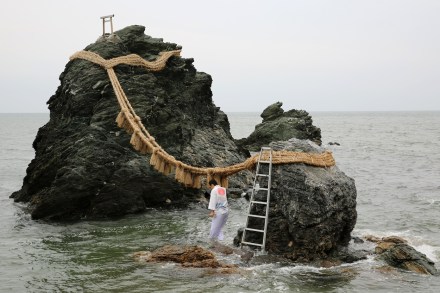
Ise, Japan They say of Japan that if you come here for a week, you want to write a novel about Japan. After a year, maybe a few essays. After a decade, a page. It is one of those countries which seems to get simultaneously more fascinating and opaque. Possessing an ancient monarchy is like having a Gothic cathedral in your back garden So it is for me, on this, my first trip to Japan in 30 years (I lived in Kyoto in the mid-1990s). This time around I have been doing prep by reading the early history of Shinto, the ‘state religion’ of Japan, an animist creed which sees the divine in everything – trees, rocks, lakes, rugby balls (really) – all in the form of kami – which can be spirits of place, mood or idea.

Canary Wharf is better than ever

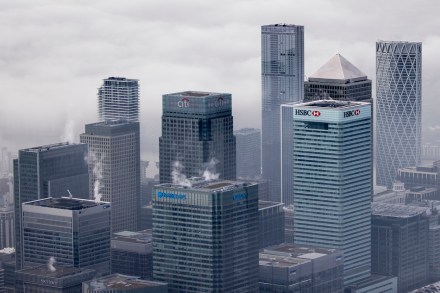
For the kind of people who think London ought to be all Farrow and Ball-coated quaintness and whiffs of Dickensianism, Canary Wharf is a rude assault, an obnoxious jungle of the anti-quaint. It is also, to many, an embarrassing paean to a moment that only the 1980s could have produced: one of gauche capitalistic, deregulatory optimism soused in international finance. One Canada Square, the frontispiece of the development and once Britain’s tallest skyscraper, is named in honour of the Toronto-based property developer who bought the project in 1988 (and a few years later went bankrupt).

York is Britain’s Florence

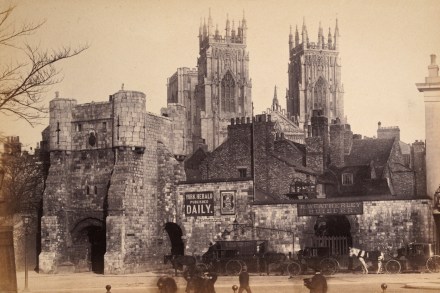
Have you been to York? Have you sauntered along its narrow, meandering medieval streets, with their peculiar names – such as Swinegate, Lendal, Ogleforth, or Fossgate – that evoke a pre-modern age? Have you strolled up Museum Street, passing medieval walls and imposing crenellated stone gateways – known as bars for some reason, where severed heads were once displayed on spikes? Have you turned a corner in this city and suddenly found yourself confronting the enormous west façade of York Minster, soaring above you? York is magnificent, as magnificent as any medieval city in Christendom Because if you have, then you will know something about this great city – something you may not have voiced.

A beginner’s guide to Hungarian food and drink

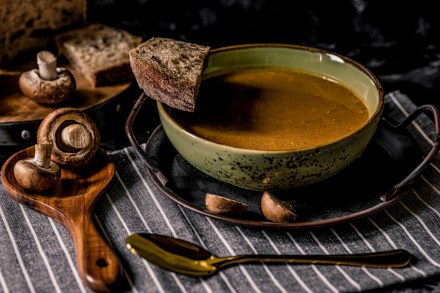
The first time I tried the well-known Hungarian wine Tokaj, which I bought from an eastern European delicatessen in London, I was so taken with it that it quickly became a verb – and the expression ‘I was a bit Tokaj’d last night’ stuck. But I soon realised that there are so many wonderful versions of this wine that you will find one to suit every occasion, and a match for pretty much anything you eat. Options include bone dry, light as a feather, sweet, robust, and tannin-rich red. And I’m lucky enough to be drinking the dry variety here in Budapest. It has just a hint of honey, making it perfect with the dishes made with cheese and paprika sauces that are so popular across this landlocked nation.

The new divide between first class and economy

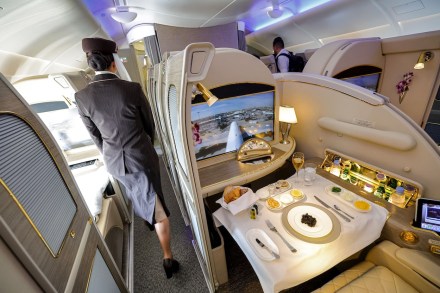
As cabin crew for an international airline, I love working in first class. In the briefing room, when all the crew are scrambling to bag their favourite positions before the start of the flight, I make sure to insist I’m the first-class dolly for the day. Usually no one minds, as some people are averse to tending to the whims of the upper-class jet set. What they might not realise is, since the dawn of the Ozempic age, working in first class is now much, much easier. There’s barely anything to do. Why? Because nobody eats anymore. Remember that famous line from Kim Kardashian, ‘no one wants to work anymore’? Well, nowadays, no one wants to eat anymore.

Sard times: Exploring Sardinia’s secret south

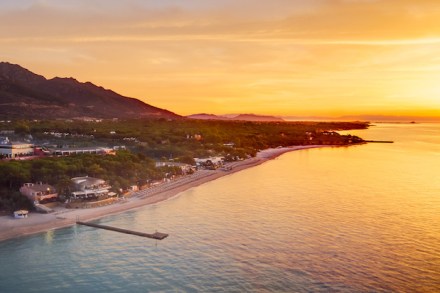
Sardinia hasn’t always been the tranquil, picture-perfect paradise of today. The island was once ruled by bandits; its rugged landscape the perfect place for criminals to hide. Things weren’t much better on the coastline: slap bang in the middle of the Mediterranean, the island was an easy target for pirates and was vulnerable to plague. Life in Sardinia was once truly miserable. Head west from Cagliari and it isn’t long before you’re in a Sardinia that many visitors don’t get to see Thankfully, the pirates and plague are no longer a problem in this part of the world. But there is another ‘p’ you might have to watch out for in Sardinia: the politician.