Spectator Life

Spectator Life

An intelligent mix of culture, style, travel, food and property, as well as where to go and what to see.

The drudgery of airports

Having a child growing up in Italy means regular flights there and back from Stansted airport. This is unfortunate, as I find nearly any other form of transport preferable. It isn’t so much the flying itself – I lack the imagination to envisage what it really means to hover 38,000 feet above the earth in a fragile aluminium tube – but the malarkey which surrounds it. I am talking about airports: getting to them, getting through them, getting out of them. The tunnel of trauma, the concentrated drudgery, the dismal, dehumanising price you must pay for your place in the sun.

Sir Ranulph Fiennes: a living Lawrence of Arabia

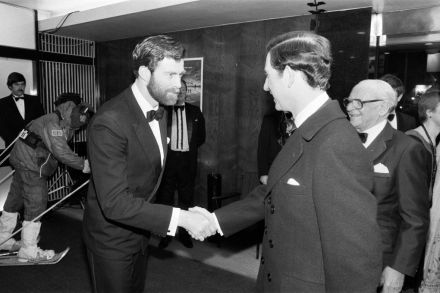
Sir Ranulph Fiennes (a third cousin of Ralph, since you ask) has written a book about Lawrence of Arabia. He feels an affinity with him: he too has led Arabs in fighting, in Sir Ranulph’s case, for the Sultan of Oman. ‘I’d been in Arabia, leading Arabs against the Marxist rebels. In Lawrence’s day, the British were fighting the Germans and the Turks’.   ‘It’s my DNA. My ancestors did lots of travel in new places’ The circumstances differed. ‘Lawrence had camels and was dealing with a huge body of men; I had six open-topped Land Rovers with two machine guns and I led 30 men; a mixture of Belushis and Oman Arabs and Zanzibars. I felt about the men as a family.’ What does he make of Lawrence’s extraordinary career? ‘It mystified me’, he says.

Have I been sent mad by goats?

I am on a retreat in the Portuguese mountains outside Faro, a heavenly place called Moinhos Velhos. I have not eaten food in three days. I have practised hours of yoga and meditation. I have swum many cool, slow lengths of a blue-tiled pool and sweated in a wood-fired sauna and walked for miles through a red dirt valley under whispering conifer pines.  Day two is the day you hate everything and want to blow up the world Yesterday I wanted to kill people. Not just the people on the retreat (who are all very calm and friendly and kind, which of course is why I wanted to kill them) but all the living creatures in the world – excluding a small herd of goats and a few obedient wood nymphs to milk them. I wanted exile. The goats got me thinking about chèvre.

Memories of Britain’s lost steam sleepers

In the early 1950s, as a very small school boy, I would travel between Inverness and London by steam sleeper train. The adventure started with tea in the Inverness Station Hotel while awaiting the train south. My parents never worried about my safety – unlike today, when children must have constant supervision from only the most stringently vetted adults. When I arrived at the platform, I was met by the sleeper superintendent, a guard into whose charge I was given. He had a small cabin in the luggage van, which, depending upon the time of year, would be decked with strings of rabbits, salmon in plaited reed cases, grouse, pheasants and all manner of delicious wild things, destined for Smithfield Market. Often, there would be a dog or two in need of attention and water.

After 25 years, I’ve returned to synagogue

On Saturday, I went to the synagogue in Béziers. I was motivated by defiance, sentiment, and an urge to demonstrate solidarity, but hardly from any rekindled religiosity. I’ve never had any to be rekindled. Like my namesake, the late Dr Jonathan Miller, said in Beyond the Fringe, ‘I'm not really a Jew… but I'm Jew-ish; not the whole hog.’ I grew up in North London when there were still some scars from the second world war. Bombsites. Prefab homes in Dollis Hill. I knew about the Holocaust but it seemed remote, impossible. My family had arrived in Britain in the late 19th century, exiles from the pogroms in Latvia. If any members of my family had perished in the camps, it was never mentioned. I really can’t recall much anti-Semitism.

Walking the Suffolk Coast Path

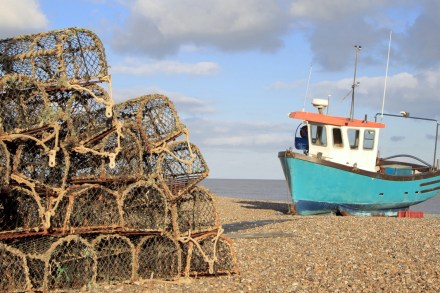
When was the last time you woke up bright and early on a weekday morning, with no need for an alarm call, rested and impatient for the day ahead? My last time was a week ago, when I awoke in the Pier Hotel in Harwich, eager to walk the first bit of my latest hike, along the Suffolk Coast Path. The Saxons sailed up this river to conquer East Anglia after the fall of the Roman Empire The Suffolk Coast Path runs for 55 miles, from Felixstowe to Lowestoft. Almost the entire route passes through an Area of Outstanding Natural Beauty. No ugly modern eyesores. Hurrah!

Why the Square Mile beats Canary Wharf

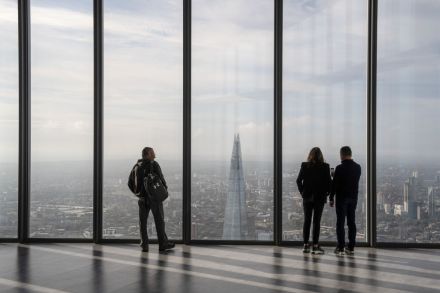
When a building’s construction requires the closure of a nearby airport, you know that the building is tall. But that’s the thing about the Square Mile at the moment – it’s so successful that the only way is up. The cranes on 22 Bishopsgate (rather than the building itself) reached such a height, as the skyscraper neared completion, that they exceeded the permitted limit for City Airport, meaning that for a few short periods the airport had to halt flights. As you stand in Horizon 22, the viewing gallery that has just opened (tickets are free but booking up fast), looking down at nearby streets is like reading the A to Z. But while 22 Bishopsgate might be head and shoulders above its neighbours (912 feet, 62 storeys), there are plenty more office towers on the way.

Japan’s peculiar pizzas

Japan is known for its food. People from across the world visit the Land of the Rising Sun to eat everything from the delectable seafood of Tsukiji Market in Tokyo to the local varieties of ramen that can be found across the nation’s 47 prefectures. And yet you would be mistaken if you believed that Japan was only capable of producing high-quality local fare, as there is a long tradition of western food in this country. Particularly, and perhaps surprisingly, it’s pizza. While toppings like pepperoni and mushrooms may be normal in the US or UK, the Japanese like plenty of seafood on their slice The concept of yoshoku dates back to the Meiji period and refers to Japanese dishes that take heavy inspiration from western countries.

I never thought I’d be a wild camper

Wild camping is ‘a modish phrase meaning camping overnight in a place which is not a dedicated campsite’, according to Lord Justice Underhill in a Court of Appeal judgment in July – and isn’t it wonderful that there are still judges carrying on the fine judicial tradition of handling the colloquial as if were radioactive waste? The point at issue was whether wild camping came within the definition of ‘open-air recreation’ – which is legally protected on Dartmoor, even without the landowner’s permission, under the Dartmoor Commons Act 1985 – or not.

What we lost with the fallen sycamore

I don’t know about you, but my reaction to learning about the felling of that tree in Northumberland was, well, weird. For a start, unlike many others, I’ve never hugged this lovely tree, never picnicked beneath it, never proposed next to it, never seen it after a long satisfying hike along Hadrian’s Wall, so I do not have much personal connection. In fact, I’ve never even been there. My only knowledge of the sycamore gap sycamore is seeing it in the Hollywood movie, Robin Hood: Prince of Thieves, which in turn – along with some later, pretty images of snowbound hills and auroral lights – slowly induced this extremely vague sense that up there, in far northern England, there was this splendid tree that one day I might visit, maybe, who knows. I mean, it is just a tree.

The night I accidentally saved a baby

I was writing a thriller in northeast Laos about 15 years ago near a town called Phonsavan, researching a mysterious megalithic site known as the Plain of Jars. When my research was done, I realised I had to devise a route home to the quaint Laotian capital of Vientiane. As I was driving one of only three rentable four-wheel-drives in the country, I decided to make the most of my mobility and take a more exciting route than the singular main road down the middle of the country (whereby I had arrived). I was particularly tantalised by a sentence in the Lonely Planet guide to Laos which claimed ‘there is theoretically an alternative route from Phonsavan back to Vientiane, which is said to be very beautiful, but we haven’t tried it’. I kept thinking: is the baby dying?

My mistaken Balkan raid

It was September 2001 and I was in Zagreb, Croatia, at the end of two weeks in the Balkans. I was there to train law enforcers in counter-trafficking initiatives: the importation of women from that region into Western European sex markets was rife following the war in the 1990s. Police in the UK had disrupted several trafficking rings originating in the Balkans, and stories were emerging as to the horror their victims had endured. Well into our second bottle, I spotted a group of leather-jacketed men leading several women, each tottering on spike heels, through to the ballroom To put this trip in context, I had been sitting and talking with men in windowless rooms in Kosovo, Moldova, Albania and Macedonia for up to ten hours a day while they smoked and drank white spirits (from 8 a.

I’ve abandoned my useless British passport

‘Vous êtes anglais, je suppose?’ A question frequently posed to me in France. To which I reply: ‘C’est compliqué.’ To be honest, I’m not sure. If one passport is good, two are better. I have three. Crise d'identité. In France, I am Irish, thanks to my grandmother, born in County Antrim. In Canada, I am Canadian, having been born there. Albeit I left aged ten months. In Britain, where I spent much of my childhood, I am British, as my parents were. My British passport is essentially useless. It’s in a drawer somewhere. I don’t need it to fly to Britain It’s the nationality equivalent of a multi-phasic personality disorder. I suppose I could now even get a French passport, but this seems greedy.

Confessions of an English teacher abroad

The English teacher abroad is a generally peripatetic animal. He moves somewhere for a year or two and then gets bored, runs out of money or fathers an illegitimate child before moving along. Meet him and he has a thousand stories about Mexican border guards, Thai prostitutes and Russian oligarchs. Enjoy the conversation. He won’t be there for long. The good Japanese schools didn’t want a random English kid with no experience Not me, though. This weekend marks ten years since I moved to Tarnowskie Góry in Poland. Tarnowskie Góry is an hour from Katowice, in Upper Silesia. It’s a charming town of about 60,000 people, built round a historic silver mine and ringed by forests.

The previous lives of London hotels

Some of London’s best places to stay are buildings that used to be something else altogether. Join us as we examine the London hotels with fascinating previous lives … The NoMad  Not enough hotels have their own museum. The NoMad does. It’s set in what used to be the Bow Street magistrate’s court, where the likes of Oscar Wilde and Dr Crippen were committed for trial. It has skilfully reinvented itself from being a working court as late as the early 1990s – complete with grim-looking holding cells and even a drunk tank – into one of the city’s most stylish and elegant luxury hotels. Designed by the New York architects Rowan and Williams, it manages to marry Manhattan chic with British eccentricity.

How to beat the crowds in Rome

Rome is Europe’s most beautiful city, but there’s a downside: the most famous attractions are nearly always overwhelmed with crowds. The line for the Colosseum bakes under the unbearable Roman sun; the Sistine Chapel queue snakes through the Vatican; the Trevi fountain is spoiled by selfie seekers. Fortunately, though, there is a way of avoiding the mob – and seeing a side of the Eternal City that captivated generations of travellers before the modern tourist industry took hold. The best advice for avoiding the throngs is, when in Rome, do as the Romans don’t – and wake up early The best advice for avoiding the throngs is, when in Rome, do as the Romans don’t – and wake up early.

Is this the end of Burning Man?

In the summer of 1986, two men, Larry Harvey and Jerry James, built an eight-foot-tall wooden effigy of a man and set fire to it on a beach in San Francisco. The event – an impromptu bonfire attended by several dozen of their closest friends – spawned what has since become a cultural phenomenon: an event seen by some as the ultimate rejection of capitalism, and by others as a giant drug-fuelled knees-up in the desert.  I’ve noticed the changes in the six years that I have been going to Burning Man Thirty-seven years on, Burning Man still culminates in the razing of a wooden sculpture, but since then both ‘the man’, and the event itself, have grown exponentially.

How much rum can you drink on St Kitts?

It all proved too much for Mrs Ray. We were in St Kitts and Nevis for a week-long Caribbean break and on the flight over I’d wondered aloud how early each day it would be acceptable to start on the rum. I soon got my answer.  Having misguidedly checked in to the St Kitts Marriott Resort – a vast, half-empty hangar of a place complete with plump, elderly Americans whirring by on mobility scooters; an over-priced restaurant serving only that which was deep-fried; and a deserted poolside bar peddling watery rum punches and a casino that smelt of damp and despair – our spirits were further flattened by finding that the restaurant we’d been recommended for dinner and to which we’d walked in the driving rain was shut.

Alone in Dartmoor’s haunted woods

Wistman’s Wood is one of the UK’s last remaining temperate rainforests. It came within Prince William’s purview after he inherited the Duchy of Cornwall, the largest privately owned portion of Dartmoor National Park. He has since visited the site, a seven-acre strip of oak woodland on the eastern slopes of the West Dart Valley, posing for photos in a waxed jacket and tweed cap. Wistman’s is a unique habitat. It has a number of rare mosses and lichens which attach themselves to and around its stunted, gnarly oaks and the large boulders dotted among them. But it is as much its place in folklore as natural history that makes Wistman’s so important.

I watched society collapse at Stansted Airport

As I gazed upon the first circle of hell, otherwise known as Stansted Airport, I felt as though I was witnessing a microcosm of everything that has gone wrong with our hapless nation. Thousands of desperate flyers were left stranded across the UK earlier this week after what appeared to be another air traffic control cock up. The utter confusion seemed to reflect the growing ineptitude inherent in so many of our institutions, where despite huge leaps in technology, nothing works, no one is accountable and no one cares. As the delicate tendrils of civil society withered around me, the thing I found most unnerving was the reaction of my fellow travellers.

Forget the Cotswolds, try the Forest of Dean for a weekend break

The roads around Monmouth are quiet but have their attractions; they cut through valleys and woods, past castles and churches. My host, soignee interior designer Neil McLachlan, explains that this part of the world is a well-kept secret, popular with minor gentry and Londoners in the know but protected from the crowds that flush in and out of the Cotswolds.

My battle with three German children

To Paxos, Homer’s inspiration they say, for Circe’s Isle. These days, there’s still enchantment, albeit of a less carnal kind. Skies are azure, waters pellucid and the days fall quickly into the most indolent of rhythms. Breakfast, swim, book. Drink, lunch, sleep. Swim, book, drink. Dinner, then bed. Sometimes, though, it seems that great swathes of West London and Wiltshire have decamped to the island, gathering in the main port of Gaios. A glut of Panamas, pink faces and pastel linen. Along with much anxious talk – over platters of fried calamari and icy bottles of Santorini white – about Keir Starmer and his proposed private school VAT ‘raid’. No wonder some wag has renamed the island ‘Paxons Green’.

Walking the Essex Way is a wonderful adventure

I’m hiking along a footpath through glorious English countryside, across lush green meadows framed by ancient woodland. I’ve hardly seen a soul today, just a few solitary dogwalkers. I’ve been walking all day and my legs are aching, but I can’t recall the last time I felt so contented, so alive. Welcome to the Essex Way, an epic walking trail that runs right across this rugged county, from Epping, on the edge of London, to Harwich, on the North Sea. I first walked the Essex Way, 81 miles from end to end, a few years ago. Like a lot of weekend hikers, I’d done a fair bit of walking in National Parks like the Lake District and the Peak District. What makes the Essex Way so different is that it runs through landscape which most folk dismiss as bland commuter belt.

Time is money at Disneyland

‘We’re all mad here,’ I mumble as I head towards the Cheshire Cat. To my left is the home of the world’s most famous mouse – and a sign warning guests to expect a wait of up to an hour and a half if they want to meet him. This is my tenth trip down a Disney theme park rabbit hole – my third as an adult and my second to Disneyland Paris – so the queues in the ‘most magical place on Earth’ comes as no surprise. But this time there’s a difference: I have my very own fairy godfather. Alex, our VIP tour guide, dressed in a three-piece suit with a checkerboard waistcoat, whisks us past the queue to a side door of Mickey Mouse’s home and rings a bell.

Why the British seaside still reigns supreme

It’s the time of year to revisit one of life’s great imponderables. British seaside holidays. Why do we do them? Which other experience – save perhaps attending a British boarding school in the past – does as much to remind you of the essential unfairness of life? Forget the costs involved (if Marianna Mazzucato wants to get Britons worked up about ‘rent-seeking’ she should start with holiday cottages) we have the weather to contend with. Like gazpacho, the British seaside holiday would be idyllic if the whole thing were only 20 degrees warmer, but it just wouldn’t work There you are on the beach, having spent 15 minutes viciously applying suntan lotion to your protesting children, only to complete the task at very the point that it starts to rain.

I escaped Totnes. But only just

Totnes is like any other small town in England insofar as there are limited shops and people will try to sell you mouldy produce at an ‘organic’ price. Other than that, it’s a different world. This is the same place that started its own currency – albeit unsuccessfully. The same place that fought back against Costa Coffee and won. And the place where, one day a year, people lose their minds over the prospect of an orange being rolled down a hill. Make of that what you will.  The town’s population swells and people drink and spend time at the beach and listen to old men playing the fiddle while high on ketamine I moved to Totnes after university. I grew up in London, which makes me pretentious and impatient.

So long, Crooked House: a guide to Britain’s oddest pubs

Farewell then, the Crooked House. The 18th-century pub, in the West Midlands village of Himley, hasn’t just stopped being a pub – it’s stopped existing, full stop. Just days after its sale to a private buyer for ‘alternative use’, the famously wonky building – where coins and marbles appeared to roll uphill – was gutted by fire and has now been demolished. Unsurprisingly this has given rise to suspicions aplenty, but we’re taking it as a chance to celebrate Britain’s oddest pubs. Step this way for underground tunnels, pubs without bars – and some very single-minded landlords… Oliver Cromwell spent a night here and Inspector Morse visited in a 1990 episode The Temple of Convenience, Manchester The clue’s in the name: this place used to be a public toilet.

On the death of a pilgrim

John Brierley, who died last month, was a legendary pilgrim that you’ve probably never heard of. Admittedly, these days most people aren’t familiar with any pilgrims. Just going to Sunday mass is unorthodox. The vast majority of us who respected Brierley never met him and probably, like me, never saw a video clip of him or even heard him talk. We knew him only from his series of Camino de Santiago guidebooks. But that was enough. Having been translated into numerous languages and sold around a million copies, his books shepherded countless pilgrims like me on their long travels across continental Europe toward the remarkable city of Santiago de Compostela in north-western Spain.

How to spend 48 hours in Tangier

One of the few highlights of newly-released Indiana Jones and the Dial of Destiny is a frantic chase through 1960s Tangier. It’s breathless, edge-of-the-seat stuff with tuk-tuks, motorcycles, a Jaguar and Mercedes tearing through the narrow streets of the medina, guns blazing and quips flying. I’m told so many tuk-tuks got mangled they needed dozens to shoot the scene.  In the medina, we wandered the crammed, twisting streets full of bustling locals, tired dogs, stray cats and laughing children What a crushing disappointment, then, to discover that the sequence was filmed not in Tangier at all but in Fez and Oujda. The 1987 Bond film, The Living Daylights, was filmed in Tangier, as was its 2015 successor, Spectre.