Spectator Life

Spectator Life

An intelligent mix of culture, style, travel, food and property, as well as where to go and what to see.

A 22-1 tip for day one of the Cheltenham Festival

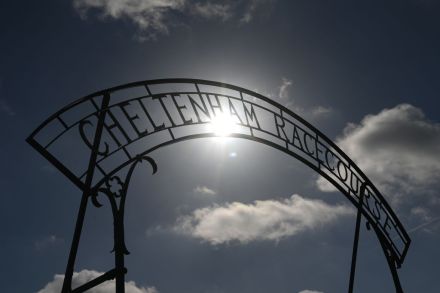
Few people enjoy the thrill of a winning punt more than me but there are times when betting becomes (almost) irrelevant. Tomorrow at 3.30 p.m. will be one of them. That’s when seven runners will line up for the Unibet Champion Hurdle, the first championship race of this week’s four-day Cheltenham Festival. I will be at the course to see what I expect to be a hurdling masterclass from Constitution Hill, Nicky Henderson’s vastly-talented six-year-old gelding and the odds-on favourite for the Grade 1 showpiece. To date his racecourse record is flawless: five wins from five races including victory in the Sky Bet Supreme Novices’ Hurdle at this meeting a year ago. Then he was heavily eased at the finish, yet still won by 22 lengths or more from the rest of the field.


Lessons for Meghan from Fergie

Before the Sussexes – before the Grabdication was a twinkle in Meghan’s crocodile eye – there was Sarah, Duchess of York; greedy, grasping, grubby Fergie. Some see Diana as when the stiff upper lip of heritage royalty became the trembling lower lip of the new breed. But the Princess of Wales was a teenage virgin with a headful of dreams lured into a marriage in which she was a breeding machine with a man who was still in love with his ex; this would have made any woman with spirit react. No, Diana was a hard worker with an attractive dash of spite – that revenge dress, that three-in-this-marriage quip – which stopped her from presenting herself as an all-round victim.

In defence of having a flutter

It was the end of May 1983, half term week. I was meant to be revising for my O-levels, which were to begin the following Monday, but instead was mooching around town, a teenager ready to be led astray. And when I bumped into a couple of similarly unfocused classmates, that’s exactly what happened.  Instead of studying, they’d been seduced by gambling – specifically, betting on the horses. And now they were trying to seduce me. ‘You’ll love it,’ I was promised as they led me into a Ladbrokes, where the air was thick with fag smoke and booming with racetrack commentary.  They explained the procedure to me – the races were displayed by their start time, this was the list of runners on the board and those sets of two numbers were their odds.

How to spend 48 hours in Montreal

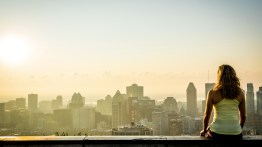
‘You’ll see when you get there,’ my friend said. ‘There’s just a different vibe in Montreal.’ He wasn’t wrong. I travelled from Toronto by train – a five-hour journey made infinitely more bearable by the impressive landscapes that flashed past the window – to find that Montreal is a tale of two cities. Still distinctly North American – and Canada’s second most populous metropolis – Montreal is dotted with all the chrome skyscrapers and wide, bustling intersections you would expect. Yet around each corner there is also a dose of seemingly incongruous European flavour: a cobbled street, an old stone church, a statue in a tree-lined square. For every modern vista, there is a strip of café culture that kids you into thinking you have strolled down a French avenue.

Plot twist: the 10 most surprising Best Picture Oscar winners

The received wisdom that the Oscar for Best Picture always goes to mainstream, generally inoffensive ‘quality’ pictures is only partially true. There have been multiple exceptions to this – and increasingly so over recent years, with an influx of younger Academy voters and a desire to be seen as more progressive than in the past. Who knows what it might mean for this year’s Best Picture nominees – which are All Quiet on the Western Front, Avatar: The Way of Water, The Banshees of Inisherin, Elvis, Everything Everywhere All at Once, The Fabelmans, Tár, Top Gun: Maverick, Triangle of Sadness and Women Talking.

One more to back at Cheltenham – and three other big-priced tips after a 16-1 winner

With the start of the Cheltenham Festival just four days away, I am pleased to say that this column’s antepost book for the meeting is looking decidedly healthy. It can all go badly wrong, of course, over the space of four days but, for now at least, let’s live in hope. Over the past couple of months, I have put up 12 Festival bets and, particularly for the first two days, most of those horses are now being offered at significantly shorter odds by all bookmakers. With more rain falling than was expected this week – and with more to come – this will inevitably suit some horses that I have tipped better than others. However, that’s the ups – and downs – of betting several weeks in advance.

How the Kindle lost its spark

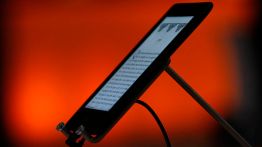
With the recent news that Kindle and other e-readers are automatically updating Roald Dahl’s books to sanitised versions, an entire era has come to an end for readers like me. Who in future will feel safe buying an electronic copy of anything? Publishers’ plans here may be modest, but the point about the puritan is that their work is never done. Martin Amis, Evelyn Waugh, Nancy Mitford, George Orwell, Charles Dickens – any one of them feels vulnerable now. If in copyright, the author and their estate can be strong-armed by the publishers; if out of copyright, laying your hands on the right edition will be a minefield. Nor does it seem clear that publishers’ revisions are being done by skilled writers.

The legacy of Chaim Topol

In 1969, for my seventh birthday, I was taken – dragged, probably – ‘up west’ to the theatre to see a musical. As I recall, it didn’t fill me with joy to be going, but it turned out to be fantastic. The songs, the acting, the dancing: it was great fun. Then we went for pasta in Soho, which was also a special event in those days. More importantly, though, I think it was the first time I became truly aware of a vital part of my identity: that I was here because decades earlier my great-grandfather had arrived on these shores, driven out of his native Russia by a pogrom, the ethnic cleansing of Jews across that vast country.

The Norfolk manor house that inspired Virginia Woolf

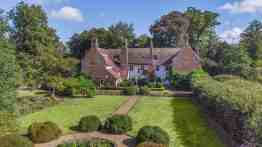
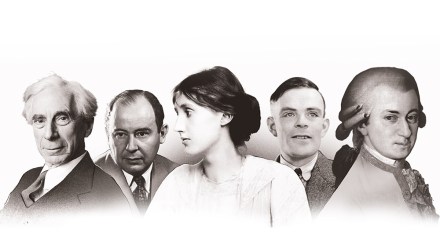
Many English country houses lay claim to literary legacies. Blo Norton Hall, however, has more right than most. In the summer of 1906, while in her early twenties, Virginia Woolf rented the Elizabethan Norfolk manor house with her older sister, artist Vanessa. The seven-mile journey there from Diss station, through isolated countryside, and their arrival at the secluded, moated site made a deep impression on Woolf. She wrote in her diary: ‘Every mile seemed to draw a thicker curtain than the last between you and the world. So that finally, when you are set down at the Hall, no sound whatever reaches your ear; the very light seems to filter through deep layers; and the air circulates slowly, as though it had but to make the circuit of the hall, and its duties were complete.

Independent thinking: private schools need reinvention, not abolition

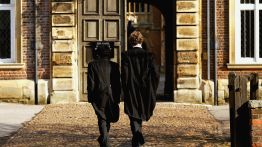
It is one of those ancient mysteries: why has no Labour government been able to abolish private schools? Harold Wilson didn’t spare grammar schools (and nor did Edward Heath’s government, which followed). New Labour, too, for all its reforming zeal, never dared disembowel the independent sector. When the party did promise to do so – in 1983 and 2019 – it lost heavily. But are private schools about to run out of luck? For once we have a Labour opposition which is threatening to end their charitable status – and which also looks as if it will cruise to victory at the next general election. Labour’s pre-manifesto has promised to end tax breaks in order to ‘fund our vision for the education system’. It has suggested that it hopes to raise £1.

Private education’s dirty little secret

Someone once said that the two greatest moments you enjoy when owning a yacht are the day you buy it and the day you sell it. You could make a similar case for school fees: nothing feels quite as good as the day you finally stop paying them. Much as we are impressed by the hockey pitch, what we’re really choosing for our kids is a peer group All the same, I feel a bit of an ingrate grumbling about private schools, since both my daughters did very well from them. Both ended up with a superb network of seemingly lifelong friends, had a mostly very happy time at school and attended the universities they wanted to attend, studying the subjects they wanted to study.

Is this the end of travel writing?

Thirty years ago, in the days when friendships were sustained not by email but by air mail, a friend of mine was spending time in some exotic faraway place. He would send me beautiful, florid accounts of his travels and I would read out the most hilarious passages to the flatmates I was living with at the time. When I next replied to him, I sent him their regards and let him know how much they had enjoyed hearing about his adventures. The next letter was angry. Although part of me understood why (I suppose I had rather naively and stupidly shared something that was supposed to be private), another part of me struggled with an expression that was new to me. I had apparently committed what he called an act of ‘cultural appropriation’.

How to get in to an American university

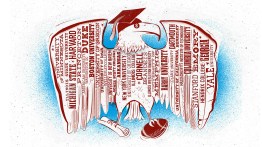
Angela McAuslan-Kelly is a normal sixth-former at Robert Gordon’s College in Aberdeen. Her dad is a bus driver and her mum works in a coffee shop. ‘They are not very wealthy,’ explains Holly Cram, a former captain of the Scottish national women’s hockey team. Angela, though, is off to Princeton in September. ‘I completely get why students want to do it. They are sold on the dream of getting a scholarship’ The reason is American universities’ extraordinarily generous scholarships, especially for sports. ‘She is very bright and she is very good at chucking a heavy thing on a wire,’ laughs Cram. Angela’s love of hammer throwing means she will soon find herself rubbing shoulders with the scions of American business.

In praise of British school holidays

As half-term approaches, the kids at the school gate visibly slow down. They start dragging their feet and purple smudges appear under their eyes. I feel sorry for them. Then I think of my home country, America. No half-terms. Children in the US went back to school on 3 January and they won’t have a week off until 3 June – five months without a break. Children form their own societies, Lord of the Flies-style, where the only rules are the ones the bullies enforce  If that sounds blissful from a childcare point of view, here’s the drawback: the American summer break is 11 weeks long. Eleven weeks!

How to tempt parents away from private schools

Destroying private schools isn’t just a preoccupation of left-wing activists. The former education secretary Michael Gove said in 2019 that he wanted state schools to be so good that paying fees would be seen as an ‘eccentric choice’. Labour has explained that if it wins power, the party will scrap charitable status for private schools and charge VAT on fees. Even among Tory voters, as many people agree with this policy as oppose it. Is it surprising that support for private schools, including among the middle classes, is on the decline? The cost of private education has more than doubled in 30 years, even accounting for inflation. The average cost of sending a teenager to a private day school is now £16,500 a year and nudging £20,000 in London and the South East.

Why maths to 18 is a bad idea (by a maths teacher)

Whenever I tell people I used to be a maths teacher the most common response is: ‘I absolutely hated maths at school.’ It is an age-old tale, to loathe maths lessons (or indeed your maths teacher). So, what better way to make children loathe maths even more than to make it compulsory until the age of 18? Rishi Sunak’s plan, announced at the start of the year, aims to address innumeracy and better prepare pupils for the workplace. There are many reasons why, on the surface, it seems a sensible approach – not least because the UK is one of the few countries in the world that does not require children to study maths in some form up to the age of 18.

How to dress for air travel

Even though I fly a lot, I retain the notion that air travel should be treated as a special occasion for which one should dress accordingly. I am writing this from Gatwick, accompanied by one of those canvas bags you get for a fiver at Sainsbury’s Back in the day, if you showed up looking as though you’d made a bit of a sartorial effort, the check-in person might pick up the phone, announce to reservations that a Mr Sutherland was ‘SFU’, and would rip up your boarding pass to replace it with a nicer one. In airline argot, SFU stood for ‘Suitable for Upgrade’. Now that upgrades almost never happen, it won’t be long before people start turning up in dressing gowns. And, though I hate to say it, one of the best tips for modern airline travel is to wear naff clothes.

Why become a teacher?

There was an article in this magazine’s last Schools supplement in September that, just for a moment, made me panic. ‘Why I’ve quit teaching’ was the headline. Not great timing. I’d just resigned from my secure civil service job in the Department for Transport to start a Postgraduate Certificate in Education in secondary level history. My thoughts raced. Had I made a serious blunder? What if I wasn’t cut out for this teaching gig after all? Would I end up an emotional wreck and go crawling back to Whitehall? When you’re teaching you’re always thinking about and sharing a subject you find profoundly interesting At my work leaving party I had well-meaning but ominous conversations along the lines of: ‘We admire your decision but think you’re absolutely mad.

School portraits: snapshots of four notable schools

Roundhay School, Leeds ‘While we were taught about racism and sexism, there was too little time spent making sure everyone could read and write,’ said Liz Truss of her alma mater three years ago when she was minister for women and equalities. Roundhay School’s record begs to differ – it has been ranked ‘outstanding’ by Ofsted for more than a decade now. In 2020, the same year as Truss’s speech, the school received a World Class Schools Quality Mark. Roundhay is based in Leeds, and educates 2,600 pupils across a gorgeous 22-acre site on the outskirts of the city.

The restorative power of great claret

‘Come dance with me in Ireland.’ That has always struck me as an enchanting prospect, though a recent Hibernian venture did not involve dancing and took place in London. There was an Irish academic called R.B. McDowell. To call him eccentric would be an understatement. He adorned Trinity College Dublin for decades, starting from the era when TCD was still part of the Anglo-Irish Protestant Ascendancy. Whenever Trinity men foregather, they can be relied on to tell McDowell stories. The Pontet-Canet 2015 was shortly to be outgunned by a super-first  R.B. belonged to a small club, devoted to the pleasures of talk and drink. Living into his nineties, he found a way of thanking those who had provided him with good company.

Why I betrayed my friend over a bottle of rum

There are moments in a boy’s adolescence when he catches a glimpse of the man he will become. Faced with adversity, is he the brave sort – or the sort who runs away and lets others suffer? Aged 13, on a school trip to Portsmouth, I discovered I was the latter. Tom insisted he’d found the bottles on a street, which made him sound considerably weirder than he was It was my first year at Bradfield College, a boarding school in Berkshire. About a hundred of us new boys packed on a coach. I vaguely recall the hooligan energy of too many young males in a small space: over-excited heads popping up to shout swear words in the direction of the staff at the front, then ducking down to avoid censure.

Woke culture is strangling comedy

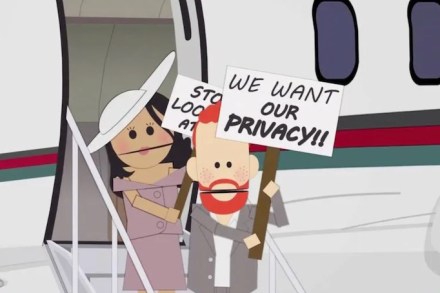
Three weeks after that South Park episode and the memes just keep on coming. Despite years of highly articulate fulminating against the preposterous pair by essayists like myself, there’s a feeling that the satirical cartoon was the conclusive blow to the Sussexes' reputation – no well-turned phrase will ever better the glorious awfulness of ‘The Worldwide Privacy Tour’. One of the things that the woke hate most about our lot is the fact that we’re far more amusing. Their natural mode of address is to scold – and scolding and wit are polar opposites. I daresay some clown somewhere has stated that punchlines are probably imperialist.

Is the Purosangue SUV a real Ferrari?

I recently spent a long weekend in the Italian region of Emilia-Romagna, driving a fast car, eating tortellini alla panna twice a day and rifling through Luciano Pavarotti’s DVD library. The tenor’s house, outside Modena, has been converted into a museum filled with his many shiny awards and Hermès scarves, framed photos with Bono and Mandela and, yes, his unrivalled collection of Police Academy movies. I also visited Modena’s sprawling San Cataldo cemetery to see the imposing family tomb of one Enzo Anselmo Giuseppe Maria Ferrari, 1898-1988. I listened carefully. It was peaceful. Apart from birdsong, not a whisper. There was no whirring, no drilling, no vibration or rumbling from underground. Everybody said he’d be spinning in his grave. Talk about a let-down.

The rise of women winemakers

Anna, the daughter of friends of mine, is in her final year at university and keen to enter the wine trade. Clearly, she is wise beyond her years because it’s a hugely engaging career. She will never get rich but will always be happy. Oh, and a glass of something tasty will never be far away, and nor will someone congenial with whom to share it.  Wine is made in beautiful places – just think of Bordeaux, the Douro Valley, Western Cape, Yarra Valley, Napa, Piedmont, Mendoza, Central Otago and even the rolling South Downs of Sussex – by delightful people (well, with just the one exception). It’s a warm, friendly and collaborative world to be in.

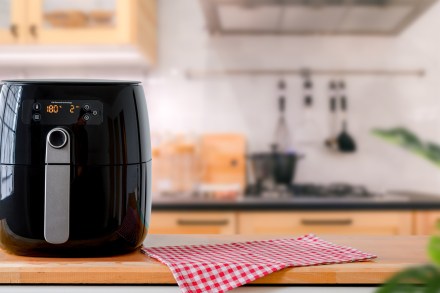
Has the air fryer fad burnt out?

Are you – along with nine million other households in Britain – the proud owner of an air fryer? Amid promises that it could cut energy bills in half, slash cooking times and turn French fries into a bona fide health food, the kitchen gadget soared in popularity last year, with sales increasing by 3,000 per cent on 2021. At one point – much to the consternation of social media chefs, TikTok-ing their every interaction with the machine – there were even fears of a national shortage (mercifully, this never came to pass).

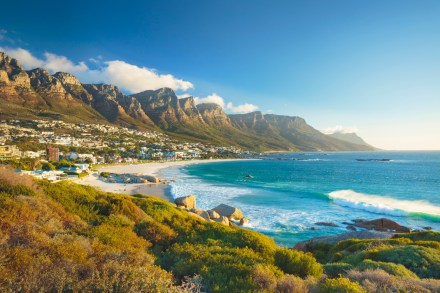
How to escape the cold without jet lag

My mum yelped. The kayak bucked back and forth as we both mouthed: ‘Dolphins!’ The pair zigzagged around us while we tried to paddle after them. Afterwards, we were paddling back towards land for a busy afternoon of exploring coffee shops and wine bars when a penguin bobbed its head up from the water. In moments like these it's hard to believe you're in a city – but there was Cape Town spread out on the shore ahead of us. The taxi driver who met us at the airport had summed it up: ‘In Cape Town, you can do everything.’ There’s nature in spades (from antelope to whales), incredible food, culture, world-class wine and, according to our kayak guide, ‘some of the best hiking and biking trails in the world’.