Spectator Life

Spectator Life

An intelligent mix of culture, style, travel, food and property, as well as where to go and what to see.

How to endure November

Grey rain slants down over the brown heather of the Lochaber hills, falling relentlessly into Loch Linnhe, and drenching the Caledonian Sleeper idling beneath my window on the platform at Fort William. November is technically still autumn, but already the long evenings of British Summer Time seem to belong to a different world. Pleasant as it is to wrap up in a coat, to feel invigorated by stepping out into a chill, or delighted by returning to the warmth within, the dying year is no cause for celebration. Christmas, the adopted pagan festival, is like Halloween – not put there because the days are joyous, but so we can thumb our nose at the downcast season. Defiance is the right attitude.

Trick or treating is vital life experience

I first got a door slammed in my face in 1987. Looking back, I can’t help but feel that moment, at the age of eight, was my first bit of training as a journalist. I wasn’t seeking a scoop back then, of course. For eight-year-olds a scoop is something you get two of with your cornet from the ice cream van. Rather I was after a Chomp bar or a bag of Bensons crisps, and all the while hoping beyond hope that I (and my accompanying gaggle of friends) wouldn’t be palmed off with a satsuma. Such was the freewheeling Friedman-esque world of trick or treating – a custom that has dwindled into what, these days, is considered by many parents to be either rude, dangerous, immoral, paganistic or a combination of all four. The ritual clings on in diminished form.

The sanctimony of Steve Coogan

About 20 years ago, the actor and comedian Steve Coogan did a tour called, with typical self-deprecation, Steve Coogan as Alan Partridge and Other Less Successful Characters. I saw the show and it was, as you’d expect from Coogan, amusing and cleverly performed. Yet it ended strangely; Coogan sang a self-lacerating song called ‘Everyone’s a Bit of a Cunt Sometimes’. It was oddly bitter and angry, but clearly Coogan stood by its sentiments, because he attempted to reprise the number in a dream sequence from his restaurant-review comedy The Trip several years later. The song, given full production values, was, perhaps wisely, deleted from the programme’s final cut. (Although you can still find it on YouTube.

Daylight savings is anti-feminist

It is, officially, ‘cosy’ season. My social-media feeds have suddenly become very homely and wholesome: full of pictures of chunky knitwear, crisp leaves, soft blankets, flickering candles and crackling fires. I want to embrace this romanticisation of winter, I really do. I want to enjoy this slower routine of fluffy pyjamas, Christmas movies and aesthetically pleasing pumpkin lattes. I want to say that I love coming home from work, drawing the curtains and snuggling on the sofa with a glass of red and a paperback. I want to laugh that it doesn’t matter if I don’t see direct sunlight for the next four months because I can wear cashmere socks or buy new fragranced bubble bath. The problem is that I have a toddler.

Films aren’t art

My late son took film seriously, a taste I was delighted to see him develop, and regret not being able to see him grow out of. When he was little we watched the Pixar films, and they gave us great joy. The first 20 minutes of Up and the last 20 of Toy Story 3 have been called the only perfect bits of cinema, a formulation with a high quotient of truth. After our son’s death, my wife commented that she had never before seen me cry. I had always wondered if she’d spotted my tears at the end of Coco, or those I shed during Guardians of the Galaxy 3, during a Sicilian family holiday, but I don’t cry easily. We watched Coco, which is about remembering the dead, shortly after my mother’s funeral. In Sicily, I wonder if it was a reaction to being uncomplicatedly happy.

The infantilising cult of comfort

I thought that maybe being in a wheelchair would stop my louche lunching ways, but somewhat to my own surprise (though not that of my mates, I’d wager), this isn’t the case. ‘You push – I’ll pay!’ has become my battle cry. But as I am wheeled about at this time of year, a pucker of irritation repeatedly flickers across my features. Pumpkin this, pumpkin that – all leading inevitably to the monstrosity that is pumpkin spiced latte. The final straw in my deciding that pumpkin spiced lattes are utterly, well, deplorable was when the ghastly Hillary Clinton described herself as a fan – ‘until I saw how many calories there are in them’. Soz, Hills, but it’ll take more than losing a bit of weight to keep a dog like yours on the porch.

Admit it: ‘Bohemian Rhapsody’ is terrible

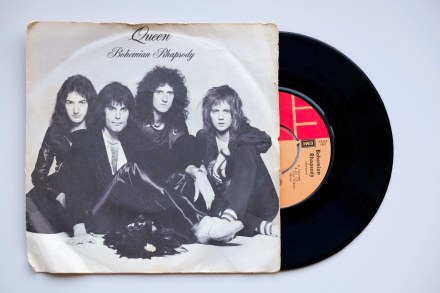
Queen’s ascendency began at around the same time as the first residents were moving their Axminster carpets and Party Sevens into Tower Hamlets’ Robin Hood Gardens, the Smithson-designed Brutalist estate that would go on to become a typical example of how post-war ‘streets in the sky’ concepts were almost always doomed to fail. Five decades on, just one small section of Robin Hood Gardens has survived for posterity. It’s been acquired by the Victoria and Albert Museum to, presumably, warn future generations of what can happen to a neighbourhood when you combine too much cheap concrete with not enough public consultation. Thanks to Freddie Mercury and co., one solitary example of the very worst excesses of overblown 1970s musical bad ideas persists, too.

Why piano competitions strike a controversial note

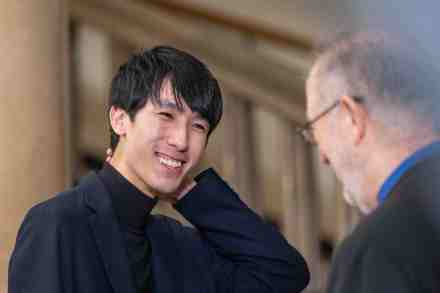
The USA’s Eric Lu has beaten more than 600 other pianists to win the 19th International Chopin Piano Competition. Held every five years in Warsaw around the anniversary of the Polish composer’s death on 17 October, this is one of several piano tournaments that often launch major careers, along with Moscow’s Tchaikovsky Competition, the Van Cliburn in Texas and the Leeds International. Unlike any of those, however, the Chopin competition requires contestants to perform the music of just one composer. Lu, 27, didn’t exactly need this win. He took first prize at the Leeds International in 2018 and has already released two records on the Warner Classics label. After his victory in Warsaw, he will take home a cash prize of €60,000 (£52,000).

How bad do things have to get before the police show up?

Earlier this year, I wrote here about the arsonist who'd left our neighbourhood looking post-apocalyptic. In the months that followed, the pyromaniac grew ever more reckless. Initially, he'd stuck to torching vehicles on the road, which was bad enough. But then he took it a step further. He set fire to a car on a driveway, which in turn set the house alight. The young family, who were asleep upstairs, escaped with their lives, but their home was destroyed. A collection was started, and we dropped in some cash. The organiser said that in 20 years in the area, he'd never seen things as bad as they were now. He'd installed CCTV after burglars had smashed their way through the bifold doors – now it might come in handy for identifying the pyro.

Banish the B-word!

The SS Californian deserves more than mere footnote status when it comes to its role in the story of the RMS Titanic. For that was the name of the ship that sent repeated messages to the crew of the doomed cruise liner, all of them warning of ice ahead. But the Titanic’s wireless operators weren’t interested – to the point where one employee dismissed the Californian’s communications with a reply that read: ‘Shut up, I’m busy.’ Of course, the Titanic wireless crew weren’t really busy at all. They were simply spending their time sending private telegrams on behalf of the first-class passengers on board. A few hours later, well, we all know what happened. But we haven’t yet gone public enough with the overuse of what was, back in 1912, an absolutely deadly adjective.

Confessions of an unmanly man

There’s a certain sort of chap who, when he hears you mention football, gets all earnest and starts talking about flat back fours. You try to stop him, attempting to steer the conversation away from tedious tactics and back on to the important stuff, such as the fact that there’s only one team in the top four English divisions whose name, when spelled in capital letters, contains no curves. He’ll look confused, disorientated, maybe even a little bit angry. Either he’ll persist with his talk of formations, or walk away completely. The correct reaction, of course, is to say: ‘Really? That’s brilliant. Let me try to work it out.’ This is when you know you’ve found a kindred spirit: an unmanly man.

Celebrity sex isn’t what it used to be

Reading about the break-up of the 19-year marriage of Nicole Kidman and Keith Urban, I was interested in some comments from our old mate ‘A. Source’ about the possible cause. According to the Sun: ‘Keith put a brave face on Nicole’s raunchy screen roles and all the comments she’d make about her sexuality. But he didn’t react well when people teased him about Nicole getting it on with hunky younger guys, albeit only on camera, and it was a sensitive topic that became a real issue as time wore on.

Real British values

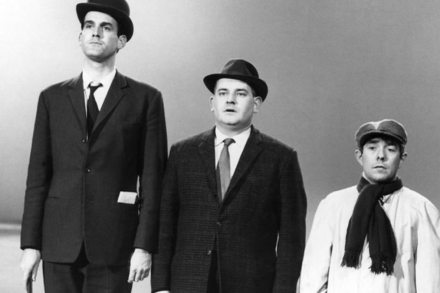
An upper-middle-class former banker friend recently attended a Reform UK selection meeting for council candidates in a decaying southern coastal town. Although he is a man of the world who once worked on oil rigs and in a shoe shop, my banker friend professed himself ‘shocked’ by the standards of dress and deportment of the other would-be candidates. Naturally all were overweight and tattooed, and all were dressed in shorts, baseball caps and hooded tracksuit tops – the standard everyday uniform of most British men under the age of 60. They were, it is fair to say, an average representation of the male members of what was once called ‘the working class’. The story reminded me of that classic TV sketch from the early 1960s.

The eccentric who turned a village into a kingdom of books

My wife put it in her usual succinct way: ‘Why do you want to write a book about such a sleazeball?’ I couldn’t really say. The late Richard Booth, second-hand bookseller and former self-crowned king of Hay-on-Wye, was not instantly lovable. Some found him the essence of unlovability. He was scruffy, disorganised, egocentric, impetuous, hopeless with money and capricious. At times he was rude, promiscuous, bad-tempered, small-minded, boring, bombastic, unscrupulous and unaware of the upset he could cause. Yet most of his staff – those who survived the whim of iron – loved him for his good heart, his childlike enthusiasm, his humour, ingenuousness, irreverence, shyness and kindness.

Canterbury Cathedral’s graffiti heresy

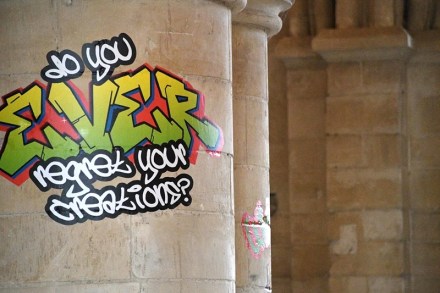
There was confusion in Canterbury Cathedral this week as the Dean and Chapter gave permission for this most venerable shrine of world Christendom to be redecorated in the manner of the M4 Chiswick flyover. Photographs appeared of the cathedral’s ancient walls and columns irregularly plastered in jagged and bulbous graffiti, picked out in the sort of gaudy palette you might see in an amusement arcade. Even vice president J.D. Vance has questioned whether this is the right way to treat the house of God, saying the graffiti made a ‘beautiful historical building really ugly’. It soon transpired that this graffiti spattered over the site of Becket’s martyrdom was in fact a temporary art installation.

The scourge of the blurb

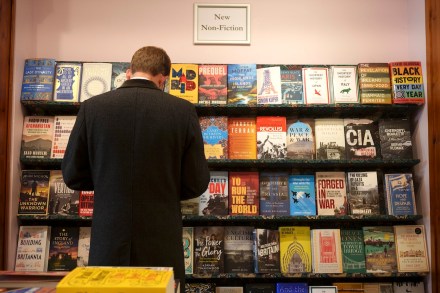
‘Books are a load of crap’, wrote Larkin the librarian, for a bit of fun. But some books are not very good, no matter what guff they put on the cover. Those promotional blurbs, where adverbs and adjectives jostle for supremacy, are often as false as Judas. Shami Chakrabarti, for instance, plugs With the Law on Our Side, the new book by Lady Hale, as ‘accessible, forensic, and breathtakingly humane’. Line-and-length humanity is clearly for those poor souls below the salt. Her ladyship is a grandee with a natty brooch, and must therefore be breathtakingly humane. It’s verbal sludge. Also, do the publishers really think that Little Bo Peep’s approval will shift a single copy?

Bring back elitism

Elitism has had a bad press in recent years. The concept has, alas, been tainted by its association with the numerous elites who have corrupted it by allowing self-interest and prejudice to become self-perpetuating. It’s been sullied by its association with old school ties and masonic-style handshakes – by closed networks which work to exclude those who happen to fall outside the pre-determined in-group. So no wonder we don’t like it any more. Who would? But its gravest sin of all has been its role in pulling up the drawbridge to protect privilege in general, through a kind of unspoken fish-knife test. If you don’t know what it’s for, you don’t get in. One way people used to storm the castle of privilege was through grammar schools, of course.

Jilly Cooper and the art of not taking life too seriously

When I found out about the death of Dame Jilly Cooper while waiting for a train, I said, out loud, ‘Oh no!’ with such vehemence that several of the commuters around me shuffled away, clearly frightened by their proximity to a madman. Cooper’s death at the age of 88 – a good innings, but also wholly unexpected, occurring after a sudden fall – brings to an end the life of Britain’s pre-eminent romantic novelist, aka ‘the queen of the bonkbuster’. It is testament to her vast popularity that many of her millions of readers felt that they knew her intimately, and those lucky enough to meet her were invariably charmed by her good humour, self-deprecating wit and charm.

Taylor Swift is increasingly horny and increasingly mean

Time was, posting anything negative about Taylor Swift would be personally dangerous, given the famous passion, obsessiveness and sheer numbers of the Swiftie fandom. In recent years, the great and the good have also piled into Swiftiedom. Her 2024 Eras tour was a must-attend photo opp for royals, senators and prime ministers’ wives (recall Victoria Starmer’s free tickets to two concerts at Wembley). The V&A hired a curator for Taylor Swift ephemera. Academics have lauded her: Harvard poetry professor Stephanie Burt taught a class on Swift last year and has a forthcoming book out called The Poetic and Musical Genius of Taylor Swift.

Has Taylor Swift broken music’s last taboo?

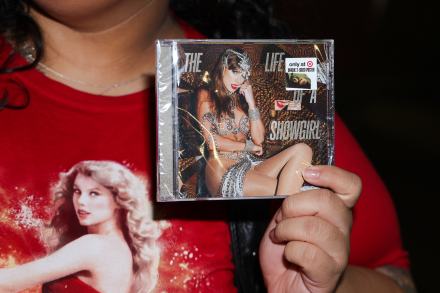
As a woman in my early thirties, it is my God-given right – arguably my duty – to have an opinion when Taylor Swift releases an album. And it’s a role that I’ve always performed without compunction. But on this occasion – the release of album 12, The Life of a Showgirl, my ability to get into the weeds (does ‘The Fate of Ophelia’ represent close text analysis of Shakespeare?) was hampered by my shock at one particularly audacious lyric.  Previous albums have had the the odd raunchy moment. So when, on this new album, she sang ‘His love was the key that opened my thighs’ in a song titled ‘Wood’, I was unmoved.

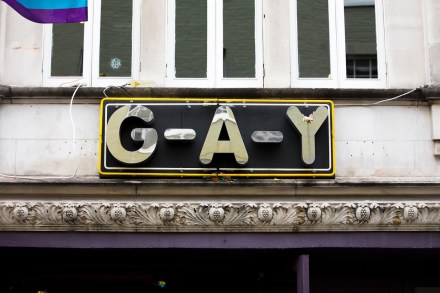
Gays won’t mourn the death of G-A-Y

My colleague seemed surprised that I replied ‘no’ when asked if I was sad at the news that G-A-Y bar – a staple of Soho for decades – was closing. A more intelligent answer would be that the closure of any ‘gay space’ is sad, but the truth is this is not somewhere that many in ‘the community’ will mourn. I tried to think about the last time I went to G-A-Y and I can’t remember. I texted a dozen friends and they can’t remember either. I guess that speaks to part of the problem. Jeremy Joseph, the owner of the bar, announced the closure on social media on Wednesday. But the speed of its closure this weekend, just days after the announcement, is surprising. Joseph says that ‘Old Compton Street has lost [its] LGBT identity’.

The banality of Emma Watson

For a long time it was handy dinner party fact that Harry Potter and the Deathly Hallows Part One (2010) briefly filmed at my late grandparents’ house, and appeared as Hermione Granger’s house in the film. Even this required extensive exposure of my grandparents to Warner Brothers’ lawyers, the film crew and, of course, to young Emma Watson herself. Neither of my grandparents had heard of Harry Potter before they were approached, and throughout filming, they failed entirely to notice her, though there was some vague recollection of ‘that rather mousy girl’ from my grandpa, who was far more taken with Susan, the 60-something woman in charge of props. This description stayed with me as Watson’s star rose and rose, plateaued, and turned gender political.

There’s something vulgar about Freemasons

Goodness, isn’t there something a bit hoary about the notion that members of the Metropolitan Police may have to declare if they’re Freemasons? The idea has come up recently in the context of discussion on ‘declarable associations’ – those organisations you’re obliged to admit to belonging to if you’re a London copper.

Am I the target of a publishing scam?

Recently I’ve been bombarded with emails from people who apparently are keen to promote or market one or other of my children’s books. A few appear to have actually read a book of mine and to know the name of the characters, others clearly haven’t. What they all have in common is that the book in question was published some years ago. A favourite seems to be The Very Snowy Christmas, a picture book published in 2020. Carmen would like to make sure it’s ‘cherished, shared and remembered in the conversation of parents, educators and readers’. It’s ‘about legacy’, she says. Sarah seeks to connect my book to ‘curated reading groups, parent-child clubs, seasonal reading circles’. Martin wants to make sure my story doesn’t ‘just sell but echoes, lives, endures’.

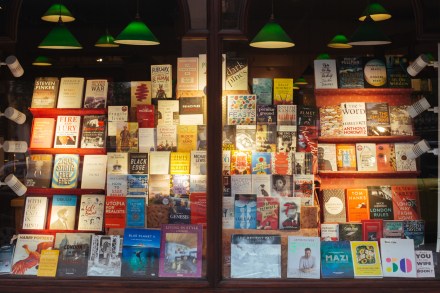
Second-hand books tell the most surprising stories

It’s relatively common, I find, when opening a newly purchased second-hand book for the first time, for something to fall from its pages. Most likely this will be a branded bookmark or printed stocklisting paper from the dealer who sold it. But it’s not unusual to find something more interesting, something belonging to the book’s previous owner. Apparently the singer Nick Cave donated 2,000 books to an Oxfam in Hove this summer, and new owners of his paperbacks discovered old plane tickets and Post-it notes tucked inside. We serial readers of actual physical books are constantly in need of bookmarks and will grab at anything to hand to use as one.

The curious cult of solitude

The thing that really fascinates me about solitude is the need to talk about it. The contradiction seems lost on people. ‘I must tell you about the silent retreat I’ve just been on.’  ‘It was so nice to just sit with my thoughts for a bit.’ Solitude is the new wild swimming: if you don’t talk about it, did it even happen?   And I fear this habit is about to get a whole lot more irritating because the benefits of solitude – all fairly predictable – are increasingly being ‘studied’ and presented in quasi-scientific jargon. ‘It creates spiritual sustenance,’ writes entrepreneur and author Ari Weinzweig.

How to spot an AI wedding speech

Early in 2020, inquiries for our speech-writing services were arriving in their droves. From Westminster to Washington, weddings to wine tastings, people needed our help. We cancelled our weekends and prepared for life without a mortgage. Covid gave us our weekends back. And all the other days. Yet when parties and events returned, a significant chunk of our clients did not. It was weird. But this wasn’t a vaccine complication, just a new player in the market. Previously we’d only had to win business against other humans. Suddenly, we were faced with a competitor able to provide speeches for any occasion in seconds. ChatGPT was doing to us what PornHub had done to the top shelf in the local newsagent. We weren’t the only ones.

The decline of the Booker Prize

‘Prizes are for little boys,’ said Charles Ives, the American composer, ‘and I’m a grown-up.’ It’s a pretty sound rule of thumb. The prizes worth having are usually those which reflect a body of work, not a single achievement. Cary Grant, the greatest leading man in the history of cinema, never won an Academy Award. Neither did Alfred Hitchcock, who made a few half-decent films. They received ‘lifetime awards’ from the red-faced academicians, but those gestures merely endorsed William Goldman’s view that, in Hollywood, nobody knows anything. As Billy Wilder told the producer who asked what he had been up to: ‘You first.’ Nobody takes much notice of the Grammys, which were designed to reward commercial success.

Matthew Parris, Stephen J. Shaw, Henry Jeffreys, Tessa Dunlop and Angus Colwell

31 min listen

On this week’s Spectator Out Loud: Matthew Parris reflects on the gay rights movement in the UK; faced with Britain’s demographic declines, Stephen J. Shaw argues that Britain needs to recover a sense of ‘futurehood’; Henry Jeffreys makes the case for disposing of wine lists; Tessa Dunlop reviews Valentine Low’s Power and the Palace: The Inside Story of the Monarchy and 10 Downing Street; and, Angus Colwell reviews a new podcast on David Bowie from BBC Sounds.  Produced and presented by Patrick Gibbons.