Spectator Life

Spectator Life

An intelligent mix of culture, style, travel, food and property, as well as where to go and what to see.

I’ll take a country walk over the gym any day

Despite having eaten my own body weight in chocolate over Christmas – and vowing to do better in the new year – my inner Augustus Gloop means I still feel duty-bound to finish what’s left. Self-control when it comes to eating has never been one of my strengths. My New Year’s resolution about a healthier diet will have to wait. In addition to buying the usual tubs of festive favourites – Heroes, Quality Street and Roses – I got a ton of confectionery as Christmas presents. I reason that it would be ungrateful not to enjoy it. My New Year’s goals are perennial: eat less and exercise more. I fail every time. I mean, I do a reasonable amount of exercise anyway: at least 10,000 steps a day with the dog, yoga every evening and a martial arts class once a week.

Northern pride is becoming a parody

The Ship of Fools lies rigged and masted, awaiting departure for Cloud Cuckoo Land. But lo! here come a few stragglers. They’re wearing cloth caps and clogs, and carrying buckets of coal. By ’eck, they must be northerners! Clamber aboard, noble savages, we are ready to cast off. Steerage, purser. You can’t beat a good old stereotype, and when it comes to stereotypes it appears you can’t whack those northern students at the University of York who feel, boo hoo, they are surrounded by intruders from the south. ‘We’re being overrun’ is the gist of it, so they have revived the university’s Northern Society to assert their independence. Nor are they alone.

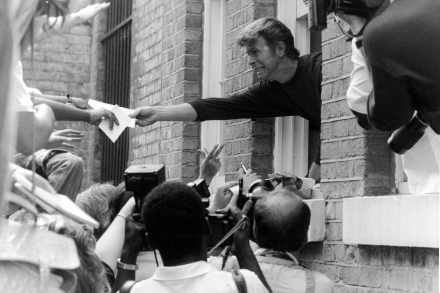
David Bowie and why we love working-class pop stars

The only time I ever saw David Bowie live was at a ropey festival in an old airfield near Stratford-upon-Avon in the latter half of the 1990s. Frankly, I thought he was pretty awful. It was the peak of Britpop, electronica and trip hop were in the ascendency and the campsite and smaller stages that weekend were fervent with fast beats, French crops and chemical ingestion. Bowie, to my late-teenage eyes and ears, seemed like an embarrassing dad, attempting to remain ‘with it’ via his recent drum and bass-infused song ‘Little Wonder’. I sloped off before the end to go and watch Goldie instead. I’ve listened to much more Bowie since then, and although I maintain that at least 50 per cent of his vast output is distinctly average, the best bits are transcendent.

The imposters who pretend to be heroes

‘Every man thinks meanly of himself for not having been a soldier, or not having been at sea,’ wrote James Boswell of Samuel Johnson in his biography of his friend in 1778. Evidently Jonathan Carley did. The retired teacher was found guilty on Monday of impersonating a rear admiral without permission. The 65-year-old was fined £500 by Llandudno magistrates’ court, and ordered to pay £85 prosecution costs and a £200 surcharge. Carley was arrested last November, days after he had appeared at the town’s Remembrance service in naval uniform with a dozen medals pinned to his chest. He told police that he had carried out the deception to have a sense of ‘belonging and affirmation’.

The death of personality

My late mother was a kind woman – who I treated badly in adolescence, as teenage girls are often inclined to do – so the few times she said nasty things to me stick in my mind. In fact, I can only think of one: when I was 11, she told me that I had ‘no personality’. I remember sitting in my bedroom, staring at a poster of David Bowie, my eyes practically crossed in crossness. What did she mean, ‘no personality’? I was a right weirdo, already well under way with the process of changing myself from a wholesome working-class Bristolian schoolgirl into a total freak, thanks to growing immersion in the works of the Velvet Underground and Oscar Wilde.

Life is more complex than we like to admit

In this strange new world we inhabit, where many people appear to struggle with nuance, the oversimplification of complex problems means that any shades of grey are ignored. This informal logical fallacy, in which every situation is presented as having only two possible options when, in reality, more exist, is now standard in politics and across mainstream and social media. However, rather than being seen as a sign of intellectual weakness, taking entrenched positions is considered perfectly reasonable. Think 7 October was depraved and insane? You’re Zionist sympathising scum. Appalled by images of children in Gaza made homeless by the conflict, struggling to lift a spoon to their mouth because they’re shaking so violently from the cold? You’re a pathetic Hamas apologist.

Janus and the back and forth of the new year

The Roman god Janus is about to play his annual trick on us. 31 December, the last day of the year, will be followed by 1 January, the first day of the year. We’ve ended up right back where we started. Frustrating, but at the same time reassuring. Janus, after whom the new month is named, was always pictured with two faces, one looking forward, the other back. He is the god of both beginnings and endings. The notion of returning to 1 January has always bothered me slightly, as though all that effort last year was for naught. Indeed the fact that each day of the year is a ‘copy’ of all the equivalent days in previous years seems troublesome too.

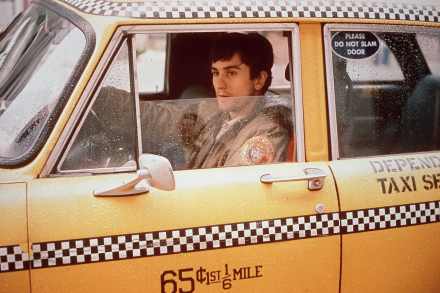
‘Doomer jazz’ and the strange afterlife of Taxi Driver

Bernard Herrmann died 50 years ago this month. He only just lived long enough to complete the suite of instrumental jazz that’s now regarded as not only his finest work across many decades as a movie composer, but one of the greatest celluloid soundtracks of all time. There are very few movies which you can honestly state simply wouldn’t have got out of the traps were it not for the soundtrack. Taxi Driver is one of them. There’s more than enough available film critic geekery about Martin Scorsese and Robert De Niro’s finest hour to plough through already. But the curious afterlife of the Taxi Driver soundtrack was something I had no idea about until a recent Spotify sleuthing session. You’ve heard the main siren call theme of the movie.

I walked out of my son’s nativity play

To walk out of a public performance before the end – be it the theatre, a concert or a lecture – is not the done thing. It’s considered an antisocial act that disrupts the performance and thus other people’s pleasure. To walk out provokes tuts of disapproval and scowls of indignation. And yet while it’s something we all disapprove of (at least in theory) it’s also something we all secretly long to do. Who hasn’t sat and squirmed in their seat at some tedious piece of theatre and wondered: how much more of this must I suffer? And who hasn’t been subjected to one of those long, sycophantic interviews with some self-adoring author flogging their latest book and not prayed for the courage to make a run for it?

The march of lazy children’s books

There’s a myth that lots of us fall for/ ‘Kids’ books are so easy to write’/ And you can see why we might think so/ As so many of them are shite. Little poem by me there. As the dad of a six-year-old and a three-year-old, I have spent perhaps 100 hours reading some wonderful books, and hearing gorgeous books read to me. But parents everywhere will know what I mean when I say: Christ there’s a lot of dross out there. Why are so many children’s books so bad? Children learn through books. If they read lazy poetry, they’ll become lazy writers and lazy thinkers While looking for kids’ books to name and shame for this piece, I realised that some of the very worst offenders are now in a charity shop or the bin.

Step forward the undeserving: it’s honours season again

Once Christmas Day’s out of the way and we’re stuck in that no man’s land between one year and the next – known, tweely, as ‘Twixmas’ or, if you’re posh, the ‘interregnum’ – one thing guaranteed to make the front pages is the announcement of the New Year’s Honours List. News of the worthy – and not-so-worthy – recipients will be released, and we’ll get to see who’s been elevated to the Lords, knighted or handed one of the lesser gongs. Among the very deserving recipients will be those who make you think: hang on a minute – how did that happen? When news broke that former prime minister Tony Blair was to be made a Knight Companion, more than a million people signed a petition calling for the honour to be blocked.

Shakespeare isn’t difficult

Chloe Zhao may have co-written and directed Hamnet (a film about William Shakespeare’s son), but she claims that she couldn’t understand Shakespeare’s words and had to rely on the actor Paul Mescal to help her. You might have thought that Zhao, who spent her sixth form years at Brighton College (where, one hopes, she at least sniffed at some form of Shakespeare), could have bestirred herself to read one of the many editions with glossaries, or even to bone up on the CliffsNotes, but no. Instead, she is simply contributing to the enduring, frustrating idea that reading Shakespeare is ‘difficult’, as if it were on a par with analytical philosophy or Judith Butler wanging on about hegemonies.

I’m a Jew who loves Christmas

On more than one occasion, I have found myself being lectured by non-Jews (always men) about why I am incorrect in my Jewishness. Judaism is a religion and I can’t be Jewish if I am an atheist, some say. The ones that accept the atheism then feel compelled to categorise me as a ‘cultural’ Jew whose identity is defined by rituals and customs passed down over the centuries. And then there’s the stern mystification about the relatively minor role that Hanukkah plays in the spiritual calendar for Jews. It is hard for some to realise that while it involves lights and wintry nights, Hanukkah is not remotely the equivalent of Christmas. Nothing in Judaism is.

Can Karl Loxley make classical music cool?

I’m backstage with classical crossover singer Karl Loxley and his pianist Tim Abel at Stratford-Upon-Avon’s Rother Street Arts House. The sound and lighting team are setting up in the empty theatre for what will be one of the final shows in Loxley’s ‘Songs of Christmas’ tour. Since 2015, when Loxley sung Puccini’s ‘Nessun Dorma’ on the TV talent show The Voice, he’s been on a mission to make classical music cool. I’m here to see exactly what that involves – and if he’s succeeding.  Loxley is charming, expansive and – at least when I interview him, a couple of hours before showtime – relaxed. Appearing on The Voice, he tells me, was ‘a very nerve-wracking experience. I don’t think I would have the nerve to do it now.

The economic purge of the young white male

I can remember when I first realised that something strange was happening to white men in Hollywood. It was around 2014, and my younger colleagues in LA – often British writers, directors and actors who had moved to California to ‘make it’ – began reporting, anecdotally, that their work was disappearing. By that I don’t mean the normal vicissitudes of a volatile creative industry. I don’t mean actors ‘resting’ or scripts getting stuck in ‘development hell’. I mean that all jobs, and job opportunities, were abruptly vanishing. Applications went nowhere, CVs were binned, hopeful meetings were suddenly cancelled.

The quiet joy of spending Christmas alone

The first thing I should tell you about my relationship with Christmas is that I’m not saturated in essence of humbug. My approach to a big family Christmas is the same as my relationship with Mexican food: if it’s put in front of me I’ll enjoy it, but I probably wouldn’t ever purposely seek it out for myself. With no family to speak of within 200 miles and with a fiancée who usually has to work on Christmas Day at her job as an NHS intensive care unit nurse, I’ve spent quite a few recent Christmas Days on my own in London. On the first year in particular, I admit I did slouch around the house with a face like a farrier’s anvil.

With Michael Gove

30 min listen

Surely needing no introduction to Spectator listeners, Michael Gove has been a staple of British politics for almost two decades. As a Christmas treat, he joins Lara Prendergast to talk about his memories of food including: the 'brain food' he grew up on in Aberdeen, his favourite Oxford pubs and the dining culture of 1980s Fleet Street. He also shares his memorable moments from his time in politics from dining with Elizabeth Hurley and Donald Trump's first state visit to his reflections on food policy as a former Education and also Environment Secretary. Plus – what has he made of the Spectator's parties since joining as editor? Produced by Patrick Gibbons.

‘Have Yourself a Merry Little Christmas’ is far from merry

Here is a great festive pub quiz question for you. Which film was the song ‘Have Yourself a Merry Little Christmas’ written for? It’s likely, particularly if you’re below a certain age, that your first reaction will be surprise that it was written for a film in the first place. That’s a reflection not so much of the failure of the film in question – Meet Me in St Louis, which was the second highest-grossing film of 1944 – but of the enduring popularity of the song itself. In 2023, it was the 11th most played holiday song, according to the American Society of Composers, Authors and Publishers. But just as the song has transcended the film, it has become unmoored from its original meaning.

Is Britain depressed?

Something very strange is happening in Britain at the moment. Look at the economy. Things aren’t really too bad: for a start it’s actually growing, if only a little. At the same time, inflation is falling. Real incomes are on the rise too – with earnings going up 4.4 per cent in the year to October, while inflation was 3.6 per cent. Meanwhile unemployment is at 5.1 per cent, which isn’t terrible. The government is raking in the sorts of taxes that would make the Sheriff of Nottingham weep with joy; and yet our taxes as a percentage of GDP are still only a hair above the OECD average – so, in other words, we are plainly a pretty well-off country with plenty of money left to splash on railways and hospitals and frigates.

AI will kill all the lawyers

It feels, pleasingly, like a scene from a cerebral James Bond film, or perhaps an episode of Slow Horses. I am in a shadowy corner of a plush, buzzy Soho members’ bar. A mild December twilight is falling over London. Across the table from me sits an old acquaintance, a senior English barrister, greying, quietly handsome, in his mid fifties. And he wants to speak anonymously, because what he is about to say will earn the loathing of his entire profession. Let’s call him James. I’ve known him for a few years, and over these years we’ve discussed all kinds of things, from politics to architecture to the misfortunes of Chelsea FC. We’ve also discussed technology and AI. James’s views of AI were always like his politics: centrist, clever, moderate, sceptical.

No, Christmas isn’t pagan

At some point during this Advent season and the coming of Christmas, you will log on to your computer, and you will see somebody smugly opining that ‘actually Christmas is a pagan festival’. This person will not know anything about pagans, bar some fuzzy ideas about equinoxes (always with the equinoxes) and sacrifice. The reasons given for this will vary: we put up trees in our houses and decorate them, just like pagans! We light candles! And we give presents, like the Romans did at Saturnalia or the Vikings at Yule or [insert random pagan festival here]. And 25 December is actually the festival of the Roman god Sol Invictus! And it’s near the solstice! And doesn’t it all have something to do with Mithras anyway?

France is becoming a nation of sexless puritans

Bring back brothels! It’s not your typical political slogan, but Marine Le Pen’s National Rally has launched a campaign to reopen and regulate France’s brothels for the benefit of sex workers. In an interview last week Jean-Philippe Tanguy, one of Le Pen’s senior MPs, said his party would table a bill to reopen the brothels – known as maisons closes in France – which were closed in 1946. ‘The prostitutes would be empresses in their own kingdom,’ explained Tanguy. Le Pen’s party believes that regulated brothels would better protect sex workers from violence. But some on the left are outraged at the proposition. In an op-ed in the left-wing L'Humanité newspaper, 12 lawyers dismissed the idea as a ‘fascist project’.

The joy of the little things

Whenever I hear the phrase ‘holiday of a lifetime’, I cringe. Same with ‘dream job’. You know they’re both going to disappoint. How can they not? Expectations have been allowed to build and build, way beyond the ability of reality to deliver. And even if your new job does make you happy for a while, it’ll soon go wrong. The job will change, or you will change, or both, and returns will diminish. No, forget the big stuff – you need to find your joy in little things. One of mine is letting the steering wheel slide through my hands. Every time I straighten out from a corner, and catch the wheel at just the right moment as it spins back round, I make a point of enjoying the moment. OK, it’s not a massive thrill – but that’s the point.

The agony of the village Christmas drinks party

Sometime in mid-October, my husband and I begin our annual deliberation: should we host a village Christmas drinks party? The conversation is almost invariably instigated by my charming husband who, mindful of all the invitations we have shamefully yet to reciprocate, feels that we ‘ought to do it this year, at least’. Almost invariably, I am the voice of dissent.  The arguments I give against are motivated by two competing – but not entirely dissimilar – emotions: vanity and concern. Vanity because I worry that my house is neither big enough nor grand enough for the sort of event I have in mind (think something along the lines of a reception at St James’s Palace, complete with hot and cold running staff and Old Masters jammed on to every wall).

Christmas carols don’t need modernising

Like Ebenezer Scrooge, we are all visited by the Ghost of Christmas Past. At this time of year, people and events that have gone before feel closer at hand – both the personal and the historical. One of the main ways we experience this is through our tradition of Christmas carols. A recent YouGov survey showed that 14 per cent of Britons usually attend a carol service. Not as high as one would hope, but attendance rates are rising: in 2023, Church of England Christmas services alone saw a 20 per cent leap in attendance. I sense 2025 is already continuing the trend. Yet many churches will be pointlessly squandering the opportunity by continuing a fad which both turns off newcomers and lets down regulars: modernised Christmas carols.

I’ll miss the unintended hilarity of the round robin

‘Dearly beloved friends and family, well, what a year it’s been! Where to start?! The big event for us – aside from nurturing our preternaturally gifted children and enjoying multiple holidays in exotic locations – was the “K” for Rupert in the King’s Birthday Honours list. Mingling with the Beckhams at Buck House after the investiture was an experience we won’t forget in a hurry!!! Meanwhile, Sarah’s novel about Thucydides is doing rather well in the Kindle charts and Agatha, Mungo and Antigone continue to impress…’ A few years ago, by this point in Advent, many Spectator readers would have received a pile of similar missives tucked into Christmas cards.

Will I ever be a juror?

David Lammy’s proposal to do away with jury trials for all but the most serious offences has a consequence which hasn’t so far been aired in national debate. It could deprive me of the chance to bang up some evildoer. Whoops! Saying that probably won’t help me realise my ambition. I think it was the wonderful Mary Killen who once suggested to an anguished correspondent, worried that his holiday would be ruined after being selected for jury service, that he write to His Majesty’s Courts and Tribunals Service saying pretty much what I have just said. In return, she wrote, he should expect a letter informing him that actually he wouldn’t be needed after all. But Gawd, have I been waiting a long time. It was 41 years ago that I first became eligible for jury service.

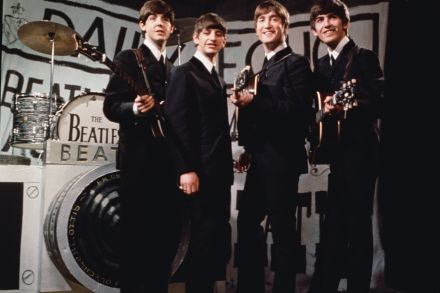
Let the Beatles be

Like most freelance writers, I have a notepad full of jottings which come under the loose category of ‘Ideas I Probably Won’t Get Round To Doing As I Doubt Anyone Will Be Interested, They’re A Bit Rubbish Anyway And It Probably Wouldn’t Pay Much’. Around halfway down this list is a book provisionally entitled A Hard Day’s Fight, in which I espouse my opinions on a plethora of Beatles-related debates, and add a few new ones of my own.

The tyranny of parcel delivery companies

Once upon a time, post was delivered by a postman or postwoman. Over the past two centuries, this quaint initiative augmented a sense of community and invested early mornings with at least fleeting human contact. These days, decades after the slow demise of letter writing, a postman is now a rather recherché figure and, thanks to Royal Mail price hikes, a symbol of luxury, despite the downgrading of his once resplendent red and blue woollen frockcoat for a synthetic combo including all-weather shorts.