Spectator Life

Spectator Life

An intelligent mix of culture, style, travel, food and property, as well as where to go and what to see.

Kate Moss refuses to apologise

According to MailOnline, Kate Moss ‘sparked fan concern as she’s spotted looking “fraught” and “on edge” at Paris Fashion Week’. Good. Kate Moss is one of the very rare celebrities who I’m interested in – because she’s one of the very few celebrities who’s interesting – but in recent years she has become a bit ‘basic’, to use the word she once tossed along with ‘bitch’ at the pilot of the EasyJet plane. Police led her away from the plane after she was caught drinking her own booze after being refused airline hooch. (‘She was not aggressive to anyone and was funny really – the crew were acting out of proportion’, said a co-passenger.

Which Saint Patrick are we celebrating?

Time was, you knew where you were with the patron saint of Ireland whose feast is 17 March. He was a Briton and he tells us in his Confessions that, when he was a teenager, he was captured by Irish slave traders and taken to Ireland, where he herded sheep. He turned to God and was told that he would escape; he duly got a passage back home. But in a dream, he heard the Irish calling out to him to come back to Ireland and walk again among them, and he knew his mission was to bring them the gospel. So he had himself consecrated bishop, returned to Ireland in AD 432 and converted the Irish in short order, with many miracles.

Andrew Tate has no place on Spotify

With more than 250 million subscribers, Spotify is by far the biggest audio streaming platform in the world – and for countless families like mine, it’s the first port of call for music, audiobooks and podcasts for children as well as adults.  In common with many apps, it has a children’s version which blocks inappropriate content for younger audiences. But in common with many parents of secondary school-aged kids, I was persuaded to remove this feature so my 11-year-old son could listen to songs by some of his favourite artists, from Oasis to Harry Styles. I had no idea that this would open him up to exposure to a step-by-step guide on trafficking women.

What my Irish passport means to me

I’m now officially Irish – the proud recipient of a shiny red passport. It arrived, with the luck of the Irish, in time for St Patrick’s Day. But as I gaze fondly at the words ‘European Union’ and ‘Ireland’ embossed in gold on the front, I do feel the awkward guilt of the hypocrite. I may have voted Remain just to avoid any upheaval but I’ve never been much of a fan of the EU. And while I’m in the confessional box, I should perhaps mention that I’m not even properly Irish – my mum was English. I’ve seldom visited the green fields of Erin and have never finished a whole pint of Guinness. So I’m afraid Paddies don’t come more plastic than me.

Why no news is good news

I’m hiding from something I used to love: the news. It’s a common tendency these days – Loyd Grossman noted it in his Spectator diary recently, calling himself a ‘nonewsnik… unable to deal with a daily diet of misery and despair’. I understand the need to escape the depressing effects of war and economic turmoil. That’s part of my own reasoning too. But my main point is slightly different: it’s not so much that the news is depressing, it’s that the news is boring. We’ve been here before. Whatever the issue, we’ve faced the same old problems and run through the same old arguments. For my 50th birthday, a friend gave me a copy of the front page of the Times from the day I was born.

How I fell for 78s

I recently made a programme about the British jazz pioneer Arthur Briggs. Yes, I know. Arthur who? The much-missed Jeremy Clarke told me: ‘If only he’d been called Arthur “Big-Boy” Briggs or “Honeydripper” Briggs, maybe things would have turned out differently.’ As it was, his name always suggested a painter-decorator from Edwardian Brixton rather than one of the hottest cornetists on the prewar jazz scene. Briggs was a Caribbean child of empire who, as a teenager, fell in with makers of the new music in New York, then after the first world war helped bring jazz across to Europe.

Good riddance to literary fiction

In case you hadn’t noticed, the London Book Fair has been gracing our nation’s capital this week, down in Earl’s Court. There, the publishers, agents and buyers of the literary globe (London is second only to Frankfurt in ‘book fair importance’) have been feverishly buying and selling the rights to hot new titles, hot new authors, maybe the odd lucky midlister, while identifying the trends, writers and genres that conceal the ultra-precious kernel of hotness to come. In today’s market it’s likely that buyers have been looking for visually rich comic books for children – enjoying a resurgence – and anything in a newish genre called ‘romantasy’ (think Fifty Shades of Grey meets Game of Thrones, with more vampires and less spanking).

We need a modern Wogan

Nowadays whenever an elderly celebrity dies – consider the death last month of Gene Hackman as a case in point – one of the first things that happens is that a chunky clip of them appearing on a talk show such as Wogan or Parkinson gets shared on social media. Before you know it, you’ve spent three or four minutes listening to them regale television-watchers of the 1970s, 1980s or 1990s with a reflective anecdote or a personal story that reveals something important or even profound about their lives and animating passions or influences.

Have you got compassion fatigue?

Experts warn that doctors like me risk a condition known as ‘compassion fatigue’ – an emotional numbness that comes from too much caring for too long. But aren’t we all on the edge? Distant hardships are now visible as they happen, and the sense that victims are everywhere becomes vividly real. Newsreaders, documentary makers, editorialists, politicians and campaigners imply we’re shallow unless consumed by the wretchedness they describe. I meet the unfortunate, struggling and afflicted on my ward rounds. And I deal with those who have been made frail by age, bad luck and bad choices. Obstetricians get flowers and wine for helping bring wonder into people’s lives, orthopaedic surgeons for fixing hips and restoring freedom. I tend not to get gifts.

What happened to BBC Radio 3?

The decline of Radio 3 makes a sad story. Established in 1967 to reflect the world of classical music, and high culture in general, it has become a swamp of mediocrity, peopled by presenters who might feel more comfortable on a pick ’n’ mix stall. Every day, in almost every way, it seems determined to forfeit the goodwill of listeners who remember what public service broadcasting used to sound like. Last week, building up to International Women’s Day, the station fluttered its feathers like a randy peacock. The Kanneh-Mason family, those latter-day Von Trapps, were on parade, and there were lashings of featherweight female composers. In the case of Florence Price, a favoured daughter, featherweight is possibly a division too steep.

Why can’t pop stars just stick to their hits?

Any old fossil like me keen on harrumphing that popular music isn’t what it used to be will have taken a certain snarky pleasure on reading that, last year, no British act figured in the world’s top ten singles or albums for the first time since 2003. To be fair, 2003 wasn’t the best year for chart music ever; Dido had the top-selling album – going 6x platinum – with Justin Timberlake, Christina Aguilera, Daniel Bedingfield and Norah Jones completing the top five. The bestselling single of 2003 was the Black Eyed Peas’ ‘Where is the Love?’, followed by ‘Spirit in the Sky’ by Gareth Gates and the Kumars, R. Kelly’s ‘Ignition’ (Remix)’, ‘Mad World’ by Gary Jules and ‘Leave Right Now’ by Will Young.

How ‘toxic’ poisoned our national conversation

There was a time when the word ‘toxic’ was applied in only a handful of circumstances. There was the stuff that occasionally oozed out of a power station into the North Sea and made the fish go funny. Or there was the substance that Christopher Lloyd would stick in the gull-wing doored DeLorean to make it go back to 1955. More prosaically there was the category of toxicity that included rat poison, bottles of bleach or those small sachets that drop out of cardboard boxes containing newly purchased electronic goods. They were generally labelled ‘toxic’ and for good reason. But then this all changed. I’m not exactly sure when it happened, but at some point in the space since Britney Spears’ 2003 hit of the same name and about five years ago, the word went bananas.

The dark side of World Book Day

What began in 1998 with Tony Blair standing in the Globe Theatre to announce a new celebration of books has morphed into something much bigger. Along with Black History Month or World History Day, tomorrow’s World Book Day is now a full member of the woke calendar. This calendar has grown – largely thanks to the UN, which spends millions inventing such initiatives – into a global non-profit industry. In March alone, we have Zero Discrimination Day, World Wildlife Day, and World Day for Glaciers. As an author of several books, I’m all for celebrating reading, poetry and especially book buying.

How Armando Iannucci lost his edge

The BBC celebrated one of its own on Monday night. Armando Iannucci was treated to a fawning retrospective by Alan Yentob, and it opened with a crass piece of TV trickery. ‘Armando Iannucci is not an easy man to pin down,’ said Yentob, as if his quarry were a master criminal or an international terrorist. ‘For ten years, I’ve been trying to talk to one of Britain’s greatest comic talents.’ Iannucci, in his heyday, would have enjoyed dissecting this sort of bombastic hyperbole. This week, he connived in the hoax. Yentob ran through Iannucci’s CV. He was raised by affluent Glaswegians (plenty of colour photographs suggesting a comfortable income), and after studying at Oxford he moved to BBC radio.

In defence of Jack Vettriano

The death of the painter Jack Vettriano at the age of 73 is sure to delight at least one art critic: the Guardian’s Jonathan Jones. Jones has consistently attacked the creator of The Singing Butler, Britain’s best-selling single image, as ‘brainless’ and ‘not even an artist’. He derided his work as ‘a crass male fantasy that might have come straight out of Money by Martin Amis.’ Nor is he alone.

The Imperial War Museum’s betrayal of history

The news that the Imperial War Museum is closing Lord Ashcroft’s Victoria Cross and George Cross gallery is sadly not a great surprise. It’s the latest act in the ‘wokeification’ of this once outstanding museum. Writing in the Daily Telegraph last week, Lord Ashcroft said that the IWM didn’t even have the ‘courtesy to inform’ him of the closure. Rather, it issued a statement in which it thanked him for his generous 15-year loan but said the exhibition will shut permanently on 1 June. The reason, explained the IWM, is to create new space ‘to allow us to share more stories of conflicts that are within many of our visitors’ living memory’.

Why Roman gladiators were the first feminists

Chiselled out of stone in around the 1st century AD, the scene in this image gives a powerful snapshot of the excitement of gladiatorial combat. In this carving found in Turkey – once a key part of the Roman empire – the opponents face each other head-on, with a look of grim determination. From behind their curved rectangular shields, both appear ready to lunge with short stabbing swords. However, this gladiatorial fight differs from what you might expect in one crucial way: both opponents are women. Look closely enough and you will see the gladiator on the left has her long hair in a plait which snakes down to a bun at the bottom of her neck.

What does it mean to be British?

The comic writer George Mikes, who died nearly 40 years ago, knew he had made it when he received a fan letter one day from Albert Einstein. Mikes, the scientist said to him, was blessed with ‘radiant humour… Everyone must laugh with you, even those who are hit with your little arrows.’ Chief among Mikes’s targets were the British people, whom the writer – a refugee from Hungary – had chosen to spend the greater part of his life among. He had come to the UK on a visit in 1938 and wisely, given what would happen to his country in the years that followed, decided never to leave. Though it describes an England now long vanished, his 1946 book How to be an Alien, a comic study of the country and its foibles, brought him fame and acceptance.

Illegal rewilders are taking over the countryside

Hardly a month goes by without a report of guerrilla rewilders at work. Lynx released in the Cairngorms, wild boar on Dartmoor, beavers everywhere and, no doubt, before long, wolves and bears – if neo-Rousseauist guerrillas can find a ready supply and achieve it without being bitten.  Usually, these illegal releases of formerly indigenous-but-no-longer-native animals are in national parks, reinforcing my view that national parks give people a state-sponsored sense of entitlement to behave as they please on private land. The fact that the vast majority of farmers are against such reintroductions seems to give added incentive to the rewilding guerrillas. The extinction of family farms at the hands of Rachel from Customer Complaints is bad enough.

Boring jobs are good for you

More than one in five people in the UK is out of work at the moment. As lockdowns lifted, many people developed anxiety and depression – most of which can be alleviated by companionship, routine and having your own cash. What I can’t understand is young, fit people not working. From the age of 13, I stood in a cake shop every Sunday, boxing pâtisserie for affluent customers. The old lady who owned the shop would mutter for us to hurry up as there was a queue. It was a knackering job, being on my feet all day, and the owner didn’t trust her charges to work the till. So we had to hand the money to her, she would hand us the change, which we would then pass on to the customer.

Edinburgh has a snobbery problem – against the English

When I was at Edinburgh University a decade ago, a girl with a thick Surrey accent stopped me as I walked back to my room in halls. ‘Rah, have you been to the reeling society?’ she asked. ‘What makes you think that?’ I replied. ‘You’ve acquired a slight limp.’ ‘It’s the cerebral palsy, luv.’ They’re very forward, these English, I thought. Last week, Peter Mathieson, principal of the University of Edinburgh, claimed that Scots students were facing snobbery from the English. An alumnus, Dr Neil Milliken, had asked what Edinburgh was doing about ‘racial discrimination and class ridicule by self-perceived superior English incomes against native students’. He sounds jolly.

Tim Peake makes me cringe

He’s the best-known Briton ever to have boldly gone into space: the first to board the International Space Station, the first to carry out a space walk. Major Tim Peake even ran a marathon while in orbit. So why do I wince every time I hear his name?  When I was growing up, shortly after the Apollo moon landing, the portentous language of that mission – ‘The Eagle has landed’, ‘One small step’ etc – had permeated global consciousness. So when space travel was depicted in popular culture, in music and film, it was often with the atmosphere of an existential psychodrama – in Space Odyssey (Kubrick), Space Oddity (Bowie), ‘Rocket Man’ (Elton).

The comedy genius of John Shuttleworth

There is a certain comic archetype that is particularly British. The likes of Pooter, Mainwaring, Hancock, Fawlty and Brent are in a tradition – going back to Falstaff, perhaps further – of hopelessly optimistic yet socially oblivious dreamers. One such character is John Shuttleworth, created and played by Graham Fellows. For the uninitiated, John Shuttleworth is a retired security guard and aspiring singer-songwriter from Sheffield who lives with his dinner lady wife and two children, Darren and Karen. He performs mainly at hospices and drop-in centres, often for no more than his travel money. His career is inexpertly managed by his next-door neighbour with whom John enjoys a generally warm, though occasionally fractious, relationship.

Keep your paws off our cats!

It’s open season on cats. Last month the Scottish Animal Welfare Commission (SAWC) floated the idea of 'compulsory containment of cats in vulnerable areas', and added that in some new housing developments felines could be banned altogether.  The report prompted a deluge of what I am going to call catphobia, for no other reason than that I’ve always wanted to coin a new word. There is an existing word for fear of cats (ailurophobia) but this isn’t that. What’s emerged since the SAWC report was published has, rather, been more like what I might call, if I were woke, a form of anti-cat racism. But that would be silly, and I’m not woke, so I’ll just call it cat hatred.

Love is blind? The truth about dating with a disability

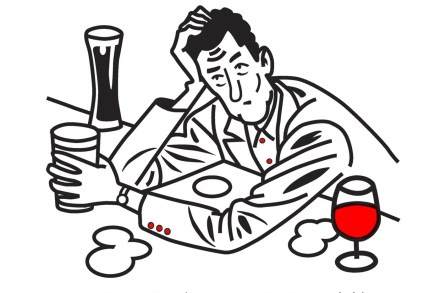
Dimly lit bars are great first-date venues for most people: the seductive ambience, the candles, the gentle clink of a martini shaker. But they couldn’t be worse for a visually impaired dater such as myself. I was born with ocular albinism and nystagmus, which renders me blind in one eye and severely partially sighted in the other. Yet, stubborn to the end, I have persevered with sepulchral bars for well over a decade now. The results have been mixed. I’ve sat down next to the wrong woman when returning from the bathroom, got lost on the way to the very same bathroom and, on one occasion, spilt an entire Bloody Mary down the front of my date. Funnily enough, she didn’t want to see me again.

What happened to children’s hobbies?

Do kids still have hobbies? Maybe hobbies isn’t quite the right word. What I mean is a passionate interest in something fairly adult, something more than playing with toys. For example, a child might get precociously into theatre or birdwatching or medieval history and have a first taste of adult enthusiasm for something. I was into magic, meaning conjuring tricks. This seemed the most interesting thing about the world, the clear pinnacle of its complicated cultural array. Why wasn’t everyone fascinated by the fact that it was possible to perform acts of seeming wizardry? The magic bug bit me when I was about 11 – who knows why. Maybe it was my uncle doing a card trick, maybe Paul Daniels on television, maybe a basic magic set someone gave me. I had to know all about it.

The perfect genius of P.G. Wodehouse’s ‘never-never land’

Pelham Grenville (PG – or Plum) Wodehouse breathed his last on Valentine’s Day fifty years ago. As Evelyn Waugh saw it, Wodehouse inhabited a world as timeless as A Midsummer Night's Dream and Alice in Wonderland. Wodehouse himself said it was as though he was forever in his last year at school. It was, Waugh said, 'as if the Fall of Man had never happened'. In a letter to some admirers, Wodehouse wrote: The world I write about, always a small one – one of the smallest I ever met, as Bertie… would say – is now not even small, it is non-existent. It has gone with the wind... In a word, it has had it. But I have not altogether lost hope of a revival. Of course, that revival never came, and Plum died aged 93, just six weeks after he was so belatedly knighted.

Generation Bland: the inevitable rise of ‘Palentine’s Day’

As we approach with anticipation or dread 14 February, the day we traditionally celebrate love and all things amorous, a certain demographic will instead be observing a rather less passionate and altogether more bland occasion: ‘Palentine’s Day’. Commemorated on 13 February, this is apparently the date upon which to honour platonic friendships instead of romantic engagements – and it’s proving increasingly popular among Generation Z. It all started with ‘Galentine’s Day’, a celebration of female friendship invented by the character Leslie Knope in American political satire mockumentary Parks and Recreation in 2010. As the concept moved from comedy to real life it morphed into the gender-neutral ‘Palentine’s’ – lest anyone should feel left out.

Never write a book

I have just finished writing a book and am moping about the house at a loose end. The conventional advice to anyone thinking about writing a book is: don’t. Unless you’re one of the 1 per cent of authors who make 99 per cent of the money, it’s a mug’s game as far as making a living is concerned. Your cleaning lady earns more per hour. So my advice is only write a book if you have an alternative source of income. One of the hardest things about writing a book is stopping. The temptation to tinker persists until the publisher screams at you to stop and mutters that publishing would be a good business if it weren’t for the authors. Still, the end is in sight, and now I need something to do.