Politics

Read about the latest political news, views and analysis

Labour humiliated by Chinese spy arrests

12 min listen

It was a bad tempered PMQs today – Kemi Badenoch attacked Starmer over his involvement, or lack thereof with the Iran conflict. And Starmer hit back at Badenoch over her questions. Not the type of unity you’d want to see on the major foreign policy issue of the day. Also today, three more arrests have been made related to Chinese spy allegations. One of them is the partner of a Labour MP Joani Reid, who has said she is ‘not part of’ her husbands business activities. James Heale speaks to Tim Shipman and Isabel Hardman.
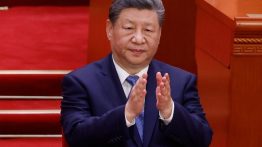
Labour humiliated by Chinese spy arrests

Parliament rocked by another China spy scandal

Oh dear. It seems that the spectre of the Chinese dragon is rearing its head over Westminster again. After three men were arrested earlier today on suspicion of spying for China, Scottish Labour MP Joani Reid has now been forced to say that she has never seen anything to make her suspect her husband, David Taylor, has ‘broken any law’. In a statement she said: I am not part of my husband’s business activities, and neither I nor my children are part of this investigation, and we should not be treated by media organisations as though we are. The Met Police took the men into custody on Wednesday morning on

Why is Keir Starmer pretending he’s a serious statesman?

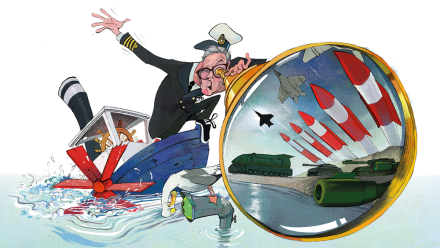
‘I’d like to remind members of the need for good temper and moderation in the language they use in this chamber.’ Sir Lindsay Hoyle began PMQs with this rather pathetic appeal to respectful debate. Given the current relationship between the Prime Minister and the leader of the opposition, it was a bit like a sincere request made to rain that it stop being wet.  The situation in the Middle East inevitably preoccupied questions. Why, asked Mrs Badenoch, were the US allowed to defend British interests and personnel, but the RAF were not. The Prime Minister loves these moments. Never mind the fact that our denuded and depressed armed forces are

Could Labour lose London?

After Gorton and Denton, where next? The scale of the Green triumph in Manchester has sent shockwaves through Sir Keir Starmer’s party. Much has been written about looming losses in Cardiff and Edinburgh. But the Greens – with their appeal to urban professionals, young Muslims and the economically disaffected – pose a threat in the place that many took to be Labour’s strongest heartland: London. ‘We have almost as many MPs there as Scotland and Wales combined,’ notes one aide. ‘Some are getting a bit nervy.’ Jitters are understandable. For ten years, Labour has ridden a wave of post-Brexit cosmopolitan feeling to boast ever-greater gains and now has 58 MPs

Why the Iran war is really about China

The question of whether America is fighting Israel’s war is perhaps the least interesting one. Strip away the noise, and a more consequential picture emerges. The United States has used overwhelming force to dismantle what had quietly become the most significant Chinese forward position outside East Asia. Over the past half-decade, Tehran transformed itself from a regional irritant into a structural component of Chinese strategic architecture. Roughly 90 per cent of Iran’s crude exports flowed to Chinese refineries operating beyond the reach of American sanctions enforcement. That revenue funded approximately a quarter of the Iranian state budget, including the military forces that Washington now considers a direct threat. China, for

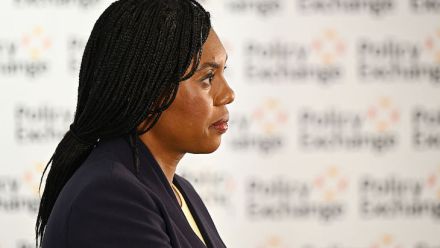
Badenoch attacks Starmer’s Iran response at PMQs

Kemi Badenoch used Prime Minister’s Questions to accuse the government of being flat-footed in its response to the war in the Middle East. The Tory leader had plenty of material to use, and she did a good job with it: running through why the UK wasn’t allowing the RAF to attack Iranian missile sites, defence spending, the spring statement and Starmer’s own weak position as Prime Minister. Starmer dug out some of his favourite lines about Tory defence spending, and ended up offering one of his rather pompous lectures on how to be a good leader of the opposition Starmer dug out some of his favourite lines about Tory defence

If only Britain was as important as Iran thinks we are

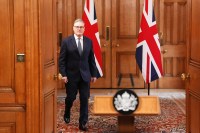
I am becoming rather fond of Prime Minister Starmer’s major foreign policy announcements. In early January, after US forces swooped into Venezuela and took President Maduro to New York to face trial, Keir Starmer was keen to get straight out in front of the cameras. There he said that he wanted to stress that ‘the UK was not involved in any way in this operation’. As though the whole world had been expecting to hear that the British armed forces were indeed central in snatching the narco-terrorist from Caracas. This week it was again Starmer’s turn to stand behind a podium, British flags behind him, and deliver another statement that

How to fix Britain’s broken protest law

The law of public protest is in a sorry state. Lawful protest should take place within clear parameters set by the criminal law, framed in part to protect the rights of others. Instead, “protest” is too often treated as a reason to disapply the ordinary law, wrongly prioritising the liberty of “protestors” over the freedom of members of the public to go about their lawful business. While the last Parliament repeatedly failed to repair this imbalance in the criminal law, Parliament now has another opportunity to address the problem, which it should take. Last week, the Supreme Court rejected a claim by protestors that they could only lawfully be convicted of glorifying

Britain has never needed an ‘Islamophobia’ definition less

For the first time, I am grateful to Zack Polanski. For, in branding Keir Starmer ‘Islamophobic’ simply for criticising Mothin Ali, he has shown just how slippery and despotic that word is. He has confirmed what most decent folk have long suspected – that accusations of ‘Islamophobia’ are a cynical ruse to shut down entirely legitimate public discussion. Starmer said not one bigoted word about Ali, the deputy leader of the Green party. Or about Islam. He didn’t diss the Koran or crack a gag about Muhammad. (All of which he should be at liberty to do, of course.) All he said is that he was ‘shocked’ to see Ali

Khamenei’s death has exposed the ugly side of British campuses

Why are students in British universities mourning Ayatollah Khamenei? The Iranian dictator’s death brought jubilant crowds of Jews and Persians out onto the streets of London. Yet, on campus, there’s a more sombre mood. Islamist extremists at British universities are working to continue the Ayatollah’s legacy Members of University College London’s Ahlul Bayt Islamic Society are grieving the ‘martyrdom’ of the Ayatollah. Khamenei’s death is described as ‘an unimaginable loss for the entire Ummah’, or global Islamic community. Students in mourning are asked to recite Surah al Fatiha, the first chapter of the Quran, ‘for our beloved Sayed’. Alarmingly, the group’s ‘mental health’ wing not only sends members their condolences

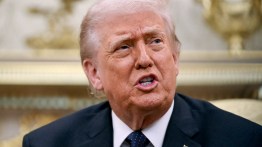
Does Trump even know why he invaded Iran?

Napoleon is supposed to have defined strategy as ‘on s’engage, et puis on voit’, loosely translated as ‘get stuck in and then see what happens’. Donald Trump is not normally deemed Napoleonic, yet in his approach to strategy he appears to have taken the great general’s precept to heart, launching initiatives without much forethought regarding consequences or further steps in the light of unexpected developments. When the consequences turn out to be unwelcome, he swiftly readjusts, discarding the initial scheme in favour of an alternative course of action, as often as not headlong retreat. Thus the swingeing Liberation Day tariff regime unveiled with much fanfare in April 2025 was swiftly suspended

Iran: Trump has a plan — does Starmer? Plus the Spring Statement fallout

40 min listen

This week: Michael and Maddie debate the escalating crisis in Iran and ask whether Donald Trump truly has a strategy – and whether Keir Starmer has one at all. They examine what Trump’s strikes are meant to achieve, whether regime change in Tehran is the real objective and why parts of the American right are uneasy about Israel’s influence over US foreign policy. Turning to Westminster, they assess Britain’s response. Has Starmer struck the right balance between caution and credibility – or has the crisis exposed the limits of Britain’s military strength and global influence? Finally, they review Rachel Reeves’s Spring Statement. With growth forecasts under scrutiny and public spending

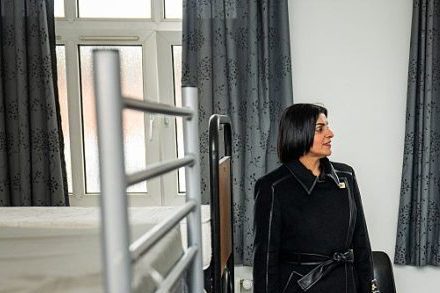
Does Labour have the stomach for Mahmood’s asylum policy?

As of Monday, migrants arriving in Britain no longer have the right to claim permanent asylum. Home Secretary Shabana Mahmood has changed the rules so that now migrants will be eligible only for temporary refugee status. Asylum seekers’ applications will be reviewed every 30 months, and they could be returned to their country of origin if it is deemed safe. There are caveats. People who have already submitted an asylum claim (100,000 submissions in 2025) are not affected by the new rules. Nor are unaccompanied children, who will continue to receive five years’ protection. Mahmood hopes that these new measures will weaken the appeal of Britain to migrants. She has

Misplaced confidence is Rachel Reeves’s calling card

‘Mr Speaker, this government has the right economic plan for this country.’ It’s never a good sign for a sombre economic statement when your opening line gets a hearty laugh.  Rachel Reeves stood up to give a Spring Statement on the economy which might just as well have been a hostage video. The Chancellor’s delivery is redolent of the stop-start of traffic near a recent road accident. If you play certain Black Sabbath records backwards you get a more convincing and comforting delivery than Rachel Reeves talking about the economy. Reeves kept on talking about how the world was ‘increasingly dangerous’ and ‘uncertain’. Once again, there was a dark comedy

Where was the imagination in Reeves’s Spring Statement?

Today’s Spring Statement was intended to be the anti-Budget: no rabbits, no leaks, no lengthy speeches. After last November’s disaster, the Office for Budget Responsibility (OBR) was not entrusted to upload a copy of the Chancellor’s speech; even the name of the ‘Spring Statement’ was rebranded by Treasury spin doctors as a simple unexciting ‘forecast’. Rachel Reeves will gain some satisfaction that she achieved her primary goal: she got through her speech without committing much in the way of news. But the Chancellor’s unwillingness to create a convincing narrative simply means that it is the dry prose of the Treasury watchdog which will fill the headlines instead. The OBR’s 131-page

Spring statement: everything you need to know

Spring statement: everything you need to know

12 min listen

Rachel Reeves has today delivered her much anticipated spring statement, her opportunity to address the looming energy crisis, the uncertainty in the Middle East and the crashing Labour market … unfortunately, she did none of the above. The Treasury promised that the spring statement was going to be boring – and at least it delivered on that pledge. For twenty painful minutes, Reeves rattled off her familiar lines about ‘stability’ and Liz Truss. Is this another wasted opportunity for Labour and the Chancellor? What will it mean for her own ‘stability’? Oscar Edmondson speaks to James Heale and Michael Simmons. Produced by Oscar Edmondson.

Rachel Reeves’s Spring Statement ignored Britain’s biggest problems

Rachel Reeves got what she wanted: an uneventful spring statement. It’s not even leading the homepage of the Financial Times. But that doesn’t mean it doesn’t matter. The forecasts the Chancellor read out from the Office for Budget Responsibility (OBR) do not paint a pleasant picture of Britain’s economy. Growth for this year was slashed compared with a year ago – coming in at just 1.1 per cent. Reeves seemed pleased that it then picks up to 1.6 per cent over the next few years, but that is not the kind of growth we need to turn around a country that has felt stagnant for years. By the end of the

Rachel Reeves’s Spring Statement was a wasted opportunity

In some parallel universe, a British Chancellor of the Exchequer today delivered a barnstorming Spring Statement designed to fix the energy crisis before it became critical, bring talent back from the Gulf and restore a crashing labour market. She announced that she was removing the restrictions on new licences in the North Sea and lowering the windfall tax on exploration. She was setting up a royal commission to look again at fracking. She was launching a flat-tax deal to tempt entrepreneurs back from Dubai. And she is cutting employers’ National Insurance to ease the jobs crisis. Unfortunately, in this universe we are stuck with Rachel Reeves. With her non-event Spring