Politics

Read about the latest political news, views and analysis

Q&A: Has the Equality Act created a ‘hierarchy of victimhood’?

35 min listen

To submit your urgent questions to Michael and Maddie, visit spectator.com/quiteright. In this week’s Q&A, Michael and Maddie ask whether Britain is driving its young and ambitious abroad. As more professionals head to places like Dubai in search of opportunity, they debate whether the real problem lies not with those who leave, but with the conditions pushing them out. Why do so many talented Britons feel they cannot build a future at home – and what does that say about the state of the country? Also this week: should the Equality Act be scrapped altogether? In light of Suella Braverman’s pledge to repeal it, they consider whether the law has
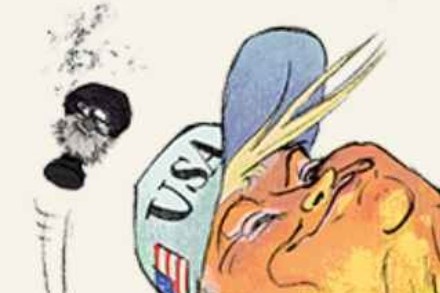
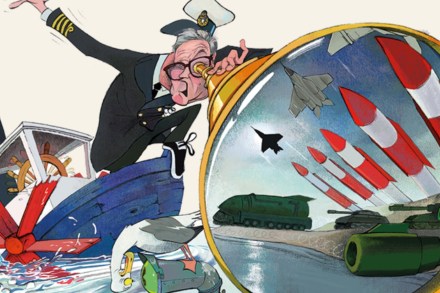
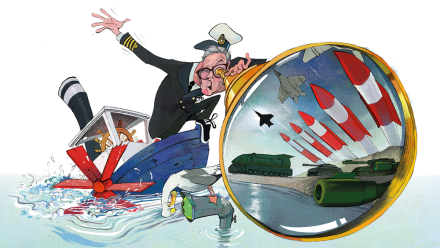
China is next – Trump’s Iran strategy explained with Maurice Glasman

Iran: Why Trump's ultimate target in this war is China – with Maurice Glasman

50 min listen

As the conflict in the Middle East escalates, what is Trump’s game plan? The Spectator’s cover piece this week, by Geoffrey Cain, argues that Trump’s ultimate target in this war is China; every dictator gone, weakens the Chinese regime. As Freddy Gray explains further on the podcast, Trump’s worldview is shaped by the events he grew up with – including then President Nixon’s visit to China in the 1970s. As well as making sense of Trump’s plan, the Spectator team take us through the dramatic events of the past week, including how Starmer appears to have alienated Britain’s allies over Iran. Plus – Lord Glasman makes the case for Reza Pahlavi, the Crown

Iran: has Starmer alienated Britain's allies?

21 min listen

As the conflict in the Middle East escalates, the British government continues to face questions about its response. Was the UK too slow to act, and if so – why? Tim Shipman reveals in the Spectator today that Keir Starmer was initially minded to approve American use of British bases but was persuaded not to by other figures, including Ed Miliband. How much damage has this done with the Americans and also wider European allies? Defence Secretary John Healey has landed in Cyprus today on a damage-limitation mission – or in a show of strength, depending on your viewpoint. Has Starmer been weakened by these events? Plus – Home Secretary

Iran: has Starmer alienated Britain's allies?

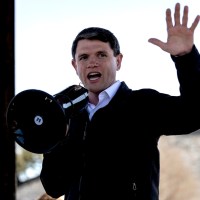
The Democrats are on the march in Texas

It’s the best of times for the Democrats in Texas and the worst of times for the Republicans. James Talarico is the Democratic candidate for the Senate while Ken Paxton and John Cornyn are headed for a nasty and expensive three-month runoff that will culminate in a runoff election on 26 May. Cornyn has made no secret of his disdain for Paxton, deeming him a ‘dead weight’. Will it be the Alamo for Texas Republicans, their last stand as the Democrats swarm over their defences to reclaim the Lone Star state and the Senate majority itself? The significance of Talarico’s victory over Jasmine Crockett can hardly be overstated. She has

Why Iran is not Iraq

At the moment, a lot of people – notably including the Prime Minister, Sir Keir Starmer – are comparing the current war with Iran with the Iraq invasion of 2003. Do they have a point? There are several common claims of comparison, some good, some bad. There is no use pretending that the decisions Starmer has made will not have vast and far-reaching consequences The principal claim is that what happened in Iraq means we should steer well clear of any further involvement anywhere. It reminds me of the final scene in that magnificent film, Chinatown. A private detective moves to intervene to stop a horror unfolding but one of

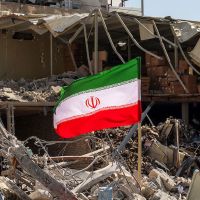
The Iran war is morphing into a regional conflict

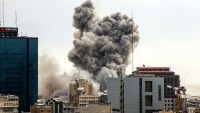
The war in the Middle East widened further over the past 24 hours, with missile interceptions stretching from Turkey to Saudi Arabia, naval clashes in the Indian Ocean and mounting pressure inside Iran itself. Nato air defences shot down an Iranian missile heading toward Turkish airspace, Saudi forces intercepted cruise missiles near Riyadh, and reports emerged that Kurdish militants may be preparing to exploit the conflict along Iran’s western border. Taken together with continuing Israeli and American airstrikes across Iran and escalating fighting in Lebanon, the developments suggest the confrontation is steadily spreading. Tens of thousands of residents have fled Tehran since the escalation began Israeli and American aircraft continued

Has Keir Starmer killed the ‘Special Relationship’?

Eighty years ago today, Winston Churchill coined the phrase ‘Special Relationship’ to describe the bond between the United States and Great Britain. That label for the close trans-Atlantic friendship, based on a common history, language and culture, and shared political and economic interests, has been repeatedly invoked ever since. Although it has frequently come under strain – notably during the Suez Crisis in 1956, and the Falklands War in 1982 – the US and UK have remained largely aligned. The two countries have broadly sung in chorus from the same song sheet. But can the ‘Special Relationship’ survive Donald Trump and Keir Starmer? Is it too much to hope that

The real problem facing Church of England liberals

Is there anything much to say about Sarah Mullally, the Archbishop of Canterbury? It seems that she is a very nice, Christian lady. She used to be Britain’s top nurse. Um, she is a brilliant manager. She is good at washing people’s feet, both for practical and ceremonial purposes. She has an awesome work-ethic. She can show emotion: she cried when telling the Church of England’s Synod about the micro-aggressions that female clergy suffer. She seems to embody the Church’s official line on the gay issue: in favour of greater inclusion, but not wanting to change the doctrine of marriage. Would the Church really risk antagonising the liberal majority, and prodding

Labour humiliated by Chinese spy arrests

12 min listen

It was a bad tempered PMQs today – Kemi Badenoch attacked Starmer over his involvement, or lack thereof with the Iran conflict. And Starmer hit back at Badenoch over her questions. Not the type of unity you’d want to see on the major foreign policy issue of the day. Also today, three more arrests have been made related to Chinese spy allegations. One of them is the partner of a Labour MP Joani Reid, who has said she is ‘not part of’ her husbands business activities. James Heale speaks to Tim Shipman and Isabel Hardman.

Labour humiliated by Chinese spy arrests

Parliament rocked by another China spy scandal

Oh dear. It seems that the spectre of the Chinese dragon is rearing its head over Westminster again. After three men were arrested earlier today on suspicion of spying for China, Scottish Labour MP Joani Reid has now been forced to say that she has never seen anything to make her suspect her husband, David Taylor, has ‘broken any law’. In a statement she said: I am not part of my husband’s business activities, and neither I nor my children are part of this investigation, and we should not be treated by media organisations as though we are. The Met Police took the men into custody on Wednesday morning on

Why is Keir Starmer pretending he’s a serious statesman?

‘I’d like to remind members of the need for good temper and moderation in the language they use in this chamber.’ Sir Lindsay Hoyle began PMQs with this rather pathetic appeal to respectful debate. Given the current relationship between the Prime Minister and the leader of the opposition, it was a bit like a sincere request made to rain that it stop being wet.  The situation in the Middle East inevitably preoccupied questions. Why, asked Mrs Badenoch, were the US allowed to defend British interests and personnel, but the RAF were not. The Prime Minister loves these moments. Never mind the fact that our denuded and depressed armed forces are

Could Labour lose London?

After Gorton and Denton, where next? The scale of the Green triumph in Manchester has sent shockwaves through Sir Keir Starmer’s party. Much has been written about looming losses in Cardiff and Edinburgh. But the Greens – with their appeal to urban professionals, young Muslims and the economically disaffected – pose a threat in the place that many took to be Labour’s strongest heartland: London. ‘We have almost as many MPs there as Scotland and Wales combined,’ notes one aide. ‘Some are getting a bit nervy.’ Jitters are understandable. For ten years, Labour has ridden a wave of post-Brexit cosmopolitan feeling to boast ever-greater gains and now has 58 MPs

Why the Iran war is really about China

The question of whether America is fighting Israel’s war is perhaps the least interesting one. Strip away the noise, and a more consequential picture emerges. The United States has used overwhelming force to dismantle what had quietly become the most significant Chinese forward position outside East Asia. Over the past half-decade, Tehran transformed itself from a regional irritant into a structural component of Chinese strategic architecture. Roughly 90 per cent of Iran’s crude exports flowed to Chinese refineries operating beyond the reach of American sanctions enforcement. That revenue funded approximately a quarter of the Iranian state budget, including the military forces that Washington now considers a direct threat. China, for

Badenoch attacks Starmer’s Iran response at PMQs

Kemi Badenoch used Prime Minister’s Questions to accuse the government of being flat-footed in its response to the war in the Middle East. The Tory leader had plenty of material to use, and she did a good job with it: running through why the UK wasn’t allowing the RAF to attack Iranian missile sites, defence spending, the spring statement and Starmer’s own weak position as Prime Minister. Starmer dug out some of his favourite lines about Tory defence spending, and ended up offering one of his rather pompous lectures on how to be a good leader of the opposition Starmer dug out some of his favourite lines about Tory defence

If only Britain was as important as Iran thinks we are

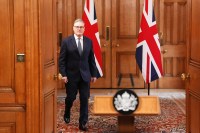
I am becoming rather fond of Prime Minister Starmer’s major foreign policy announcements. In early January, after US forces swooped into Venezuela and took President Maduro to New York to face trial, Keir Starmer was keen to get straight out in front of the cameras. There he said that he wanted to stress that ‘the UK was not involved in any way in this operation’. As though the whole world had been expecting to hear that the British armed forces were indeed central in snatching the narco-terrorist from Caracas. This week it was again Starmer’s turn to stand behind a podium, British flags behind him, and deliver another statement that

How to fix Britain’s broken protest law

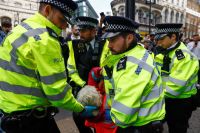
The law of public protest is in a sorry state. Lawful protest should take place within clear parameters set by the criminal law, framed in part to protect the rights of others. Instead, “protest” is too often treated as a reason to disapply the ordinary law, wrongly prioritising the liberty of “protestors” over the freedom of members of the public to go about their lawful business. While the last Parliament repeatedly failed to repair this imbalance in the criminal law, Parliament now has another opportunity to address the problem, which it should take. Last week, the Supreme Court rejected a claim by protestors that they could only lawfully be convicted of glorifying

Britain has never needed an ‘Islamophobia’ definition less

For the first time, I am grateful to Zack Polanski. For, in branding Keir Starmer ‘Islamophobic’ simply for criticising Mothin Ali, he has shown just how slippery and despotic that word is. He has confirmed what most decent folk have long suspected – that accusations of ‘Islamophobia’ are a cynical ruse to shut down entirely legitimate public discussion. Starmer said not one bigoted word about Ali, the deputy leader of the Green party. Or about Islam. He didn’t diss the Koran or crack a gag about Muhammad. (All of which he should be at liberty to do, of course.) All he said is that he was ‘shocked’ to see Ali

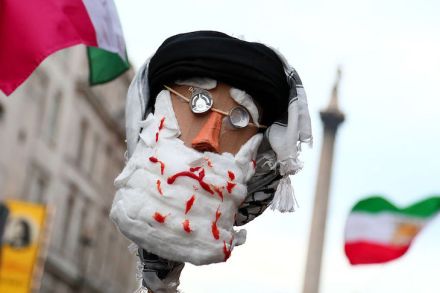
Khamenei’s death has exposed the ugly side of British campuses

Why are students in British universities mourning Ayatollah Khamenei? The Iranian dictator’s death brought jubilant crowds of Jews and Persians out onto the streets of London. Yet, on campus, there’s a more sombre mood. Islamist extremists at British universities are working to continue the Ayatollah’s legacy Members of University College London’s Ahlul Bayt Islamic Society are grieving the ‘martyrdom’ of the Ayatollah. Khamenei’s death is described as ‘an unimaginable loss for the entire Ummah’, or global Islamic community. Students in mourning are asked to recite Surah al Fatiha, the first chapter of the Quran, ‘for our beloved Sayed’. Alarmingly, the group’s ‘mental health’ wing not only sends members their condolences