Doug Stokes

Doug Stokes is Head of the School of International Relations at Modul University Vienna and Honorary Professor at the University of Exeter.

China won’t be hurt by the US blockade of Hormuz

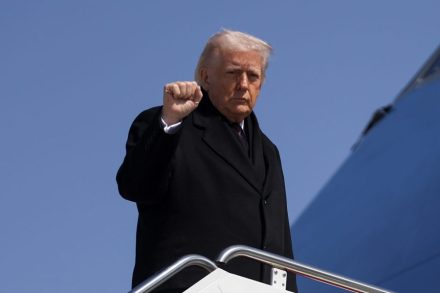
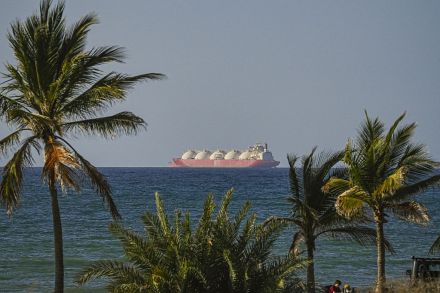
As I argued last month, the Iran war was, partially, always really about China. Not by design, perhaps, but these kinds of conflicts are not easily confined by those who start them. Any disruption to the world’s principal energy chokepoint becomes, whether Washington planned for it or not, a test of the Sino-American balance of power. The primary contest is between Washington and Beijing, and the real lesson is that China’s energy planners have been vindicated Trump’s announcement on Sunday of a naval blockade targeting all vessels entering or leaving Iranian ports, after peace talks collapsed in Islamabad, sharpens that test considerably.
What Trump gets wrong about Nato

The idea that the United States has been swindled by its Nato allies is not new. Robert Gates, in his valedictory address as secretary of defence in June 2011, warned bluntly that future American leaders might not consider the return on defence investment in Europe worthwhile. He spoke of a ‘two-tiered alliance… Between those willing and able to pay the price and bear the burdens of alliance commitments, and those who enjoy the benefits of Nato membership… but don’t want to share the risks and the costs.’ Gates was no populist. He was a career intelligence officer and establishment Republican, and his warning carried real weight precisely because it came from inside the institutional consensus rather than against it.

How Trump can ‘win’ in Iran

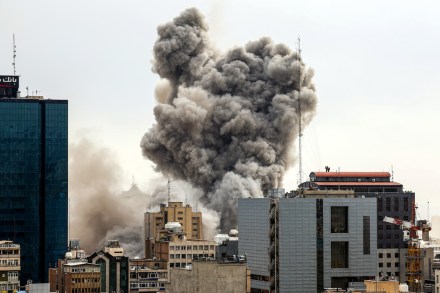
The United States is once again in a terrible predicament: a war where the definition of 'victory' grows murkier by the day, against an adversary whose advantages lie in the tyranny of geography and its determination to fight. While the US and Israel enjoy overwhelming conventional superiority, a handful of cheap Iranian drones or weaponised IRGC dinghies have been able to take America's Gulf oil allies offline and render the strategic Strait of Hormuz unnavigable. Donald Trump faces what we might call the 'Corleone problem': the don can end the war, but only if peace looks like a gift he's granting, not a price he's paying. America has been trapped by this logic before.

Why the Iran war is really about China

From our UK edition

The question of whether America is fighting Israel’s war is perhaps the least interesting one. Strip away the noise, and a more consequential picture emerges. The United States has used overwhelming force to dismantle what had quietly become the most significant Chinese forward position outside East Asia. Over the past half-decade, Tehran transformed itself from a regional irritant into a structural component of Chinese strategic architecture. Roughly 90 per cent of Iran’s crude exports flowed to Chinese refineries operating beyond the reach of American sanctions enforcement. That revenue funded approximately a quarter of the Iranian state budget, including the military forces that Washington now considers a direct threat. China, for its part, was not being philanthropic.

Maduro’s capture wasn’t about oil

From our UK edition

The image of Nicolás Maduro in US custody has inevitably resurrected the ghosts of foreign policy past. For the reflexively cynical observer, the narrative writes itself: a Republican White House, a Latin American strongman, and the world’s largest proven oil reserves. As with Iraq in 2003, the slogan of American imperialism and its 'blood for oil' foreign policy circulated on social media before the dust had even settled over Caracas. 'The overnight strikes on Venezuela,' declared the Guardian, and Trump's neo-imperial 'declaration that the US would run the country and sell its oil, have driven another truck through international law and global norms'. This is a comfortable, nostalgic critique, harking back to the heady days of 2003. It is also dangerously wrong.

The lesson Starmer should take from Trump’s foreign policy

From our UK edition

Donald Trump has this week shown that he cares more about economic interests over inherited commitments – even to allies. By contrast, Keir Starmer’s handling of the Chagos Islands dispute reveals an entirely different approach to power – prioritising diplomatic acclaim over strategic imperatives. His decision to cede sovereignty of the islands has been framed as a moral and reputational victory, despite deep concerns in Washington. While Trump’s instinct is to wield American leverage unapologetically, Starmer has sought to secure international approval at the expense of Britain’s strategic position.

America’s ‘techwokery’ is infecting its allies

America’s racial angst is transforming the politics of the West. The world is watching as Biden’s ambitious “whole-of-government equity agenda” actively repudiates key elements of the American creed. The “equity” agenda conflates equal outcomes with equal opportunities. “Justice” is thus imposed by technocratic elites who, like the apparatchiks of the empire the US defeated in the Cold War, are a class with special privileges. As Vice President Kamala Harris explains, under the new “equity” regime, all Americans will “end up in the same place.” An unholy alliance of technocratic management and the woke sacralization of historically oppressed groups is creating a new form of American governance: call it “techwokery.

techwokery

Universities should resist calls to ‘decolonise the curriculum’

From our UK edition

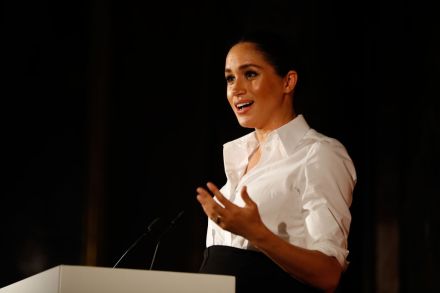
Meghan Markle has reportedly backed calls to ‘decolonise the curriculum’. This campaign to promote ethnic minority thinkers in place of 'male, pale and stale' academics also has support from the Labour party. Angela Rayner, shadow education secretary, has said that 'like much of our establishment, our universities are too male, pale and stale and do not represent the communities that they serve or modern Britain'. If Labour comes to power, Rayner promised to use the Office For Students to change things. But this move to ‘decolonise the curriculum’ is in fact a big mistake. Firstly, the campaign conjures up images of dusty old men engaged in an unconscious conspiracy to ensure ‘non-western’ worldviews are stamped out.