Politics

Read about the latest political news, views and analysis

Hamas is exploiting the freedoms it wants to destroy

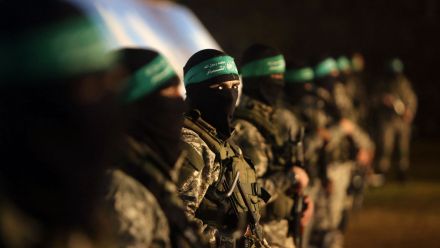
In any sane world, it would be dismissed as grotesque fantasy: Hamas – the Iranian-backed terror group responsible for the 7 October massacre – petitioning British courts to lift its designation as a terrorist organisation. But this is one of those times it seems the entire world has gone mad.  For here we are, in Great Britain, witnessing Hamas, aided by British lawyers, seeking to launder its blood-soaked record under the false banners of ‘liberation’ and ‘resistance’. This is not mere absurdity. It is a direct assault on the integrity of British democracy – and on very survival of western civilisation. While our principles of justice rightly insist that all

British Steel and the death of dim-witted globalisation

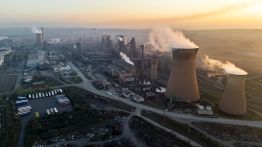
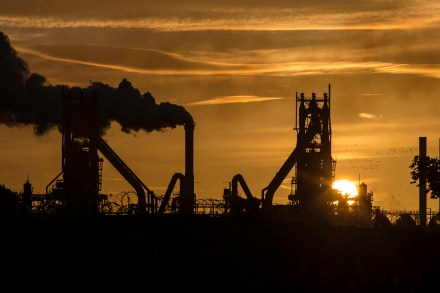
The dewy-eyed and rather dim-witted vision of globalisation is dead, I think for good. Labour is to effectively re-nationalise British Steel in Scunthorpe and in making the announcement that Parliament was to be recalled, Sir Keir Starmer said: ‘This afternoon, the future of British Steel hangs in the balance. Jobs, investment, growth, our economic and national security are all on the line.’ The crucial part of that sentence is ‘national security’: an acceptance that trade does not happen in a vacuum, separated from the rest of life. It was always contingent. It was never sensible to have the Chinese running our only virgin steel blast furnace, just as it was

The HMP Frankland attack should never have happened

How do you break the rule of law inside our jails? You could do worse than try to murder a prison officer on duty, which by all accounts nearly came to pass yesterday. The terrorist Hashem Abedi, the brother of the Manchester Arena bomber, reportedly came within seconds of doing so in a frenzied attack on prison officers in the separation unit of HMP Frankland. Three were sent to hospital, seriously injured by a combination of stab wounds and burns from hot oil. I know a thing or two about separation units. I called for their creation when I did an independent review of Islamist extremism in our prisons, as

Dozens dead after Russian strike on the city of Sumy

Two Russian missiles loaded with cluster bombs hit the city centre of Sumy this morning – on Palm Sunday, when Ukrainians traditionally go to church ahead of Easter. At least 32 people were killed, including two children. More than 80 were injured. The deadliest hit was on a trolleybus, pictured above. After the strike, a Russian military blogger calling himself ‘Terem’ posted this: ‘My opinion as a good Christian – the Russians must destroy these people. They are preventing us from building the Third Rome… they must pay with their blood. The end justifies the means.’ The attack on Sumy comes just a week after another Russian Iskander missile, also

‘Nationalisation in all but name’: the blame game over British Steel

11 min listen

Parliament was recalled from Easter recess for a rare Saturday sitting of Parliament yesterday, to debate the future of British Steel. Legislation was passed to allow the government to take control of the Chinese-owned company – Conservative MP David Davis called this ‘nationalisation in all but name’. Though, with broad support across the House including from Reform leader Nigel Farage, the debate centred less around the cure and more around the cause.  Katy Balls and James Heale join Patrick Gibbons to discuss the debate, the political reaction and how much of a precedent this sets for Starmer.  Produced by Patrick Gibbons.

Why Spain is cosying up to China

‘You’ll be cutting your own throat,’ US Treasury Secretary Scott Bessent warned countries thinking of aligning with China. The remarks were made just before Spain’s prime minister, socialist Pedro Sánchez, arrived in Beijing on Thursday with a delegation of ministers, seeking to boost trade, attract investment, and to position Spain as the EU’s chief interlocutor with China. Bessent’s threat came as no surprise. President Trump had just lifted global tariffs above 10 per cent for 90 days for everyone except China, which instead now faces a staggering 145 per cent rate. Bessent’s message couldn’t have been clearer: any friend of our enemy is an enemy. To an extent the hostility

Can Trump reach a nuclear deal with Iran?

On Saturday, Iranian and American diplomats met in Oman to discuss a nuclear deal. The talks were a clash of styles, tone and substance. In the past, talks in locations like Vienna allowed the international press to watch the Iranian and American delegations leaving and arriving at different hotels. This time, the discussions are hidden away from prying eyes and journalists inside Muscat’s palaces.  Iran’s foreign ministry began by seeking to tightly control and dominate the early media narrative. Iranian diplomats told media outlets that the talks took place in a positive atmosphere. These Iranian expressions of optimism were commonplace during the Iran nuclear deal revival negotiations from 2021 to

How could the HMP Frankland attack happen?

On Saturday, an awful assault took place at HMP Frankland. According to a statement from the Prison Officers’ Association (the union for frontline jail staff), Hashem Abedi, brother of the Manchester Arena bomber, allegedly committed an unprovoked attack on three prison officers. It seems he  ‘threw hot cooking oil’ over them, and then used ‘home made weapons’ to stab them. According to the union, the officers ‘received life threatening injuries, including burns, scalds and stab wounds’. All three officers were rushed to hospital. As of 6 p.m. yesterday evening the Ministry of Justice confirmed that one officer, a woman, has been discharged, and two are still being treated. The Lord

Why do the French hate J.D. Vance so much?

At the start of the month, J.D. Vance delivered the address at the Heritage Foundation in Washington for the premiere of a documentary. ‘Live Not By Lies’ is based on the book by Rod Dreher, who is a friend of the American Vice President’s. Vance informed his audience that backstage Dreher told him of a recent interview he had given to a French newspaper. Broadcast on Le Figaro’s online channel, Dreher was described in the tagline as an ‘American intellectual and friend of J.D. Vance’. As Vance joked, maybe that ‘was meant to tarnish [him] in that country’. It may have been. France does appear to have an axe to

North Korea will never give up its nuclear ambitions

Earlier this week, Kim Yo Jong proclaimed that North Korea has no intention of abandoning its nuclear weapons. ‘If the US and its vassal forces continue to insist on anachronistic denuclearisation… it will only give unlimited justness and justification to the advance of the DPRK aspiring after the building of the strongest nuclear force for self-defence,’ she said, adding that North Korea’s nuclear status could ‘never be reversed by any physical strength or sly artifice’. This may have been stating the obvious, but this declaration by Kim Jong Un’s vitriolic sister dashed any optimistic hopes that the arrival of a new administration in Washington could lead to Pyongyang treading one

Transport Minister admits texting while driving double-decker bus

Just what is it with Labour and transport? Less than five months after Louise Haigh was forced to resign as Secretary of State for her missing phone debacle, now another tech-loving transport minister is in hot water again. This time it is Peter Hendy, ennobled last summer and instilled as a junior minister at the Department for Transport. But it seems that roads could be the undoing of the new Rail Minister, according to the Times. The paper reports that Hendy has now admitted using a mobile phone at the wheel of a double-decker bus before subsequently reporting himself to the police. He was spotted texting a friend by a passenger

The steel debate was an unseemly blame game

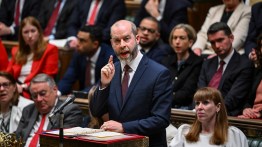
In the end, it was David Davis who said it best. Today’s emergency debate on how to save British Steel’s Scunthorpe plant amounted to a ‘nationalisation in all but name Bill’, with new measures amounting to a ‘reprieve, not a rescue’. Jonathan Reynolds, the Business Secretary, did a decent job of affecting reluctance at the sweeping powers being handed to him to order Chinese owners Jingye to buy the raw materials to keep the plant’s two blast furnaces going. ‘I do not want these powers any minute longer than is necessary, but I do need these powers to rectify and save this situation’, he told the House. But, in the

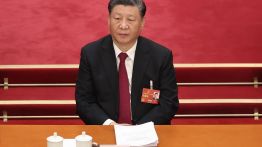
What is Xi Jinping planning?

Shanghai port is the busiest in the world. Activity there is closely monitored by financial analysts distrustful of official statistics and looking for clues as to what is really happening in the world’s second largest economy. For the past few days they will have been taken for a wild ride. First there was mayhem as ships rushed to load up with containers, half of them destined to the United States, in an effort to beat tariff deadlines. By this weekend the place is reportedly at a near standstill. ‘Containers that missed the narrow window now sit idle in stacks along the docks. Many shippers are either pulling cargo back or

Nationalising British Steel won’t fix a thing

There will be some stirring speeches about saving jobs. There will be lots of grand rhetoric about securing a great British industry. Who knows, some of the more mischievous Labour backbenchers may even break out into a chorus on the Red Flag. Parliament will vote on Saturday in favour of an emergency bill that will effectively take British Steel back into public ownership, and pave the way for full-scale nationalisation. There is just one catch. It won’t actually solve anything.  British Steel has been in bad shape for more than a decade. Its Chinese owners, Jingye Group have decided it is no longer worth the vast losses it is racking

Greens grab victory in Lammy’s backyard

Westminster has a new tradition on Friday mornings: analysing council by-election results. These days, such contests rarely make for good reading for Keir Starmer, with Labour now losing votes to every other parties across the country. Two council wards were of particular note this week. The first in Longdendale, Tameside in Greater Manchester saw Reform storm to victory with 47 per cent of the vote, with Labour’s share collapsing to just 25 per cent. Watch out Ange…. But it was another contest in the nation’s capital that caught Steerpike’s eye. For on the same night that Labour was shedding votes up north, they were losing a safe seat down south

Farage is leading Labour’s policy

For Reform’s supporters drawn from the right of the Conservative party, Nigel Farage’s call to nationalise British Steel never made much sense. Why return Britain to the days of pre-Thatcherite Britain, when loss-making industries were propped up by the taxpayer as they gradually became less and less competitive globally? Yet the political value of Farage’s policy has now become plain. With the government recalling parliament to pass emergency legislation to take control of the ailing British Steel – said by its Chinese owners, Jingye, to be losing £700,000 a day – Farage can now be seen to be leading Labour party policy. He has given a huge kick to a

Tariff turmoil: the end of globalisation or a blip in history?

17 min listen

Globalisation’s obituary has been written many times before but, with the turmoil caused over the past few weeks with Donald Trump’s various announcements on tariffs, could this mark the beginning of the end for the economic order as we know it? Tej Parikh from the Financial Times and Kate Andrews, The Spectator‘s deputy US editor, join economics editor Michael Simmons to make the case for why globalisation will outlive Trump. Though, as the US becomes one of the most protectionist countries in the developed world, how much damage has been done to the reputation of the US? And to what extent do governments need to adapt? Produced by Patrick Gibbons.

Merz’s coalition treaty is an empty, promise-free shell

It took just over six weeks for the new German coalition to form. That is very quick: in the past it has often taken months for parties to come to an agreement after elections. So what has made this process so smooth? I would like to think it was a sense of urgency, but I suspect it’s more to do with the programme being easy to agree on. The coalition treaty put together by the CDU and SPD parties is decidedly non-committal and unimaginative – a far cry from the change voters were promised. The 146-page document had barely been released on Wednesday before one of its architects warned that