Politics

Read about the latest political news, views and analysis

‘The art of the deal’?

15 min listen

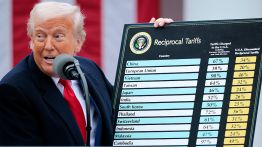
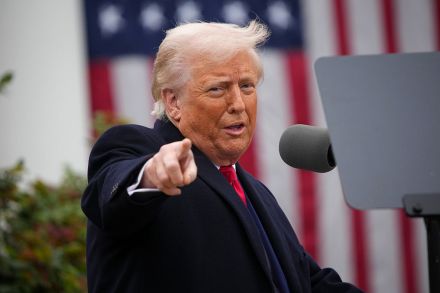
Two days ago, talk of a 90-day pause on Donald Trump’s ‘reciprocal tariffs’ was branded ‘fake news’ by the White House. But yesterday, the President confirmed a 90-day pause on the higher tariff rates on all countries apart from China. There is some confusion about whether this was The Donald’s plan from the start – although the safe assumption is that it wasn’t, and that someone senior in the White House sat him down and explained the market chaos he has caused. Is this ‘the art of the deal’? Regarding China, the President wrote: ‘Based on the lack of respect that China has shown to the World’s Markets, I am
Don’t expect much from Wes Streeting’s waiting list purge

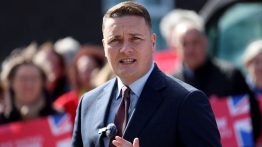
Well, that’s one way to reduce NHS waiting lists: to kick off a load of patients whom you have decided don’t need to be on them. New NHS chief executive John Mackey has ordered that everyone on a waiting list must be ‘validated’ – with the aim of removing 300,000 of the 7.43 million names on them. Examples given are people who have already been seen privately and have no further need for NHS treatment, people who have instead sought help in A&E, people who no longer have symptoms or those who could be seen ‘in the community’ instead (i.e. at GP surgeries or clinics). Many of the names which have

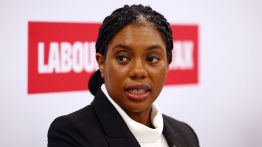
Watch: Badenoch blasts Beeb over Adolescence questions

The progressive class’s obsession with Adolescence continues – and Tory leader Kemi Badenoch is having none of it. When Badenoch appeared on BBC Breakfast this morning to discuss her party’s local election campaigns, presenters were quick to quiz the parliamentarian on her thoughts on the Netflix series, which has been lauded by Labour MPs – including the Prime Minister himself – for highlighting the perils of toxic masculinity. But the Conservative leader was quick to dress down her interviewers for their preoccupation with the, er, fictional show… While Sir Keir Starmer praised Netflix bosses earlier this month for making the drama free to watch in high schools, the Conservative party

Trump’s tariff pause has given Japan time to plan its next move

Asian markets are rebounding after President Trump announced a 90-day ‘pause’ in the implementation of the ‘Liberation Day’ tariffs that had sent shock waves through the financial community. Most dizzying perhaps were events in Japan, where after a vertiginous plunge on Monday, the Nikkei surged over 8.5 per cent on this morning’s trading. Japan’s iconic companies had a good day: Toyota was up 6 per cent, Sony 12 per cent and Mitsubishi 10 per cent. Elsewhere in Asia, the South Korean KOSPI rose 6 per cent, the Hang Sang climbed 2.69 per cent, the Singapore Composite Index 1.29 per cent and Taiwan’s stock exchange was up over 9 per cent.

Donald Trump has got what he wanted

Donald Trump has peered into the abyss. The US President watched the Wall Street meltdown and the global trading system (from which America benefits as much as anyone) start to collapse, and he hit pause. The conventional narrative will be that Trump has blinked, but I think he simply got what he wanted. Yesterday’s decision to put a 90-day pause on reciprocal tariffs, while increasing the rate on China to 125 per cent, has certainly come as a relief to the markets. The S&P500 was up almost 9 per cent on the news. Investors can breathe again. It would be easy to argue that President Trump has simply chickened out

Trump shock, cousin marriage & would you steal from a restaurant?

39 min listen

This week: Trump’s tariffs – madness or mastermind? ‘Shock tactics’ is the headline of our cover article this week, as deputy editor Freddy Gray reflects on a week that has seen the US President upend the global economic order, with back and forth announcements on reciprocal and retaliatory tariffs. At the time of writing, a baseline 10% on imports stands – with higher tariffs remaining for China, Mexico and Canada. The initial announcement last week had led to the biggest global market decline since the start of the pandemic, and left countries scrambling to react, whether through negotiation or retaliation. China announced a second wave of retaliatory tariffs – to

Labour has once again betrayed grooming gang victims

Parliament’s last day before recess is usually a dull affair. A one-line whip allows MPs to return to their constituencies early and the matters for debate are deliberately parochial. When the Commons rose for Easter this week, the government could have expected attention to have been even more desultory than normal, since politicians and the media were focused on the fallout from Donald Trump’s global tariff war. Which is why it is all the more concerning that the Home Office chose that afternoon to slip out the announcement that it was retreating from its commitment to investigate the operations of grooming gangs in five local authorities. Someone must have thought

How Starmer plans to weather Trump’s storm

Since Donald Trump returned to the White House, Keir Starmer has struggled to set the agenda. The latest attempt came with the Spring Statement, but events soon overtook that when the US President announced his mass tariffs, which could derail Rachel Reeves’s spending plans. It is not yet 100 days into Trump’s secondterm, and ministers have already had to adjust rapidly to the new normal. Even without the unpredictability of decisions from the White House, government communications have proved challenging. The long-standing No. 10 director of communications, Matthew Doyle, recently stepped down. At a recent away day, his successor James Lyons spoke on the importance of moving to digital platforms

Did Trump really mean to slap tariffs on the world?

So were Donald Trump’s tariffs a negotiating tactic all along – never intended to come into force but rather as a shock tactic to bring other governments to the negotiating table? That was a popular theory before ‘Liberation Day’, but one rather snuffed out by the severity of the tariffs announced and the realisation that Trump might actually be deadly serious about wanting to price foreign goods out of US markets. Lord Hague, for example, wrote earlier this week that people had fooled themselves into thinking that Trump didn’t always mean what he said; we were naïve to think that he should not be taken literally. But with today’s announcement

Why has Trump backed down on tariffs?

Two days ago, talk of a 90-day pause on Donald Trump’s ‘recipricoal tariffs’ was branded ‘fake news’ by the White House. This afternoon, the President has confirmed a 90-day pause on the higher tariff rates on all countries apart from China. ‘Based on the lack of respect that China has shown to the World’s Markets, I am hereby raising the Tariff charged to China by the United States of America to 125 per cent, effective immediately,’ the President shared. This is an increase on Trump’s part, from the 104 per cent levy announced overnight, which China countered with an 84 per cent tariff on American imports, which is set to
Can China win the trade war against the US?

China hit back on Wednesday with an additional 50 per cent tariff on US imports, matching the extra levy imposed overnight by Donald Trump on Chinese goods. That made the running totals 104 per cent so far from Washington, vs 84 per cent from Beijing, prompting one analyst to compare them to two racing cars driving straight at each other in a high stakes game of chicken. Though in the immediate aftermath of China’s latest hike, the loudest cackling came from panicked stock markets, which continue to tumble amid a growing realisation that for the moment neither side is going to swerve. For good measure, China also added 12 more US companies to export control and unreliable entity lists, which

The EU is making a big mistake by retaliating against Trump

A Harley-Davidson will cost you a little more in France; Florida orange juice will be more expensive in Germany and American soybeans will go up in price everywhere across Europe. The European Union has decided to start taking the fight back to President Trump with a round of retaliatory tariffs. The trouble is, it is making a big mistake. Sure, we can all understand the desire to stand up to what it sees as bullying. But it is not going to win this battle.  In the wake of President Trump’s decision to impose a 20 per cent tariff on everything the EU sells in the United States, some form of

Merz’s new coalition is bad news for Germany

Today, the CDU’s Friedrich Merz has signed a coalition agreement with the Social Democrats. In doing so he has formalised the most spectacular betrayal of centre-right voters in modern German history. The document might as well be written in red ink, given how thoroughly the SPD has dominated the negotiations despite suffering their most catastrophic electoral defeat since the Wilhelmine era.  In a press conference announcing the agreement, a stuttering and visibly uncertain Merz thanked the leaders of the SPD for the ‘great work’ of the past weeks. This is not how an election winner proudly presents his new government. There was fear in his voice. This is precisely the outcome the far-right

The Republican party is dead

On Tuesday, the United States Senate Committee on Finance met to question Jamieson Greer, Donald Trump’s Trade Representative. The subject – a masterpiece of senatorial understatement and restraint – was ‘The President’s 2025 Trade Policy Agenda‘. What it meant, of course, was the sweeping and stringent tariffs unveiled by the President in the shabbily glitzy game show atmosphere of ‘Liberation Day’ the week before. The extent of the new tariff regime has unsettled many congressional Republicans. Senator Ron Johnson of Wisconsin noted to Greer: ‘We want fair trade, but I hope you reocgnise tariffs are a double-edged sword, I would argue, a somewhat blunt instrument’. James Lankford of Oklahoma cautioned

Why does Keir Starmer want to give 16-year-olds the vote?

The Labour party’s long flirtation with extending the franchise to 16-year-olds smoulders on. As Starmer told this week’s Liaison Committee: ‘We will definitely get it done, it’s a manifesto commitment and we intend to honour it.’ If true, this will be the largest change to the electorate since 1969 when the voting age was reduced from 21 to 18. It will mean around 1.5 million potential voters being added to the electoral roll. Seducing teenagers began when Labour was last in office. Back in 2007, Julie Morgan, then-MP for Cardiff North, used a Private Members’ Bill to suggest amendments to the Representation of the People Act which would lower the

Could China collapse the US economy?

Anyone who thought that government bonds would provide a safe haven from the turmoil on global stock markets has just had a rude awakening. While bond yields initially fell after Donald Trump’s ‘Liberation day’, yesterday they rebounded, with the yield on 10-year US Treasury bonds hitting 4.5 per cent – higher than they were before the crisis began. To put it another way, anyone with holdings in US government debt would initially have seen the value of their bonds rise, but now they, like most equity investors, are sitting on a paper loss. The movements in US Treasury bonds have led some to wonder: could the rest of the world

Lib Dems double down on Gail’s strategy

To Sir Ed Davey’s Liberal Democrats. The fun-loving party made headlines during the general election campaign after its party leader was pictured on paddleboards, waterslides and even a bungee jump during the lead-up to the July poll. But while the party’s strategy appeared all fun and games from afar, the Lib Dems were working far more tactically behind the scenes. Embarking on a mission to mercilessly target Tory areas, the Liberal Democrats used a rather, er, original rule of thumb to identify voters looking to jump ship: ‘Does their constituency have a Gail’s?’ Going after consistencies that housed the luxury bakery chain appeared to work in Davey’s favour – with

Could resident doctors go on strike again?

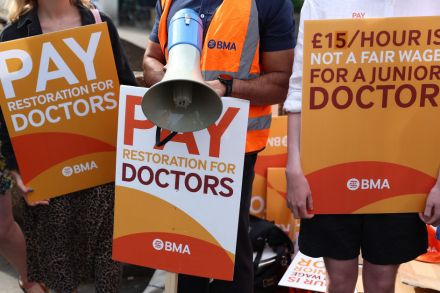
As if Prime Minister Keir Starmer didn’t have enough to worry about overseas with Donald Trump’s tariffs, now old tensions are also threatening to cause problems closer to home. The British Medical Association has announced today that its junior doctors – now referred to as ‘residents’ – have re-entered a dispute with the government over delays to pay recommendations for the next financial year. What exactly does this mean? It means that more strikes could be on the horizon.  There is no guarantee that the goodwill Streeting has built up with the doctors’ union will last indefinitely Labour Health Secretary Wes Streeting has enjoyed boasting of his successful negotiations with