Politics

Read about the latest political news, views and analysis

The three scenes from Ch4’s Brexit film that show why Remain lost | 7 January 2019

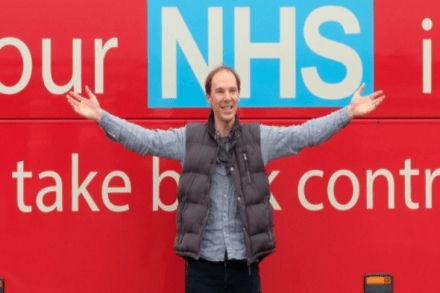
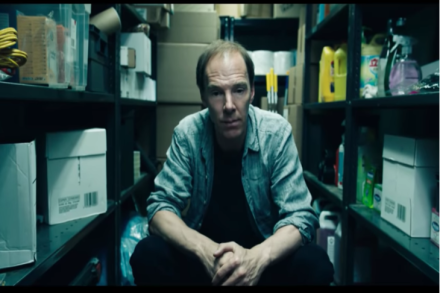
As soon as Channel 4 announced Benedict Cumberbatch had been cast as Dominic Cummings in its Brexit film, a hatchet job was expected. Some might still see it this way. I found it balanced, gripping, and at times funny, even moving. Plenty will be written about which parts were accurate and which not, but this was drama, not documentary. The story it tells is perhaps the most important story of our times: how politicians had become stuck in a late-90s time warp using a Clinton-era playbook, and thought Remain would easily win the referendum. But they lost because politics changes and the new energy was coming from forgotten voters who saw a chance to be counted. And Dominic Cummings, an outsider with contempt for the establishment, spotted this.
‘Brexit: The Uncivil War’ will please both Leavers and Remainers

It starts with a balding weirdo locked in a cupboard ranting about mythological abstractions. This is Dominic Cummings, the key figure in Channel 4’s Brexit film, The Uncivil War, and the opening scene is designed to overcome a major hurdle. How to make the audience – half of whom loathe Brexit – feel sympathy for the man credited with making it happen. Trapping him in a neon-lit cell with only his thoughts for company turns him into a tormented martyr. Next we see him being sized up as a potential director of the Leave campaign. Deep in his guts he loathes politicians – and the entire Westminster establishment – especially David Cameron and his communications chief, Craig Oliver.

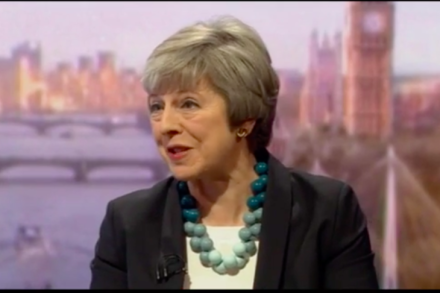
Sunday Shows Roundup: Theresa May – Meaningful Brexit vote will ‘definitely’ be in January

As MPs prepare to return to Westminster following the Christmas recess, the Prime Minister has given her first TV interview of the new year. With the deadline for Brexit fast approaching, Theresa May again put the case for her Brexit deal, on which she postponed a crucial Commons vote in December. Andrew Marr asked her if this time, the vote would definitely be going ahead: TM: Yes we are going to hold the vote... The debate will start next week and it will carry on until the following week, but we will be holding the vote. AM: We’re talking about the 15th or 14th? TM: That sort of timing, yes. However, when Marr asked if she would invite the Commons to vote for her deal again if it was rejected first time round, May was non-committal.

New Year, same old May

Theresa May doesn’t yet have anything concrete to offer MPs who have concerns about her Brexit deal. On Marr this morning, May repeatedly talked about how she was seeking ‘assurances’ on the backstop. But she clearly hasn’t got them yet. Interestingly, May indicated that the assurances she’s looking for are around a start date for the new relationship; rather than a time limit or clearer exit mechanism. This would mean that the backstop would not be ‘indefinite’ as there’d be a start date for the future trade relationship. However, this approach immediately raises two questions. First, would the future relationship apply to the whole of the UK or just Great Britain?

Jeremy Hunt’s Brexit journey – a timeline

With Theresa May promising MPs that she will not lead the party into another election (so long as it's not imminent), the race is on to be her successor. Numerous ministers have been accused of being on manouvres in recent weeks – and playing up to the Tory base. One such politician is Jeremy Hunt. The Foreign Secretary has been burnishing his newfound Brexiteer credentials of late – something that ought to appeal to the eurosceptic Tory membership. On a trip to Singapore, Hunt heaped praise on the country’s economic model, and suggested that Britain could learn lessons from it after 29 March. Hunt's rivals, meanwhile, are quick to snipe that such efforts are insincere given that he used to be Remain.

Theresa May will soon face the decision of her life over Brexit

The Prime Minister does have a strategy to prevent what she sees as the chaos of a no-deal Brexit. The flaw in it is that the strategy probably has a shelf life of just over one week. Because her strategy is to persuade MPs to back her version of leaving the EU in a vote on 15 or 16 January, and in the words of one of her senior ministers: “I will be shot for telling you this but we are going to lose that vote”. So what then? Well, amazingly, no one around her – not her ministers, not her officials – seem to know. Why not? “She won’t tell us” says a minister. “We go to see her. We give her our ideas about what to do next. She listens politely. She even asks questions. But none of us have a clue whether she agrees, whether she is persuaded.

Will Brexit really hit house prices?

On any other day of the week the Guardian is – with some justification – complaining about a housing crisis, with millions of young people priced-out of ever owning – or even renting – a decent home. Now, however, it seems to be treating with alarm news that prices are stagnating. 'UK house prices take pre-Brexit hit, says Nationwide' declared a headline this week – followed by news that house prices have, in fact, risen by 0.5 per cent over the past 12 months. That is a lot lower than we have become used to in recent decades, but isn’t it a good thing if rampant house price inflation has come to a halt? And is it really connected with Brexit? The housing market – outside London – never returned to the mania of pre-2008.

Jeremy Corbyn condemns the people of Milton Keynes

Jeremy Corbyn has a message for the people of Milton Keynes: I condemn you. The Labour leader delivered his criticism at an event in 2011 after voters in the town booted out pro-Palestinian Labour MP Phyllis Starkey. He told the audience: ‘I condemn the people of Milton Keynes for the mistakes that they made in the May election but they will have a chance for (sic) correct their mistakes hopefully in the very near future.’ https://twitter.com/TheGolem_/status/1080886732701253633?ref_src=twsrc%5Etfw Unfortunately at the two general elections since Corbyn made his comments, the people of Milton Keynes failed to learn their lesson by twice electing two Tory MPs.

What Tory members think about Theresa May’s Brexit deal

On 14 January Theresa May will resume the uphill task of getting her Brexit agreement with the European Union through the House of Commons. So far, things are not looking good for the PM. Before the Christmas break, over one hundred Tory MPs publicly pledged to vote against her deal, and the ferocious backlash it received from all quarters forced the government to delay the vote in order to avoid an inevitable, and humiliating defeat. One of the hopes in Downing Street was that the Christmas break would give everyone a chance to cool down. MPs returning to their constituencies for the festive period would speak to members of the public who would convince them to get on with Brexit and get behind May's plan.

Letters | 3 January 2019

Lords reform Sir: How astonishing that the historian Robert Tombs (‘Beyond Brexit’, 15 December) should think that the Lords might ‘at last be seriously reformed’ after more than a century of schemes that foundered in the Commons. MPs have an unthreatening upper house; they will never agree on substantial changes that would increase its power. They will leave the Lords to implement its own sensible plans to cut its numbers to 600 by bringing party strengths into line with those in the Commons over the next few years.

Why Donald Trump will step up his feud with the EU this year

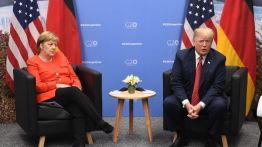
For Angela Merkel, the chief guardian of Europe’s centrist politics, 2018 was a year of tribulation – and she admits it. In her New Year's speech, the German chancellor acknowledged the hardship of the last twelve months while begging her countrymen to unite in the year ahead. “We will only master the challenges of our times if we stick together and collaborate with others across borders,” Merkel told the German people in what can only viewed as a call for the country to come together. Merkel’s words, however, don’t only apply to Germany.

Theresa May struggles to keep her DUP promise

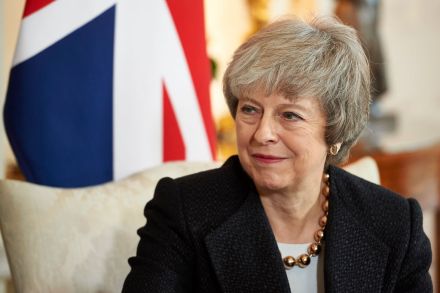
When Conservative MPs tabled a no confidence vote against Theresa May last month, the Prime Minister had to make a number of big promises in order to survive it. She pledged not to fight the next election, to find a legally binding solution to the Irish backstop – and to get the DUP back on side. This afternoon we were offered a reminder of how difficult it will be for May to keep that last promise. Following a lunchtime meeting with May, the DUP's Westminster leader Nigel Dodds issued a statement making clear that his party's 'principled objections' to the withdrawal agreement have not been resolved. He said that the proposed deal 'flies in the face of the government’s commitments on Northern Ireland as we leave the EU'.

Why Jeremy Corbyn won’t back a second referendum yet

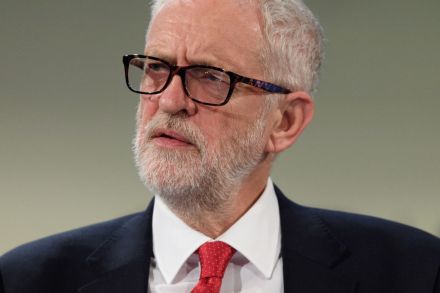
Jeremy Corbyn has come under pressure this week to back a second referendum after a YouGov poll found that seven in ten Labour members wish for it to be party policy. So far, Corbyn has resisted such calls for a so-called People's Vote. In this week's Spectator, I explain why the Labour leader is reluctant to go near one – at least for the time being. With the Tories in turmoil over Brexit, it’s quite possible — some cabinet members believe probable — that the government may soon collapse with a new general election called. This is Labour's great hope – and Corbyn hopes to trigger a snap poll by defeating the government in a confidence motion after the meaningful vote.

Will 2019 be Corbyn’s year?

It’s hard to think of a time when an opposition leader has had such a promising start to the new year. Jeremy Corbyn finds himself up against a prime minister who barely survived a confidence motion, with more than a third of the Conservative parliamentary party voting against her. The Tories have no majority of their own and have fallen out with their partner, the DUP. That same government is facing a make-or-break Brexit vote in two weeks’ time. It’s quite possible — some cabinet members believe probable — that it may soon collapse with a new general election called. All Labour needs is to be ready. In parliament, Corbyn’s closest allies are trying to do just that.

A seven-year winter or a pleasant surprise? Your guess is as good as mine

A friend reminds me that she sold her house last summer because I warned her 18 months ago that Brexit chaos would loom over every aspect of life by the beginning of 2019. I got that horribly right, and I was right too that the dismissive attitude of Westminster politicians towards the Irish border problem — call it ‘the Barnier trap’ if you prefer, but I can tell you I heard grown-up Irish voices trying in vain to alert UK ministers as long ago as September 2016 — would come back to baulk the entire negotiation. But would I care to make any sort of prediction for the three months ahead? No, I wouldn’t.

The way we were

‘The Spectator, having quite recently been a very bad magazine, is at present a very good one.’ Those gratifying words began a full-dress leading article in the Times on 22 September 1978, headed ‘On the Side of Liberty’. Its occasion was this magazine’s sesquicentenary, which we celebrated with a grand ball at the Lyceum Theatre, and much else besides. Although I can’t possibly be objective, I think that the praise was deserved. The revival of The Spectator 40 years ago was wonderful: it assured what had been the very insecure future of the paper, and it was the time of my life.

The first amendment and the internet’s free speech clash

For Silicon Valley, 2018 was defined by one impossible question: should there be limits to free speech on the internet? The first amendment is hardwired into the (American) CEOs of the big three social media sites: Twitter, YouTube and Facebook. Each platform grew its user-base with a “words can never hurt me” attitude. Back in 2012, Twitter defined itself as the “free speech wing of the free speech party”; Facebook CEO Mark Zuckerberg has defended his users' right to be wrong – even for Holocaust deniers. For years, social media platforms allowed posts that could arguably inspire real-life violence in the US, Germany and in Myanmar. But now things are changing.

Five reasons Brexiteers should learn to love the backstop

Westminster conversation about Brexit often suffers a time lag. MPs frequently speak with surprise about things that actually happened months ago and which are regarded as old, established facts in Brussels and policy wonk-world. The backstop is the best example: outlined in the December 2017 Joint Report of the UK and EU negotiators, its meaning and necessity still came as a novelty to some MPs – resigning cabinet ministers included – in June; and to others in November. (The 2017 election result is another instance: it took many Tory MPs at least a year to realise it meant there could be no Commons majority for the hardest form of Brexit; some still haven’t worked that out.

Nationalisation isn’t the solution to fixing Britain’s railways

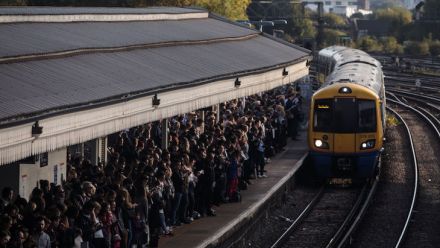
It’s the New Year, which must mean that railway fares are up again – this time by an average of 3.1 per cent. Jeremy Corbyn has said the latest price hike is a ‘disgrace’, and commuters forced to shell out more for their journeys are likely to agree. No one – not even Chris Grayling – is pretending that Britain’s railways are perfect, or that the system that they operate under does either. The Transport Secretary has in fact explicitly stated this week that ‘the franchising model cannot be the path for the future’. But at the same time, there’s something that’s not said often enough, or even at all: Britain’s rail network is actually not that bad.