Politics

Read about the latest political news, views and analysis

When it comes to Brexit, UK universities’ sums don’t quite add up

This week, Universities UK and the Russell Group, seemingly speaking on behalf of the whole sector, produced an Open Letter from distinguished vice-chancellors. ‘It is no exaggeration to suggest,’ said the letter, ‘that this [leaving the EU without a deal] would be an academic, cultural and scientific setback from which it would take decades to recover.’ Actually, it would be as exaggerated as a Donald Trump tweet. The detail of this is brilliantly demonstrated by Noel Malcolm in an analysis for Briefings for Brexit. The bit that made me burst out laughing was Sir Noel’s comparison of a similar Open Letter, from 103 university vice-chancellors, just before the referendum vote in 2016, with this week’s effort.
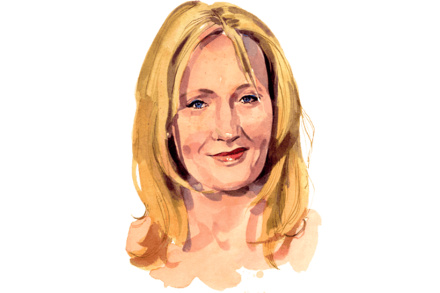
What is it about J.K. Rowling that brings out the worst in the far-left?

If hell is other people, Twitter is the Devil’s noticeboard. Occasionally, though, its asteroid-inviting awfulness unearths a little insight into human nature, specifically when our instincts clash with our ideology. Take J.K. Rowling, author of the Cormoran Strike series who has also dabbled a little in children’s fiction. The Scottish novelist is a well-kent supporter of left-of-centre causes and has backed up her conscience with her coin. Her broadsides against Donald Trump and Brexit have made her an enemy of the intemperate right.

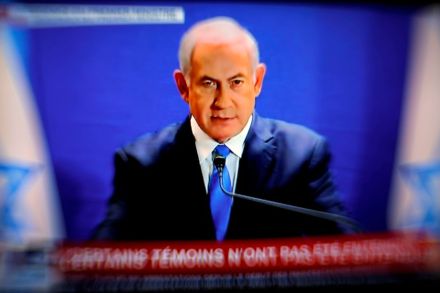
Is time up for Benjamin Netanyahu?

Benjamin Netanyahu is only the second prime minister in Israel's history to win three elections in a row, but could 'Bibi's' time finally be up? When Israel's PM called a snap election – due to take place in April – initial polls suggested that his Likud party would win twice as many seats as any other party. His victory now looks somewhat less inevitable: a new party run by former army chief Benny Gantz is gaining ground; and Netanyahu, who has been in power almost ten years, is facing a series of corruption probes that could derail him. Netanyahu's endurance has been a testament to his ability to divide the left and keep the right guessing as to what he will do next.

The politically correct tactics of the mob outside parliament

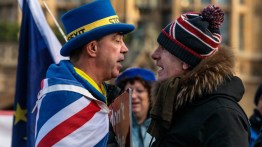
People are talking about the ugly protests outside parliament as if they are a new and strange phenomenon in British politics. The rough bellowing at politicians. The hollering of the word ‘Nazi!’ at people who clearly aren’t Nazis. The attempt to shout down politicians and journalists who simply want to make a political point. It is all so shocking and strange and un-British, commentators claim. Really? To me, the protests look and sound incredibly familiar. They look like another expression of the nasty, censorious, violent-minded political correctness that has been growing for years in this country. These protests aren’t fascism in action — they’re political correctness in action. All the elements are there.

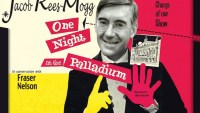
Live from the London Palladium: Jacob Rees-Mogg

Before Christmas, we at The Spectator arranged an evening with Jacob Rees-Mogg. The idea was that I’d interview him in front of our readers, and he’d take questions. After just one advert in the magazine, we sold out: a thousand tickets, gone. So, what to do? We may come to regret this, but we're doing something that, until a while ago, I’d never have expected to happen: booked the London Palladium, one of the biggest theatres in the West End, for an evening of political discussion with a backbench MP. This is all quite unusual, but we live in unusual times. And there’s a decent chance that we’ll sell out this one as well. So if you’re thinking of joining us, it might be an idea to book now (to do so, click here).

Fiona Onasanya goes AWOL

At the end of last year Labour MP Fiona Onasanya was convicted of perverting the course of justice, after lying to police about a speeding charge. She has since been suspended from the Labour party but will remain the MP for Peterborough unless she is recalled or sentenced to longer than one year in jail. In response to the verdict, Onasanya had what we might call an unusual reaction. In messages to colleagues the MP compared her plight to that of Jesus and Moses and in a newspaper column, vowed to carry on fighting as an independent MP, promising to fight this 'botched Brexit deal': 'This is why I have continued to scrutinise this botched Brexit deal: a deal that does not take back control, nor provide industry, business, and left behind communities with confidence.

Letters | 10 January 2019

The changing EU Sir: If, as Frederik Erixon writes, ‘there is a strange pre-revolutionary atmosphere in Brussels’ and ‘power will be handed back from Brussels to the nation states’ (‘The Last Heave’, 5 January), isn’t this what we have wanted and shouldn’t we delay our Brexit negotiations in order to see what happens? The Brexiteers have always said that the EU, its immigration policies and the euro are not sustainable. After the elections across Europe in 2019 the forces for change will be greater than David Cameron found. Surely we need to combine with other like-minded nations, as we have done in the past, to strengthen the forces demanding change rather than walking away, leaving us unable to influence what happens in Europe?

Rise above it

For several weeks now, a group of anti-Brexit protesters have found a way of regularly appearing on television news. They wave banners and chant slogans and try to disturb politicians being interviewed. Most MPs take it in good part. Jacob Rees-Mogg even expressed his admiration for those able to shout ‘Stop Brexit’ in a way that is picked up by microphones a hundred yards away. But when pro-Brexit protesters called Anna Soubry a Nazi, dozens of MPs wrote to the police asking them to intervene. The police issued new guidelines to officers. Broadcasters have been conducting interviews with politicians on the green outside parliament for decades. Protesters have rarely interfered. That they do so now on a daily basis is a reflection of the coarsening of political debate.

Portrait of the Week – 10 January 2019

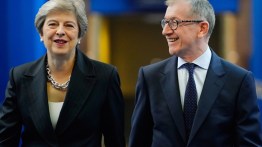
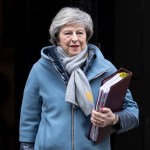
Home The government drifted towards a vote by the Commons, which it had cancelled in December, on its withdrawal agreement from the EU. British and European officials discussed extending the period under Article 50 before Britain leaves the EU, which would otherwise come into effect on 29 March. ‘We’re continuing to work on further assurances, on further undertakings from the European Union in relation to the concern that’s been expressed by parliamentarians,’ Theresa May, the Prime Minister, said. She even invited groups of MPs for a drink at 10 Downing Street to court their votes. The government was defeated by 303 votes to 296 on a cross-party amendment to the Finance Bill to limit tax-raising powers for no-deal preparations unless authorised by Parliament.

Diary – 10 January 2019

As a hack who lived and breathed the financial crisis, you might think that at the start of 2008 and 2009 I would have been more anxious about what lay ahead than I am today. Wrong. In my understanding of the mechanistic link between a bust banking system and the wallop to our prosperity, I could at least broadcast about what needed to be done to clean up the mess. A problem understood is a mendable problem. I am more unsettled today than at any time in 35 years as a journalist because of a political paralysis that makes the destiny of this nation so uncertain. The Prime Minister’s Brexit plan, which would have us pay £39 billion for a largely unknown future relationship with the EU, is set to be defeated. But then what?

My plan to end the abuse of MPs 

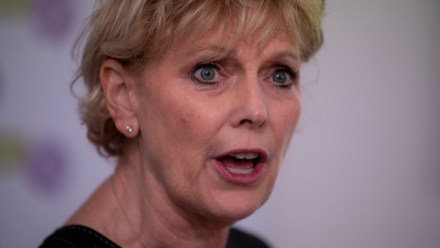
In football, a player can be sent off the pitch for violent conduct or 'using offensive, insulting or abusive language and/or gestures towards another player'. If a footballer attacks another player rather than the ball, they are disciplined. This is an accepted and acceptable approach to a game where passions run high. A similar approach could be applied to the unacceptable abuse of politicians such as Anna Soubry and a number of journalists, over Brexit. Why are standards that are applied on the sports field somehow lost in real life? By all means play the ball (whether that's Brexit, the EU itself, May’s deal or no deal) with a passion. But if you go for another player, you deserve a red card.

Has Speaker Bercow outstayed his welcome?

John Bercow has been an excellent, reforming Speaker of the House of Commons. He has supercharged backbenchers with greater use of urgent questions, for instance, and has also made Parliament more family-friendly. His pomposity while chairing Prime Minister's Questions - the endless chiding about what the public might think of MPs' behaviour, often accompanied with tedious jokes about certain members needing to take 'a soothing medicament' - was something even the MPs in question could forgive, given they had a Speaker who was making the legislature bolder. But in the past few months, there has been a shift in the Parliamentary mood.

Socially segregated Oxbridge colleges are a dreadful idea

The Guardian has published a piece by Andrew Adonis urging Oxford and Cambridge to set up ‘access colleges’ which would only admit applicants from comprehensives. I’ve long been a fan of Adonis. He did more to drive up standards in state schools as a Labour education minister than most Conservatives do as education secretaries. Unlike his partisan colleagues, he has also been wholly supportive of the free schools programme and gave me some much needed words of encouragement when I was trying to set one up. So I was disappointed to see him resurrect this old idea. The last time it was run up the flagpole, five years ago, I opposed it in an Oxford Union debate and my views haven’t changed.

Jeremy Corbyn is right. We need a general election

Brenda from Bristol, look away now. Jeremy Corbyn is pressing Theresa May to call a general election, saying: ‘To break the deadlock, an election is not only the most practical option, it is also the most democratic option. It would give the winning party a renewed mandate to negotiate a better deal for Britain and secure support for it in Parliament and across the country.’  The EU has already made clear there will be no changes to the terms and Corbyn’s election call is really a holding tactic. However, he has, inadvertently, stumbled on an inescapable truth: this Parliament is no longer capable of delivering Brexit or even of thwarting it. It is not the democratic system that has broken down but the parliamentary one.

11 times John Bercow did care about Parliamentary precedent

John Bercow ditched Parliamentary precedent when he allowed a vote to take place on Dominic Grieve's Brexit amendment yesterday. His decision caused uproar among Tory MPs, but Bercow defended the decision by saying that precedent didn't count for everything when it comes to setting the rules in the Commons. He told MPs: ‘I am not in the business of invoking precedent, nor am I under any obligation to do so. I think the hon. Gentleman will know that it is the long-established practice of this House that the Speaker in the Chair makes judgments upon the selection of amendments and that those judgments are not questioned by Members of the House. I am clear in my mind that I have taken the right course of action.

Does May even have a Plan B?

Cabinets these days are fractious affairs. Ministers take increasingly unsubtle digs at each other as they rehearse the same old arguments. But this week, Theresa May chose to have a pop at someone who wasn’t there. ‘We’re still suffering from George,’ she told her colleagues — a reference to the former chancellor George Osborne. Her complaint was that Osborne’s over-the-top threats of a punishment Budget and other such claims during the 2016 referendum campaign had made it far harder to get Tory MPs and the public to take warnings of the consequences of no deal seriously. For her, this is a big problem. Her Brexit deal will only get through because of fear of the supposed alternatives: no deal or a second referendum.

Quiet terror

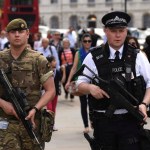
They don’t like to use the ‘Q’ word in counter-terrorism. It’s a bit like blurting out the name of the Scottish Play in a theatre. At Christmas parties, members of the security agencies insisted they had never been busier but once the year had turned and they were no longer tempting fate, they were prepared to admit that 2018 was a bit ‘quieter’. There were, for instance, far fewer arrests for ‘attack planning’, as opposed to downloading or sharing instructional and propaganda material. Last year, there were only four foiled attacks and one unsuccessful vehicle attack on Parliament. Right at the last gasp, with three hours to go to New Year, a knifeman in Manchester stabbed a couple and a police officer, but did not kill anyone.

Matteo Salvini is doing Brussels a favour with his harsh migration policy

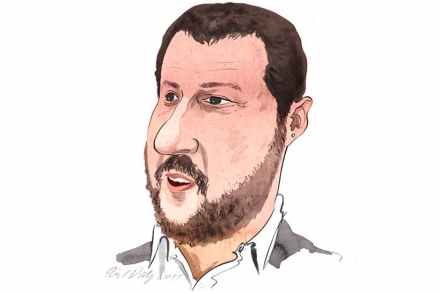
Matteo Salvini, Italy’s deputy prime minister and interior minister, is one of the most controversial politicians in Europe. The 45-year old chief of the League party exudes a down-to-earth demeanour with his common-man social media posts, in which he shares pictures of himself eating Barilla pasta and Nutella. To his many opponents, Salvini is a thick-headed, semi-fascist ideologue who wants to turn back the clock and return Europe to a dangerous form of nationalism. But to his supporters, in and out of Italy, he is a straight-talking, no-nonsense defender of his country's sovereignty against the northern elites in Berlin and Brussels.