Politics

Read about the latest political news, views and analysis

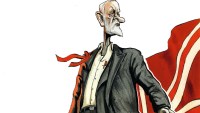
Why Jeremy Corbyn won’t back a second referendum yet

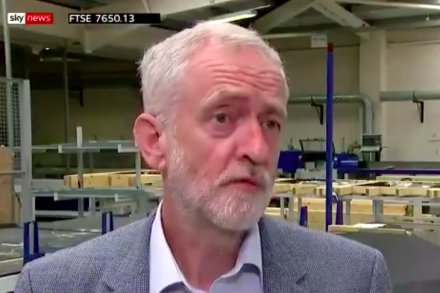
Jeremy Corbyn has come under pressure this week to back a second referendum after a YouGov poll found that seven in ten Labour members wish for it to be party policy. So far, Corbyn has resisted such calls for a so-called People's Vote. In this week's Spectator, I explain why the Labour leader is reluctant to go near one – at least for the time being. With the Tories in turmoil over Brexit, it’s quite possible — some cabinet members believe probable — that the government may soon collapse with a new general election called. This is Labour's great hope – and Corbyn hopes to trigger a snap poll by defeating the government in a confidence motion after the meaningful vote.
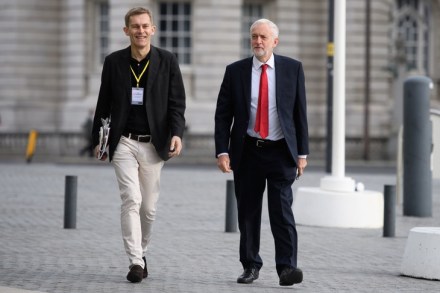
Will 2019 be Corbyn’s year?

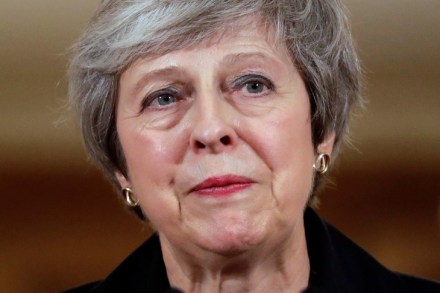
It’s hard to think of a time when an opposition leader has had such a promising start to the new year. Jeremy Corbyn finds himself up against a prime minister who barely survived a confidence motion, with more than a third of the Conservative parliamentary party voting against her. The Tories have no majority of their own and have fallen out with their partner, the DUP. That same government is facing a make-or-break Brexit vote in two weeks’ time. It’s quite possible — some cabinet members believe probable — that it may soon collapse with a new general election called. All Labour needs is to be ready. In parliament, Corbyn’s closest allies are trying to do just that.

A seven-year winter or a pleasant surprise? Your guess is as good as mine

A friend reminds me that she sold her house last summer because I warned her 18 months ago that Brexit chaos would loom over every aspect of life by the beginning of 2019. I got that horribly right, and I was right too that the dismissive attitude of Westminster politicians towards the Irish border problem — call it ‘the Barnier trap’ if you prefer, but I can tell you I heard grown-up Irish voices trying in vain to alert UK ministers as long ago as September 2016 — would come back to baulk the entire negotiation. But would I care to make any sort of prediction for the three months ahead? No, I wouldn’t.

The way we were

‘The Spectator, having quite recently been a very bad magazine, is at present a very good one.’ Those gratifying words began a full-dress leading article in the Times on 22 September 1978, headed ‘On the Side of Liberty’. Its occasion was this magazine’s sesquicentenary, which we celebrated with a grand ball at the Lyceum Theatre, and much else besides. Although I can’t possibly be objective, I think that the praise was deserved. The revival of The Spectator 40 years ago was wonderful: it assured what had been the very insecure future of the paper, and it was the time of my life.

The first amendment and the internet’s free speech clash

For Silicon Valley, 2018 was defined by one impossible question: should there be limits to free speech on the internet? The first amendment is hardwired into the (American) CEOs of the big three social media sites: Twitter, YouTube and Facebook. Each platform grew its user-base with a “words can never hurt me” attitude. Back in 2012, Twitter defined itself as the “free speech wing of the free speech party”; Facebook CEO Mark Zuckerberg has defended his users' right to be wrong – even for Holocaust deniers. For years, social media platforms allowed posts that could arguably inspire real-life violence in the US, Germany and in Myanmar. But now things are changing.

Nationalisation isn’t the solution to fixing Britain’s railways

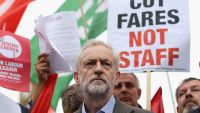
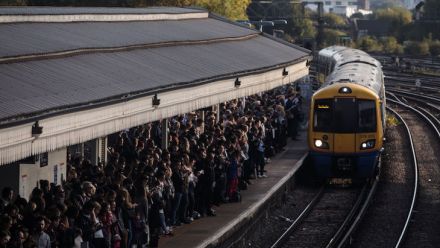
It’s the New Year, which must mean that railway fares are up again – this time by an average of 3.1 per cent. Jeremy Corbyn has said the latest price hike is a ‘disgrace’, and commuters forced to shell out more for their journeys are likely to agree. No one – not even Chris Grayling – is pretending that Britain’s railways are perfect, or that the system that they operate under does either. The Transport Secretary has in fact explicitly stated this week that ‘the franchising model cannot be the path for the future’. But at the same time, there’s something that’s not said often enough, or even at all: Britain’s rail network is actually not that bad.

The good news about Britain’s economy you might not have heard

Britain is, of course, in a Brexit-driven recession of its own making, while other EU countries are powering on ahead without us. Or so we keep being told. The ideas is that we are distancing ourselves from European markets - and concerned manufacturers will move production to factories elsewhere in the EU. While this gloomy analysis appears to be confirmed every time the CBI, IMF and others publish their forecasts, it is becoming increasingly hard to square with the economic data. This morning, IHS/Markit published its monthly Purchasing Managers’ Index (PMI) for manufacturing – a measure of business activity which leads official government statistics on the economy.

Jeremy Hunt’s Singapore pitch rubs up colleagues the wrong way

It's a new year, a new dawn, a new day – and for many Brits a fresh start. Unless you're Theresa May. The Prime Minister begins 2019 with things much the same as they were in 2018. Her party is at war over Brexit, she still has a hugely unpopular piece of legislation to pass and her rivals are circling – attempting to boost their appeal to the Tory membership in anticipation of an eventual leadership contest. After a briefing war between No.10 and the Home Office over the Christmas period – which saw details of leadership frontrunner Sajid Javid's luxury holiday wind up in the papers – it's now the turn of Jeremy Hunt to cause a stir. The Foreign Secretary is in Singapore flying the flag for Global Britain.

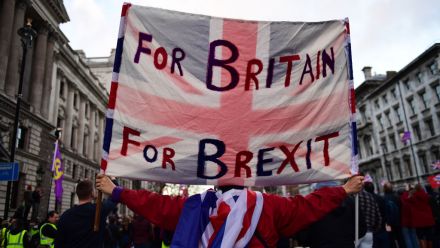
Brexit is about renewal, not just leaving the EU. And there’s no time to waste

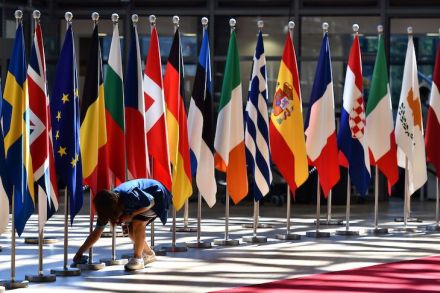
None of us can predict the potential fallout from Brexit, good and bad. What began as a vote of confidence in our institutions has shown them to be dangerously fallible. A country where people usually rub along together is now marked by a cultural and emotional rift. If Brexit does continue to dominate our politics for years, will it mean a reform of our institutions, or a battening down of the hatches by a beleaguered elite? Will the House of Lords, having alienated its natural defenders, at last be seriously reformed? Shall we try to restrain the dangerously capricious powers of prime ministers? Shall we empower local government? Both Brexiteers and Remainers will be in a rather militant mood.

Women with Balls podcast: Dame Helena Morrissey interview

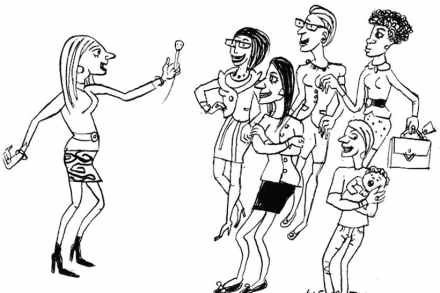
Dame Helena Morrissey has been described as the UK's own superwoman thanks to the fact that she balances a high-flying City career as a financier with bringing up nine children. She's also a rarity in the finance sector as a proud Brexiteer. So, I'm delighted to have Helena as my guest on the latest episode of Women with Balls. In the interview, Morrissey talks about what it is like being a lone voice on Brexit in her industry: 'I, maybe naively, had taken the logical extension of the work I'd done on encouraging diversity in the boardroom to mean that diversity of thought on issues like the EU referendum was to be welcomed. It became very shouty very quickly and very confrontational the whole run up to the referendum and then subsequently.

The 10 worst political interviews of 2018

2018 has hardly been a year which has inspired faith in our political class. From the bungled Brexit negotiations to botched resignations, at every turn our elected representatives have managed to outdo themselves in bids to prove how useless they can be. Nowhere has this been more apparent than in the numerous political interviews viewers and listeners have been subjected to. To see off the year, and to remind readers of how bad things were, Mr Steerpike has rounded up the ten worst (or best) interviews of 2018: 1. Alastair Campbell caught out  Following the 'People's Vote' march in October, Remainer-in-chief Alastair Campbell was in a triumphant mood. After all, when so many people had marched in favour of a second Brexit referendum, how could any government ignore them now?

The top 40 horrors lurking in the small print of Theresa May’s Brexit deal | 30 December 2018

We’re closing 2018 by republishing our ten most-read articles of the year. Here’s No. 2: Steerpike on the many problems with May's Brexit deal: Theresa May's government has teetered on the point of collapse over her proposed Brexit deal. The withdrawal agreement between the UK and Brussels led to Dominic Raab and Esther McVey resigning in protest. However, May's remaining ministers have since attempted to rally around her at least in the short term. Speaking on Friday, Liam Fox – the International Trade Secretary – gave a speech in which he declared 'a deal is better than no deal'. This is rather different to May's old claim that 'no deal is better than a bad deal'. So, is Fox right? Mr S thought it best to let readers decide for themselves.

Why Britain decided to leave the EU – but other countries haven’t | 29 December 2018

Why us? Why is the UK the first – and only – country to decide to leave the EU? Greenland, Algeria (when it was part of the French empire) and the French Caribbean island of St Barthélemy have all been in the EU and are no more, but the UK is the first full member country to hold a referendum and decide ‘enough’. Why us, and not one of the many other members nursing doubts about the EU? There are many reasons, none of which are to do with us being more inward looking or racist. We are an island, but arguably the most outward looking EU nation. We do have issues with racism, but various studies have concluded we are among the least racist countries in Europe.

Why John Redwood won’t be May’s knight in shining armour  

With Theresa May’s Brexit agreement set to return to the Commons in January, rumour had it that the government - increasingly desperate to convince Brexiteer MPs to support the deal - was considering doling out knighthoods and honours to get them to change their mind. Lo and behold, the New Year’s honours list for 2019 was announced yesterday. Just two MPs were nominated for knighthoods at the start of the year, one of which was arch-Eurosceptic and vociferous opponent of May’s deal, John Redwood, for political and public service.

Why MPs should not stop legal aid reform

There is never more excitement on the Left than when a Tory MP recants and concludes that his heartless party and its callous social policies are wrong. So it was on Friday when Nigel Evans, MP for Ribble Valley, announced that he had had a ‘road to Damascus conversion’ and realised that David Cameron’s legal aid reforms – which reduced the eligibility for legal aid – had made life harder for those who found themselves on the wrong end of a court case. It wasn’t pure altruism which had led him to this conclusion – Evans himself was acquitted on nine charges of sexual assault in 2014. While the case against him fell apart so, too, did his financial security. He complained that it had swallowed up his entire £130,000 life savings.

2018: the year that exposed the Brexit fantasies on all sides

When the tide goes out, you see who’s swimming naked. So says Warren Buffett, the folksy billionaire investor, explaining that tough times expose which firms have poor management. The same is true of politics, and especially Brexit. 2018 was the year the tide went out on Brexit, and we saw too many of our politicians' failings exposed in all their shrivelled glory. The tide was, like all tides, predictable. As we neared the end of the two year Article 50 period, the outline of a potential exit deal had to emerge, and that deal would show that, contrary to fantasy, the EU holds the better hand of cards in this game. Any agreement to leave the EU was always going to involve compromises, decisions to accept something less than what you hoped for.

Fiona Onasanya’s curious review of the year

Oh dear. Fiona Onasanya's 2018 didn't go exactly as she would have hoped with the Labour MP found guilty of perverting the course of justice, after a court found that she had lied to police about speeding to avoid putting points on her driving license. Despite the Labour whip being withdrawn, Onasanya has since compared herself to Jesus and hinted that she may continue on as an MP regardless. So, Mr S was curious to read Onasanya's review of the year for her local paper, the Peterborough Telegraph. In the article, Onasanya looks back at the big events of 'an incredibly busy, and sometimes fractious year in the House of Commons' – Brexit, universal credit and 'drastic cuts' to the local area: Curiously Onasanya doesn't find space to mention her own problems.

The Home Office must not be allowed to create a ‘hostile environment’ for EU nationals

A rather sinister tweet was sent out yesterday by the Home Office telling EU nationals that if they wanted to stay in Britain they’d best “apply” – not register – for the scheme if they "want to stay in the UK" after 31 December 2020. The tone was quite disgusting. And it raises the question as to whether, with the Home Secretary on holiday, his officials are about to launch into a “hostile environment” scheme in direct contradiction to his personal approach and UK government policy. Language matters. The phrase “hostile environment” summed up the horror of Home Office autopilot: a computer-says-no approach to immigration, with effects on human lives that will forever be a stain on the reputation of Tory government.