Morgan Meaker

The troubling rise of political violence in Saxony

From our UK edition

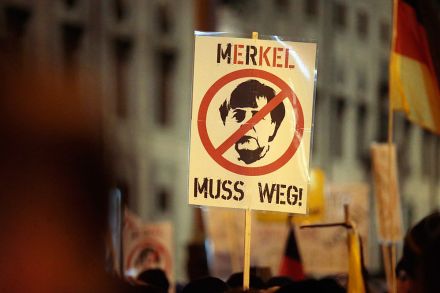
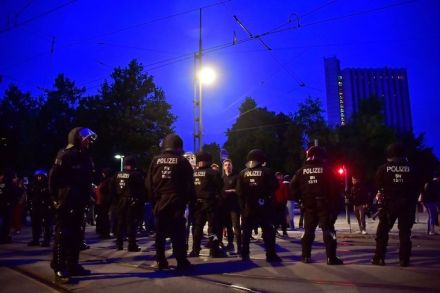
Saxony is Germany’s most troublesome state. For the past four years, this former part of the communist east has been hit by riots, weekly protests and been a symbol of the stubborn economic gulf between the country’s east and west. Now, a state election in the region on Sunday brings a fresh challenge for Angela Merkel, where her CDU party has spent the campaign jostling with the far-right AfD for the top position in the polls. Although the AfD have now fallen a few percentage points behind Merkel's party, they are a real threat to the CDU, who have governed the region for 30 years. As this year's European election campaign segued into preparations for Sunday’s vote, a sweltering summer has been strained by the spectre of violence in the state.
Spain’s populists are set to change the country’s politics for good

From our UK edition

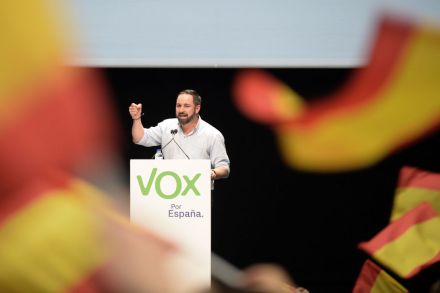
For years, southern Spain has been one of the main entry points for migrants travelling to Europe from Africa or the Middle East. Yet throughout the so-called refugee crisis of 2015 – an issue that saw populist parties across the EU gain huge support – Spain proved to be one of Europe’s few exceptions. Throughout a flurry of elections – the European elections in 2014 and general elections in 2015 and 2016 – voters were instead tempted away from mainstream parties by left-wing political upstart Podemos. Unlike the far-right in the rest of Europe, Spain’s was pretty much non-existent. Even just six months ago, the anti-immigrant, anti-feminist Vox party did not have a single councillor anywhere in the country.

The first amendment and the internet’s free speech clash

From our UK edition

For Silicon Valley, 2018 was defined by one impossible question: should there be limits to free speech on the internet? The first amendment is hardwired into the (American) CEOs of the big three social media sites: Twitter, YouTube and Facebook. Each platform grew its user-base with a “words can never hurt me” attitude. Back in 2012, Twitter defined itself as the “free speech wing of the free speech party”; Facebook CEO Mark Zuckerberg has defended his users' right to be wrong – even for Holocaust deniers. For years, social media platforms allowed posts that could arguably inspire real-life violence in the US, Germany and in Myanmar. But now things are changing.

Kosovo’s failed dream

From our UK edition

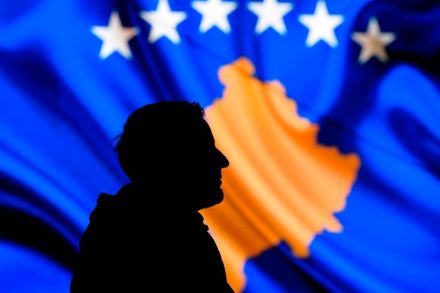
In February 2008, Europe’s youngest country declared independence as a 'multi-ethnic state'. In the aftermath of its conflict with Serbia, post-war Kosovo was shepherded towards its new identity by the United Nations, Europe and the US. The West spent 25 times more money per capita here than on post-war Afghanistan. But as the country and its ethnic Albanian majority celebrated 10 years of independence last Saturday, it’s clear that efforts to turn Kosovo into a multi-ethnic state have failed and minorities remain locked out of mainstream society. Serb and Roma minority groups are isolated in separate municipalities.

We are the people! How the German right repackaged unification

From our UK edition

‘Wir sind das Volk’ – ‘We are the people’ – has become the slogan of Germany’s disaffected. The phrase is the rallying cry of Pegida, the country’s anti-Islam protest movement. At one of the group’s first rallies in Dresden, back in 2014, it was taken up as a popular protest chant. In the disenfranchised east, it is a phrase which has gained currency since then, with Pegida and Alternative for Germany (AFD) keen to use it to exploit the widespread feeling of dislocation from central government and 'Wessis' (west Germans), who continue to be richer than their eastern neighbours.