Roger Awan-Scully

Roger Awan-Scully is a professor of political science and the head of politics and international relations at Cardiff University

Mark Drakeford still has the support of Welsh voters

From our UK edition

In the current circumstances it is strange to recall that, until very recently, a common complaint of devolved politicians in Wales – as well as academics studying devolved politics – was a lack of media attention and profile. The ill-wind of Covid-19 has blown few people much good, but has unquestionably done a lot to raise awareness of some of the realities of devolved government. There has been plenty of evidence in the past that many people in Wales were unaware that even health – on which the Welsh Government spends the majority of its budget – was devolved. Meanwhile, for his first year in the job Welsh First Minister Mark Drakeford was ‘Dr Who?

Welsh Tories are misreading the mood on Covid

From our UK edition

Responding to the Covid-19 pandemic has imposed great strains on governments and leading politicians. But, initially at least, the reaction of publics in much of the world was a supportive one; in a time of peril, many of them ‘rallied to the flag’. In some places, though, it was not entirely clear to which flag people should rally. Where there are devolved or regional governments of different parties to the national government, it was not obvious who might benefit from any public goodwill – or later on, from a possible backlash if the public judged government handling of the crisis to be inadequate.

Wales has witnessed a Tory revolution

From our UK edition

Never in modern political history has there been such a good general election for the Welsh Conservatives. The expectation before election night, shaped by the final pre-election polls, was that the Conservatives would be on the front foot. But Wales has had a very long history of Labour dominance and Welsh Labour had shown resilience in difficult circumstances before. Perhaps they would be able to do so once again? In the end, the result was better than nearly all Welsh Tories could reasonably have hoped for. The final figures saw the party gain six seats, jumping to 14 overall. All of those seats were won from Labour, who fell from 28 Welsh MPs to 22; the remaining four Welsh seats, all in west Wales, were held by Plaid Cymru.

There is a quiet Tory revolution underway in Wales

From our UK edition

Wales has been dominated by the Labour party for, quite literally, longer than anyone can remember. But the key message from the final Welsh poll of the campaign is that we could be on the verge of a genuinely historic general election outcome. The Welsh Political Barometer poll was conducted over the final weekend of the campaign and asked respondents how they would vote in the general election – with the question adjusted to take into account of the fact that not all parties are standing in all seats.

Can the Welsh Tories recover from their disastrous campaign launch?

From our UK edition

Wales has not been the source of good electoral tidings for the Conservatives for a very long time. The party last won a general election here in ’59 – that’s 1859. Since then, Wales has had successive lengthy eras of Liberal and then Labour dominance, with the Conservatives rarely able to mount a serious challenge. The last person to defeat Labour in a general election in Wales was the Liberal, David Lloyd George – just after he led Britain to victory in world war one. Since then, Labour have come first in both votes and seats in the last 26 successive general elections. For a while, early in the 2017 campaign, it looked as if things would be different.

The Liberal Democrats win the Brecon and Radnorshire by-election

From our UK edition

Were there a Most Beautiful Parliamentary Constituency in the UK award, Brecon and Radnorshire would be a very plausible contender. But Conservatives may be struggling to appreciate the aesthetic appeal of this large chunk of rural mid-Wales today. The by-election there overnight has reduced Prime Minister Johnson’s effective parliamentary majority – that is, including the DUP – to a single seat. A difficult parliamentary situation for the government just got ever-so-slightly worse. So much for the honeymoon period… In truth, the by-election result should not have been much of a shock. Brecon and Radnor has not, historically, been particularly fertile territory for the Conservative party.

Labour’s Welsh wipeout should terrify Jeremy Corbyn

From our UK edition

Elections in Wales are supposed to be boringly predictable. Until the 2019 European election, Labour had come first in 38 of the last 39 Wales-wide election contests, including all 26 of the last general elections, in a run that began in 1922. But all good – or bad – things tend to come to an end eventually. To describe what happened in the European election as an electoral earthquake in Wales seems almost to understate the magnitude of what happened. The Brexit Party, who did not even exist until six weeks ago, got more than double the Labour vote share, and came first in 19 of the 22 local authority areas in Wales.

Newport West’s by-election suggests Labour could struggle in a snap election

From our UK edition

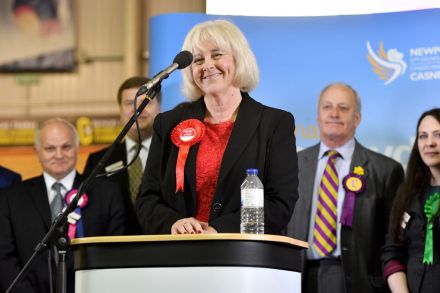
The result from the Newport West by-election came in late last night and as was generally expected Labour held the seat, albeit with a reduced majority. As had also been expected, turnout was significantly down on the general election. Here is the full result: Candidate (Party) Votes per cent (change on 2017) Ruth Jones (Labour) 9,308 39.6 (-12.7) Matthew Evans (Conservative) 7,357 31.3 (-8.0) Neil Hamilton (UKIP) 2,023 8.6 (+6.1) Jonathan Clark (Plaid Cymru) 1,185 5.0 (+2.5) Ryan Jones (Lib-Dems) 1,088 4.6 (+2.4) Amelia Womack (Greens) 924 3.9 (+2.9) June Davies (Renew) 879 3.7 (+3.7) Richard Suchorzewski (Abolish the Assembly) 205 0.9 (+0.9) Ian McLean (Social Democrat) 202 0.9 (+0.9) Phillip Taylor (Democrats and Veterans) 185 0.8 (+0.

The humiliating end to Leanne Wood’s Plaid Cymru leadership

From our UK edition

'The morning had been golden; the noontide was bronze; and the evening lead.' So said Churchill about the career of Lord Curzon. But these words could also summarise the leadership of Plaid Cymru by Leanne Wood – a leadership that came to an abrupt and rather humiliating end on Friday. Most observers of politics outside Wales, and plenty of people even within Wales, only really became aware of Leanne Wood after the televised leaders’ debates during the 2015 general election. By that point, she had actually been leader of her party for more than three years. Wood was a surprise leader – even to herself. First elected to the Welsh Assembly in 2003, she was probably best known for being booted out of the chamber for referring to the Queen as 'Mrs Windsor'.

The humiliating end to Leanne Wood’s Plaid Cymru leadership | 1 October 2018

From our UK edition

'The morning had been golden; the noontide was bronze; and the evening lead.' So said Churchill about the career of Lord Curzon. But these words could also summarise the leadership of Plaid Cymru by Leanne Wood – a leadership that came to an abrupt and rather humiliating end on Friday. Most observers of politics outside Wales, and plenty of people even within Wales, only really became aware of Leanne Wood after the televised leaders’ debates during the 2015 general election. By that point, she had actually been leader of her party for more than three years. Wood was a surprise leader – even to herself. First elected to the Welsh Assembly in 2003, she was probably best known for being booted out of the chamber for referring to the Queen as 'Mrs Windsor'.