Politics

Read about the latest political news, views and analysis

Letters: parliament has a responsibility to stop Brexit

Parliament’s responsibility Sir: I always enjoy reading the intelligent and outspoken Lionel Shriver. But her latest article (14 September) puts forward an invalid argument. As Ms Shriver points out, no one in the USA seriously argued that the disaster of Trump’s election, and the damage it could cause the country, meant the result should be contested. She compares this with the fact that many in the UK want to overturn the EU referendum result; and concludes from this that our political system is ‘broken’. But had an election been fought here, with one party promising Leave and the other Remain, few would be seriously arguing for the overturn of the outcome — whatever it was. Elections are, rightly I believe, taken more seriously than referendums.

How many Britons now vape?

Talking Turkey David Cameron again accused the Leave campaign of ‘lying’ about the prospect of Turkey joining the EU. A reminder of what he himself has said on the subject: — ‘I’m here to make the case for Turkey’s membership. And to fight for it… I will remain your strongest possible advocate for EU membership and for greater influence at the top table of European diplomacy.’ (Speech to Turkish parliament, 2010) — ‘In terms of Turkish membership of the EU, I very much support that. That’s a longstanding position of British foreign policy which I support. We discussed that again in our talks today.

David Cameron would be a winner in Ancient Greece

David Cameron is convinced he was right to call a referendum and to promise to enact it. Justifiably: there was a huge turnout and a clear winner. That’s democracy. But he has been lashing out because the referendum did not go as he hoped. This whingeing makes him look like a total loser. An ancient Greek in that position would argue he was a winner: he had kept his promise, and therefore reputation, intact. For a Greek, reputation was of the very highest importance because simply doing or being good was not enough: if people did not know about it, what was the point? As a result, Greeks often explained their motive for action in terms of the honour and renown it would bring them.

David Cameron is more authentic than Boris Johnson

I don’t recall exactly when I first met David Cameron, but it must have been in Oxford in 1985 shortly after the beginning of Michaelmas term. I was a third year at Brasenose studying PPE and he was a first year, also doing PPE. I remember him being friendly and down to earth and canny enough to keep his political views to himself. At the time, Brasenose was dominated by a group calling itself the ‘left caucus’ and while it wasn’t social suicide to be identified as a Tory, it was a bit infra dig. After Cameron twigged that we were both ‘in the closet’, so to speak, he confessed to me that he was a Thatcherite. ‘Dry as dust,’ he whispered.

Why would Britain want to be a member of a club like the EU?

The past three years of agonising non-progress on Brexit have damaged Britain in many ways. Our political institutions have looked ridiculous and, through endless uncertainty, unnerved markets. But we have also learned much about the EU. Its behaviour, and that of its officials, has served to reassure those who were uncertain about their Brexit vote that the UK could never be happy as part of this club. Better to be the EU’s greatest ally than its most reluctant and disruptive member. But post-Brexit relations will be shaped, in no small part, by the process of leaving. The Prime Minister’s trip this week to Luxembourg was a good example of what can go wrong.

The Green party’s Brexit hypocrisy

William Hazlitt said hypocrisy is the only unforgivable vice. He would surely have a field day with our current crop of politicians. But perhaps the worst of the bunch is Caroline Lucas. The Green MP responded to the Liberal Democrat’s promise to overturn Article 50 without even a further referendum by saying: Lucas is partly correct: the Lib Dem’s policy move is remarkable in its audaciousness. Jo Swinson recently told us that she could never forgive David Cameron for his decision to have an in-out EU referendum, conveniently forgetting the fact that she herself called for such a referendum back in 2008 and that nearly all Lib Dem MPs voted in favour of the EU Referendum Act in 2015.

Judgment day: the danger of courts taking over politics

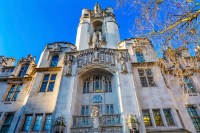
Who runs Britain? When Boris Johnson’s lawyers made their case in front of the Supreme Court this week, defending his right to prorogue parliament, they in effect brought it back to this simple question. This was a controversy for politicians to settle, not courts. Judges, they said, should think twice about ‘entering the political arena’ and unsettling the UK’s ‘careful constitutional and political balance’. He may be the first prime minister to frame the matter so starkly, but no previous prime minister has had to. This is about far more than Brexit. Britain is witnessing political litigation on a hitherto unseen scale. We have a government that has lost a working majority and is being forced by legislation to act against its own central policy.

Will the Supreme Court end the prorogation of Parliament?

At the close of Supreme Court proceedings on Thursday, there was quite a lot of to and fro about what it would actually mean if the judges find the prime minister unlawfully misled the Queen when proroguing parliament. Which was understandably interpreted by some knowledgeable observers as a signal that the judges may indeed find that Boris Johnson unlawfully prevented MPs from sitting at this critical time for the UK. The big issue they have to decide is whether they have a locus at all, whether the PM’s use of the royal prerogative to send MPs home for five weeks is - in the jargon - justiciable, or an issue for any court. The consensus among lawyers is that those arguing for the prosecution, Pannick and O’Neill, had the best of this argument.

Rachel Johnson gives Boris a Brexit solution

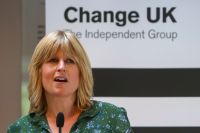
Since 2016, Brexit has been dividing families, splitting friends, ruining dinner parties. But perhaps the one family whose split over the EU has been the most public, drawn-out and frankly Shakespearean, is that of the Johnson family. While Boris is determined to take us out by 31 October do or die, his Remainer brother Jo resigned from cabinet a fortnight ago, and sister Rachel stood as a candidate for Change UK on a second referendum platform only earlier this year. Though she didn’t manage to get elected, she still has the Prime Minister’s ear. On the Spectator Podcast this week, she tells us about her suggestion to Boris about how to solve the current Brexit impasse: ‘We have a general election and a second referendum on the same day.

The Portsmouth Lib Dems will rise again

The Liberal Democrats have been going through something of a minor identity crisis as of late, after the party allowed the former Tory MP Phillip Lee to cross the aisle and join their ranks. Lee's support in the past for checking migrants at the border for HIV, and his abstention on a key vote for same-sex marriage in 2013 has led many in the party to wonder how 'liberal' a Liberal Democrat actually has to be to join the party. Happily, Mr S is on hand to inform the party that they're perhaps a more 'broad church' than many members realised.

David Cameron: I s**t at the TV over Brexit bus

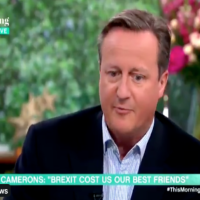
There have been plenty of revelations about David Cameron this week, from the time he questioned Michael Gove's sanity to when he got 'off his head' on dope at Eton. But Mr S thinks our former prime minister might have saved the best admission until now. On ITV's This Morning, Cameron was talking about how he reacted when he saw the Vote Leave bus with its slogan suggesting £350m should be spent on the NHS instead of going to the EU. He told Holly and Phil: “Believe me, I did more than.. I shat at the…Sorry, I shouted at the TV”   https://twitter.com/petesaull/status/1174625857056444417?ref_src=twsrc%5Etfw Mr. S feels sorry for whoever had to clean up the mess...

Why there’s still a chance of a deal

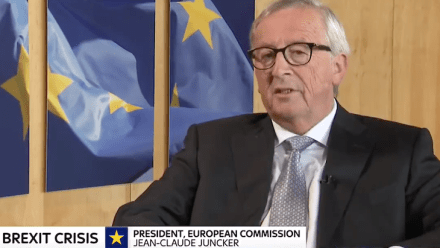
One of the reasons why Boris Johnson is Prime Minister is that he is an optimist. After the negativity of the May years, the Tory party yearned for some can-do spirit, which he was able to provide. But his relentless positivity has made it difficult to assess how realistic a Brexit deal is. At cabinet on Tuesday he made very bullish noises about the prospects of an agreement being reached. How realistic is this, though? Johnson told the assembled ministers that he’d had a ‘good lunch’ with Jean-Claude Juncker. There were chuckles. More seriously, he pointed out that the EU had shifted from its prior position, which was that the withdrawal agreement could not possibly be reopened and that only the political declaration could be changed.

I’m sorry because I failed: An interview with David Cameron

‘How have you been?’ David Cameron asks, bounding up to meet me. Fine, I say, then make the mistake of asking him the same question. His face drops. ‘Oh,’ he says. ‘Well. So-so.’ Watching the political news, he says, has been getting him down (in a way it didn’t when he was in office) and if you’ve picked up a newspaper in recent days, you’ll know why. His memoir, For the Record, is out and the extracts make it sound like a 700-page apology note to the nation. He’s sorry for the referendum result. Sorry for what came after. And above all, sorry for letting villains like Boris Johnson and Michael Gove get away with it. Standing in his jogging kit, fresh from his morning run, the former prime minister still looks a bit deflated.

My puppy-training advice for Boris Johnson

President Harry Truman once observed: ‘If you want a friend in Washington, get a dog.’ Boris Johnson, as Prime Minister in the unfriendliest era British politics has known, and his girlfriend Carrie Symonds have taken on a Jack Russell puppy called Dilyn. They and I are therefore among the 24 per cent of UK citizens who are dog-owners, with nearly nine million animals in our national ownership. Taking on a puppy in retirement, said our friends, was madness — especially in a house full of antiques and with a carefully tended garden. Certainly, the game has changed since we last raised a puppy 40 years ago. So have the overheads.

Why the UK should support free movement with Australia

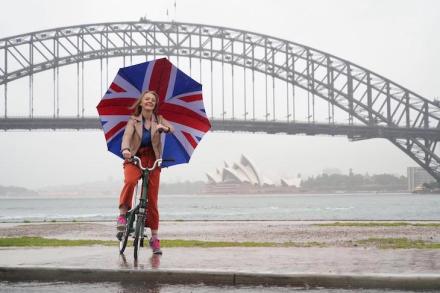
If Britain and Australia agree a post-Brexit trade deal, Liz Truss the international trade secretary has said that free movement between the two countries could form part of an agreement. In a press conference this morning in Canberra, Truss explained that 'Australians want to come and live and work in Britain, and Brits want to come and live and work in Australia'. In response to a question about free movement and the relaxation of current checks, Truss said that this was 'certainly something that we will be looking at as part of our free trade negotiations'. This potentially could take the form of pure free movement (like Australia has with New Zealand) or a visa that allows anyone who can find a job to stay (like Australia has with the United States).

Why the hard left has abolished Labour Students

To understand the move last night by Labour’s National Executive Committee (NEC) to abolish the party’s student wing, Labour Students, you need to go back in time nearly 40 years to the late 1970s and early 1980s. Then, the party’s youth section, the Labour Party Young Socialists (LPYS), had been wholly taken over by Militant, a Trotskyist entryist group. But in the student section of the Labour party (then called NOLS, the National Organisation of Labour Students), mainstream Labourites – like NOLS chairs Mike Gapes in the 1970s and John Mann in the 1980s – put together a broad coalition of democratic socialists and held back a Militant takeover of the group.

Labour’s latest bid to alienate Jewish members

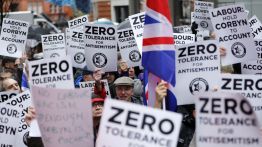
Labour has yet again shown it doesn't care about its Jewish members. Jeremy Corbyn said earlier this year that “there is no place for anti-Semitism or any form of racism in the Labour party”. But not for the first time – and not for the last – Jews who still belong to the party have been sidelined.  The latest cause for disquiet is the decision yesterday by the party's National Executive Committee. Not content with scrapping the party's student wing ahead of next week's gathering in Brighton, the NEC has now agreed new rules concerning the handling of allegations of anti-Semitism and disciplinary procedures for expelling members.

Laura Kuenssberg did her job. Leave her alone

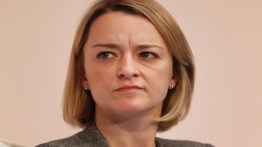
This is an article about Twitter, so you might decide to ignore it. Social media is not real life, after all, and many sensible people dismiss it as meaningless noise: 'it’s just Twitter'. But this article is also about the current state of politics and journalism, neither of which can – sadly – be discussed without reference to Twitter, so bear with me. Twitter is, to use a technical term, going batshit about Laura Kuenssberg, the BBC political editor. This isn’t the first time, and I’m sure it won’t be the last, but that doesn’t mean it’s not deserving of comment. Kuenssberg’s name is all over Twitter because of an incident at a London hospital that Boris Johnson visited today.