David Paton

David Paton is professor of industrial economics at Nottingham University Business School. He tweets at @cricketwyvern

Will vaccinating teenagers really prevent disruption to schools?

From our UK edition

After the JCVI recommended against offering vaccines to children aged 12 to 15 on health grounds, the government asked the four chief medical officers to consider the broader case, including the impact on schooling. As we know, the government has now accepted the chief medical officers’ recommendation: that all 12 to 15 year olds should be offered one dose of Pfizer on the grounds that doing so will reduce disruption to education. The government has released details of the modelling that underpins that rationale. The approach was first to estimate the number of infections with and without vaccination under different scenarios of infection spread. Next, they used this to model the number of days of lost education that could be prevented by vaccination.

The mysterious fall of the teenage pregnancy

From our UK edition

Across the globe, teenage pregnancy rates have been falling for at least the last 10 years but social scientists still don’t fully understand the reasons why. In England in 2008, about 39,000 girls under the age of 18 became pregnant, a rate of 40 per 1,000. By 2018 the rate had gone down to just under 17 per 1,000 a drop of nearly 60 per cent. Similar decreases have been seen across the developed world both near (including Ireland and many European countries) and far (the US, Australia and New Zealand), despite different policy approaches and interventions by governments.

The dangers of comparing different countries’ death rates

From our UK edition

Using differences in coronavirus death rates between countries to draw out policy conclusions is becoming a very popular pastime. Unfortunately, as Michael Baum has pointed out already in The Spectator, it is rarely a productive one. Over the weekend, Dr Elaine Doyle of the University of Limerick tried her hand, arguing that high death rates in the UK relative to Ireland reflected badly on the UK policy approach to tackling the virus. At the time of writing, the UK has reported 12,868 hospital deaths of coronavirus patients, a rate of about 193 per million, while the Republic had reported 435 hospital deaths, a much lower rate of about 89 per million. But the UK is a very different country to Ireland.

The case for ending the football coronavirus ban

From our UK edition

As the huge economic and social costs of the lockdown become more apparent, attention is understandably turning to the exit strategy and, in particular, which of the banned activities can safely be restarted. Professional sport should be one of the first items on the list. Policy disagreements over the coronavirus lockdown have been somewhat unfairly characterised as pitting epidemiologists, concerned only about public safety, against heartless economists prepared to trade the deaths of loved ones for the sake of pounds and pence. Of course, in reality, economists care about saving lives too, while public health experts understand that even health policy decisions involve some sort of trade-off in which deaths averted cannot be the only consideration.

How Boris can avoid May’s Brexit trap during EU trade talks

From our UK edition

Much of the nation breathed a sigh of relief when the exit poll was released. Whatever one’s views of the Tories, their clear majority has at least saved the country from yet more years of argument and damaging uncertainty. All the other major parties were committed to overturning the result of the 2016 referendum. At heart, the election outcome was a validation of democracy: voters do not like the sight of politicians ignoring their clear instructions that the UK must leave the EU. But despite the emphatic result, it did not take long for some to try to reframe the debate in a pro-remain direction. Boris, we were told, could use his large majority to pivot to a “softer Brexit”. Indeed, this is the eager expectation of some on the EU negotiating side.

The lure of Corbynomics

From our UK edition

With the polls seemingly reluctant to move in their favour, Labour have set out their stall very clearly: they hope to win the election by pledging perhaps the biggest increase in government spending in living memory. Billions have been promised for students and the health service. Under Corbyn, there will be free broadband for all, free personal care for the elderly and the planned increase in the state pension age will be scrapped. Economists dismiss the reasons why Britain couldn't possibly afford such measures without a dramatic hike in tax. But it would be a mistake to ignore the very real attraction to some of Corbynomics. Early signs suggest Labour’s manifesto spending pledges have done little to shift opinion polls.

What it’s like being an out-and-proud Brexiteer on campus

From our UK edition

Some were surprised when history lecturer and Brexit party candidate Kevin Yuill revealed that there were plenty of secret Brexit supporters in British universities. As another out-and-proud academic Brexiteer, I am happy to report that I too have come across my own fair share of pro-Brexit colleagues. But we should not underestimate the isolation that many of those Leave supporters feel within the world of higher education. One consequence of being open about my views is that it has led to people of all political persuasions contacting me, often out of the blue, keen to discuss Brexit. Some are critical. Others are just intrigued to know why I hold the views I do.

The Green party’s Brexit hypocrisy

From our UK edition

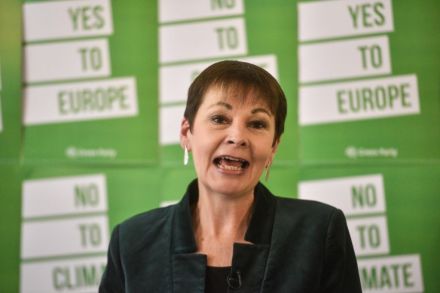
William Hazlitt said hypocrisy is the only unforgivable vice. He would surely have a field day with our current crop of politicians. But perhaps the worst of the bunch is Caroline Lucas. The Green MP responded to the Liberal Democrat’s promise to overturn Article 50 without even a further referendum by saying: Lucas is partly correct: the Lib Dem’s policy move is remarkable in its audaciousness. Jo Swinson recently told us that she could never forgive David Cameron for his decision to have an in-out EU referendum, conveniently forgetting the fact that she herself called for such a referendum back in 2008 and that nearly all Lib Dem MPs voted in favour of the EU Referendum Act in 2015.

What type of general election does Jeremy Corbyn want to fight?

From our UK edition

The current obsession with Boris Johnson’s decision to marginally reduce Parliament's sittings days has had the side effect of taking the spotlight off the tricky strategic decisions Jeremy Corbyn faces over the next two months. Up until now, Corbyn has been content to continue attacking the prospect of no deal largely on the basis of the threat to workers’ jobs. The sight of him lining up on the same side as the big business forces of Remain is somewhat incongruous, whilst his description of no deal as a 'bankers’ Brexit' looks odd given how much funding Morgan Stanley, Goldman Sachs and the other international banks gave to the Remain campaign during the referendum.

Boris’s nightmare is that the EU accepts his Brexit offer

From our UK edition

As was to be expected, the EU’s reaction to Boris Johnson’s offer of revisiting the Withdrawal Agreement if the backstop is removed has been to reject it out of hand. But there are still 68 days to go before the UK is due to leave the EU and if the EU’s resolve wavers between now and then, Boris’s high-risk strategy could come back to haunt him. Reading Martin Howe’s evisceration of the Withdrawal Agreement, one is reminded of Jerome K Jerome’s visit to the doctor in Three Men in a Boat. Rather than explaining that he was suffering from the symptoms of pretty much every disease known to mankind, J found it easier to tell his doctor the one thing that was not wrong with him: housemaid’s knee.

Why the Labour party deserves to be destroyed

From our UK edition

So after months of prevarication, Labour have announced that they will back a second referendum under any circumstances and will campaign for Remain to stop a 'no deal or a damaging Tory Brexit'. The reaction has dismayed Labour MPs in vulnerable Leave-leaning seats, but delighted Nigel Farage. Indeed, the decision has played perfectly into the Brexit party's strategy of targeting working-class voters in the North and Midlands. Three months ago, many assumed that a Tory wipe-out at the next election was inevitable. But now the tables are turned and it is difficult to see anything but electoral doom for Labour. The Brexit party will surely siphon off Leave voters in Labour’s industrial heartlands.

A Halloween no-deal Brexit is no longer a scary prospect

From our UK edition

Project Fear is back after a seasonal break. Far from resolving anything, Theresa May’s decision to delay Brexit back in the spring simply kicked the can down the road, frustrating companies who invested scarce resources into getting ready for a 31st March departure. Damaging as the decision to delay Brexit was, the silver lining is that seven months’ on, the UK is likely to be in a much better position to cope with the no-deal fall out. You wouldn’t know if it you listened to the CBI who continue to churn out “no-deal” scare stories. Or if you read the civil service memo apparently “leaked” to the media, explaining that the UK needs at least another five months to be ready for “no deal”.