Politics

Read about the latest political news, views and analysis

Will the no-deal opponents finally get their act together?

So what now for the opponents of no deal? Boris Johnson has dramatically called their bluff, and as Mr Steerpike reports, not all of them are taking this particularly well. Both proponents and opponents of Britain leaving without a deal are engaged in a political wrestling match, with all the theatrics that entails. Both are working out which parliamentary mechanisms will suit them best. Both are also accusing the other of blocking democracy, pretending not to notice the similarities in their tactics. Neither will admit that the other side has a right to do what it has chosen to, instead preferring to call it a 'constitutional outrage'. The problem for those trying to stop no-deal is that their team isn't working as well as Boris Johnson's.

Does Tony Blair think free speech isn’t for everyone?

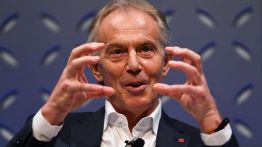
Not content with agitating against democracy with his relentless Remainer shenanigans, now Tony Blair appears to be aiming his fire at freedom of speech. Seriously, is there no civilisational liberal value this man doesn’t want to take down? A new report for Blair’s think-tank, the Tony Blair Institute for Global Change, says hard-right groups should be subjected to censorship even if they are not involved in any kind of violent activity. The report says the government should draw up a list of ‘designated hate groups’ — you mean a blacklist? — and these designated groups should be prevented from appearing in media outlets or engaging with public institutions.

Sajid Javid needs to start thinking like an entrepreneur

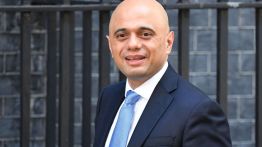
Chancellor Sajid Javid’s approach to the spending review is in danger of stopping the Boris-inspired Tory revival in its tracks. The Chancellor needs to think more like an entrepreneur and less like he's a newly-wed on a tight income. He intends to stick to the current spending rule that the annual deficit should not exceed 2 per cent of GDP in 2020-21 and plans to reduce total government debt as a proportion of national income. There is to be extra money for the police, health and education but other areas will continue to face strict controls. He likes to compare government spending with household expenditure. As every household knows, he says, it is necessary to make choices and choose priorities, but his homely analogy is irrelevant. It is just plain bad economics.

Full text: Boris’s plan to prorogue Parliament

Dear Colleague, I hope that you had an enjoyable and productive summer recess, with the opportunity for some rest ahead of the return of the House. I wanted to take this opportunity to update you on the Government's plans for its business in Parliament. As you know, for some time parliamentary business has been sparse. The current session has lasted more than 340 days and needs to be brought to a close — in almost 400 years only the 2010-12 session comes close, at 250 days. Bills have been introduced, which, while worthy in their own right, have at times seemed more about filling time in both the Commons and the Lords, while key Brexit legislation has been held back to ensure it could still be considered for carry-over into a second session. This cannot continue.

The most hysterical reactions to Boris Johnson’s Queen’s speech

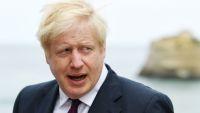
Boris Johnson announced this morning that he will attempt to schedule a Queen's speech on 14 October, and will suspend parliament for several weeks in September to do so – cutting down the amount of time MPs have in parliament to prevent a no-deal Brexit. It's entirely normal for a new government to schedule a Queen's speech on taking power, and will usually suspend parliament beforehand (though not normally for this length of time). Boris Johnson's decision will also bring an end to one of the longest parliamentary sessions in history, and will not close parliament during the actual Brexit date, as many anti no-dealers initially feared.

Dominic Grieve: ‘I will certainly bring down a Conservative Government’

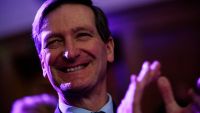
Boris Johnson's plan to suspend Parliament is not going down well with MPs, not least among some of those on the Tory backbenchers. Dominic Grieve reacted furiously to the news. The Tory MP said the Prime Minister's decision is 'outrageous' – and he threatened to help bring down the Tory Government, even if it means ushering in a Corbyn government. Here is what he had to say on Radio 5 Live: 'I don’t see how a Prime Minister who persists with this is going to find he is going to get to the 31 October still in office. There will be a vote of no confidence and his government will come down.' Do you have time? 'Oh yes, there is plenty of time to do that.' And you will bring down a Conservative Government?

The parliamentary battle of our age begins

The parliamentary battle of our age, and of many ages – over how and whether the UK Brexits – begins, with the signal from Downing Street that the Commons will rise some time between 10 and 13 September and will return for a Queen's Speech on 14 October. This will leave MPs with just a few days in early September and in late October to block the no-deal Brexit many of them fear. One source close to Boris Johnson said the decision to suspend parliament for a month was 'not [about] Brexit, you cynics'. Which shows a certain sense of humour. But another No.

Europe’s politicians should be terrified of a no-deal Brexit

Jeremy Corbyn has vowed to use 'all tactics available' to block a no-deal Brexit. The Labour leader is meeting MPs today to try work out how to do just that. But with no deal back in the headlines, are we having the wrong discussion about what it would mean for Britain to leave the EU without an agreement? Most of the focus around a no-deal Brexit has been on the economic pain that will be suffered by various parties, but particularly the UK. Little thought has been given, however, to the political pain. To politicians seeking re-election (for either themselves or their party), small issues can become greatly magnified. Whenever a steel plant or a car factory faces closure, the government comes under pressure to meet with the owners to find a rescue plan.

Is the Chancellor’s cancelled speech another sign an early election is looming?

Sajid Javid has this afternoon cancelled a speech he was due to give tomorrow, and brought forward the one-year spending review to early September. It was due to take place later in the autumn. A statement from the Treasury said 'the forthcoming Spending Round will instead be brought forward in early September and will cover the themes and priorities he was due to outline'. This isn't a surprise for any of those in government who had been working on the spending review. Secretaries of State have been returning to Whitehall today, ready for meetings with the Treasury this week about their spending envelopes.

Gordon Brown has done enough damage in Scotland

Gordon Brown has broken his silence again. The former prime minister told the Edinburgh International Book Festival that the Scottish Parliament had ‘failed to deliver a fairer and more prosperous Scotland’ and had instead become a ‘battering ram for constitutional warfare’. What’s that, Lassie? Timmy’s trapped down the well? And creating a Scottish parliament to run almost all of Scotland’s affairs separately from the rest of the UK helped rather than hurt the campaign for independence? Jeepers. The battering ram that Brown laments exists only because the party and government in which he played a somewhat senior role insisted on fashioning it.

Jeremy Corbyn capitulates in cross-party Brexit talks

Jeremy Corbyn's cross-party talks to stop a no-deal Brexit have broken up, with opposition leaders and MPs releasing a statement saying they 'agreed on the urgency to act together to find practical ways to prevent no deal, including the possibility of passing legislation and a vote of no confidence'. The Labour leader opened the meeting by saying he would prioritise legislation, rather than a vote of no confidence, which will be kept as a last resort. Calling a vote of no confidence in the first few days of Parliament sitting next week might have been a dramatic way of Corbyn trying to show that he was serious about stopping a no-deal exit and that he does really want a general election, but it is also very unlikely to have succeeded.

Is this misunderstanding behind the rise of populism?

The latest stage in a series of arcane gambits and cunning plans designed to frustrate Britain’s exit from the EU came in the form of Jeremy Corbyn's recent letter to leading opponents of a no-deal Brexit, inviting them to discuss the joint coordination efforts. In his letter, Corbyn rightly predicts that during the next few weeks the country will enter a ‘constitutional and political storm’. Up to now, however, the response of our political elite to this impending crisis has been confused. Radical Leavers claim Parliament can be prorogued to allow a no-deal Brexit to pass without further intervention from MPs.

For better or worse, Boris Johnson is different

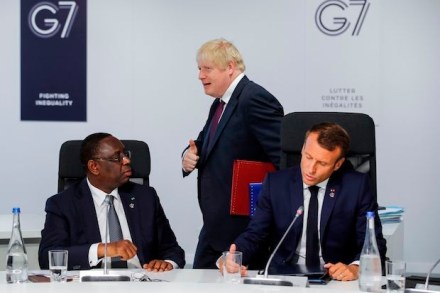
I’ve learned only one thing at the G7 summit of big rich countries here in Biarritz: Boris Johnson absolutely loves being Prime Minister. There’s little of the conspicuous sense of duty that weighed on the shoulders of Theresa May, Gordon Brown and Sir John Major. Nor is there that unnerving claim to embody the spirit of a nation that Tony Blair and Margaret Thatcher perhaps made too often and believed too much. There’s a touch of David Cameron’s Old Etonian entitlement, the idea that it would be odd if he weren’t PM. But mostly Johnson simply seems to be having fun – whether by pointing a joshing finger at the imperious president of France or telling an incredulous President of the EU that they agree on absolutely everything.

Caption contest: Boris Johnson and President Trump meet at G7

To the G7 summit in Biarritz where Boris Johnson has held his first meeting with Donald Trump since becoming Prime Minister. The two blondes used the breakfast meet to talk up trade, with President Trump saying the UK leaving the EU will be like losing 'an anchor round the ankle'. A more jolly affair than the President's interactions with the previous prime minister, Trump praised Johnson as 'the right man' to deliver Brexit. The start of a new chapter in the special relationship? Captions in the comments.

Spectator competition winners: Gilbert & Sullivan’s The Brexiteers

In Competition No. 3112 you were invited to submit an extract from Gilbert & Sullivan’s The Brexiteers. The title of this new addition to the G&S canon was, of course, a nod to The Gondoliers. But in an entry both serious and silly, full of wit and whimsy, you also plundered The Mikado (‘Four little maids in politics, we,/ Boris-resistant as can be...’), Iolanthe (Lord Chancellor’s ‘Nightmare Song’) and H.M.S. Pinafore (‘Ring the merry bells for Brexit!’), among others. There were stellar performances from Max Gutmann, Sylvia Fairley, David Shields and D.A. Prince. They were only narrowly outstripped by the winners below who earn £30 each.

Boris Johnson has not made Nigel Farage go away

Nigel Farage: whatever happened to him? You remember, the chap in the coat who used to go on about Europe and all that. Time was, you couldn’t turn on the TV without seeing him. These days, not so much. Farage’s relative quiet in political circles says quite a lot about how easy a ride Boris Johnson is getting in his early days as PM. It is implicitly assumed by many commentators and editors that the advent of a Boris Johnson Government packed with ultra-committed Brexiters, directed by the Vote Leave team and seemingly hell-bent on No Deal will, in due course, render Farage and his Brexit Party irrelevant.

How the Tory party could come back to life

We are living through the most dramatic period in British peacetime history since the agitations leading up to the Great Reform Bill – and, irrespective of Brexit, there is more to come. The UK is about to experience a revolution in government. This will take one of three forms. There could be a chassis revolution, as in 'The world's in a terrible state of chassis.' If the Government were forced into an early election, with the Brexit party on one flank and the Liberals on the other, Parliament would be hung beyond hope of stability. It is reasonable to describe the prospect of such chaos without foreseeable end as revolutionary. There could also be a more orthodox revolution, if Jeremy Corbyn gained power.