Politics

Read about the latest political news, views and analysis

How George Galloway and I plan to save the Union

For me – and, I suspect, for many Scottish Tories – a lot of my time in lockdown was characterised by a sense of frustrated impotence. I would sit in front of the television in furious disbelief as I watched Nicola Sturgeon, the unchallenged leader of a one-party state, on the BBC, answering useless questions from selected journalists who offered no supplementary interrogation. As Sturgeon’s poll ratings soared my morale sank. What are we dejected Unionists to do? How can we stop the SNP’s march towards a second referendum when the mainstream opposition to Sturgeon from the Scottish branch offices of the Tory, Labour and Liberal parties has been risible? Then three weeks ago George Galloway came to lunch.
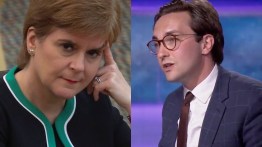
Nicola Sturgeon and Newsnight presenter’s Tory tweet fake news

Nicola Sturgeon was able to indulge in a small spot of schadenfreude today, as A level results were announced in England, and UK ministers were criticised for the downgrading of some students’ results. The Scottish first minister has had a hellish week defending her own disastrous handling of exam results north of the border, which culminated on Tuesday with the SNP U-turning on its decision to downgrade thousands of students’ exam results – a decision which has been widely criticised by Scottish Conservatives.

What’s the true cost of lockdown on our kids’ futures?

We’ve heard endless statistics on the likely death toll from Covid-19, and over the past week we have learned just how great was the economic devastation in most countries in the second quarter as they locked down to deal with the disease. But what about the global impact on children’s education? That is something the World Bank has attempted to estimate. School closures, it concludes, effectively reduce the times spent in education by between 0.3 and 0.9 years. Globally, before the pandemic, the average child went through 7.9 years of schooling. For the Covid generation this will be reduced to between 7.0 and 7.6 years.

Inflated exam grades let the government ignore its own failures

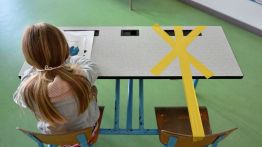
It was obvious that closing schools would hit the poorest hardest, inflicting permanent damage and deepening inequality. While many private schools and the best state schools maintained a full timetable of lessons throughout lockdown, a study by UCL in June found that 2.3 million pupils — one in five of the total — did virtually no schoolwork at all during the weeks of lockdown. The official response has been to turn a blind eye, and imagine that the damage can be covered up by simply awarding decent exam results. This year’s students are right to protest about the injustice of the system. From the moment the decision was taken to cancel exams, rather than carry out exams with social distancing, this year’s mess was guaranteed.

Why David Davis is confident a Brexit deal can be done

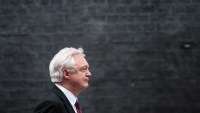
LBC broadcaster Iain Dale has transformed his Edinburgh festival shows into a series of Zoom-casts. First up, David Davis. The former Brexit secretary had arranged his web-cam in a study lined with scarlet law-books. A few hours earlier, he said, he’d completed a seven-mile jog. He’s 71. Davis began by criticising the government over the corona-shambles. Last winter the World Health Organisation had rated Britain ‘top of the league in its preparedness’ for a flu pandemic. But the implementation of the plans had been disastrous. The biggest single error was the failure on testing. It was over-centralised. We were over-proud of our test-approach. Had we done what the Koreans or Germans had done, many thousands would still be alive today.

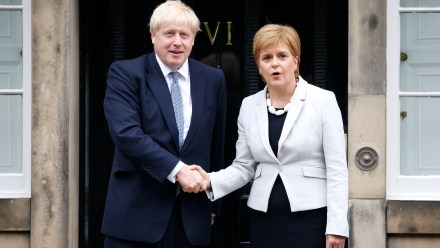
Here’s Nicola: can Boris Johnson stop Scottish independence?

Boris Johnson is far from being the first prime minister to holiday in Scotland. David Cameron used to slip off the radar at his father-in-law’s estate on the Isle of Jura, and plenty of other Conservative premiers have enjoyed a Scottish August on the grouse moor. But Johnson may be the first to holiday north of the Tweed as a matter of political calculation and convenience. He comes to Scotland to show his commitment to what he calls the ‘magic’ of the Union. About time too. At last — at long last, Scottish Unionists might say — the cabinet has recognised it has a problem in North Britain.

Kamala chameleon: the many faces of Biden’s running mate

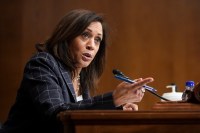
Kamala Harris, the new Democratic vice-presidential nominee, certainly looks the part. Barack Obama once called her ‘the best-looking attorney general in the country’, though he later decided that was a sexist remark and apologised. She’s half-black, half-Indian and she has a charismatic Californian smile. If a director were casting for someone to play America’s first minority woman vice-president, he’d probably plump for an actress who looked like Harris. She dresses like the Hollywood idea of a political woman — power-suits and pearls. She’s got what wonks call the ‘optics’ down pat. It’s easy to forget but only last year Harris was considered a favourite to win her party’s presidential nomination.

Why is Labour struggling to attack Boris Johnson?

16 min listen

Gavin Williamson last night announced that A-level students getting their results tomorrow could appeal using mock exam grades. Meanwhile, today, new figures showed that the UK economy contracted by over 20 per cent between April and June. Among all this, why has Labour failed to show how they could govern the country better? Fraser Nelson speaks to Kate Andrews, the Spectator's economics correspondent, and Stephen Bush, political editor at the New Statesman.

Labour’s transgender civil war has hit a new low

August is the traditional silly season, but the Labour party risks descending into a farce from which it might struggle to recover when real politics resumes in September. In the absence of any direction from the party leadership, the transgender thought police have led the party down a rabbit hole. Last week, Spectator readers may recall the appalling attack on Rosie Duffield MP for claiming – quite rightly – that 'only women have a cervix'. Now, the madness has continued. This week’s episode involves LGBT+ Labour. Not to be confused with the Labour Campaign for Trans Rights (LCTR) that appeared in February, LGBT+ Labour has a long history of campaigning inside the Labour party and alongside the Labour party for gay rights.

Tory MP calls for England to take back Calais

The UK government has seemed flummoxed in recent days about how to best stop migrants and asylum seekers crossing the English Channel in inflatable dinghies – with ministers particularly concerned about the failure of the French authorities to prevent people traffickers organising journeys out of Calais. Immigration minister Chris Philp travelled to Paris this week in an attempt to strike a deal with the French about the return of migrants. Both sides have since expressed a ‘shared commitment’ to stemming the rise in Channel crossings, and Philp has promised to unveil a ‘joint operational plan’ in the coming days, to completely cut off the route.

Matt Hancock needs a ‘big, hairy, audacious goal’ for test and trace

Stanford Business School professors, Jim Collins and Jerry Porras in their book Built to Last: Successful Habits of Visionary Companies, introduced the idea of the ‘big hairy audacious goal’, or BHAG. A BHAG (pronounced ‘bee hag’) is a bold, clear and compelling target for an organisation to strive for, with the appropriate resourcing. A great example was President Kennedy’s speech to Congress in which he said ‘this nation should commit itself to achieving the goal, before this decade is out, of landing a man on the moon and returning him safely to earth’. This audacious goal committed and motivated NASA and its suppliers to deliver a massive step up in performance.

Spare us Ben & Jerry’s lecture on the Channel migrant crisis

Multi-millionaire virtue-signallers Ben and Jerry are at it again. Once again the ice-cream capitalists are doing their woke schtick in the hope that even more of the right-on middle-classes will buy their expensive tubs of cream and sugar. This time they’re taking aim at Priti Patel, lecturing her on Twitter about immigration. Thanks, but no thanks — we don’t want vast corporations butting into our democratic politics. Ben & Jerry’s UK gave Patel a haughty ticking-off in a Twitter thread published yesterday. In response to Patel’s promise to reduce the number of migrant boats crossing the English Channel, B&J said the ‘real crisis’ is ‘our lack of humanity for people fleeing war, climate change and torture’.

Is Britain heading for the worst economic hit in Europe?

It’s odd to read headlines today saying that the UK has officially entered recession. We’ve known this for months: shops were closed, restaurants shuttered. You couldn’t get a cup of coffee or a haircut, offices were closed and millions furloughed. These were not normal times – but we knew that then, as we know it now. What we didn’t know was how far the economy had contracted, and how much this could be remedied by ending lockdown. The big news today, revealed by official figures released by the Office for National Statistics this morning, starts to answer this. It turns out that our economic hit was one of the hardest in Europe. UK GDP fell 20.

Is Kamala Harris a good VP pick?

18 min listen

Yesterday evening, Joe Biden announced Kamala Harris as his running mate. While the Californian senator is seen by many as a safe pick, she notably came to blows with Biden in the Democratic primaries for his history of working with segregationists. Is this a good move by the Biden campaign? Freddy Gray speaks to Matt McDonald, managing editor of the Spectator USA.

Was the ‘pee tape’ a lie all along?

Sir Anthony Eden’s wife, Clarissa, famously said that at times she’d felt as if the Suez Canal was flowing through her drawing room. Over the past four years, perhaps American voters have felt the Volga lapping at their feet. There’s been no escape from Russia and even the Mueller inquiry did not put the matter to rest. Before Mueller’s inquiry a year ago, the headlines were about whether President Trump had conspired – or ‘colluded’ – with the Kremlin; the news now is all about Trump’s revenge for what he calls a conspiracy ‘bigger than Watergate’. This Russia conspiracy has the intelligence agencies cooking up a fake story about collusion in order to investigate Trump and overturn the result of the presidential election.

There’s nothing unfair about the way A-level results will be decided

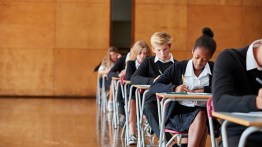
This time tomorrow, I will be one of the hundreds of thousands of A-Level students across the country receiving their results. The hastily set-up grade allocation system – which will use an algorithm based on a pupil's predicted and past grades, as well as a school's recent exam history to give results – has generated a predictable amount of anger. But this frustration is misplaced. Even as a student from a comprehensive school, the type of school thought to be most disadvantaged by this method of allocating results, the chosen approach is the best we can hope for in these circumstances. After all, in the absence of exams what are the alternatives?

The SNP’s Hate Crime Bill is turning the law into a culture war

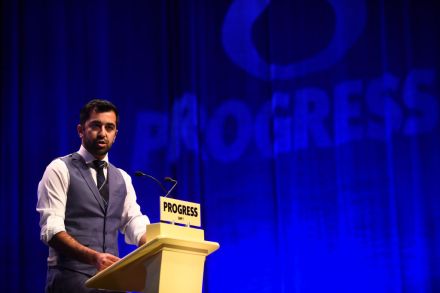
Every time I re-read the SNP’s Hate Crime Bill, I become more convinced that its author, Humza Yousaf, is trying his hand at a Titania McGrath style satire of wokeness. Scotland’s justice secretary is woke but his draft legislation is such a smash-’n’-grab of every item on the wishlist of coercive progressivism that he can’t be entirely serious. It’s not everyone who can forge common cause between the Catholic Church and the National Secular Society, the Law Society and the Scottish Police Federation, so Yousaf is gifted in that regard. Now the Faculty of Advocates, Scotland’s answer to the Inns of Court, has issued a 35-page examination of the Bill, warning among other things of serious ‘potential unintended consequences’.

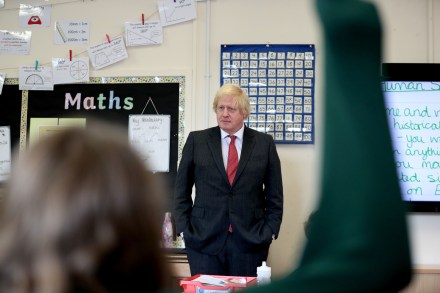
Have ministers really thought through their back to school strategy?

There's something rather ominous about a government minister waving around the results of a yet-to-be-published study to underline that they've definitely got a tricky policy nailed down. Over the weekend, we saw the Prime Minister and Education Secretary both insisting that it would be fine for English schools to reopen in September because a piece of research by Public Health England showed that there was little evidence the virus is transmitted at school. But the Times today reports that officials working on the study are uncomfortable with the way their findings have been represented by ministers and that older children may spread the virus in the same way as adults do.