Politics

Read about the latest political news, views and analysis

Palmerston’s retirement leaves Larry as top cat

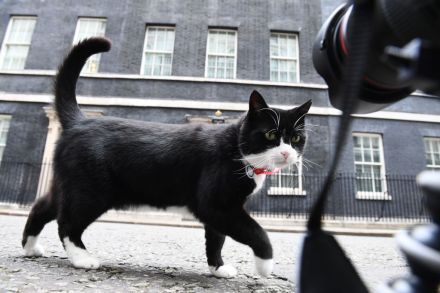
Power struggles at the heart of government continued today, with a key member of the Foreign and Commonwealth Office announcing his retirement. Palmerston the cat, Chief Mouser of the department since 2016, announced he was stepping down via the Foreign Office Twitter account. In a statement, Palmerston explained that working from home over lockdown had made him reconsider his position. He had found life ‘relaxed, quieter and easier’, and decided his age meant it was finally time to take a ‘step back’. Could internal struggles be behind Palmerston’s decision to remove himself from the political fray?

What Rishi Sunak should learn from Kirstie Allsopp

Kirstie Allsopp is in trouble. The posh-but-nice telly lady committed two cardinal errors of modern life: first by saying something interesting on Twitter, and second by assuming people would credit her with good intentions. She wrote: ‘If your job can be done from home it can be done from abroad where wages are lower. If I had an office job I’d want to be first in the queue to get back to work and prove my worth to my employer. I am terrified by what could be on the horizon for so many.’ I think most fair-minded people would read that as a clumsy but well-meaning attempt to warn people about some tough economic times ahead, and not a criticism of the people who may well suffer in those times.

Will Hancock’s ‘Zoom medicine’ take off?

It's not unusual that the left and right hands of government don't know what the other is doing: despite being based in the same postcode, different departments are notoriously bad at communicating. They even stop speaking to one another occasionally, with secretaries of state blocking new policies at what is known as the 'write-round' stage of policy development. This is where ministers consult colleagues across government on a policy, which others can then block. Sometimes departments have such a strong objection to a policy in another ministry that they refuse to sign off anything else through write-rounds until this plan is dropped.

Will Boris’s planning shake-up end in another Tory fight?

If there's one thing you'd think the Tories might have learned over the past ten years in government, it's that trying to reform the planning system will cause an almighty row. Under David Cameron, the party ended up in a bizarre fight with the Daily Telegraph and the National Trust over its plans to build more homes. Theresa May talked about reform but characteristically never quite managed it. But despite everything else that's going on for the government at the moment, ministers have rather bravely ploughed ahead with a huge planning shake-up which makes the Cameron reforms look rather boring.

Can London survive coronavirus?

44 min listen

London is the motor to Britain’s economy, so how can it rebuild after the pandemic? (00:55) How can the new Tory leader in Scotland, Douglas Ross, keep the United Kingdom together? (17:50) And why the looming conflict between India and China isn’t in Kashmir, but rather in the Bay of Bengal. (29:33) With economist Gerard Lyons; historian Simon Jenkins; The Spectator’s Scotland editor Alex Massie; The Spectator’s political editor James Forsyth; historian Francis Pike; and author Jonathan Ward. Presented by Katy Balls. Produced by Gus Carter and Max Jeffery.

Are the Bank of England’s forecasts too optimistic?

The Bank of England offers a mixed bag of forecasts today. It now expects Britain’s economic downturn to be less extreme than feared, while also predicting a recovery will take longer than originally thought. The Bank now expects the economy to contract 9.5 per cent in 2020, substantially less than the 14 per cent drop it predicted at the height of the national lockdown. But it joined the Office for National Statistics in revising its optimism for a sharp V-shaped recovery downward, expecting nine per cent growth in 2021, with GDP not returning to pre-Covid-19 levels for another eighteen months. The Bank’s forecast remains one of the most optimistic, still showing the resemblance of a V-shaped recovery. But are these scenarios accurate reflection of what’s to come?

Will Boris’s planning reforms backfire?

10 min listen

The government has announced the most ambitious planning reforms of a generation – but could they backfire? Meanwhile, as the contacting tracing regime continues to lag, health officials launch a new coronavirus app that will tell people if they may be at risk from the virus. Katy Balls talks to James Forsyth and Kate Andrews.

Can Douglas Ross stop Scexit?

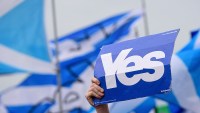
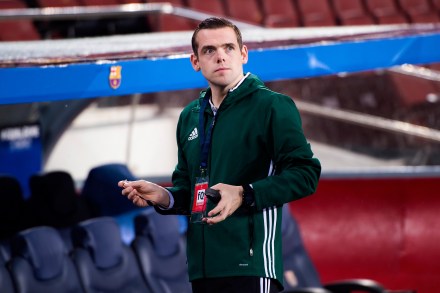
Douglas Ross is the new leader of the Scottish Conservatives and since his predecessor lasted all of 167 days, best of luck might be more in order than congratulations. The Moray MP was awarded the position unopposed after Jackson Carlaw resigned entirely of his own volition and without any input from Downing Street. Ross inherits a party 35 points behind in the polls with a Holyrood election on the cards for next May. The SNP currently controls the Scottish parliament with the help of the nationalist Greens but, on present polling trends, would likely win a majority of seats in its own right. Worse, during Carlaw’s tenure, support for Scexit — Scotland’s exit from the United Kingdom — crossed over into the majority.

Economies run on confidence – the government mustn’t undermine it

Throughout the past few months the government has appeared to face an unenviable choice between saving lives and saving livelihoods. Nevertheless, a fortnight ago the path seemed clear. The numbers of Covid infections were falling, but the economic news was dire — hence Boris Johnson was engaged in a drive to reopen the economy as quickly as he could without prompting objections from his scientific advisers. Now things feel rather different. Economic figures from recent days have surprised on the upside: the CBI’s figures for retail sales in July show a sharp V-shaped recovery. Sales of cars and houses were running ahead of last year — during July at least. At the same time, though, the outlook on Covid-19 has darkened.

Why the Lib Dem leadership contest matters

When Dominic Cummings addressed government advisers recently, he said that he was so out of touch with day-to-day politics that he needed to ask who the current leader of the Liberal Democrats was. In fairness to the Prime Minister’s most senior adviser, he’s not alone in this confusion. Since Jo Swinson lost her seat to the Scottish National party in the December election, there have been only interim leaders in place as members pick a successor. Ask a No. 10 staffer or Tory MP which candidate they would prefer to win — Layla Moran or Sir Ed Davey — and you are more likely to be met with laughter than a serious reply. Once again the Liberal Democrats are being talked up as a party on the brink of extinction.

Could possession of the Bible become an offence in Scotland?

For the Scottish National party, the phrase ‘nanny state’ is not so much a criticism as an aspiration. This is the party that wanted to assign a state guardian to every child born in Scotland through its ‘named person’ scheme, only to be thwarted by the Supreme Court. Under Nicola Sturgeon’s leadership, there have been repeated attempts to regulate the eating and drinking habits of people, including proposed bans on two-for-one pizza deals and minimum pricing on cheaper alcoholic drinks. It makes sense, then, that the party’s paternalism should extend to the question of free speech.

Can Douglas Ross take on the SNP?

10 min listen

Douglas Ross has won the Scottish Conservatives leadership election – but can take on the SNP without risking a second independence referendum? Meanwhile, pressure is growing on the Tories to suspended a former minister accused of rape. Finally, a new report by a cross-party group of MPs suggests the failure to impose quarantine on travellers at the height of the pandemic could have worsened the coronavirus crisis. Gus Carter talks to James Forsyth and Katy Balls.

Will the Beirut blast change Britain’s foreign policy?

What should the British government do to help Lebanon recover from the Beirut explosion? Ministers say they are working to provide the Lebanese government with technical support and financial assistance, but they are coming under pressure from senior Conservative colleagues to use the disaster as a turning point in the way Britain approaches the Middle East generally. Tobias Ellwood, chair of the Defence Select Committee, and Tom Tugendhat, chair of the Foreign Affairs Committee, have both called for Britain to take a more active role in the region, or risk seeing hostile states such as Iran and terrorist groups filling a 'vacuum'. These two MPs have been instrumental in pushing Boris Johnson to toughen his approach to China in recent months.

Has Sweden been vindicated?

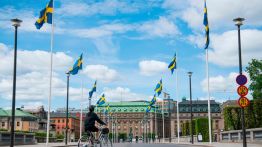
Sweden has released growth figures for the second quarter – a contraction of 8.6 per cent – and two narratives are circulating. The first is that the Swedish experiment has failed spectacularly, resulting in both a higher death toll than its Scandinavian counterparts as well as a collapsed economy. The second is that Sweden has been vindicated, taking a much less severe economic hit than the EU’s average and in a better position to recover as well. Which is the fairer assessment? Sweden has indeed taken an economic beating despite never instigating a full lockdown.

Party whips are ill-suited to deal with serious allegations like rape

The Tories are still coming under fire for failing to suspend the unnamed MP who was arrested at the weekend on suspicion of rape, sexual assault and coercive control. A group of charities and trade unions are the latest to criticise the decision, saying in a statement released yesterday that 'we are still not confident that [Parliament] is a safe and equal place for women to work'. The group wants Parliament to suspend the MP, and for the whip to be removed while the police investigate the allegations. But while the Tories insist they take all such allegations extremely seriously, they also say the matter is currently in the hands of the police and they will make a decision about the whip once the police decide whether or not to charge the suspect.

Is Sturgeon right to brag about Scotland’s coronavirus response?

What political opportunities Covid-19 has presented for Nicola Sturgeon. Day after day in recent weeks she has appeared at her press conference, presenting a picture of a Scotland where the disease has been all but eliminated – placed in contrast with England where, she says, the government is merely trying to contain the disease, and not very well at that. It is an image which, naturally, aides the cause of Scottish independence. To remind us of the game she is playing, she has several times pointedly raised, or failed to rule out, the threat of imposing quarantine on visitors from England. But is the image of a Covid death-free Scotland fair? Interesting analysis by Sam Taylor lays bare the accuracy of Sturgeon’s – and other nationalists’ – claims.

Will a second wave thwart Boris’s bid to reopen schools?

As ministers work on plans to return all pupils in England to the classroom next month, the government is once again being criticised from all sides. Union leaders are questioning whether the current plan carried significant safety risks, while England's children's commissioner has made an intervention today warning that schools should be the last places to shut in future lockdowns – after pubs. This comes back to a Whitehall phrase I reported last week, the ‘schools or pubs dilemma’. Ministers have started to consider their arguments in the event that some things have to close in order for others to open as a result of the rate of infection being too high in No. 10's view.

Has Trump’s Covid-19 response really been so dire?

The sight of Donald Trump fumbling with charts during his interview on HBO this Monday has provided much ammunition for his enemies. The words ‘train wreck’ and ‘toe-curling’ have been used multiple times to describe how the President insisted that the US has one of the lowest death rates from Covid-19, while interviewer Jonathan Swan quoted figures suggesting the US has one of the worst rates. True, Trump looked ill-prepared, but was he fibbing, as many of his critics have implied? America cannot claim to have a lower death rate than comparable western countries – but neither does it come out especially badly The truth lies somewhere between what Trump and Swan were each trying to assert.