Politics

Read about the latest political news, views and analysis

The truth about the migrant crisis isn’t what you think

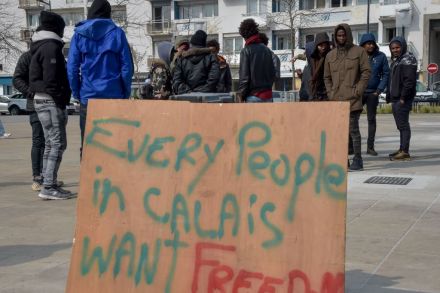
Home Secretary Priti Patel visited the port of Dover last week to gee up the beleaguered Border Force and offer words of encouragement to the British people. 'It is our mission and objective to break this route up,' she told her personal cameraman and tightly-controlled media team. Priti hot footed it out of the docks as soon as the PR stunt was over. Job done for another day. More fake promises of stronger borders by a Conservative party who seem unable to control anything, let alone a porous expanse of water separating England from France. The reality is we all know what’s going on. Not from the mainstream media who eagerly line the dock side waiting for exhausted looking women and children being brought off the boats.
University challenge: the next education crisis

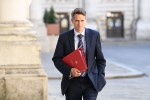
On the insistence of university authorities, freshers’ week will be an online affair this year. But if this autumn is not much fun for students, it will be a lot less fun still for university staff whose admissions system has just been thrown into turmoil by the A-level results debacle. While some institutions now face overcrowding, others face financial ruin. When the Education Secretary Gavin Williamson announced on Monday that he was abandoning the algorithm devised by Ofqual to moderate A-level results and would allow candidates to keep the grades estimated by their teachers, students were relieved — many more will, after all, now be able to go to their favoured university. Admissions officers at the top universities were rather less happy.

It’s time to end Tory uniphobia

Before the exams meltdown, universities were losing both friends and influence on the Tory benches. They were deemed to be on the ‘wrong’ side of the referendum and then enemy combatants in a low-level culture war. The ministerial message to young people was shifting from the sensible ‘you don’t have to do a degree’ to the openly discouraging ‘too many go to university’. The high watermark of uni-phobia perhaps came last month when cabinet ministers denounced Tony Blair’s target of 50 per cent of children going to university and warned that any institution finding itself in financial difficulties would be ‘restructured’. To say our universities feel unloved by this government is an understatement.

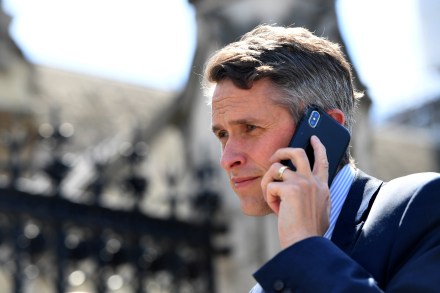
The importance of Gavin Williamson

When Boris Johnson tried to call a general election in September last year, everyone around him assumed that Jeremy Corbyn would agree. When this didn’t happen, Johnson found himself out of ideas. Dominic Cummings’s plan was to keep calling for an election, keep holding votes and hope the resolve among opposition parties would break. The Prime Minister decided to get a second opinion. He wanted someone who knew parliament and its dark arts, and could advise him how to fight and win its battles. He summoned Gavin Williamson. On being presented with the plan, the former chief whip gave a long pause. ‘It’s a preposterous plan,’ he finally replied. ‘And that’s exactly why you should do it.’ It worked.

Matt Hancock will regret appointing Dido Harding

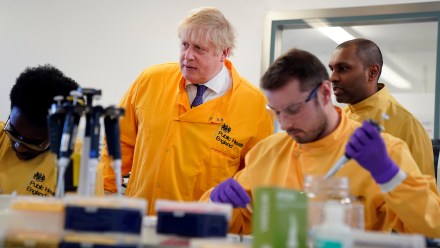
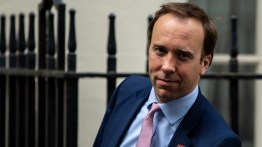
It seemed at first that Matt Hancock was scrapping Public Health England in a bid to save his own political career. But the hapless Health Secretary appears to have bungled even this elementary piece of political theatre. He has appointed Baroness Harding as the head of the new National Institute for Health Protection. Dido Harding?!? The Conservative life peer’s main claims to fame are presiding over the muddled response to a cyber-attack that affected tens of thousands of customers when she was chief executive of TalkTalk and heading up the government’s test-and-trace programme. To date, the programme has proved almost comically disastrous. The much-heralded app developed by NHSX has now been abandoned – who could have seen that one coming?

Have Arab nations forgotten about Palestine by accepting Israel?

The Palestinians are entering one of the most precarious periods in their nation’s history. The normalisation of relations between Israel and the United Arab Emirates is only the beginning as other Arab and Muslim states are expected to follow. Yesterday, Haidar Badawi Sadiq, spokesman for the Sudanese foreign ministry, confirmed talks between Khartoum and Jerusalem and predicted a treaty before the end of the year. Today, Sadiq was fired and the ministry denied all knowledge of secret negotiations. Maybe Sadiq spoke out of turn; maybe he jumped the gun; maybe he floated the test balloon that he was told to. No matter.

How Nicola Sturgeon outsmarts Westminster

14 min listen

A new poll today shows that support for Scottish independence is at a record high of 55 per cent. On the podcast, Cindy Yu talks to Katy Balls and Fraser Nelson about why - in particular, how does Nicola Sturgeon continue to exceed Westminster's expectations?

Did female leaders trump men in dealing with the pandemic?

It isn’t hard to imagine what would happen if an academic produced a paper claiming that countries led by men were more entrepreneurial or are better at negotiating international deals. The sky would fall in on them before the ink was dry. Their paper wouldn’t find a mainstream journal to publish it, anyway, but the mere existence of the study would be enough to have them denounced by students and thrown out of their university. But if you were to publish a study claiming that countries led by women have coped better with the Covid-19 pandemic, with fewer cases and fewer deaths than countries led my men?

Who is the virtual DNC for?

21 min listen

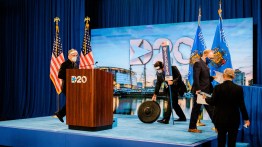
The virtual Democratic National Convention kicked off this week with an agenda packed full of the party's most well-known and experienced figures. But with a controversial appearance from Bill Clinton and a barnstorming speech from Michelle Obama, who is the convention really for? Matt McDonald, managing editor of the Spectator USA, speaks to Emily Larsen, political reporter at the Washington Examiner.

Meet the students left in limbo by the A-level U-turn

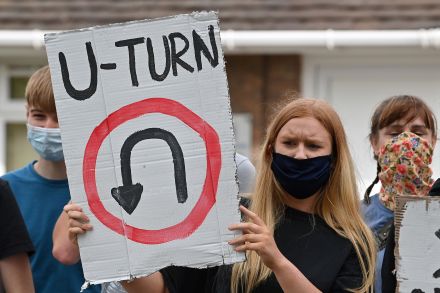
Gavin Williamson’s A-level U-turn may have quietened the protestors but it has only added to the confusion. The education secretary’s change of heart to allow students their teacher predicted grades, rather than those generated by an algorithm, means there could be an extra 60,000 students now entitled to a place at their first-choice university – and universities could be contractually obliged to accept them. But will there be enough places? When pupils originally received their results on 13 August, universities (not assuming a government U-turn was on the cards) started sorting through the offers they had made to students, accepting and rejecting some, and offering new places to others.

For too long the Union has been taken for granted

Last month, Boris Johnson marked one year as Prime Minister. He did so not by making a speech from Downing Street but instead by travelling north to Orkney in Scotland. Those few days also saw a historic cabinet meeting, focused solely on strengthening the Union, a sign of the government’s commitment to the centuries-old family of nations that makes up the United Kingdom. There are those who may wonder why the Prime Minister feels the need to spell out this commitment. Surely the UK has been bound together in a common cause during the Covid crisis? The numerous Treasury intervention schemes, Ministry of Defence field hospital, sharing of data – the UK government and its devolved partners have been forced to work together for the first time in more than 20 years.

The A-levels fiasco will cripple our crisis-ridden universities

The fiasco over A-Level results has only deepened the suffering of a university sector mired in market-driven chaos. Analysis suggests that, thanks to the U-turn on predicted grades, as many as 100,000 students could now meet the entry requirements for their first-choice university. The usual figure is 40,000.  Universities simply cannot accommodate this many additional students. Indeed, they cannot actually accommodate – physically or in terms of teaching staff – their existing students under social distancing regulations, which is why all teaching is being shifted online for 2020/21. And yet, universities feel not only morally obliged, but perhaps also legally mandated, to try to do so.

Ofqual boss’s algorithm malfunction

Gavin Williamson has taken a lot of stick for the A-level exams debacle, but Mr Steerpike thinks we should perhaps look to Roger Taylor, the chair of Ofqual, who also happens to be head of the Centre for Data Ethics and Innovation. Not many people think that using an algorithm to decide exam results was the best option, but it becomes even more questionable when you realise that Taylor led a study last year, warning of algorithms propensity to ‘make decisions which reinforce pre-existing social inequalities’. The study states: ‘concerns are growing that without proper oversight, algorithms risk entrenching and potentially worsening bias.

Why has the government scrapped Public Health England?

12 min listen

Matt Hancock today confirmed that Public Health England will be scrapped and replaced by a new National Institute for Health Protection, which will be led by Baroness Dido Harding - who currently runs the Test and Trace scheme. John Connolly speaks to Katy Balls and Kate Andrews about why.

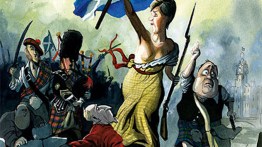
The rise of Scotland’s Covid nationalism

Whenever some London celebrity with a hamster’s grasp of Scottish politics simpers about moving north to escape the flaxen-fringed Franco in No. 10, the cybernat rank-and-file briefly down pitchforks to assure them ‘we’ll get the kettle on’. Like all megachurches, Scottish nationalism loves nothing more than a convert and English progressives all the more so for their loathing of the political and cultural character of England today. In so far as Scottish nationalism has anything as coherent as a philosophy, it is that Scotland is more politically progressive and therefore more virtuous than England.

What Boris can learn from David Lloyd George

The question of nationalism within the United Kingdom is not a new one. The popularity of self-governance and separatism has ebbed and flowed, but it has been a constant force that has strafed against the Union. If Boris Johnson is truly intent on preserving the United Kingdom then he would do well to look to others who have navigated the nationalist question. One such figure is surely David Lloyd George, the architect of the modern UK settlement who secured the union of Great Britain and Northern Ireland by resolving the Irish question during the post-war coalition. For all this, however, he spent much of his career as the gadfly on Welsh issues.

What’s behind the government’s dramatic U-turn?

13 min listen

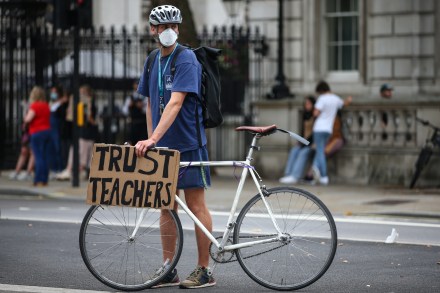
Gavin Williamson announced this afternoon that pupils receiving A-level and GCSE results this year would be awarded teacher-predicted marks. Why has the government finally changed its mind, and will Gavin Williamson stay in the Cabinet? Cindy Yu speaks to Fraser Nelson and Katy Balls.

Gavin Williamson’s Twitter gaffe

Not content with criticism from virtually all sides of the political arena, Gavin Williamson appears to have turned even his own Twitter account against him in an act of online sadomasochism. The most recent like on his account is of a tweet by the children’s author Michael Rosen, in which he argues that under the current government: 'People get promoted to positions of power (and nice pay) to abuse teachers and run a system that judges young people on two or three hours splurge that bears no resemblance to life's tasks.' Unless Williamson is the most self-critical minister in British political history, it would appear the like was an accident...