Politics

Read about the latest political news, views and analysis

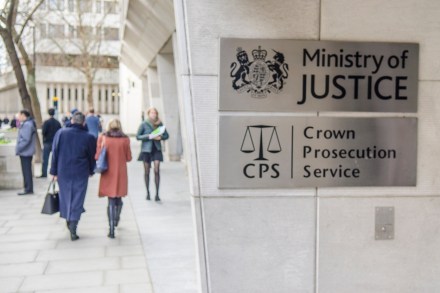
Rape prosecutions targets are a disastrous idea

Prominent amongst the achievements of the current government has been the establishment of a battalion of ministerial taskforces. We now have the culture renewal taskforce, the waste taskforce, the infrastructure delivery taskforce, the libraries taskforce, the university research and knowledge exchange sustainability taskforce and the roadmap taskforce (whose onerous task it is to coordinate no fewer than five sub-taskforces). First among equals of all of these is the criminal justice taskforce, established with the explicit purpose of restoring the Conservative Party’s reputation as the party of law and order.
Nicola Sturgeon’s exam results U-turn

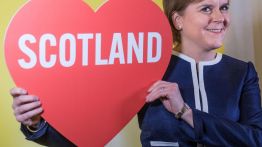
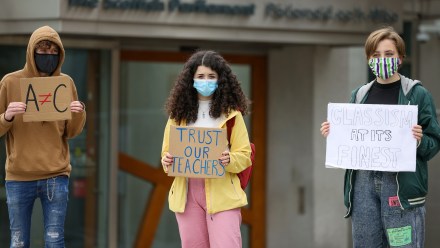
The Scottish government has U-turned on its decision to downgrade thousands of students’ exam results. Instead, pupils in Scotland who had their grades lowered by the Scottish Qualifications Authority (SQA) will be able to rely on teacher assessments of their results, the Scottish Education Secretary John Swinney has announced. The U-turn comes after Nicola Sturgeon was forced into a humiliating apology yesterday for her administration’s handling of the exam results fiasco, which saw pupils in Scotland’s most deprived areas have their pass rate downgraded by more than students in wealthier areas.

Why unemployment figures haven’t budged

Look past the headline statistics and you’ll see economic reality starting to infiltrate the labour market. Today’s employment figures from the Office for National Statistics mark very little movement from the previous quarter, with employment at 76.4 per cent (down 0.2 per cent on the previous quarter) and unemployment at 3.9 per cent (unchanged from the previous quarter, still hovering at a record-low level). Yet today also marks the biggest decrease in UK employment for a decade, since May 2009 in the wake of the financial crash. For many workers, being temporarily away from paid work is likely to become permanent How can this be?

Don’t rush to judgement on Boris’s handling of Covid-19

The verdict is in: Boris Johnson's handling of coronavirus has been disastrous. Britain's death toll remains one of the highest in the world, sick patients were discharged back into care homes at the height of the epidemic; and millions of pounds blown on useless PPE which can't be used by NHS staff. But while it's true that some things have gone wrong – as Boris himself has conceded – it's also true that many of those loudly condemning Boris for the way he has dealt with the pandemic have form in criticising Boris. So are they right? And is it fair to blame Britain's coronavirus blunders on the PM? The UK is now fourth in the inglorious table of coronavirus deaths, with India sadly catching up fast.

Starmer is falling into Boris’s trap on school reopenings

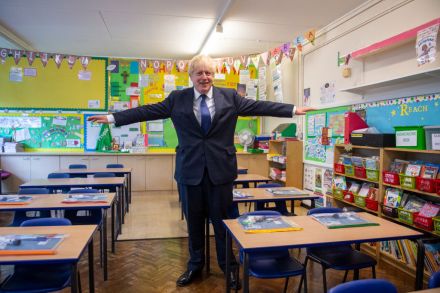
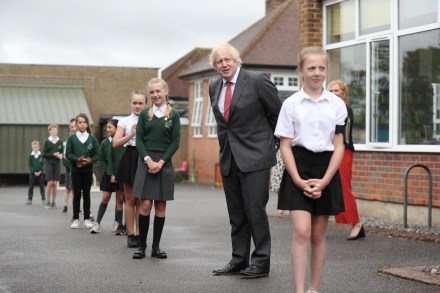
The National Education Union has issued 200 safety demands they want met before schools are to fully reopen in September. The response from many Tory MPs to this has been to describe the list as a ‘wreckers’ charter’, designed to make a return to the classroom this autumn practically impossible. Boris Johnson, meanwhile, is establishing getting kids back to school full-time once again in September as one of the guiding missions of his premiership. As the prime minister said, ‘now that we know enough to reopen schools to all pupils safely, we have a moral duty to do so.’ This is a wise move by Boris Johnson. Getting the classrooms full again is a big opportunity with little political risk.

Is the Preston lockdown justified?

13 min listen

Over the weekend, the city of Preston in the north of England was partially locked down. But on what basis? Cindy Yu talks to Kate Andrews and Fraser Nelson about whether the government is implementing local lockdowns based on the right metrics.

How Covid spread in Sweden’s care homes

Why did Covid prove so lethal in care homes? Between 2 March and 12 June, there were 66,112 deaths of care home residents in England. Of these, 19,394 ‘involved’ Covid (in the Office of National Statistics’s own terminology) – 29.3 per cent of the total. As has been apparent from the beginning of this crisis, the risk of dying of Covid-19 sharply rises with age, so in that sense it is not surprising for deaths among care home residents to be high – but why has it proved so difficult to protect residents from the disease, not just in Britain but in many countries?

The BBC only has itself to blame for the licence fee mess

For an organisation that likes to be popular these are troubling times for the BBC. This month the Corporation started sending out letters explaining that it had ended the universal exemption from paying the licence fee for the over-75s. From now on, unless you are in receipt of pension credits (taken as evidence of poverty) you’ll have to stump up £157.50 if you want to watch EastEnders – no matter how old you are. Needless to say, the BBC’s decision has not been popular; charities for the elderly have been highly critical – the Corporation has been accused of ‘lacking compassion’ and charities predict some pensioners will have to forego essentials like food and heating to keep the telly on.

The Lib Dem paradox

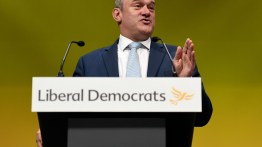
Are the Lib Dems finished? It's not the first time that question has been asked. In fact, it's a fairly regular refrain. With the days when the Liberal Democrats reliably won around 40 to 60 seats a distant memory, the party has struggled since the coalition years to find relevance. Ahead of the 2019 snap election, the party appeared to be in a good position. After big gains in the European elections, the then leader Jo Swinson had a chance to capitalise on two polarising leaders in Boris Johnson and Jeremy Corbyn and hoover up votes from the centre. Instead the party won fewer seats than in 2019 and Swinson lost her own seat. It's in part for these reasons that the leadership contest now underway to find Swinson's successor has failed to set the heather alight.

Reopening schools is Boris’s next big test

The Tories are well aware that the public won’t endlessly give them the benefit of the doubt on their handling of the coronavirus crisis. They are also aware that one of the most tangible signs to people that the government is still not in control of things is if schools fail to open – or have to rapidly close again – this autumn.  Boris Johnson’s op-ed in the Mail on Sunday makes clear that he and his colleagues appreciate this, and that reopening schools will be the ‘national priority’. There is also plenty of briefing that Gavin Williamson’s ‘head will be on the chopping block’ if English schools don’t start back next month.

Has there ever been an acronym less apt than Sage?

Our lives remain dominated by the plague, aka Covid-19. The government’s handling of it — admittedly a difficult task — has not been brilliant, but no worse than the performance of its scientific and medical advisory group (no acronym has ever been less apt than Sage).  There is one obvious lesson to be learned: the lesson from Sweden. The Swedes, alone in Europe, declined to have a lockdown. The outcome, in terms of deaths and health in general, seems to have been pretty average for Europe — worse than some, better than others (including, in particular, the UK). But comparisons are difficult, given all the factors involved. However, one fact is plain. The damage to Sweden’s economy has been far less than to every other European economy.

Farewell to the Palmerston I knew

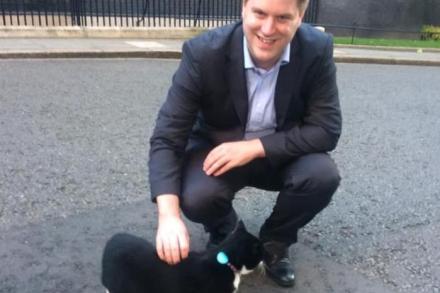
As a number of top civil servants take shelter from the 'hard rain' Dominic Cummings has forecast for Whitehall, it's unsurprising one feline has also taken the opportunity to announce his retirement. It's fair to say my friends and former colleagues who work at the Foreign Office are much sadder to see the back of Palmerston the cat than the permanent secretary, Sir Simon McDonald, who is also leaving his post, though in fairness Sir Simon probably made himself available for fewer scratches behind the ears. The announcement has been subject to speculation for some time, with Palmerston isolating for months at a temporary home in Hampshire, which is now to become permanent. Ever the media-savvy moggy, Palmerston chose the eve of International Cat Day to announce his departure.

Are the Lib Dems finished?

16 min listen

The Liberal Democrat leadership race will finally come to an end this month but, after December's crushing election defeat, is the party over too? In a special Saturday edition of Coffee House Shots, Gus Carter speaks to Katy Balls and Nick Tyrone, author of Politics is Murder, about how a new leader could pull the Lib Dems back from the brink of extinction.

Will HSBC protect its pro-democracy staff in Hong Kong?

Noel Quinn, the chief executive of HSBC, declines to say whether his bank will disown pro-democracy staff who fall foul of China’s draconian new security law for Hong Kong. The bank, he says, follows the law of every country in which it operates: it will treat the issue case by case.  What he may not have digested is that the new security law claims universal jurisdiction. Any Hong Kong person making secessionist, terrorist, seditious etc statements (as defined by China) anywhere in the world commits a crime, just as if he makes similar statements from Victoria Peak, Hong Kong. If I were a pro-democracy Hong Kong citizen working at HSBC’s headquarters in London, I would ask Mr Quinn whether he will protect me when the Chinese authorities drop in to demand my extradition.

What all parties can learn from the SNP

In the run up to the 2015 general election, there was a lot of talk in Westminster about the demise of two-party hegemony. We were coming to the end of five years of coalition government and the thinking was that neither the Tories nor Labour could get a majority, possibly ever again. This theory has since been crushed as First Past the Post works its magic. But there is one exception to this: the SNP. From having only six MPs in parliament when Nick Clegg was deputy prime minister, they ended up with 56 after 2015, and though they dipped in 2017, they went back up to 48 seats in the House of Commons in December – their dominance of Scottish politics looks destined to continue.

Will France be quarantined next?

11 min listen

Belgium, Andorra and the Bahamas were added to the UK’s quarantine list yesterday evening, meaning Brits returning from those countries will be required to stay at home for two weeks. With Belgium’s neighbour, France, also seeing a surge in coronavirus cases, will they be next? Gus Carter speaks to Katy Balls – who is on holiday in Paris – and James Forsyth about air bridges, exam results and the lack of candidates to become the next cabinet secretary.

Why the Tories can’t back down over planning reforms

A rigid and complicated planning system has long been one of the issues holding back the UK economy. The planning reforms announced by Robert Jenrick this week are designed to bring more predictability and speed to the system. Jenrick’s document is very much a case of politics being the art of the possible. The green belt is left alone in its entirety, despite the fact that a more rational planning system would require examining whether all of the green belt is needed, and if it is all in the right place. For example, building houses around train stations in the green belt would seem a sensible move – but these reforms wouldn’t enable that. But, overall, the shift to a zonal system would be a significant improvement on what this country currently has.

Evening Standard sacks nearly half its journalists after Covid crunch

Last Friday, Evgeny Lebedev, owner of the Independent and the Evening Standard, was celebrating his nomination for a peerage. But while the future looks bright for soon-to-be Lord Lebedev (son of the former KGB spy Alexander Lebedev), there is bad news for some of those who work for him. Today it was announced that the Standard will sack nearly half of its journalists after its business model was shredded by the Covid-19 crisis. Up to 69 poor hacks at Derry Street are said to be up for the chop, with 46 who work in other roles in the company also losing their jobs.